

The global men’s swimwear market is experiencing remarkable momentum, with projections showing growth from USD 29.78 billion in 2026 to USD 38.49 billion by 2031. This surge reflects a fundamental shift in consumer values, particularly among eco-conscious men and parents who prioritize sustainability without compromising style. Online shopping has become the preferred channel for discovering certified sustainable beachwear that aligns with environmental responsibility, offering unprecedented access to brands committed to reducing ocean plastic pollution while supporting meaningful social causes.
Table of Contents
- Understanding The Market And Demand For Sustainable Beachwear
- Why Online Shopping Expands Sustainable Beachwear Choices
- Materials And Environmental Benefits Of Sustainable Beachwear
- Recognizing Ethical Certifications And Avoiding Greenwashing
- Functional And Style Advantages Of Sustainable Online Beachwear
- Social Impact And Consumer Influence Of Sustainable Brands
- Common Misconceptions And How To Avoid Greenwashing
- Practical Benefits Of Buying Sustainable Beachwear Online
- Explore Sustainable Beachwear Collections At Le Club Original
- Frequently Asked Questions
Key takeaways
| Point | Details |
|---|---|
| Market expansion | Men’s sustainable swimwear segment growing at 5.74% CAGR through 2031, outpacing general market growth |
| Material innovation | Recycled fabrics like ECONYL® and rPET divert ocean plastics while delivering superior UV protection and durability |
| Certification importance | Third-party labels such as OEKO-TEX®, GRS, and Fair Trade verify authentic sustainability claims and combat greenwashing |
| Online advantages | Digital platforms provide broader selection, transparent product details, seasonal discounts, and convenient comparison tools |
| Social impact | Purchasing from ethical brands directly supports ocean conservation projects and mental health initiatives |
Understanding the market and demand for sustainable beachwear
The mens swimwear market growth trends reveal compelling evidence of transformation. Men’s beachwear segment is expanding at CAGR 5.74%, significantly faster than the overall swimwear category. This acceleration stems from several converging factors that make 2026 a pivotal year for sustainable fashion.
Beach tourism continues its upward trajectory, with millions of families planning extended coastal vacations. Water sports participation has similarly climbed, creating consistent demand for high-performance swimwear that withstands repeated saltwater exposure and intense sun. Parents shopping for matching father-son sets increasingly seek products that reflect their environmental values, transforming casual purchases into statements of principle.
Key market drivers include:
- Rising awareness of ocean plastic pollution and microfiber shedding from conventional synthetic fabrics
- Growing preference among millennial and Gen Z fathers for brands demonstrating transparent supply chains
- Increased participation in beach cleanups and coastal conservation activities fueling demand for aligned products
- Limited availability of certified eco-friendly options in traditional brick-and-mortar retail stores
- Social media influence showcasing sustainable lifestyle choices as aspirational and accessible
The challenge for eco-conscious consumers has historically been access. Physical retailers typically stock limited sustainable inventory due to shelf space constraints and hesitation about consumer willingness to pay premium prices. This scarcity created a gap between demand and availability, one that online platforms have decisively filled. Digital marketplaces now showcase dozens of verified sustainable brands, each competing on transparency, style, and environmental impact rather than simply undercutting on price.
Why online shopping expands sustainable beachwear choices
Digital retail fundamentally changes how consumers discover and evaluate sustainable swimwear. Unlike physical stores constrained by geography and inventory costs, online platforms can showcase comprehensive collections from emerging and established eco-brands simultaneously. This abundance allows shoppers to compare materials, certifications, and brand values side by side before committing to purchase.
Online shopping delivers specific advantages for sustainability-focused buyers:
- Access to niche brands prioritizing recycled materials and ethical manufacturing that lack physical distribution
- Detailed product pages explaining fabric origins, carbon footprint reduction, and third-party certification status
- Customer reviews highlighting durability, fit, and actual environmental impact over multiple seasons
- Seasonal promotions offering 30% to 50% discounts on certified sustainable collections, improving affordability
- Free shipping thresholds encouraging bundled purchases of complementary beachwear items
Convenience extends beyond selection. Reputable online retailers provide transparent return policies, allowing customers to verify fit and quality without financial risk. This contrasts sharply with physical stores where sustainable options may be relegated to small sections with limited size ranges. Digital platforms also update inventory continuously, ensuring access to the latest eco-innovations as brands release new materials and designs.
Educational resources embedded in online shopping experiences help consumers navigate complex sustainability claims. Choosing eco swimwear online becomes straightforward when product pages explicitly list certifications like OEKO-TEX® Standard 100 for chemical safety and Global Recycled Standard for material verification. These details empower shoppers to distinguish genuinely sustainable products from those employing vague marketing language.
Pro Tip: Use advanced filters on trusted platforms to sort by specific certifications before browsing collections, ensuring every option meets your environmental standards from the outset.
The ability to research brands thoroughly before purchasing represents another critical advantage. Online shoppers can verify company commitments by reviewing finding eco swim brands transparency reports, examining manufacturing partnerships, and assessing contributions to environmental initiatives. This level of due diligence proves nearly impossible when making quick decisions in physical retail environments.
Materials and environmental benefits of sustainable beachwear
Sustainable swimwear distinguishes itself through innovative material sourcing that directly addresses ocean pollution. Recycled nylon, exemplified by the ECONYL® regeneration system, transforms discarded fishing nets, fabric scraps, and other nylon waste into premium yarn indistinguishable from virgin material. Similarly, recycled polyester (rPET) repurposes plastic bottles that would otherwise contribute to landfills or marine ecosystems.
These materials deliver measurable environmental advantages:
- Each kilogram of ECONYL® nylon prevents approximately 7 kilograms of CO2 emissions compared to petroleum-based alternatives
- rPET production consumes 59% less energy than manufacturing virgin polyester while diverting plastic from oceans
- Closed-loop manufacturing systems allow worn swimwear to be recycled again, creating circular material flows
- Advanced weaving techniques reduce microplastic shedding during washing by up to 80% compared to conventional synthetics
| Material | Source | Environmental Benefit | Performance Feature |
|---|---|---|---|
| ECONYL® | Ocean plastics, fishing nets | Reduces marine waste by 70% per garment | UPF 50+ protection, chlorine resistant |
| Recycled PET | Plastic bottles | Saves 4.3 kg CO2 per swimsuit | Quick-dry, fade-resistant colors |
| Organic cotton blends | Certified organic farms | Eliminates pesticide runoff | Breathable, soft on sensitive skin |
| Plant-based elastane | Renewable biomass | 40% lower carbon footprint | Maintains stretch over 300+ wears |
Durability represents a frequently overlooked sustainability factor. Sustainable swimwear fabrics engineered from recycled content typically outlast conventional options by entire seasons due to reinforced weaving and superior colorfast dyes. This longevity reduces replacement frequency, multiplying the environmental benefit of each purchase.
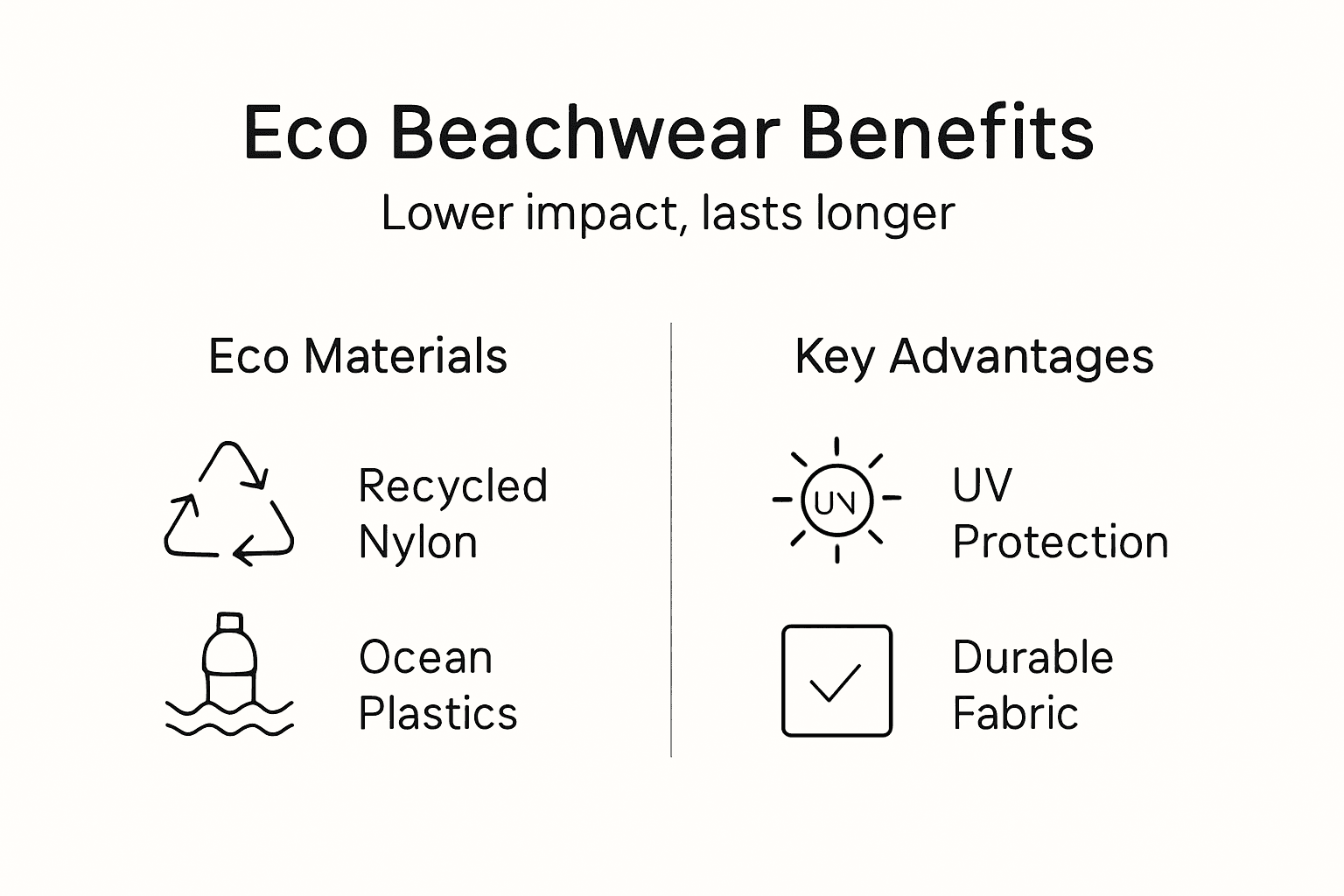
UV protection built into recycled fabrics provides functional advantages beyond environmental responsibility. Most certified sustainable swimwear offers UPF 50+ rating, blocking 98% of harmful rays without chemical treatments that degrade over time. Parents appreciate this dual benefit when shopping for boys’ beachwear, knowing their sons receive continuous sun protection throughout active beach days.
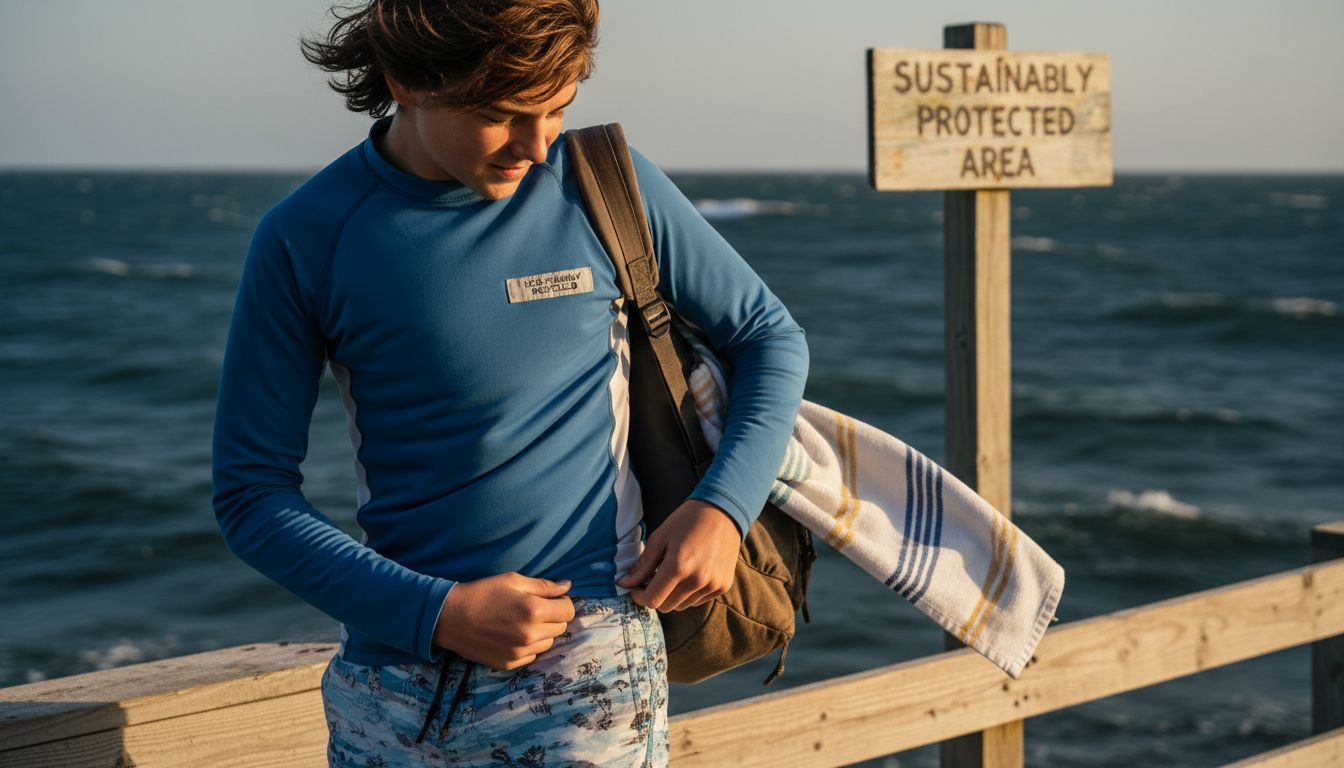
Pro Tip: Prioritize brands publishing detailed material sourcing documentation, including facility certifications and carbon footprint calculations, to verify environmental claims beyond marketing slogans.
Chemical management in sustainable swimwear production follows stricter protocols than conventional manufacturing. OEKO-TEX® certified fabrics undergo testing for over 100 harmful substances, ensuring finished garments remain safe for sensitive skin and aquatic ecosystems when microfibers inevitably shed during use. This comprehensive approach addresses both human health and environmental protection simultaneously.
Recognizing ethical certifications and avoiding greenwashing
Third-party certifications provide essential verification in an industry where sustainability claims proliferate faster than regulatory oversight. Understanding which labels carry weight helps consumers make informed decisions without becoming certification experts themselves.
Key certifications for sustainable swimwear include:
- OEKO-TEX® Standard 100: Confirms textiles meet strict limits for harmful chemicals, heavy metals, and carcinogenic dyes throughout production
- Global Recycled Standard (GRS): Verifies recycled content percentage and tracks material chain of custody from source to finished product
- Fair Trade Certified: Ensures ethical labor practices, safe working conditions, and fair wages throughout manufacturing
- Bluesign® System: Addresses environmental impact across entire textile supply chain, from raw material extraction through final assembly
- Global Organic Textile Standard (GOTS): For natural fiber components, certifies organic farming and processing methods
Greenwashing tactics have grown sophisticated as consumer demand for sustainable products intensifies. Common red flags include vague terminology like “eco-friendly” or “natural” without supporting documentation, imagery emphasizing nature without substance, and claims focusing on single attributes while ignoring overall impact. Eco certifications in swimwear serve as crucial tools for cutting through marketing noise.
“The prevalence of greenwashing in fashion has reached critical levels, with studies showing 60% of sustainability claims lack proper verification. Consumers must demand transparency through recognized certifications rather than accepting marketing narratives at face value.” — Textile Exchange Industry Report, 2026
Verifying brand authenticity requires systematic evaluation:
- Check product pages for certification logos with clickable links to issuing organizations
- Review brand websites for published sustainability reports detailing measurable progress
- Search for third-party audits or partnerships with recognized environmental organizations
- Examine whether brands provide specific data (percentages, volumes, emissions) rather than qualitative statements
- Investigate whether companies openly discuss challenges and areas for improvement, indicating genuine commitment
Understanding sustainable swimwear becomes simpler when focusing on independently verified claims rather than brand-generated content. Reputable companies welcome scrutiny and provide easy access to documentation supporting their environmental assertions.
Functional and style advantages of sustainable online beachwear
Sustainable swimwear has transcended the utilitarian aesthetic that characterized early eco-fashion. Contemporary collections rival mainstream brands in design sophistication while delivering superior functional performance that justifies investment.
Performance benefits include:
- Enhanced UV protection integrated into fabric structure rather than applied coatings that wash away
- Improved chlorine resistance extending lifespan through hundreds of pool sessions
- Four-way stretch maintaining shape recovery even after extended saltwater exposure
- Quick-dry properties reducing bacterial growth and extending time between washes
- Colorfast dyes preventing the fading that typically signals garment replacement
Style diversity has expanded dramatically as sustainable brands attract designers from conventional fashion. Online collections now feature everything from classic solid colors appealing to conservative dressers to bold prints and patterns rivaling any resort wear. Style and function of eco swimwear converge in designs suitable for everything from competitive swimming to casual beach barbecues.
Family coordination options particularly resonate with parents seeking matching father-son styles. Many sustainable brands offer identical patterns across men’s and boys’ size ranges, creating photo-worthy moments while reinforcing shared environmental values. This thoughtful approach to product development demonstrates how eco-brands understand their audience beyond superficial sustainability messaging.
Durability directly impacts sustainability by reducing consumption frequency. A well-constructed recycled polyester swim trunk lasting three summers prevents two additional purchases that would otherwise contribute to production emissions and eventual landfill waste. When functional performance matches or exceeds conventional alternatives, choosing sustainable options becomes economically rational rather than merely aspirational.
Comfort innovations address common complaints about synthetic swimwear. Advanced moisture-wicking linings prevent chafing during active water sports, while mesh pockets allow drainage without sacrificing security for essentials. These details reflect how established sustainable brands have refined designs through customer feedback and wear testing.
Social impact and consumer influence of sustainable brands
Purchasing decisions carry power beyond individual environmental footprints. Supporting brands that embed social responsibility into business models amplifies positive impact through profit-sharing mechanisms and advocacy initiatives.
Meaningful contributions sustainable swimwear brands facilitate:
- Direct funding for ocean cleanup organizations removing plastic debris from beaches and marine habitats
- Partnerships with marine conservation groups conducting research and habitat restoration
- Mental health program support recognizing connections between environmental degradation and psychological wellbeing
- Educational initiatives teaching coastal communities about sustainable fishing and waste management
- Fair wage commitments ensuring manufacturing workers receive living compensation and safe conditions
Le Club Original exemplifies this integrated approach by linking product sales to mental health advocacy, acknowledging how environmental concerns contribute to eco-anxiety among young people. This holistic perspective treats sustainability as interconnected with human wellbeing rather than isolated environmental protection.
Ocean conservation impact of swimwear extends beyond material sourcing when brands actively participate in restoration efforts. Some companies organize customer beach cleanups, creating community around shared values while generating tangible waste reduction. These events transform abstract sustainability commitments into visible action that reinforces brand authenticity.
Consumer influence operates through market signals that shape industry behavior. As sustainable brands capture growing market share, conventional manufacturers face pressure to adopt similar practices or risk losing environmentally conscious customers. This dynamic has already prompted major sportswear companies to introduce recycled content lines and pursue certifications they previously dismissed as niche concerns.
The cumulative effect of individual purchases creates momentum for systemic change. When thousands of families choose certified sustainable swimwear over conventional alternatives, they demonstrate viable demand that justifies further innovation investment. This positive feedback loop accelerates material science advancement and drives down costs through economies of scale.
Common misconceptions and how to avoid greenwashing
Persistent myths about sustainable swimwear create hesitation among potential buyers despite mounting evidence contradicting these beliefs. Addressing misconceptions directly helps consumers make confident decisions based on facts rather than outdated assumptions.
Myth 1: All synthetic fabrics equally harm the environment
Recycled synthetics demonstrate dramatically lower impact than virgin petroleum-based materials. ECONYL® production generates 90% less global warming impact than manufacturing new nylon, while rPET diverts plastic from ecosystems. The critical distinction lies in material sourcing and manufacturing processes, not synthetic versus natural classification.
Myth 2: Sustainable swimwear always costs significantly more
Online seasonal sales routinely offer 40% to 50% discounts on certified sustainable collections, bringing prices competitive with mid-range conventional brands. When factoring in superior durability extending useful life by multiple seasons, cost per wear often favors sustainable options. Initial sticker shock dissolves when calculating actual long-term value.
Myth 3: Natural fibers always represent better environmental choices
While organic cotton offers benefits for t-shirts and towels, natural fibers lack the performance characteristics essential for swimwear. Cotton absorbs water, dries slowly, and loses shape rapidly in chlorinated or saltwater environments. Recycled synthetics provide necessary stretch, quick-dry properties, and longevity that natural alternatives cannot match for aquatic applications.
Myth 4: Eco-friendly automatically means unfashionable or utilitarian
Contemporary sustainable swimwear rivals any resort collection in aesthetic sophistication. Leading eco-brands employ professional designers creating trend-forward styles that happen to use recycled materials rather than sacrificing fashion for environmental responsibility. The false choice between style and sustainability has been thoroughly debunked by market offerings.
Preventing greenwashing deception requires applying consistent verification standards:
- Demand specific certification documentation rather than accepting generic eco-terminology
- Research brand transparency by reviewing published sustainability reports with measurable data
- Cross-reference environmental claims against third-party audits from recognized organizations
- Evaluate whether brands discuss challenges and areas for improvement versus presenting perfect narratives
- Avoiding greenwashing in swimwear becomes systematic when following structured verification protocols
Skepticism serves consumers well in sustainability marketing, but cynicism that dismisses all environmental claims equally proves counterproductive. Distinguishing genuine commitment from opportunistic marketing requires effort, but established certification systems provide reliable shortcuts for busy shoppers.
Practical benefits of buying sustainable beachwear online
Beyond environmental and social considerations, online purchasing delivers concrete advantages that enhance the shopping experience while supporting sustainable choices.
Convenience factors include:
- Free shipping on orders exceeding modest thresholds, typically $50 to $75, eliminating delivery costs
- Frequent promotional periods offering 30% to 50% discounts during seasonal transitions
- 24/7 access allowing research and purchasing around family schedules without store hour constraints
- Detailed size charts with measurement guides reducing fit uncertainty compared to rushed in-store decisions
- Customer review sections providing real-world feedback on durability, comfort, and environmental impact
| Factor | Online Shopping | Physical Stores |
|---|---|---|
| Sustainable brand selection | 20 to 50+ certified brands | 2 to 5 brands typically |
| Product information depth | Full material sourcing, certifications, impact data | Limited to hang tags, often vague |
| Pricing transparency | Easy comparison across brands and retailers | Requires visiting multiple locations |
| Seasonal discounts | Regular 40% to 50% promotions via email | Clearance only, limited sustainable inventory |
| Return flexibility | 30 to 60-day windows with prepaid labels | Store credit often, shorter windows |
| Educational resources | Integrated blogs, guides, certification explanations | Minimal, depends on staff knowledge |
Selection breadth represents the most significant advantage. Online platforms curate collections from emerging sustainable brands that lack capital for physical retail partnerships alongside established companies. This democratized access allows innovation to reach consumers regardless of brand marketing budgets.
Practical benefits of online buying extend to comparison shopping that would require hours of driving between physical locations. Digital platforms enable side-by-side evaluation of similar products from different brands, examining material composition, certification status, price points, and customer satisfaction ratings simultaneously. This efficiency respects consumers’ time while facilitating informed decisions.
User reviews provide invaluable insights beyond brand marketing claims. Parents describe how specific swim trunks held up through summer swim lessons, beach vacations, and backyard pool parties. These authentic experiences help set realistic expectations about durability, fit consistency across sizes, and whether environmental benefits justify any price premium.
Return policies mitigate the primary concern about online apparel shopping: fit uncertainty. Reputable retailers provide prepaid return labels and full refunds within generous windows, allowing customers to verify sizing and quality at home. This removes financial risk from trying sustainable brands for the first time.
Explore sustainable beachwear collections at Le Club Original
Le Club Original curates premium sustainable swimwear collections specifically for eco-conscious men and families seeking style without environmental compromise. Every product features verified certifications including OEKO-TEX® for chemical safety and recycled content verification, eliminating guesswork about authenticity. The platform offers matching father-son styles in identical patterns, creating memorable family moments while demonstrating shared values.
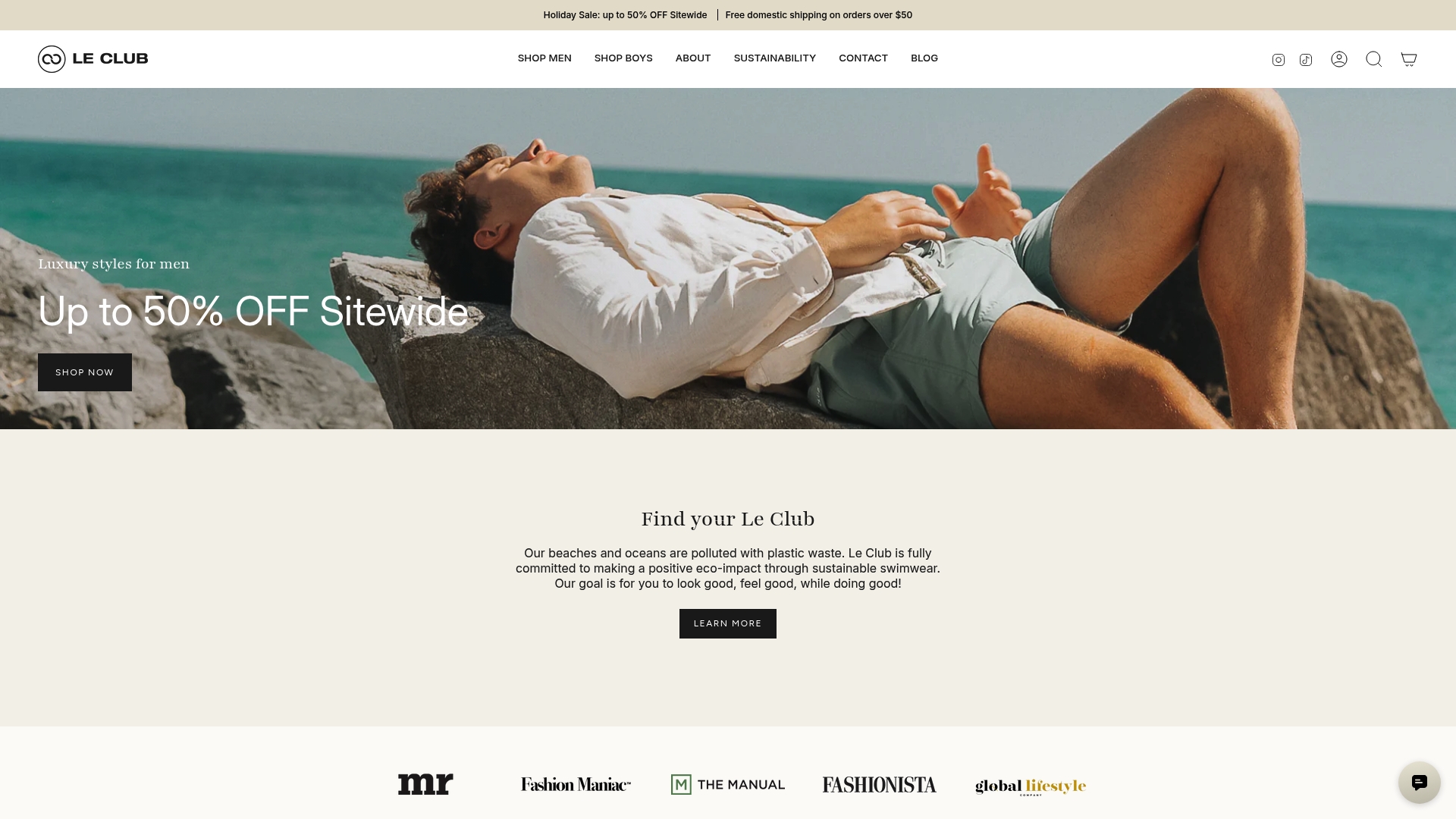
Seasonal promotions regularly deliver 40% to 50% discounts on certified collections, making sustainable choices accessible without premium pricing. Free shipping on orders over $50 encourages bundling complementary items while supporting ocean conservation and mental health initiatives through profit-sharing partnerships. New arrivals showcase the latest innovations in recycled materials and design trends, ensuring access to cutting-edge sustainable fashion. Top sustainable swimwear highlights customer favorites that balance environmental responsibility with functional performance and contemporary style.
Frequently asked questions
How do I verify if beachwear is truly sustainable?
Check for third-party certifications like OEKO-TEX®, Global Recycled Standard, or Bluesign® displayed on product pages with verifiable links to issuing organizations. Review brand transparency reports detailing specific material sourcing, manufacturing partnerships, and measurable environmental impact data rather than vague marketing language.
Are eco-friendly swimwear options affordable for families?
Online seasonal sales frequently offer 40% to 50% discounts on certified sustainable collections, bringing prices competitive with mid-range conventional brands. When accounting for superior durability that extends lifespan by multiple seasons, cost per wear often favors sustainable options despite occasionally higher initial prices.
Can I find matching styles for fathers and sons?
Many sustainable swimwear brands now offer identical patterns across men’s and boys’ size ranges specifically for family coordination. Online platforms provide the broadest selection of these matching options compared to physical stores, where sustainable inventory typically remains limited.
Why choose online shopping over physical stores for sustainable beachwear?
Digital platforms showcase 20 to 50+ certified sustainable brands compared to 2 to 5 options in typical retail locations. Online product pages provide detailed material sourcing, certification documentation, and customer reviews that physical hang tags cannot match, enabling informed decisions about environmental authenticity.
How does purchasing sustainable swimwear benefit the environment and community?
Recycled materials like ECONYL® and rPET divert ocean plastics while reducing carbon emissions by up to 90% compared to virgin synthetics. Many brands share profits with ocean conservation organizations and mental health initiatives, amplifying positive impact beyond individual purchase decisions through systemic support for environmental restoration.
What certifications matter most when choosing eco swimwear?
OEKO-TEX® Standard 100 verifies chemical safety, Global Recycled Standard confirms recycled content percentage and supply chain tracking, and Fair Trade ensures ethical labor practices. Bluesign® addresses comprehensive environmental impact across textile production, while GOTS certifies organic processing for natural fiber components. Multiple certifications indicate thorough commitment beyond single-issue focus.