

Searching for swimwear that matches your commitment to the planet can quickly become confusing thanks to bold claims and mixed messages from brands. For eco-conscious men and boys, understanding the real impact of your swimwear choice matters as much as style or comfort. By shedding light on eco-certifications that safeguard environmental safety, chemical health, and ethical manufacturing, you can shop with confidence, knowing your choices truly support a healthier world.
Table of Contents
- Eco-Certifications In Swimwear Explained
- Major Certification Types And Labels
- Core Standards: Materials, Safety, And Labor
- Common Requirements And Application Process
- Risks Of Greenwashing And False Claims
- Comparing Certified Vs. Non-Certified Options
Key Takeaways
| Point | Details |
|---|---|
| Understand Eco-Certifications | Familiarize yourself with various eco-certifications to make informed decisions about sustainable swimwear. |
| Prioritize Robust Certifications | Look for swimwear brands with multiple certifications to ensure comprehensive environmental and ethical practices. |
| Beware of Greenwashing | Be cautious of brands making vague or exaggerated sustainability claims without solid evidence. |
| Evaluate Certified vs. Non-Certified Options | Choose certified swimwear for guaranteed quality, safety, and sustainable manufacturing practices. |
Eco-certifications in swimwear explained
Swimwear eco-certifications represent critical tools for consumers seeking environmentally responsible beach fashion. These independent verification systems evaluate a garment’s total environmental impact, moving beyond superficial marketing claims to provide transparent, measurable standards for sustainability.
Understanding eco-certifications requires recognizing the complex criteria used to assess swimwear manufacturing. Sustainable fabric standards typically examine multiple dimensions of production, including:
- Raw material sourcing
- Water and energy consumption during manufacturing
- Chemical usage and waste management
- Labor practices and worker conditions
- Carbon footprint of production processes
- Potential for fabric recyclability
Certification bodies like Global Organic Textile Standard (GOTS), Bluesign, and OEKO-TEX evaluate these factors systematically. Each certification focuses on different aspects of environmental responsibility, providing consumers with nuanced insights into a brand’s commitment to sustainable practices.
Not all eco-certifications are created equal. Understanding their specific criteria helps make truly informed purchasing decisions.
The most robust certifications go beyond simple material selection, analyzing entire supply chains and manufacturing ecosystems. They challenge brands to demonstrate comprehensive environmental stewardship, tracking everything from raw material extraction to final product distribution.
Pro tip: When shopping for sustainable swimwear, look for multiple certifications and understand what each specifically covers to make the most informed environmental choice.
Major certification types and labels
In the world of sustainable swimwear, multiple certification types play crucial roles in ensuring environmental and ethical standards. Sustainable swimwear certifications represent comprehensive frameworks that evaluate manufacturing practices, material sourcing, and overall environmental impact.
The most prominent eco-certification types include:
- OEKO-TEX Standard 100: Focuses on chemical safety and human health
- Global Recycle Standard (GRS): Verifies recycled content and responsible production
- Bluesign: Monitors entire textile supply chain for environmental safety
- Fair Trade: Ensures ethical labor practices and worker compensation
- GOTS (Global Organic Textile Standard): Validates organic material use and processing
Each certification addresses different sustainability dimensions. OEKO-TEX, for instance, tests textiles for harmful substances, while Bluesign examines the entire manufacturing ecosystem to minimize environmental impact. These certifications provide consumers with transparent insights into a brand’s commitment to responsible production.
Not all certifications are equal. Some offer deeper environmental assessments than others, making careful research critical for conscious consumers.
Companies pursuing multiple certifications demonstrate a more comprehensive approach to sustainability. By combining different certification standards, swimwear brands can create products that minimize environmental harm while maintaining high-quality manufacturing practices.

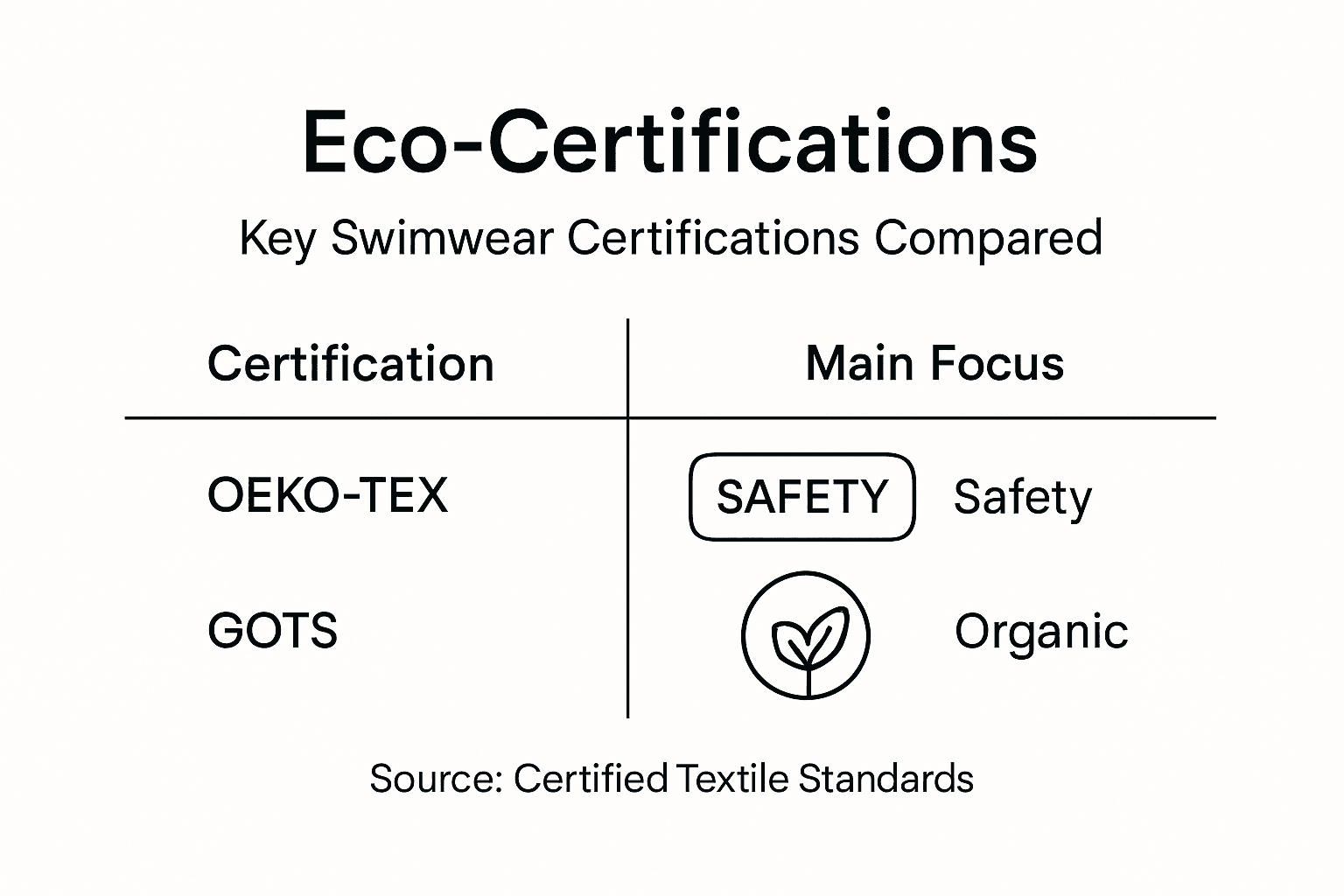
Below is a summary comparing the most recognized eco-certifications for swimwear:
| Certification | Main Focus | Scope of Assessment | Consumer Benefit |
|---|---|---|---|
| OEKO-TEX Standard 100 | Chemical safety | Product testing for harmful substances | Assurance of skin-safe materials |
| Global Recycle Standard (GRS) | Recycled content | Verifies recycled inputs and responsible management | Confidence in recycled material sourcing |
| Bluesign | Environmental safety | Full supply chain monitoring | Lower environmental footprint |
| Fair Trade | Ethical labor | Labor condition and wage guarantees | Support for fair worker treatment |
| GOTS (Global Organic Textile Standard) | Organic materials | Organic status and processing | Guaranteed organic fiber authenticity |
Pro tip: Always cross-reference multiple certification types when evaluating a swimwear brand’s environmental claims to get a complete picture of their sustainability efforts.
Core standards: Materials, safety, and labor
Sustainable swimwear demands rigorous evaluation across multiple critical dimensions. Non-toxic swimwear standards provide comprehensive frameworks that protect both environmental and human welfare throughout production processes.
The core standards encompass three fundamental areas:
-
Material Composition
- Organic fiber sourcing
- Recycled material percentages
- Chemical-free production methods
-
Worker Safety
- Fair wage guarantees
- Safe working conditions
- Transparent labor practices
-
Environmental Protection
- Minimal water consumption
- Reduced carbon emissions
- Waste management protocols
Certification bodies meticulously assess each of these dimensions. For instance, OEKO-TEX Standard 100 validates that no harmful chemicals touch human skin, while Fair Trade certification ensures workers receive equitable compensation and operate in safe environments.
Authentic sustainability transcends marketing claims. True environmental responsibility requires holistic commitment across production cycles.
Advanced certifications now integrate multiple evaluation criteria, creating more comprehensive assessment models. By examining material sourcing, manufacturing processes, and human impact simultaneously, these standards provide nuanced insights into a brand’s genuine environmental commitment.
Pro tip: Request detailed certification documentation from swimwear brands to understand the depth and authenticity of their sustainability claims.
Common requirements and application process
Navigating eco-certification for swimwear involves understanding complex assessment criteria and rigorous application protocols. Brands seeking certification must demonstrate comprehensive commitment to environmental and social responsibility through detailed documentation and transparent manufacturing practices.
The typical certification application process involves several critical stages:
-
Initial Documentation Submission
- Detailed material sourcing records
- Complete supply chain mapping
- Chemical inventory and safety data
-
Manufacturing Audit
- On-site facility inspection
- Worker condition verification
- Environmental impact assessment
-
Compliance Verification
- Technical fabric testing
- Chemical residue screening
- Labor practice evaluation
Certification bodies like OEKO-TEX and Bluesign require extensive evidence demonstrating sustainable practices. Brands must provide comprehensive documentation proving they meet strict environmental and ethical standards, including detailed records of material origins, production methods, and worker treatment.
Certification is not a one-time achievement but an ongoing commitment to continuous improvement and transparency.
Most certifications require annual re-evaluation, ensuring brands maintain high standards. This dynamic process encourages continuous innovation and accountability in sustainable swimwear manufacturing, pushing companies to consistently improve their environmental and social practices.
Pro tip: Maintain meticulous records of your supply chain and production processes, as documentation is key to successful certification.
Risks of greenwashing and false claims
Greenwashing represents a significant challenge in the sustainable swimwear marketplace, where brands manipulate environmental messaging to appear more eco-friendly than their actual practices warrant. Sustainable swimwear deception involves creating misleading claims that exploit consumers’ environmental consciousness without substantive change.
Common greenwashing tactics include:
- Using vague environmental language
- Highlighting minimal sustainable features
- Employing misleading imagery
- Creating fake certifications
- Exaggerating recycling claims
- Selective transparency about manufacturing
Consumers face substantial risks when encountering these deceptive marketing strategies. Without rigorous third-party verification, brands can present environmentally harmful products as sustainable, effectively undermining genuine ecological efforts and misleading well-intentioned purchasers.
Greenwashing isn’t just dishonest marketing—it’s an active threat to meaningful environmental progress.
Detecting greenwashing requires critical analysis and understanding of authentic sustainability practices. Consumers should demand transparent documentation, verified certifications, and comprehensive supply chain information to distinguish between genuine environmental commitment and superficial marketing claims.
Pro tip: Always request specific, verifiable evidence of sustainability claims, and be skeptical of brands using broad, unsubstantiated environmental language.
Comparing certified vs. non-certified options
The distinction between certified and non-certified swimwear represents a critical choice for environmentally conscious consumers. Sustainable swimwear standards reveal significant differences that extend far beyond surface-level marketing claims.
Key comparative dimensions include:
-
Material Quality
- Certified: Verified organic/recycled materials
- Non-certified: Potentially harmful synthetic fabrics
-
Chemical Safety
- Certified: Rigorous toxin screening
- Non-certified: Unverified chemical composition
-
Environmental Impact
- Certified: Documented reduced carbon footprint
- Non-certified: Potentially higher pollution levels
-
Labor Practices
- Certified: Transparent, ethical manufacturing
- Non-certified: Potentially exploitative conditions
Certified swimwear undergoes extensive testing that guarantees material safety, environmental responsibility, and ethical production. Non-certified options frequently lack transparency, potentially exposing consumers to harmful chemicals and supporting unsustainable manufacturing practices.
Not all swimwear is created equal. Certification transforms a simple garment into a statement of environmental commitment.
Consumers choosing certified options directly support sustainable manufacturing ecosystems. These choices drive industry-wide changes, encouraging brands to adopt more responsible production methods and prioritize environmental stewardship.
The table below highlights key differences between certified and non-certified swimwear choices:
| Aspect | Certified Swimwear | Non-Certified Swimwear |
|---|---|---|
| Transparency | Supply chain is fully documented | Limited or unclear sourcing details |
| Health Safety | Free from harmful chemicals | Risk of chemical exposure |
| Social Impact | Workers’ rights and pay audited | Labor practices may be unverified |
| Environmental Claims | Environmental positivity is verified | Green marketing may be misleading |
Pro tip: Request detailed certification documentation and look beyond marketing claims when selecting sustainable swimwear.
Discover Truly Sustainable Swimwear That Lives Up to Its Claims
The challenge of navigating eco-certifications and avoiding greenwashing can feel overwhelming when searching for swimwear that genuinely supports environmental and social responsibility. The article highlights how transparent certifications like OEKO-TEX, GOTS, and Fair Trade are essential to verify real impact—not just marketing talk. If you want swim trunks or bikinis made from verified organic or recycled materials, crafted under ethical working conditions, and free from harmful chemicals, finding trustworthy brands is key.
At Le Club Original, we share your commitment to authentic sustainability. Our curated collections feature swimwear designed with comprehensive eco-consciousness that goes beyond surface claims. From supporting ocean pollution reduction to prioritizing fair labor practices, we uphold the strict standards the article emphasizes. With seasonal sales and new arrivals, it has never been easier or more stylish to choose pieces that align with your values.
Stylish Sustainable Swimwear Collections
Explore Our Commitment to Eco-Responsibility
Shop Now at Le Club Original

Challenge greenwashing and make your beachwear count today. Visit Le Club Original to select swimwear verified through trusted eco-conscious standards. Act now to enjoy guilt-free style with free shipping on qualifying orders and support a community dedicated to both environmental and mental well-being.
Frequently Asked Questions
What are eco-certifications in swimwear?
Eco-certifications are independent verification systems that evaluate the environmental impact of swimwear, covering aspects like material sourcing, manufacturing methods, and labor practices to ensure brands adhere to sustainable practices.
Why should I choose certified swimwear over non-certified options?
Certified swimwear has undergone rigorous testing that guarantees safety from harmful chemicals and assures environmentally responsible production. Non-certified options may lack transparency and expose consumers to unethical labor practices or environmental harm.
What are some common eco-certifications for swimwear?
Common eco-certifications include OEKO-TEX Standard 100 for chemical safety, GOTS (Global Organic Textile Standard) for organic materials, Bluesign for full supply chain monitoring, and Fair Trade for ethical labor practices.
How can I identify greenwashing in swimwear brands?
Consumers can identify greenwashing by looking for vague environmental claims, unverifiable certifications, or brands that highlight minimal sustainable features without providing detailed documentation or transparency about their practices.