

Searching for swim trunks that look great and respect the planet should not feel impossible. As traditional swimwear depends on fossil fuels and adds to pollution, a new wave of style is challenging that norm with upcycled fabrics sourced from discarded plastic bottles and fishing nets. Upcycled swimwear clears waste from oceans and landfills while delivering comfort and durability that match conventional options. This guide explains what upcycled materials really are, how they are made, and why choosing them changes the game for both your summer look and the environment.
Table of Contents
- What Are Upcycled Fabrics in Swimwear?
- Types of Upcycled Materials Used Today
- How Upcycled Swimwear Is Made
- Comparing Upcycled and Traditional Swimwear
- Environmental Impact and Consumer Benefits
Key Takeaways
| Point | Details |
|---|---|
| Upcycled Fabrics Reduce Waste | Upcycled swimwear uses materials like plastic bottles and fishing nets, contributing to ocean cleanup and landfill reduction. |
| Equal Performance to Traditional Swimwear | Upcycled fabrics deliver comparable durability, stretch, and color retention without the environmental cost of virgin materials. |
| Support Circular Fashion | Choosing upcycled swimwear promotes a circular economy, reducing reliance on fossil fuels and encouraging sustainable practices. |
| Transactional Transparency Matters | When purchasing, prioritize brands that disclose their sourcing and recycling methods to ensure ethical production practices. |
What Are Upcycled Fabrics in Swimwear?
Upcycled fabrics in swimwear transform waste materials into functional, high-performance ocean wear. Instead of virgin petroleum-based synthetics, brands now source from discarded plastic bottles, fishing nets, and industrial textile scraps.
The core materials include:
- ECONYL regenerated nylon, made from nylon waste that recycles infinitely without quality loss
- Recycled polyester spun from melted plastic waste destined for landfills
- Post-consumer waste materials recovered from ocean pollution and discarded textiles
This approach solves a real problem. Traditional synthetic swim trunks rely on crude oil derivatives, meaning every garment ties back to fossil fuels. Upcycled alternatives break that cycle entirely.
How the Process Works
The transformation from trash to trunks involves several key steps.
First, manufacturers collect waste sources. Fishing nets recovered from oceans, plastic beverage bottles from recycling programs, and abandoned textiles all become feedstock.
Next comes mechanical or chemical processing. Waste materials get shredded, melted, or chemically broken down into raw fibers.
Then producers spin these fibers into yarn, bleach and dye them to match your preferred colors, and weave or knit the finished fabric.
When you wear upcycled swim trunks, you’re wearing materials that would otherwise occupy ocean floors or landfill space for decades.
Why This Matters for Your Lifestyle
You care about the ocean. Traditional swimwear manufacturing generates massive waste while depleting finite fossil fuel reserves.
Upcycled fabrics flip the equation:
- Remove pollution from oceans and landfills
- Reduce petroleum dependency
- Create durable, performance-grade material with zero quality compromise
- Support circular fashion principles that eliminate the “take, make, dispose” model
The fabric performs identically to virgin synthetics. You get stretch, quick-dry properties, chlorine resistance, and color retention. The only difference is the environmental impact plummets.
Pro tip: When shopping for upcycled swimwear, look for brands that disclose their source materials—whether they use ocean-recovered nets or processed plastic bottles tells you exactly where your trunks came from.
Types of Upcycled Materials Used Today
Three primary materials dominate the upcycled swimwear market. Each addresses a different pollution source while delivering the performance you expect from modern swim trunks.
ECONYL Regenerated Nylon
ECONYL stands out as the gold standard in upcycled swimming fabrics. This regenerated nylon comes from post-consumer nylon waste, particularly discarded fishing nets and textile scraps.
What makes ECONYL exceptional is its infinite recyclability. Unlike virgin nylon, which degrades after processing, ECONYL maintains its quality through endless recycling cycles. You can recycle your trunks multiple times without any performance loss.
The material delivers premium stretch, durability, and quick-dry properties identical to traditional nylon swimwear.
Recycled Polyester (rPET)
Recycled polyester from plastic bottles represents another major player in sustainable swim trunks. Manufacturers collect post-consumer plastic bottles, shred them, and spin the material into yarn.
This approach directly tackles ocean plastic pollution. Plastic bottles destined for landfills or waterways get transformed into functional beachwear instead.
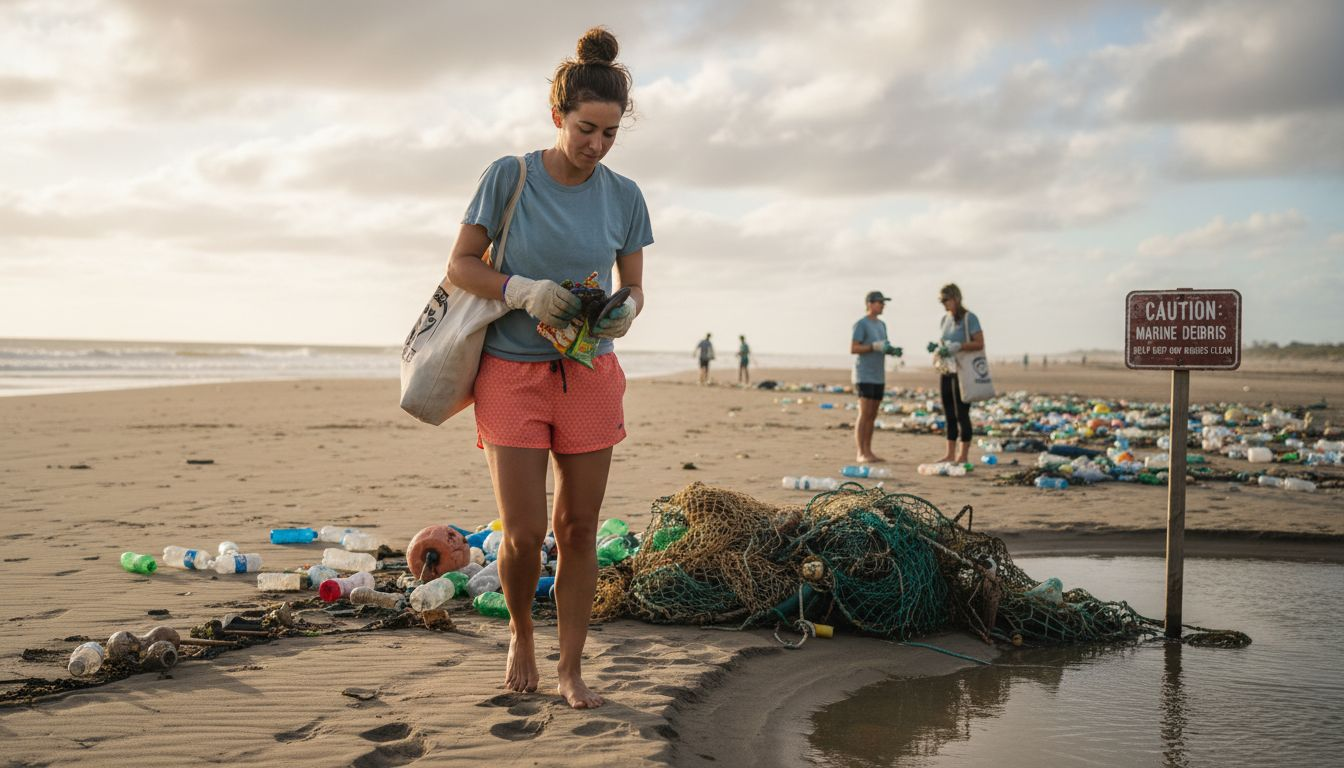
Recycled polyester offers excellent color retention, chlorine resistance, and dimensional stability. The performance matches virgin polyester without the crude oil footprint.
Recycled Nylon (Other Sources)
Beyond ECONYL, recycled nylon comes from industrial textile waste. Manufacturing scraps, rejected fabrics, and pre-consumer textile trim get recovered and reprocessed.
This diversifies the waste stream beyond fishing nets. Factories can now divert textile waste that would otherwise burden landfills.
Material Comparison
Here’s how these options stack up:
| Material | Source | Recyclability | Best For |
|---|---|---|---|
| ECONYL | Fishing nets, nylon waste | Infinite | Durability seekers |
| rPET | Plastic bottles | Limited cycles | Eco-minded buyers |
| Recycled nylon | Textile scraps | High | Performance and sustainability |
All three materials provide comparable performance to virgin synthetics while dramatically reducing environmental impact.
Compare how upcycled material choices address pollutants and consumer values:
| Material Type | Pollution Addressed | Consumer Value Added |
|---|---|---|
| ECONYL Regenerated | Ghost fishing nets | Infinite recyclability, premium feel |
| rPET Polyester | Plastic bottle litter | High color retention, stability |
| Recycled Nylon | Factory textile scraps | Performance and eco-diversity |
Each upcycled material type removes a different pollution source from oceans and landfills while delivering the same comfort and durability you expect.
Pro tip: Check the product tag for material composition—brands listing ECONYL or rPET percentages are transparent about their sourcing and committed to circular fashion principles.
How Upcycled Swimwear Is Made
The production of upcycled swimwear follows a circular textile-to-textile recycling process that transforms ocean waste into wearable performance gear. Understanding this journey shows why your swim trunks deliver both style and environmental impact.
Collection and Sorting
The process starts with waste collection. Manufacturers source discarded fishing nets from oceans, post-consumer plastic bottles, and textile scraps from factories.
Workers sort these materials by type and condition. Contaminated items get removed, while usable waste gets prepared for processing.
This step determines the quality of your final product. Better sorting means cleaner, more durable fibers.
Breaking Down and Processing
Once sorted, waste materials enter mechanical and chemical processing. Plastic and textile materials get shredded into tiny fragments.
These fragments then get melted or chemically broken down into raw polymer chains. The result becomes virgin-like material ready for spinning.
Advanced innovations like LYCRA® T400® EcoMade fiber use recycled plastic combined with bio-based materials, creating elasticity without traditional elastane.
Fiber Spinning and Yarn Creation
Processed polymers get spun into fine fibers and twisted into yarn. Manufacturers control thickness, texture, and strength at this stage.
The yarn then gets wound onto spools, ready for fabric production. This is where your swim trunks’ performance characteristics begin forming.
Knitting and Fabric Manufacturing
Specialized knitting machines weave yarn into finished fabric using high-quality techniques. The knit structure determines stretch, durability, and comfort.
These machines work with precision to create:
- Tight, durable weaves that resist chlorine breakdown
- Elastic fabrics that recover shape after stretching
- Smooth surfaces that feel premium against skin
- Water-repellent finishes that dry quickly
Dyeing and Finishing
Fabric gets dyed to your preferred color using eco-friendly processes. Finishing treatments add chlorine resistance, UV protection, and antimicrobial properties.
Quality control teams inspect every batch for defects. Only fabrics meeting strict performance standards move forward.
Production and Assembly
Finished fabric arrives at manufacturing facilities where it becomes your swim trunks. Skilled workers cut patterns, sew seams, and add hardware.
The entire process completes a circle: ocean waste becomes collection, processing, spinning, knitting, dyeing, and finally becomes the performance swimwear you wear and can recycle again.
Unlike traditional swimwear made from virgin synthetics, upcycled trunks close the loop entirely. Your worn-out pair can enter the recycling stream and become new trunks once more.
Here’s a summary of how upcycled swimwear manufacturing reduces environmental impact at each production stage:
| Stage | Traditional Swimwear | Upcycled Swimwear | Environmental Benefit |
|---|---|---|---|
| Raw Material Source | Petroleum-based | Ocean and landfill waste | Reduces fossil fuel extraction |
| Processing Energy | High | Lower | Less carbon emissions generated |
| Manufacturing Waste | Significant | Minimized | Less landfill and ocean pollution |
| End-of-Life | Difficult to recycle | Designed for recycling | Supports circular fashion principles |
Pro tip: Look for brands disclosing their manufacturing locations and recycling partnerships—transparency about production practices indicates genuine commitment to circular fashion rather than greenwashing.
Comparing Upcycled and Traditional Swimwear
The biggest question: does choosing upcycled mean sacrificing performance or durability? The answer is a definitive no. Modern upcycled swimwear matches traditional options across nearly every metric that matters to you.
Performance and Durability
Recycled polyester blends maintain similar abrasion resistance as virgin polyester fabrics. This means your upcycled trunks withstand the same pool chemicals, saltwater exposure, and frequent washing.
Seam strength, stretch recovery, and colorfastness all perform identically. You won’t notice any difference during regular use.
Longevity is essentially equal. Both types last 2-3 seasons with proper care.
Environmental Impact Differences
Here’s where upcycled swimwear stands apart. Traditional swimwear requires crude oil extraction, petroleum refining, and virgin polymer production.
Upcycled alternatives eliminate these resource-intensive steps entirely. The carbon footprint reduction is substantial:
- Traditional polyester: derived from fossil fuels
- Upcycled polyester: sourced from diverted waste streams
- Carbon savings: significant reduction without quality compromise
Cost Comparison
Upcycled swimwear typically costs slightly more upfront. Premium pricing reflects the complexity of waste collection and advanced recycling technology.
However, comparable durability means cost-per-wear becomes nearly identical. You’re investing in the same lifespan with better environmental outcomes.
Quality and Aesthetics
Both options deliver premium finishes, vibrant colors, and excellent aesthetics. Dye processes have advanced enough that upcycled fabrics accept color beautifully.
Feel and fit are indistinguishable. Your skin won’t register any difference.
Comparison Table
| Factor | Traditional | Upcycled |
|---|---|---|
| Durability | Excellent | Excellent |
| Stretch/Recovery | High | High |
| Chlorine Resistance | Strong | Strong |
| Color Quality | Premium | Premium |
| Lifespan | 2-3 seasons | 2-3 seasons |
| Carbon Footprint | High | Low |
| Recyclability | Limited | Infinite |
The practical reality: upcycled swimwear delivers everything traditional options promise—durability, comfort, style—while dramatically reducing ocean pollution and waste.
Why Choose Upcycled?
Performance parity means your decision comes down to environmental values. Wearing upcycled trunks signals commitment to circular fashion without any performance sacrifice.
You get identical functionality plus the knowledge that your purchase diverts ocean pollution and landfill waste.
Pro tip: Compare specific products rather than categories—some traditional brands use sustainable practices while some upcycled brands vary in transparency, so read material composition and manufacturing details before purchasing.
Environmental Impact and Consumer Benefits
Choosing upcycled swimwear isn’t just a fashion decision—it’s an action that directly combats ocean pollution and landfill overflow. The environmental gains are measurable and meaningful, and the personal benefits extend beyond feeling good about your choices.
Ocean Pollution Reduction
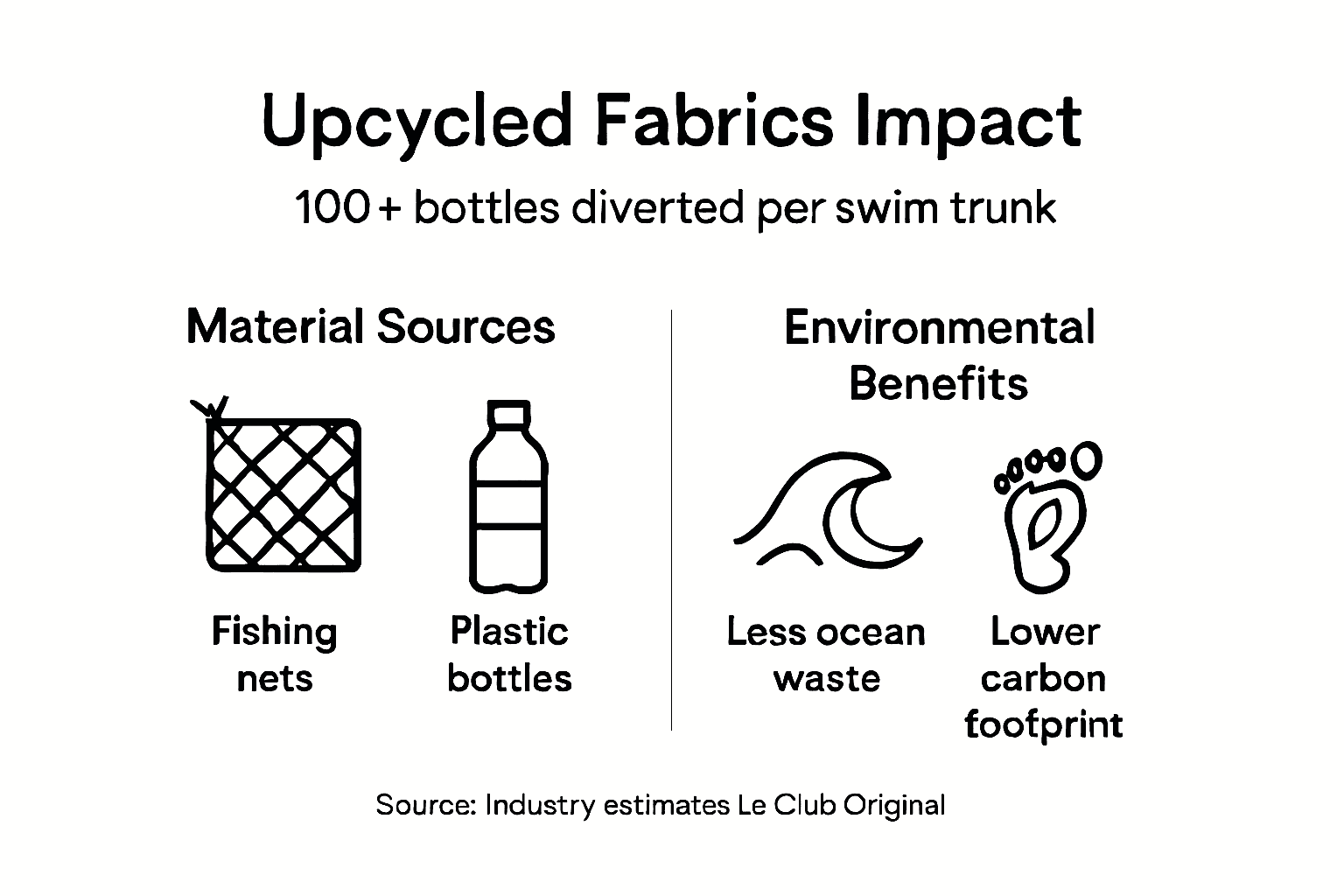
Upcycled swimwear diverts fishing nets and plastic bottles from oceans and landfills. These materials would otherwise accumulate in marine ecosystems for decades.
Fishing nets alone represent a massive pollution problem. Abandoned nets trap marine life and break into microplastics that contaminate food chains.
Your single pair of upcycled trunks keeps roughly 100-150 plastic bottles or portions of fishing nets out of the environment.
Carbon Footprint Reduction
Traditional swimwear manufacturing requires crude oil extraction and refining. This process generates significant greenhouse gas emissions.
Upcycled production eliminates petroleum dependency entirely. Manufacturing from waste materials produces dramatically lower carbon emissions:
- Oil extraction and refining: intensive energy and emissions
- Recycled material processing: minimal emissions by comparison
- Overall reduction: substantial carbon savings per garment
Landfill Waste Prevention
Plastic bottles and textile scraps would occupy landfill space for centuries. Each upcycled swimwear product prevents material from entering waste streams.
This creates cascading benefits. Less landfill demand means reduced infrastructure needs and lower environmental pressure.
Circular Economy Support
Wearing upcycled trunks supports circular fashion principles. These models eliminate the traditional “take, make, dispose” approach.
Instead, materials cycle infinitely:
- Waste materials get collected from oceans and landfills
- Processing transforms them into new fibers
- Manufacturing creates finished swimwear
- Consumers wear the garment
- Old trunks enter recycling streams again
- The cycle repeats indefinitely
Consumer Benefits Beyond Environment
Buying upcycled swimwear delivers personal advantages too. You support brands prioritizing transparency and ethical practices.
Many upcycled manufacturers disclose their supply chains and recycling partnerships. This accountability ensures your purchase genuinely impacts sustainability.
You also join a community of eco-conscious consumers driving market demand for sustainable fashion. Your choices signal to brands that consumers care about environmental responsibility.
When you wear upcycled swimwear, you’re participating in a movement that transforms ocean waste into wearable goods while reducing emissions and landfill burden simultaneously.
Quality of Life Impact
There’s psychological value in knowing your purchases align with your values. Wearing trunks made from recovered ocean pollution creates genuine satisfaction.
You get premium performance without compromising environmental integrity. That’s a win-win outcome.
Pro tip: Track your annual impact by calculating the number of plastic bottles diverted—most brands publish conversion metrics showing exactly how many bottles each product keeps from oceans and landfills.
Choose Sustainable Style with Upcycled Swimwear from Le Club Original
The challenge of ocean pollution demands real solutions like those featured in the discussion about upcycled fabrics in swimwear. If you want to make a meaningful impact by reducing plastic waste and supporting circular fashion principles your swim trunks can be part of the solution. Le Club Original offers a curated collection of eco-friendly swim trunks crafted from regenerated materials such as ECONYL and recycled polyester that deliver the same high performance and durability you expect without compromising style or comfort.
Explore our latest sustainable swimwear at Le Club Original and join a community committed to turning ocean waste into wearable gear. With discounts of up to 50 percent sitewide and free shipping on orders over $50 there has never been a better time to upgrade your beachwear responsibly. Take the next step toward protecting marine life and reducing landfill burden by discovering our new arrivals and best sellers designed to make your purchase count for the planet and for your wardrobe.
Frequently Asked Questions
What are upcycled fabrics in swimwear?
Upcycled fabrics in swimwear are materials transformed from waste, such as plastic bottles and fishing nets, into high-performance swimwear, offering a sustainable alternative to traditional synthetics made from fossil fuels.
How does the process of making upcycled swimwear work?
The process involves collecting waste materials, breaking them down into raw fibers, spinning them into yarn, and then creating fabric through knitting or weaving, followed by dyeing and finishing to produce functional swimwear.
How do upcycled swimwear materials compare to traditional swimwear?
Upcycled swimwear materials, like ECONYL regenerated nylon and recycled polyester, offer similar performance, durability, and aesthetic appeal to traditional materials, but with a significantly lower environmental impact.
What environmental benefits are associated with choosing upcycled swimwear?
Choosing upcycled swimwear helps reduce ocean pollution, prevents landfill waste, lowers carbon emissions from manufacturing, and supports circular fashion by recycling materials indefinitely.