

Choosing swimwear for a sustainable beach getaway is no longer just about bold designs and good fit. For eco-conscious men who crave both style and responsibility, zero waste swimwear offers a smarter solution rooted in real environmental action. By focusing on eco-friendly materials and ethical production, brands are eliminating unnecessary textile waste and plastic pollution at every stage. This guide breaks down what zero waste really means and how smarter choices can keep your favorite shorelines clean without sacrificing performance.
Table of Contents
- What Zero Waste Swimwear Really Means
- How Zero Waste Swimwear Is Made
- Key Materials And Design Innovations
- Benefits For Oceans And Eco-Lifestyles
- Challenges And Alternatives In Sustainable Swimwear
Key Takeaways
| Point | Details |
|---|---|
| Zero waste swimwear minimizes environmental impact | By using recycled materials and efficient production methods, these brands significantly reduce waste and pollution. |
| Durability justifies higher upfront costs | Though more expensive initially, zero waste swimwear lasts longer and incurs less environmental impact over time. |
| Look beyond labels for genuine practices | When shopping, inquire directly about a brand’s waste reduction methods to ensure they’re truly committed to sustainability. |
| Circular design thinking shapes products for longevity | Manufacturers consider the entire lifecycle of swimwear, ensuring that materials can be recycled and reducing waste after use. |
What Zero Waste Swimwear Really Means
Zero waste swimwear isn’t just marketing speak about recycled materials. It’s a complete rethinking of how swim trunks get made, from fiber selection through packaging. When brands commit to zero waste production, they’re eliminating unnecessary byproducts at every stage of manufacturing. That means no scraps ending up in landfills, no excess dyes contaminating water systems, and no packaging that requires five layers of plastic to protect your shorts. The goal is straightforward: create swim gear that performs beautifully while leaving virtually nothing behind.
The concept sits within a larger movement toward eco-friendly materials and ethical production that reduces plastic pollution and textile waste. What makes this different from regular “sustainable” labels is the precision. Zero waste means manufacturers account for every gram of material. Deadstock fabric gets repurposed into other products rather than incinerated. Dye water gets filtered and reused. Defective pieces become donations or get broken down and reconstructed. You’re looking at swimwear brands that operate with almost surgical attention to waste prevention.
For you as a buyer, understanding what sustainable swimwear actually involves helps you distinguish between genuinely responsible brands and those simply capitalizing on eco-conscious marketing. True zero waste production typically costs more upfront because it requires better equipment, more careful sourcing, and additional quality control checkpoints. But this translates to durability that outlasts cheap alternatives by years. Your investment covers not just the trunks themselves, but the environmental impact avoided during creation. No hidden disposal costs. No guilt about contributing to ocean microplastics from synthetic fibers that shed.
The practical outcome for coastal living is significant. Fewer manufacturing byproducts entering waterways means cleaner diving conditions where you actually swim. Less textile pollution means healthier coral ecosystems during those vacation trips to tropical destinations. And when your zero waste trunks eventually reach end of life, responsible brands typically have take-back programs or use fully biodegradable materials that don’t persist in oceans for decades. You’re not just buying better looking swim gear—you’re participating in a supply chain that actively prevents ocean damage.
Pro tip: When shopping for zero waste swimwear, look beyond certifications to ask brands directly about their waste reduction practices. Request specifics on how they handle textile scraps and dye water—genuine zero waste companies welcome these questions and provide detailed answers.
How Zero Waste Swimwear Is Made
The manufacturing process for zero waste swimwear starts with material selection that fundamentally changes what ends up in your closet. Instead of virgin petroleum-based synthetics, brands source recycled materials like ECONYL regenerated nylon harvested from abandoned fishing nets, plastic bottles pulled from oceans, and industrial fabric scraps that would otherwise become waste. This single decision eliminates the resource extraction phase that typically accounts for massive environmental damage. You’re not just getting trunks made from recycled content—you’re funding the cleanup of actual ocean debris and transforming pollution into wearable products.
Once materials arrive at the factory, the actual zero waste magic happens through optimized pattern cutting and cleaner production methods. Traditional swimwear manufacturing wastes around 15 percent of fabric through inefficient cutting patterns. Zero waste operations use computer-aided design to map cutting patterns that eliminate scraps entirely—every millimeter gets accounted for. The remaining byproducts get repurposed into smaller products or processed back into fiber. Water recycling systems capture and filter dye water so it cycles back through production rather than contaminating local waterways. Organic or low-impact dyes replace harsh chemicals that typically require intensive treatment to remove from water before discharge. The entire operation focuses on circular fashion principles where fabric lifecycles extend as long as possible.
What separates genuine zero waste from greenwashing is product stewardship that extends beyond the factory floor. Responsible manufacturers design trunks for longevity, meaning they last you years instead of seasons. They incorporate take-back programs where you can send worn-out pieces back for recycling or upcycling. Some brands use fully biodegradable materials that break down naturally in soil rather than persisting in oceans for decades. Packaging comes minimalist, often using recycled paper and water-based inks instead of plastic clamshells. This commitment continues through consumer use and disposal—the complete lifecycle gets considered during the initial design phase.
This table summarizes common zero waste swimwear manufacturing strategies, their benefits, and trade-offs:
| Strategy | Environmental Benefit | Trade-Off/Challenge |
|---|---|---|
| Computer-aided pattern cutting | Nearly eliminates fabric waste | Requires advanced tech investment |
| Water recycling in dyeing | Reduces water consumption, pollution | Higher operational costs |
| Use of mono-material fabrics | Simplifies recycling post-use | May limit stretch/performance |
| Minimalist recycled packaging | Cuts down on single-use plastics | Occasional compromise on product protection |
Understanding the benefits of recycled swimwear helps you recognize why these manufacturing practices cost more upfront but deliver superior value. You’re purchasing durability combined with genuine environmental responsibility. Every purchase funds innovation in waste-elimination technology and ocean cleanup initiatives.
Pro tip: Check product tags for specific material details like ECONYL certification or third-party waste reduction certifications, then verify them on the brand website—genuine zero waste producers openly document their supply chains and manufacturing practices.
Key Materials and Design Innovations
Zero waste swimwear relies on a specific palette of materials that perform like traditional synthetics but come from entirely different sources. ECONYL regenerated nylon, sourced from discarded fishing nets and industrial waste, delivers the same stretch and chlorine resistance you’d expect from virgin nylon without the ocean pollution baggage. Repreve recycled polyester, made from reclaimed plastic bottles, provides durability and quick-dry performance while keeping bottles out of landfills. Beyond synthetics, brands are experimenting with organic cotton, hemp, and biodegradable fabrics that break down naturally at end of life. The key difference is that each material choice considers what happens after you’re done wearing the trunks. Hemp biodegrades in months rather than persisting for decades. Organic cotton eliminates pesticide runoff from agricultural production. These materials don’t sacrifice performance, they just ask manufacturers to think beyond the purchase point.
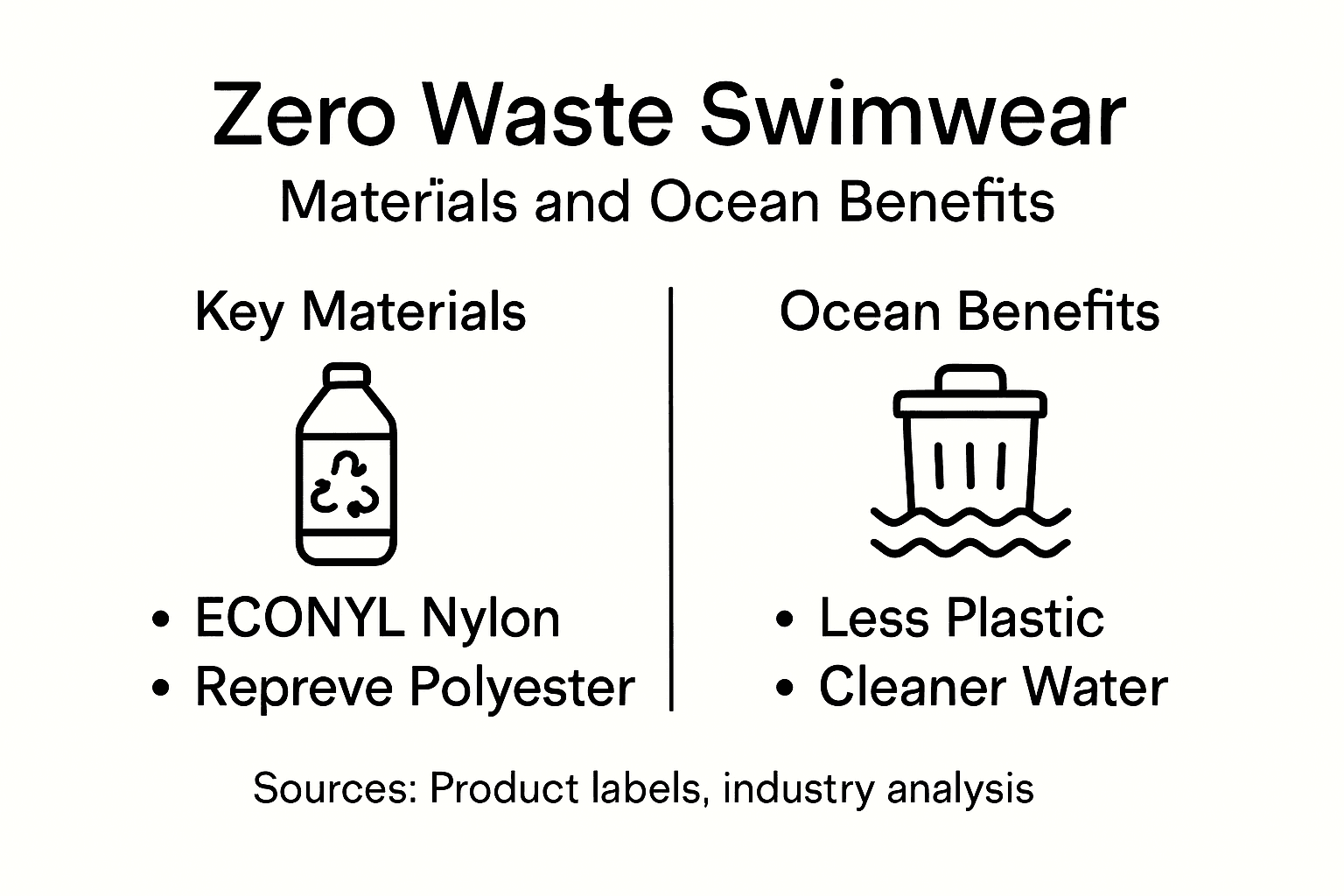
Here’s a quick comparison of major zero waste swimwear materials and their unique sustainability contributions:
| Material | Origin | Key Sustainability Feature | Performance Property |
|---|---|---|---|
| ECONYL Regenerated Nylon | Recycled fishing nets, fabric scraps | Removes ocean waste and industrial byproducts | High stretch, chlorine resistant |
| Repreve Recycled Polyester | Reclaimed plastic bottles | Reduces landfill plastic | Quick-dry, durable |
| Organic Cotton | Pesticide-free cotton fields | Lowers chemical runoff | Soft, less chlorine-resistant |
| Hemp | Sustainable hemp crops | Biodegradable in months | Breathable, moderate durability |
Design innovation goes deeper than fabric selection. Advanced textiles with antimicrobial treatments and UV protection extend product lifespan by preventing degradation and odor buildup, meaning you keep wearing the same pair longer rather than replacing them annually. Hydrophobic coatings reduce water absorption, which keeps the trunks lightweight and speeds drying. These performance features aren’t frivolous add ons, they’re durability multipliers. When your zero waste trunks last five years instead of two, you’ve already reduced your environmental footprint significantly. The design also accounts for repairability. Seams use reinforced stitching patterns. Waistbands attach with replaceable elastic. Zippers come from suppliers specializing in quality hardware. You can actually fix these trunks rather than discarding them at the first sign of wear.
What ties everything together is circular design thinking. Manufacturers map out the complete product journey before cutting a single pattern. They ask: Can this fabric be recycled? Will this dye process contaminate water? Does this style remain relevant five years from now, or will it look dated in a season? Can consumers return worn pieces for recycling? Do the components separate easily for material recovery? This comprehensive approach means zero waste swimwear often comes in timeless cuts and colors rather than trendy patterns that lose appeal. You’re investing in basics that work year after year, not fast fashion replacements that end up in donation bins within months.
Pro tip: When comparing materials, prioritize durability certifications and chlorine resistance ratings over just recycled content percentage, since a well made pair of ECONYL trunks that lasts five years beats poorly constructed recycled polyester that deteriorates in one season.
Benefits for Oceans and Eco-Lifestyles
Choosing zero waste swimwear directly impacts ocean health in ways that aren’t immediately obvious when you’re standing in a changing room. Every pair of conventional synthetic trunks sheds microplastic fibers with every wash and wear cycle. Over a product’s lifespan, a single pair releases thousands of microscopic plastic particles that enter waterways and eventually reach oceans. Fish and marine mammals ingest these particles, mistaking them for food. The plastics accumulate in tissues, moving up the food chain until they reach your dinner plate as seafood. Zero waste swimwear made from recycled ocean plastics and regenerated fibers dramatically reduces this pollution cycle. When you wear ECONYL trunks, you’re wearing reclaimed fishing nets that were already polluting the ocean. That material is no longer degrading in saltwater and shedding fragments. You’ve essentially rescued it from becoming part of the microplastic problem.
The water conservation benefit extends beyond manufacturing floors. Traditional swimwear production requires intensive water usage during dyeing and finishing processes. Reducing plastic pollution through sustainable materials also means reducing the chemical-laden water discharge that damages coral reefs and kelp forests near production facilities. Water recycling systems in zero waste operations cut consumption dramatically, meaning less freshwater depletion in arid regions where swimwear gets manufactured. Lower carbon emissions follow naturally from using recycled materials that require less energy to process compared to virgin petroleum extraction and refinement. Your trunks avoid the extraction phase entirely—no offshore drilling impact, no refinery emissions, no transportation from oil fields to processing plants.
At a lifestyle level, zero waste swimwear commits you to circular consumption patterns that extend far beyond beach days. You start asking different questions when shopping. Will this last five years? Can I repair it? What happens when I’m done wearing it? These questions reshape purchasing decisions across all your clothing categories. You invest in fewer, better quality pieces rather than constantly replacing worn items. Your wardrobe becomes intentional rather than impulsive. Beach vacations start involving less luggage because you’re confident the pieces you pack will serve multiple trips. This mentality gradually influences daily choices—you gravitate toward durability and repairability in everything from wallets to jackets. Your individual decisions ripple outward when friends notice your swimwear quality and ask where you bought it, creating awareness that drives market demand toward sustainable options.

Pro tip: When building an eco-conscious lifestyle around zero waste swimwear, focus first on replacing your most frequently worn pieces with sustainable versions rather than overhauling your entire closet at once—this approach saves money and prevents the waste of discarding perfectly usable items.
Challenges and Alternatives in Sustainable Swimwear
The sustainable swimwear industry operates in a space full of real trade offs that don’t always have clean solutions. Natural fibers like organic cotton and hemp sound environmentally perfect until you test them in saltwater conditions. Cotton loses durability quickly when exposed to chlorine and salt, becoming brittle within a season or two. Hemp performs better but still doesn’t match the longevity of synthetic blends. This creates a genuine dilemma: Do you choose materials that feel more sustainable but wear out faster, requiring replacement and additional waste? Or do you prioritize durability through synthetic blends that last longer but carry a heavier environmental footprint during production? Most zero waste brands land somewhere in the middle, using recycled synthetics paired with small natural fiber percentages to optimize both performance and sustainability.
Mixed fiber fabrics present another hidden challenge. When manufacturers blend recycled polyester with ECONYL nylon and add small percentages of spandex for stretch, the resulting garment becomes nearly impossible to recycle at end of life. Current recycling infrastructure can’t efficiently separate these fiber combinations, so most blended swimwear ends up incinerated or landfilled despite being made from recycled content. Balancing environmental benefits while managing durability challenges remains complex, especially when innovations in biodegradable additives and new fiber combinations are still emerging. Some brands are experimenting with mono material construction, using only one fiber type so recycling becomes simpler. Others develop take back programs that handle the separation in controlled facilities rather than relying on consumer sorting. These solutions work but require investment and consumer participation.
Cost represents the most obvious barrier. Zero waste swimwear costs 40 to 60 percent more than conventional alternatives due to superior materials, smaller production runs, and quality control checkpoints. For a 25 to 45 year old male on a budget, that price difference stings when you’re buying multiple pairs for family vacations. The reality is that true zero waste production doesn’t scale down to bargain basement pricing without sacrificing the environmental commitments. Companies could cut costs by compromising on durability, using cheaper recycled materials, or reducing waste management standards, but then the zero waste designation becomes meaningless. The genuine alternative isn’t cheaper zero waste swimwear, it’s buying fewer pairs and keeping them longer. One pair of $140 ECONYL trunks lasting five years costs less per year than replacing $60 conventional trunks annually.
Pro tip: Start with one high quality zero waste pair for your primary vacation season, then gradually rotate in additional pieces as your budget allows, rather than replacing your entire swimwear collection at once.
Embrace Zero Waste Swimwear for a Cleaner Ocean and Timeless Style
The challenge of microplastic pollution and textile waste in swimwear production calls for a bold change in how we shop and live. Zero waste swimwear offers a powerful solution by combining durability, recycled materials like ECONYL regenerated nylon, and cutting-edge sustainable design to protect our oceans while enhancing your style. If you want swim trunks that last for years without contributing to ocean microplastics, understanding the impact of your choices is the first step toward meaningful change.
At Le Club Original, we address these exact concerns by offering a curated collection of eco-friendly swim trunks and beachwear crafted through responsible, transparent manufacturing practices. Shopping our sustainable swimwear means you invest in quality pieces designed for longevity, supporting ocean cleanup efforts and reduced environmental footprints. Explore our new arrivals designed to elevate your beach experience with regenerated fibers and minimalist packaging that honors circular fashion principles.
Discover sustainable swimwear that aligns with your eco-conscious lifestyle and contributes to healthier seas.

Take the next step today and join a community committed to ocean preservation and stylish sustainability. Browse the collection and upgrade your swimwear to zero waste essentials that make a real difference to the planet and your wardrobe.
Frequently Asked Questions
What does zero waste swimwear mean?
Zero waste swimwear refers to swimwear designed to eliminate waste at every stage of production, from material selection to packaging. This means no fabric scraps, no harmful dye discharge, and minimal packaging waste.
How does zero waste swimwear impact ocean health?
By utilizing recycled materials and minimizing waste, zero waste swimwear reduces the release of microplastics into oceans and helps prevent ocean pollution. It often consists of materials like ECONYL, made from abandoned fishing nets, which helps remove existing pollutants from the water.
What materials are commonly used in zero waste swimwear?
Zero waste swimwear typically uses recycled materials such as ECONYL regenerated nylon and Repreve recycled polyester. Some brands may also incorporate organic cotton, hemp, and biodegradable fabrics that break down naturally at their end of life.
How do I know if a swimwear brand practices zero waste production?
You can determine if a brand practices zero waste production by inquiring about their waste reduction practices, material sourcing, and end-of-life handling for their products. Genuine brands welcome these questions and often provide detailed information about their sustainability efforts.