

Finding the perfect swimwear for a sustainable beach vacation can be tricky when you want both style and real protection from the sun. Regular clothing offers nearly zero defense, with a typical cotton T-shirt rated at just UPF 5. Modern UPF swimwear uses specially designed fabrics that create a physical barrier against UV rays, blocking both UVA and UVB. You get genuine sun safety while supporting brands that help protect the oceans and environment you care about.
Table of Contents
- Defining UPF Swimwear And Common Misconceptions
- Types Of UPF Swimwear And Protection Ratings
- How UPF Swimwear Works To Block UV Rays
- Eco-Friendly Materials And Sustainable Manufacturing
- Selecting Safe And Effective UPF Swimwear
Key Takeaways
| Point | Details |
|---|---|
| Understanding UPF | UPF swimwear protects against UV rays, offering ratings from 15 to 50+, where higher numbers indicate better protection. |
| Common Misconceptions | UPF clothing should complement, not replace, sunscreen; both serve essential roles in sun safety. |
| Choosing Quality | Select UPF-rated swimwear made from tightly woven materials to ensure effective UV protection and durability. |
| Sustainability Matters | Opt for eco-friendly UPF swimwear to support environmental efforts while ensuring personal sun protection. |
Defining UPF Swimwear and Common Misconceptions
UPF stands for Ultraviolet Protection Factor, and it measures how effectively a fabric blocks harmful UV rays from reaching your skin. Think of it as sunscreen built directly into your swimwear.
Unlike SPF (Sunscreen Protection Factor), which rates sunscreen products, UPF specifically applies to clothing and textiles. Here’s the key difference: UPF blocks both UVA and UVB rays, while SPF mainly focuses on UVB protection.
Regular clothing offers almost no UV defense. A standard cotton T-shirt has a UPF rating of around 5, meaning it allows 1/5th of UV rays to penetrate. That’s barely noticeable protection for a beach day.
UPF swimwear changes that equation entirely. These garments use specially designed fabrics with tighter weaves and higher thread counts to create a genuine barrier against radiation. They’re engineered, not accidental.
How UPF Ratings Actually Work
UPF ratings follow a simple logic: higher numbers mean better protection.
- UPF 15: Blocks approximately 93% of UV rays
- UPF 30: Blocks approximately 97% of UV rays
- UPF 50+: Blocks approximately 98% of UV rays
The difference between UPF 30 and UPF 50+ might seem small on paper, but those extra percentage points matter when you’re spending hours at the beach.
Common Misconceptions That Trip People Up
Myth 1: UPF and SPF are basically the same thing. They’re not. SPF applies to sunscreen; UPF applies to clothing. Mixing them up could leave you under-protected.
Myth 2: You don’t need sunscreen if you wear UPF clothes. False. Sunscreen and UPF clothing work together as complementary tools, not replacements.
Myth 3: UPF protection only matters in summer. Wrong again. UV rays penetrate year-round, so UPF coverage protects you during every beach trip, whether it’s July or November.
Myth 4: UPF swimwear feels stiff and uncomfortable. Modern sustainable UPF swimwear combines protection with comfort. You get performance without sacrificing the fit and feel you want.
UPF clothing creates a physical barrier against UV rays—something sunscreen alone cannot achieve, regardless of how carefully you apply it.
When you’re planning eco-conscious beach vacations, UPF swimwear becomes part of your strategy. It protects your skin while supporting brands committed to environmental responsibility, which means you’re not just protecting yourself—you’re protecting the oceans you love.
Pro tip: Check the UPF rating label before purchasing; not all swimwear marketed as “sun protective” actually meets UPF standards, so verify the actual rating rather than relying on marketing language alone.
Types of UPF Swimwear and Protection Ratings
UPF swimwear comes in multiple styles, each designed to deliver protection while fitting different beach lifestyles. Whether you’re spending hours paddleboarding or just catching a few rays, there’s a UPF option for your needs.
The UPF Rating Spectrum
UPF ratings range from 15 to 50+, with each level blocking different amounts of UV radiation.
- UPF 15: Blocks about 93% of UV rays—basic protection for casual beach time
- UPF 30: Blocks about 97% of UV rays—solid choice for extended outdoor exposure
- UPF 50+: Blocks more than 98% of UV rays—maximum protection for serious sun exposure
The jump from UPF 30 to UPF 50+ might look modest numerically, but that extra percentage makes a real difference during all-day beach sessions. When you’re planning eco-conscious adventures, UPF 50+ delivers peace of mind.
Common UPF Swimwear Styles
Not all UPF swimwear looks the same. The style you choose affects both protection level and practicality.
Rash guards are fitted shirts designed for water activities. They’re lightweight, quick-drying, and offer excellent coverage for your torso and shoulders—the areas most exposed to intense sun.
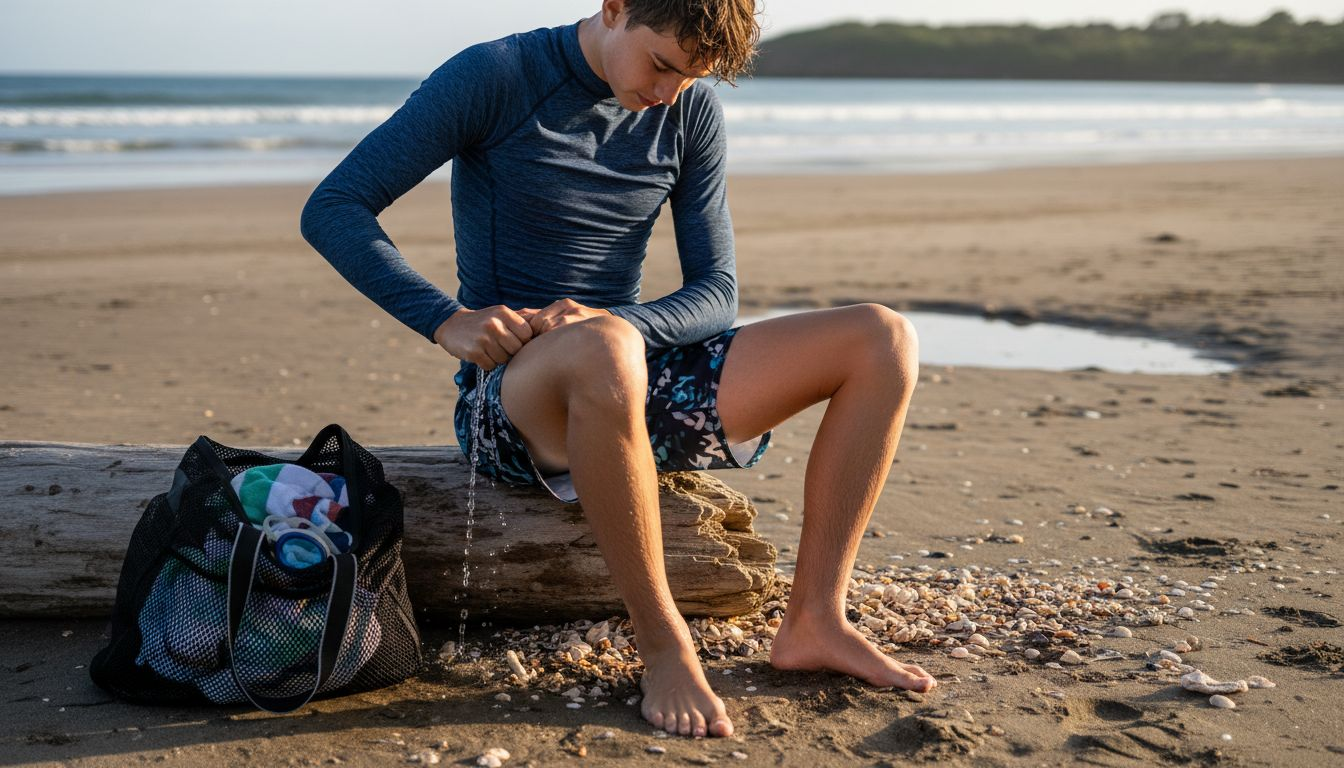
Swim shirts provide similar coverage to rash guards but often have a relaxed fit. They work well for casual beach days without sacrificing protection.
Full-coverage suits extend protection to your legs and arms. These deliver maximum UV defense but require more adjustment if you’re used to traditional swimwear.
Each style maintains UV protection even when wet, which is critical since water doesn’t strip the fabric’s protective properties.
Here’s a quick overview of UPF swimwear styles and their ideal use cases:
| Style | Best For | Coverage Focus |
|---|---|---|
| Rash Guard | Water sports and activities | Torso, shoulders |
| Swim Shirt | Casual beach lounging | Torso |
| Full-Coverage Suit | Extended sun exposure | Arms, legs, torso |
This summary helps you match swimwear style to your beach activity needs.
What Makes the Fabric Work
The magic behind UPF swimwear lies in the material composition. Tightly woven synthetic fibers like polyester, nylon, and spandex blends create barriers that regular cotton simply cannot match. These fabrics have higher thread counts, leaving fewer gaps for UV rays to slip through.
Some manufacturers enhance protection further by treating fabrics with UV-inhibiting chemicals. This added layer of defense ensures consistent protection across multiple seasons of wear and washing.
Moisture-wicking technology integrated into these fabrics keeps you comfortable while maintaining full UV protection. You stay dry without compromising on safety.
Coverage matters as much as fabric rating—a UPF 50+ rash guard protects only what it covers, so pair it with shorts or additional layers for full-body defense.
Durability and Lifespan
UPF swimwear generally lasts several seasons with proper care. Frequent swimming, chlorine exposure, and regular washing can gradually reduce effectiveness over time. Quality matters here: sustainable, well-made UPF swimwear holds its protective properties longer than cheaper alternatives.
Pro tip: Rinse your UPF swimwear in fresh water after each use and avoid high-heat drying to extend the fabric’s UV-blocking lifespan—this simple step can add years to your gear.
How UPF Swimwear Works to Block UV Rays
UPF swimwear doesn’t just sit on your skin looking good—it actively fights UV radiation through a combination of fabric engineering and material science. Understanding how it works helps you appreciate why quality matters.
The Fabric Barrier System
Tightly woven fabrics minimize gaps for UV light to penetrate, creating a physical barrier between your skin and harmful rays. Think of it like a microscopic mesh shield that’s designed specifically to block ultraviolet radiation.
Regular T-shirt fabric has loose weaves with visible gaps. UPF swimwear uses specialized fiber construction with significantly higher thread density, essentially closing those gaps. The result is a fabric that lets water and air through while blocking UV.
How UV Rays Get Stopped
UPF fabrics employ two primary defense mechanisms:
- Absorption: Specialized fibers and chemical treatments within the fabric absorb UV energy before it reaches your skin
- Reflection: The fabric’s surface and composition reflect UV rays away, preventing them from penetrating
Many manufacturers combine both methods for maximum effectiveness. Some add UV-blocking chemical treatments to enhance the fabric’s natural protective properties, creating layers of defense.
What Affects Protection Levels
Not all UPF swimwear performs equally. Several factors determine actual protection effectiveness:
- Fabric density: Tighter weaves block more UV
- Color: Darker fabrics absorb more UV than lighter ones
- Fiber type: Synthetic materials like polyester outperform natural fibers
- Moisture content: Interestingly, wet fabric sometimes performs differently than dry fabric
This is why your UPF 50+ swimwear maintains protection even after jumping in the ocean. The fabric’s structure and treatment remain effective when wet, unlike regular cotton which loses much of its minimal protection when soaked.
The Math Behind the Ratings
Here’s the practical breakdown: A UPF 50 fabric allows only 2% of UV rays to pass through. That means 98% of radiation never reaches your skin. The rating system provides measurable proof of effectiveness.
Quality UPF swimwear maintains its protective capabilities across multiple seasons, even with regular water exposure and washing—this durability makes it a smart long-term investment for eco-conscious travelers.
When you’re choosing sustainable swimwear for your beach lifestyle, you’re selecting fabrics engineered at a molecular level to protect you. The protection is real, measurable, and proven.
Pro tip: Pair your UPF swimwear with reapplication of water-resistant sunscreen every two hours, since no single protection method blocks 100% of UV rays—layered defense is always the strongest approach.
Eco-Friendly Materials and Sustainable Manufacturing
Choosing UPF swimwear isn’t just about protecting your skin—it’s about protecting the planet. Sustainable manufacturing practices and eco-friendly materials turn your beach gear into a statement about environmental responsibility.
Materials That Make a Difference
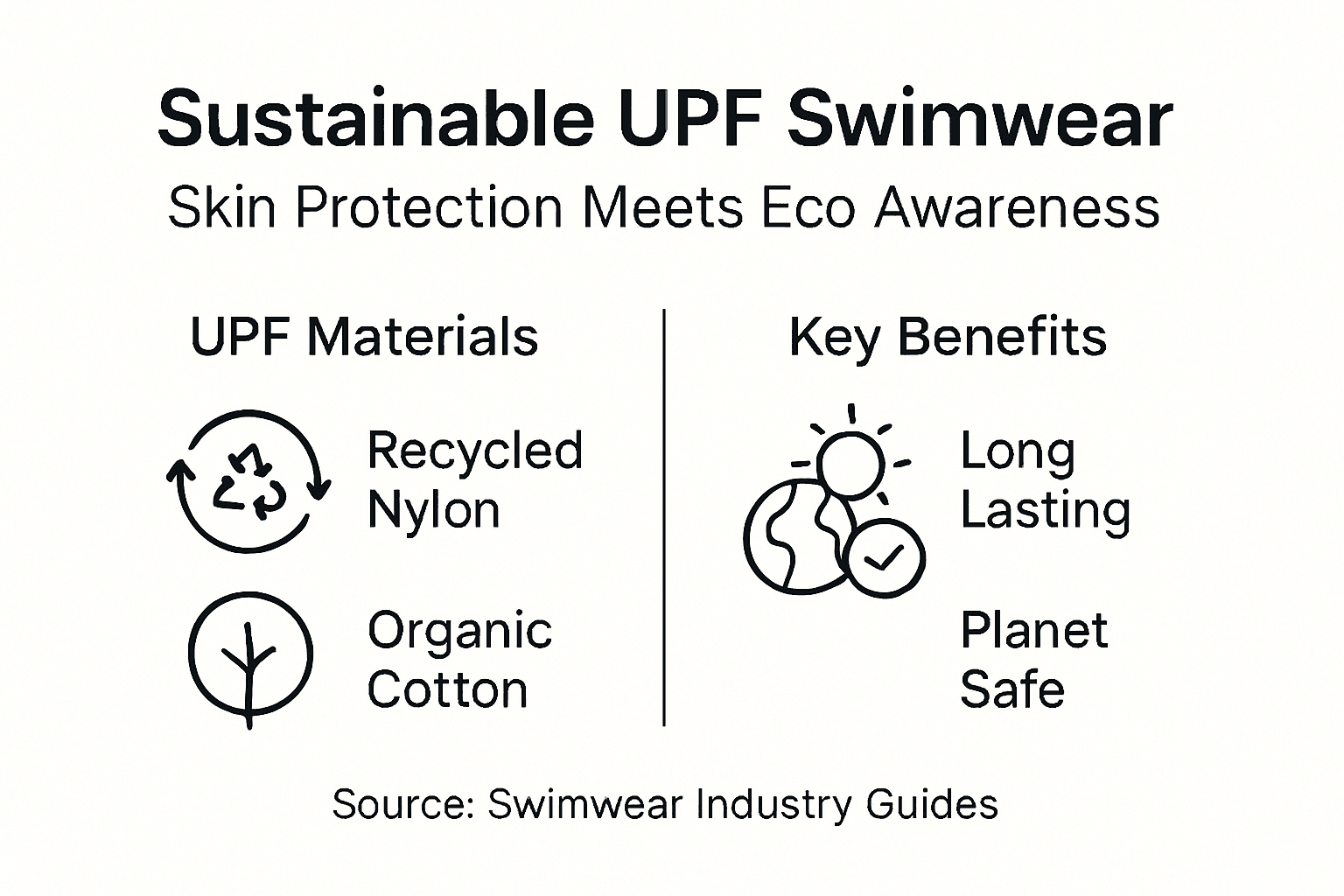
Sustainable swimwear uses recycled polyester from plastic bottles or nylon reclaimed from fishing nets, transforming ocean waste into wearable protection. This approach tackles two problems simultaneously: reducing plastic pollution while creating high-performance UPF garments.
Other eco-conscious options include blends of organic cotton, linen, and hemp. These natural fibers require fewer synthetic chemicals during production and break down naturally at end-of-life, unlike conventional petroleum-based synthetics.
Eco-conscious buyers should know how material choices impact sustainability and performance:
| Material Type | Environmental Benefit | UV Protection Quality |
|---|---|---|
| Recycled Polyester | Reduces ocean plastic waste | High and durable |
| Organic Cotton | Lower chemical use, biodegradable | Moderate, less durable |
| Nylon from Nets | Reclaims fishing industry waste | Very high, lasts seasons |
This table highlights both sustainability and protection when selecting UPF swimwear materials.
How Sustainable Manufacturing Works
Eco-friendly UPF swimwear producers prioritize environmental responsibility at every production stage.
- Water conservation: Using recycled water and reducing consumption during dyeing and finishing processes
- Chemical reduction: Replacing toxic dyes with safer, biodegradable alternatives that don’t harm aquatic ecosystems
- Carbon emissions: Streamlining supply chains and manufacturing processes to lower overall footprint
- Transparent sourcing: Ensuring ethical labor practices and accountability throughout production
These aren’t marketing buzzwords—they’re measurable commitments that reduce damage to oceans and ecosystems you care about.
UV Protection Meets Environmental Goals
Sustainable fabrics receive UV-inhibiting treatments during manufacture to maintain high protection standards without compromising on environmental values. You don’t sacrifice performance when choosing eco-friendly options.
Manufacturers also focus on durability and longevity. A UPF swimsuit that lasts multiple seasons prevents the cycle of throwaway fashion, reducing overall waste. Quality sustainable pieces become investment pieces, not disposable items.
The Real-World Impact
When you purchase sustainable UPF swimwear, you’re supporting production methods that consume less water, reduce chemical runoff, and lower carbon emissions. For eco-conscious travelers, this alignment between personal protection and environmental protection matters deeply.
Sustainable UPF swimwear proves protection and environmental responsibility aren’t mutually exclusive—they’re increasingly becoming the standard for brands that understand their ocean impact.
Your beach days directly support oceans and ecosystems when your gear comes from responsible manufacturers. Every purchase sends a message about what you value.
Pro tip: Check product tags for certifications like Global Organic Textile Standard (GOTS) or recycled material percentages—these third-party validations confirm genuine sustainability claims rather than greenwashing.
Selecting Safe and Effective UPF Swimwear
Not all swimwear labeled as sun-protective actually delivers real protection. Knowing what to look for separates effective gear from marketing hype, ensuring your beach days truly keep you safe.
The UPF Rating Baseline
Look for garments labeled with a UPF rating of 30 or higher to ensure adequate UV protection. Better yet, aim for UPF 50+, which blocks more than 98% of harmful rays.
Anything below UPF 15 provides minimal defense. UPF 30 works for casual beach time, but if you’re planning extended water activities or eco-conscious vacations where you’ll spend hours outdoors, UPF 50+ offers superior peace of mind.
Fabric Quality Matters Most
The fabric construction determines real-world effectiveness. Tightly woven materials with dense construction block UV rays far better than loosely woven alternatives. When examining swimwear, check whether the fabric feels substantial and closely knit.
Loose-fitting swimwear actually outperforms tight styles because stretching fibers reduces their protective capability. A relaxed fit maintains the fabric’s tightness, keeping UV protection intact during movement and swimming.
Key Selection Criteria
When shopping for UPF swimwear, evaluate these essential features:
- Wet durability: Verify it maintains UPF protection when soaked, not just when dry
- Longevity: Choose pieces built to last multiple seasons with proper care
- Coverage design: Longer sleeves and leg coverage protect more vulnerable skin areas
- Breathability: Look for moisture-wicking properties that prevent overheating in warm weather
- Certifications: Seek seals from authoritative bodies like The Skin Cancer Foundation
These features combine to create swimwear that actually protects without sacrificing comfort or style.
Layering Your Sun Protection
Combine UPF swimwear with broad-spectrum sunscreen on exposed skin for maximum defense. UPF clothing covers what it touches, but your face, ears, and any uncovered areas still need sunscreen reapplied every two hours.
This dual-protection approach gives you comprehensive coverage that no single method achieves alone.
Understanding Durability
Quality sustainable UPF swimwear withstands repeated use and chlorine exposure while maintaining its UV-blocking properties. Consider how often you’ll wear the piece and whether it justifies the investment through multiple seasons of protection.
Effective UPF swimwear combines high ratings, dense fabric construction, thoughtful design, and proof of durability—when all elements align, you’re getting genuine protection that earns its place in your beach wardrobe.
Pro tip: Before purchasing, ask whether the manufacturer provides care instructions specifically for maintaining UPF effectiveness, as washing method and water temperature directly impact how long your swimwear’s protection lasts.
Discover Stylish UPF Swimwear That Protects You and the Planet
Understanding the importance of UPF swimwear means knowing you need more than just style for your beach days. The challenge is finding swimwear that offers real, reliable UV protection like UPF 50+ fabrics while also being comfortable, durable, and eco-friendly. At Le Club Original, we specialize in sustainable swim trunks and beachwear designed with tightly woven, recycled materials that block harmful UV rays effectively. You deserve swimwear that protects your skin during extended outdoor adventures without compromising on comfort or environmental responsibility.

Ready to make every beach day safer and more stylish? Explore our curated selection of sustainable swim trunks and bikinis engineered to maintain their UPF protection season after season. Support a brand committed to ocean preservation and mental health awareness while enjoying free shipping and exclusive seasonal discounts. Click here to protect your skin and the planet with confidence now at Le Club Original.
Frequently Asked Questions
What does UPF mean in swimwear?
UPF stands for Ultraviolet Protection Factor and measures how effectively a fabric blocks harmful UV rays from reaching your skin. UPF swimwear provides a built-in layer of sun protection, unlike regular clothing.
How does UPF swimwear differ from regular swimwear?
UPF swimwear is specifically designed with tightly woven fabrics that block UV rays, offering significant protection against sun exposure. In contrast, regular swimwear typically has very low UV protection, often allowing a majority of UV rays to penetrate.
Can I rely solely on UPF swimwear for sun protection?
While UPF swimwear significantly reduces UV exposure, it should be used in conjunction with sunscreen to protect all exposed skin areas. UPF clothing offers physical protection where it covers, but sunscreen is essential for areas that are not covered.
What are the different UPF ratings and what do they mean?
UPF ratings indicate the level of protection provided by the fabric. A UPF 15 rating blocks about 93% of UV rays, UPF 30 blocks about 97%, and UPF 50+ blocks more than 98%. Higher ratings offer better protection, making UPF 50+ ideal for extended sun exposure.