

Finding the perfect swim trunks can feel complicated when you want style that respects both the ocean and your local community. Choosing locally made beachwear is about more than keeping up with trends—it is a real step toward lowering carbon emissions and supporting skilled workers, according to research. By understanding what truly defines local production and clearing up common myths, you can make smarter choices that match your values without sacrificing comfort or design.
Table of Contents
- Defining Locally Made Beachwear and Common Myths
- Eco-Friendly Materials and Sustainable Production
- Community Impact and Ethical Labor Practices
- Carbon Footprint: Transportation and Ocean Health
- Quality, Style, and Cost Compared to Imports
Key Takeaways
| Point | Details |
|---|---|
| Locally Made Beachwear Supports Communities | Purchasing locally made beachwear keeps money in your community, fostering economic growth and creating jobs for local artisans. |
| Sustainability and Accountability | Locally made products reduce carbon footprints and promote transparency, ensuring ethical labor practices and environmentally friendly materials. |
| Quality and Cost Benefits | Locally made swimwear often matches or exceeds the quality of imports while being more cost-effective due to shorter supply chains. |
| Stay Informed While Shopping | When choosing beachwear, ask where materials come from and who produces them to support authentic and ethical brands. |
Defining Locally Made Beachwear and Common Myths
Locally made beachwear means swimwear and beach apparel produced within a specific geographic region using local resources, manufacturers, and skilled workers. This approach stands in sharp contrast to mass-produced fast fashion that relies on global supply chains and outsourced manufacturing.
What Actually Counts as Locally Made
True locally made beachwear involves more than just assembling pieces in one location. It means:
- Sourcing materials from regional suppliers or sustainable vendors
- Employing local artisans, seamstresses, and designers who understand regional styles
- Keeping manufacturing, quality control, and distribution within the same geographic area
- Supporting the local economy through every production stage
When you buy locally made trunks or rash guards, your money circulates within your coastal community rather than disappearing into massive international corporations.
The Big Myths About Local Production
Consumers often harbor misconceptions about locally produced beachwear. Here are the most common ones:
Myth 1: Local = Always More Expensive
Not necessarily. While premium locally made pieces exist, regional production actually shortens supply chains and reduces costs. You’re not paying for international shipping, tariffs, or massive retail markups. Many local makers price competitively with fast fashion brands.
Myth 2: Local Beachwear Can’t Match Fashion Trends
Local designers stay current. Coastal communities understand their market intimately and respond quickly to style preferences. Small-batch production means new designs appear faster than mega-retailers’ seasonal releases.
Myth 3: All Local Production Is Automatically Sustainable
Location alone doesn’t guarantee sustainability. However, local production reduces transportation emissions and enables transparent labor practices. Authentic locally made beachwear combines regional production with conscious material choices.
Myth 4: You’re Supporting Workers You’ll Never See
Actually, locally made beachwear creates verifiable connections. You can know your maker’s story, understand their practices, and see exactly where your purchase goes. This transparency beats anonymous global supply chains.
Why This Distinction Matters for Your Choices
Understanding what “locally made” truly means helps you make informed decisions aligned with your values. It’s not just about geography—it’s about accountability, community impact, and conscious consumption.
Pro tip: When shopping for locally made beachwear, ask manufacturers direct questions: Where are materials sourced? Who sews your pieces? Can they show you production photos? Authentic makers enthusiastically share these details.
Eco-Friendly Materials and Sustainable Production
Locally made beachwear shines when manufacturers prioritize sustainable materials and conscious production methods. The difference between fast fashion and eco-conscious brands lies in what they choose to use and how they make it.
The Material Revolution
Traditional synthetic swimwear relies on petroleum-based plastics that shed microfibers into oceans. Sustainable alternatives exist and are gaining traction:
- Recycled polyester from plastic bottles and fishing nets
- Natural fibers like organic cotton, linen, and hemp
- Bio-based polymers and natural fibers that reduce pollution during production
- Regenerated fabrics from wood pulp (Tencel, Modal)
Your choice of material directly impacts ocean health. When you buy locally made trunks from recycled or natural fibers, you’re refusing the throwaway culture that damages ecosystems.
What Sustainable Production Actually Means
It’s not just about materials. Real sustainable production involves:
- Using less water and fewer harsh chemicals in dyeing and finishing
- Fair wages and safe working conditions for all employees
- Minimal waste through zero-scrap design and small-batch manufacturing
- Transparent sourcing you can actually trace
Local makers excel here because they control every step. They can answer where fabric comes from and who handled it.
The Durability Factor
Sustainable beachwear lasts longer. Quality construction means your trunks survive multiple seasons, not multiple summers. This durability creates a circular economy—fewer replacements mean less consumption overall.
Buying one quality pair of locally made swim trunks that lasts three years beats replacing cheap fast fashion twice yearly.
Why Production Location Matters
Local manufacturers reduce transportation emissions simply by keeping supply chains short. They also face community accountability—their reputation depends on local customers who see their practices directly.
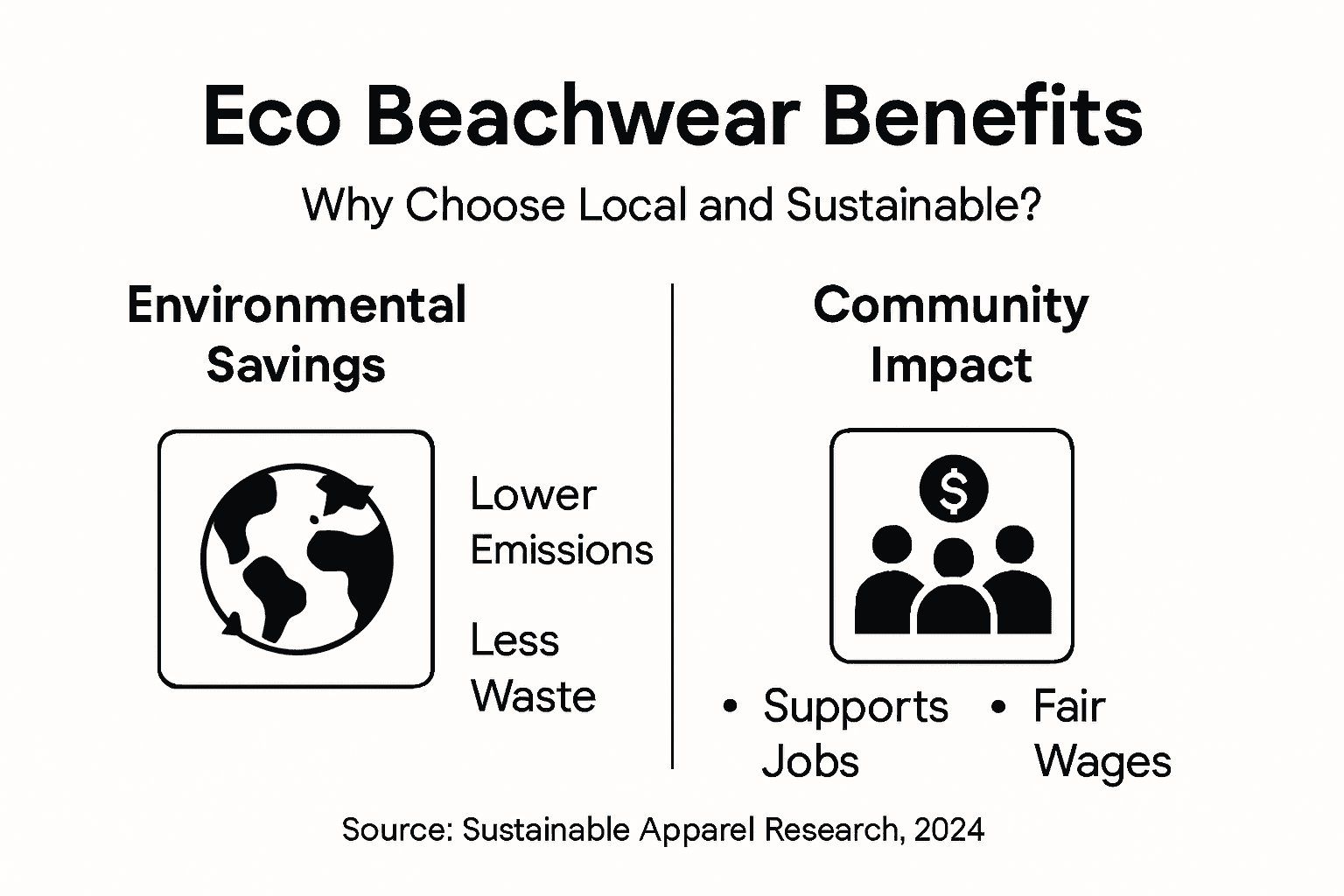
Pro tip: Check product labels for fiber composition, then research those materials online. Organic cotton, regenerated fabrics, and recycled synthetics are your allies. Ask makers about their dye sources and water usage—legitimate producers welcome these questions.
This table summarizes the main sustainability features to look for in beachwear:
| Feature | Importance for Sustainability | How Local Makers Deliver |
|---|---|---|
| Eco Materials | Reduces ocean/pollution impact | Sources recycled or organic fibers |
| Fair Labor | Ensures ethical treatment | Transparent workshops, known workers |
| Resource Use | Lowers water and energy waste | Small-batch, efficient production |
| Durability | Reduces waste, saves money | Quality finishing for longer wear |
| Community Impact | Keeps value local | Funds local artisans, strengthens culture |
Community Impact and Ethical Labor Practices
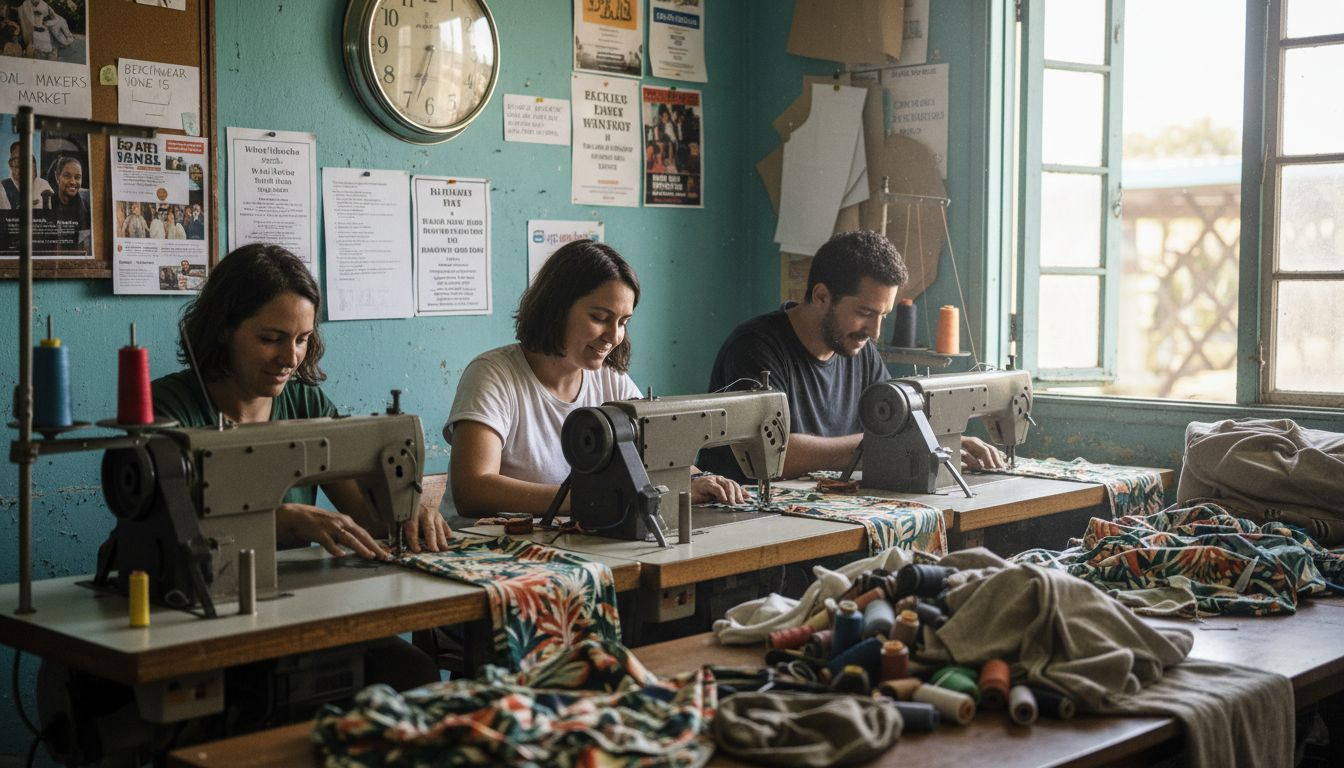
When you buy locally made beachwear, your money doesn’t vanish into corporate headquarters thousands of miles away. It stays in your coastal community, supporting real people and strengthening local economies.
How Local Production Builds Stronger Communities
Locally made beachwear creates jobs across multiple sectors. Design, manufacturing, retail, and supply chain work all happen nearby. Local fashion production drives economic growth by supporting regional suppliers, strengthening community identity, and preserving cultural heritage.
Your purchase funds:
- Designers crafting original styles
- Seamstresses and artisans with stable employment
- Local fabric suppliers and material vendors
- Retail staff who know the products personally
- Small transportation and logistics businesses
This multiplier effect means one beachwear purchase supports dozens of livelihoods.
Ethical Labor Practices You Can Actually Verify
Fast fashion hides behind anonymous supply chains spanning continents. Local makers can’t hide. You can visit studios, meet creators, and see working conditions directly.
Sustainable fashion promotes fair wages, safe working environments, and gender equality within communities. Local producers offer transparency that international corporations simply cannot match.
Beyond Fair Wages
Ethical labor means more than paychecks:
- Health and safety standards in workshops
- Reasonable working hours without exploitation
- Benefits like healthcare access
- Respect for workers’ dignity and rights
- Career growth opportunities in craft skills
Local artisans build pride in their work. They’re not assembly line workers—they’re craftspeople creating something they’ll see in their community.
The Cultural Preservation Angle
Some coastal regions have distinctive beachwear traditions. Locally made production keeps these styles alive. Indigenous techniques, regional design aesthetics, and traditional craftsmanship survive when communities support local makers.
When you buy locally made beachwear, you’re not just buying a product—you’re investing in your community’s future and someone’s livelihood.
Real Accountability
Local makers answer to their neighbors. Bad labor practices, environmental shortcuts, or quality issues spread quickly through tight-knit communities. This built-in accountability drives ethical behavior far more effectively than distant corporate compliance departments.
Pro tip: Visit local makers’ websites or social media to see production photos, worker spotlights, and community involvement. Makers proud of their practices share these stories openly. If a brand won’t show you who makes their beachwear, that’s a red flag.
Carbon Footprint: Transportation and Ocean Health
Here’s a hard truth: your beachwear traveled thousands of miles before reaching you. That journey carries a massive carbon cost. Locally made beachwear slashes this impact dramatically by keeping manufacturing close to home.
The Transportation Emissions Problem
Fast fashion relies on global supply chains that span continents. Fabric comes from one country, manufacturing happens in another, and distribution centers scatter worldwide. Transportation contributes significantly to fashion’s carbon emissions, yet companies often hide these numbers in their sustainability reports.
A single pair of imported swim trunks might travel:
- Raw materials shipped internationally
- Manufacturing across oceans
- Distribution through multiple warehouses
- Final delivery to your door
Each leg burns fossil fuels and pumps carbon dioxide into the atmosphere.
The Bigger Industry Picture
The textile and apparel industry generates roughly 10% of global carbon emissions through energy-intensive production and logistics. That staggering percentage rivals aviation and shipping industries combined. When you buy locally, you’re opting out of this system.
How Local Manufacturing Cuts Emissions
Locally made beachwear eliminates unnecessary transportation:
- Materials sourced regionally, not internationally shipped
- Manufacturing happens where you live
- Distribution requires minimal shipping distance
- No multi-warehouse logistics networks
- Direct consumer delivery or local pickup
The carbon math is simple. Shorter supply chains equal fewer emissions. One local purchase prevents multiple international shipments.
Ocean Health Connection
This matters beyond climate. Shipping emissions dissolve into atmosphere, creating ocean acidification that devastates coral reefs and marine ecosystems. Microplastic shedding from synthetic fabrics adds another layer of damage.
When you buy locally made beachwear from sustainable materials, you’re protecting the ocean itself—the very waters you swim in.
Choosing locally made beachwear reduces transportation emissions, lowers your carbon footprint, and protects the marine ecosystems that define coastal life.
The Transparency Gap
Most brands won’t tell you their transportation emissions. Local makers can because the numbers look good. Request carbon calculations from any maker—transparent producers welcome the question.
Pro tip: Ask local beachwear makers about their sourcing radius and shipping methods. Look for brands using consolidated shipments and carbon-neutral delivery options. Supporting makers within 500 miles of your home maximizes transportation savings.
Quality, Style, and Cost Compared to Imports
The biggest myth about locally made beachwear is that you’re paying premium prices for inferior style. Reality tells a different story. When quality and pricing are controlled variables, locally made products hold their own against imports—and often win.
Quality Perception vs. Reality
Consumers perceive locally made products as having equal or better quality compared to imported goods when controlling for price and brand factors. This isn’t just sentiment. Local makers stake their reputation on every piece. Bad quality kills their business immediately.
Imported fast fashion relies on volume and disposability. Local makers rely on reputation and repeat customers.
Where Imported Goods Still Have an Edge
Let’s be honest: imported brands benefit from massive marketing budgets and perceived prestige. Some consumers associate foreign labels with status, which is entirely psychological. Imported items may be perceived as more stylish or prestigious, though this perception doesn’t correlate with actual quality.
Brand recognition matters. Marketing matters. But neither improves your swim trunks.
The Real Cost Breakdown
Here’s where locally made wins financially:
- No international shipping costs passed to consumers
- No middleman markups from global distributors
- No massive marketing budgets to recover
- Direct producer-to-consumer pricing
- Reduced tariffs and import taxes
A $60 locally made pair costs significantly less than a $120 imported pair of identical quality. The price difference reflects logistics, not craftsmanship.
Style Innovation From Local Designers
Local beachwear designers understand your specific market. Coastal regions have unique style preferences, water conditions, and climate factors that matter. Designers living in your area create pieces reflecting local aesthetics.
Small-batch production also means trends shift faster. New styles launch monthly, not seasonally.
Durability Math
One quality locally made pair lasting three years beats replacing fast fashion twice yearly. The initial cost might seem higher, but total cost of ownership favors durability.
Locally made beachwear delivers quality equal to or better than imports while costing less, thanks to eliminated supply chain markups and direct pricing.
The Hidden Cost of Cheap Imports
Fast fashion’s rock-bottom prices hide true environmental and social costs. You’re not actually saving money—you’re externalizing those costs to workers, communities, and ecosystems.
Pro tip: Compare price-per-wear, not sticker price. A $70 locally made pair worn 50 times costs $1.40 per wear. A $40 imported pair worn 15 times costs $2.67 per wear. Quality durability always wins the math game.
Here’s how imported and locally made beachwear differ on key impact areas:
| Factor | Imported Beachwear | Locally Made Beachwear |
|---|---|---|
| Supply Chain Length | Global, complex, multi-country | Short, regional, easily traced |
| Carbon Emissions | High due to shipping | Low with local sourcing |
| Community Benefit | Profits go overseas | Supports local jobs, economy |
| Transparency | Difficult to verify | Makers and processes visible |
| Material Traceability | Often unclear | Directly traceable, verified |
| Style Relevance | Generic for global market | Tailored to local tastes |
| Price Influencers | Includes tariffs, shipping | Fewer middlemen, transparent costs |
Embrace Sustainable Style with Locally Made Beachwear Today
The article highlights key challenges such as understanding what truly defines locally made beachwear and overcoming myths about cost, quality, and sustainability. If you value eco-conscious materials, ethical labor practices, and reducing your carbon footprint you want more than just swimwear you want a lifestyle aligned with environmental responsibility. By choosing locally made designs that prioritize durability and community impact you contribute directly to ocean health and support real artisans.
At Le Club Original, we bring these values to life with our curated collection of stylish, eco-friendly swim trunks and beachwear for men and boys. Our products feature sustainable fabrics, transparent sourcing, and dedication to reducing ocean pollution. Join a community that shares your passion for the planet while enjoying quality beachwear made close to home.
Discover our newest arrivals and seasonal sales for a seamless, sustainable shopping experience that benefits you and your coastal community.

Ready to make a meaningful change with your beachwear choices Explore our exclusive sustainable collections at Le Club Original today and wear your eco-conscious values with pride. Every purchase supports local production and helps protect the oceans you love.
Frequently Asked Questions
What does ‘locally made beachwear’ mean?
Locally made beachwear refers to swimwear and beach apparel produced within a specific geographic area using local materials and skilled artisans, supporting the local economy and reducing transportation emissions.
Are locally made beachwear products more expensive than mass-produced options?
Not necessarily. Locally made beachwear can be competitively priced because it eliminates international shipping costs, reducing overall expenses compared to fast fashion.
How does locally made beachwear contribute to sustainability?
Locally made beachwear often uses eco-friendly materials, minimizes transportation emissions, and promotes fair labor practices, thus contributing positively to environmental and social sustainability.
What are the benefits of choosing sustainable materials in beachwear?
Choosing sustainable materials helps reduce ocean pollution, supports biodegradable options, and promotes healthier ecosystems. Sustainable beachwear also tends to last longer, reducing the overall costs associated with frequent replacements.