

Your favorite pair of sustainable swim trunks deserves more than a quick toss in the laundry pile. Protecting your investment involves a thoughtful routine that respects both quality materials and environmental impact. With eco-friendly habits, you can keep swimwear looking sharp for years while staying true to your values. Discover the smart steps and sustainable washing methods that make a difference.
Table of Contents
- Step 1: Prepare Swimwear With Gentle Sorting
- Step 2: Rinse Swimsuits To Remove Salt And Chlorine
- Step 3: Wash Using Eco-Friendly Detergents And Cold Water
- Step 4: Dry Properly With Air And Avoid Direct Sunlight
- Step 5: Store Swimwear In A Sustainable Way
Quick Summary
| Actionable Insight | Clear Explanation |
|---|---|
| 1. Inspect Swimwear Carefully | Check swimwear for damage and sort items before washing to prevent color transfer and extend their lifespan. |
| 2. Rinse After Use | Rinse swimwear with cool water immediately after swimming to remove salt and chlorine, preventing damage to fibers. |
| 3. Use Eco-Friendly Detergents | Wash swimwear using mild, eco-friendly detergents in cold water to maintain fabric quality and protect the environment. |
| 4. Air Dry in Shade | Lay wet swimwear flat in a shaded area to prevent fading and brittleness caused by direct sunlight or heat. |
| 5. Store Properly | Keep dry swimwear in breathable storage to avoid mildew and maintain the fabric’s quality during the off-season. |
Step 1: Prepare swimwear with gentle sorting
Before you wash your sustainable swim trunks or other eco-conscious beachwear, take a few minutes to sort and prepare them properly. This simple act prevents damage, extends the lifespan of your investment, and ensures each piece gets the right treatment. Think of it like preparing your gear before a beach trip, you wouldn’t just throw everything into a bag without checking condition first. Your eco-friendly swimwear deserves the same intentional care.
Start by checking each item for any visible damage, loose seams, or areas that might need attention before water exposure. Look at the tags and any care instructions included with your purchase, especially if your swimwear uses specialized sustainable materials. Separate your pieces by color, fabric type, and any embellishments. Dark colored swim trunks should be sorted away from lighter items to prevent any potential dye transfer, even though quality sustainable dyes shouldn’t bleed excessively. If you have multiple pairs or styles, group chlorine-exposed pieces separately from those worn only in saltwater or freshwater. This approach means you can customize your washing method to each piece’s specific needs and history.
Check pockets and any hidden areas for sand, salt residue, or debris that could damage fibers or create rough spots during washing. Run your hands along the fabric to feel for any irregularities. Remove any loose threads you notice, as these can tangle or pill during the cleaning process. If you’re preparing multiple items, lay them out flat for a quick visual inspection. This takes just two or three minutes but protects your entire collection. When you apply sustainable washing methods in the next step, you’ll already have your pieces organized and ready for optimal care.
Pro tip: Keep a small mesh bag specifically for your eco-friendly swimwear during this sorting process, then use that same bag for gentle machine washing later if needed, reducing transfer between loads.
Step 2: Rinse swimsuits to remove salt and chlorine
This step is where you stop damage before it starts. Salt crystals and chlorine residue are like tiny enemies living on your swimwear fibers, gradually breaking down the fabric from the inside out. A quick rinse immediately after wearing prevents these substances from setting in and causing permanent degradation. You’ll be amazed at how much crud comes off with just fresh water, and your eco-friendly swimwear will reward you with significantly extended wear.
Rinse your swimsuit under cool, clean running water as soon as possible after beach or pool time. Start at the top and let water flow downward, working the fabric gently between your fingers to help release salt deposits and chlorine. Pay special attention to seams, the waistband, and anywhere the fabric folds or creases, since these areas trap more residue. Spend about two to three minutes on this process for each piece. Turn the suit inside out and repeat the rinsing, since the interior absorbs just as much salt and chlorine as the exterior. If you’ve been in a chlorinated pool, you might notice the water running off still carries that chemical smell for the first minute or two. Keep rinsing until the water runs clear and you don’t detect any chlorine odor. This thorough approach ensures sustainable washing methods will be far more effective when you get to that stage.
Once you’ve finished rinsing, gently squeeze out excess water without wringing or twisting the fabric. Never use hot water for this step, as heat can set stains and damage elastic fibers in your sustainable swimwear. Your swimsuit should feel soft and pliable when you’re done, not stiff or sticky. If you’re rinsing multiple pieces, do them one at a time so you can give each proper attention. This single step can add months to your swimwear’s lifespan by preventing the chemical breakdown that happens when salt and chlorine sit on fabric too long.
Pro tip: Keep a spray bottle filled with fresh water at your beach bag or pool bag for immediate rinsing on the spot, preventing residue from drying onto the fabric before you reach a sink.
Step 3: Wash using eco-friendly detergents and cold water
This is where your commitment to sustainability actually extends the life of your swimwear. The right washing method protects both your investment and the planet at the same time. By choosing eco-friendly detergents and cold water, you’re preventing fiber breakdown while keeping harsh chemicals out of our oceans. Your sustainable swim trunks will thank you with years of reliable wear.
Fill a basin or sink with cool water and add a small amount of eco-friendly detergent specifically designed for delicate fabrics. You don’t need much, just enough to create gentle suds. Submerge your sorted swimwear and let it soak for about 15 to 20 minutes, allowing the detergent to work on any remaining sunscreen residue, body oils, or sweat that fresh water rinsing missed. Gently agitate the fabric by hand every few minutes, working the soapy water through the material without vigorous scrubbing. Cold water is non-negotiable here because hot water damages elastic fibers and can cause colors to fade faster. When you apply sustainable washing methods properly, you’re giving your eco-conscious beachwear the best possible foundation for longevity.
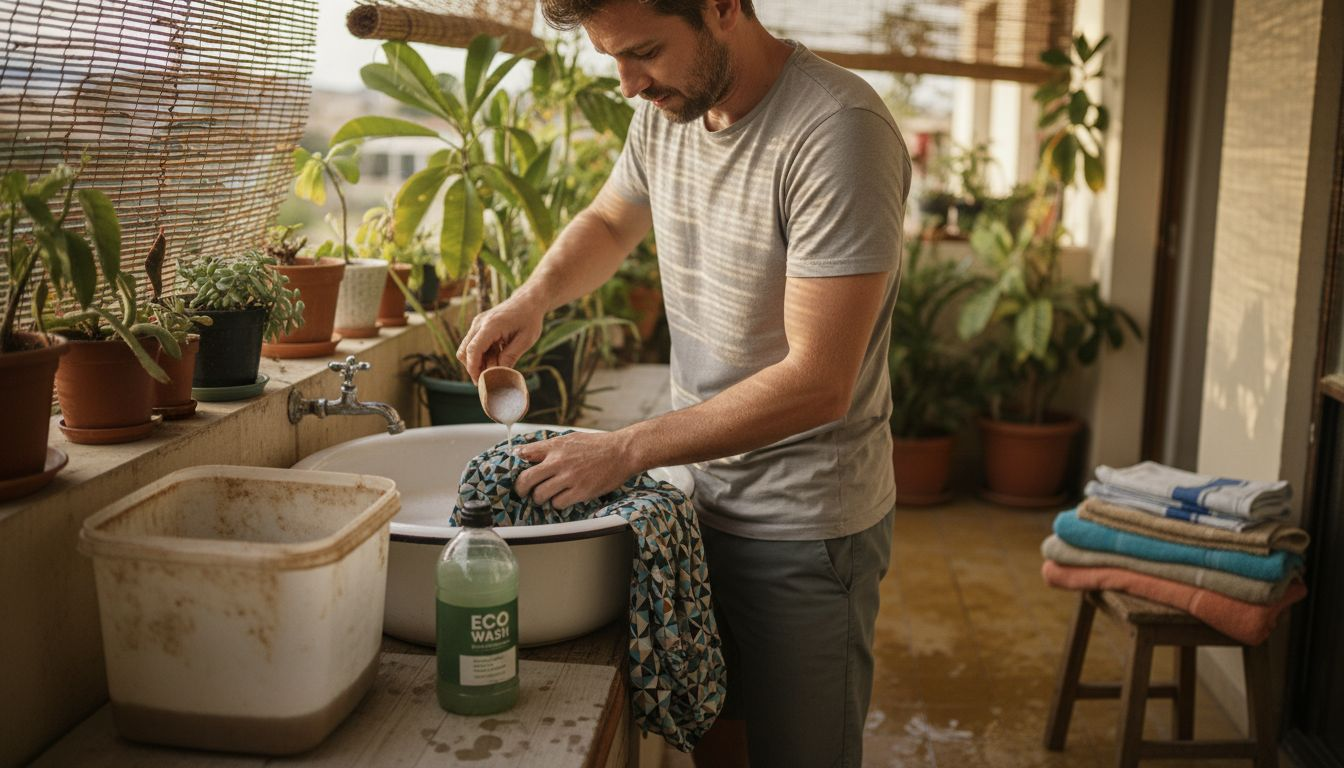
After the soak, rinse the swimsuit thoroughly under cool running water until all soap is completely gone. Soap residue left behind can create stiffness and attract dirt. Squeeze out excess water gently, then proceed to drying. The entire washing process takes about 30 minutes and uses far less water than a washing machine cycle. This hands-on approach also lets you catch any potential issues early, like loose seams or fabric pilling, before they become major problems. Your eco-friendly detergent choice matters too, since plant-based or biodegradable options break down naturally without harming aquatic ecosystems.
Pro tip: Mix your eco-friendly detergent solution in a reusable container and label it for future use, so you can quickly grab it for your next swimwear wash without measuring each time.
Step 4: Dry properly with air and avoid direct sunlight
How you dry your swimwear is just as important as how you wash it. This final step determines whether your eco-friendly investment stays vibrant and elastic or becomes faded and brittle. Air drying is your best friend here, but you need to do it strategically to preserve the integrity of your sustainable beachwear. Skip the dryer completely, avoid the harsh midday sun, and your swimwear will maintain its quality for many more seasons.
Lay your wet swimsuit flat on a clean, dry surface like a towel or drying rack placed in a shaded area. Avoid hanging it from clotheslines in direct sunlight, as UV rays break down synthetic fibers and fade colors rapidly. If you must hang your suit, do it in a shaded spot with good air circulation, and use padded hangers rather than regular ones to prevent stress on the fabric. The drying process takes between 24 and 48 hours depending on humidity and airflow in your location. Turn the suit over halfway through drying to ensure both sides dry evenly. A garage, covered porch, or well ventilated bathroom works perfectly. When you apply sustainable washing methods combined with proper drying, you’re maximizing the lifespan of your purchase by years.
Never use a regular household dryer, even on low heat, as the tumbling action and warmth damage elastic and synthetic materials irreversibly. Avoid radiators, space heaters, or any direct heat source. Your swimsuit should dry completely before storing it away, as any residual moisture can lead to mold or mildew growth that permanently damages the fabric. Check that the waistband and thick seams are fully dry by pressing gently with your fingers. Once dry, your swimsuit should feel soft, pliable, and ready for your next adventure. This patient, low-energy approach keeps your eco-conscious beachwear in excellent condition while using zero electricity.
Pro tip: Store your completely dry swimwear in a breathable mesh bag or loose cotton container rather than a plastic bag, allowing any residual moisture to escape and preventing mildew during off-season storage.
Step 5: Store swimwear in a sustainable way
Proper storage is the final piece of the puzzle that keeps your eco-friendly swimwear in pristine condition between beach seasons. Where and how you store your suit determines whether it emerges ready for action or degraded and forgotten. By choosing sustainable storage methods, you’re extending the life of your investment while staying true to your environmental values. Your swimwear deserves a home that protects it without compromising your commitment to the planet.
Choose a cool, dry location away from direct sunlight and extreme temperature fluctuations. A dresser drawer, linen closet, or under-bed storage works perfectly. Never store your swimsuit in a humid bathroom or damp basement, as moisture promotes mildew and fabric deterioration. Keep it away from heat sources like radiators, vents, or attics where temperatures spike during summer months. Store your suit flat or loosely folded rather than crammed into a tight ball, preventing permanent creases and stress on elastic fibers. If you’re storing multiple suits, separate them with acid-free tissue paper to prevent color transfer. The goal is maintaining an environment that mimics the conditions your suit experienced when you first opened the package. Understanding sustainable swimwear goes beyond just washing and wearing, it includes thoughtful storage practices that honor the resources invested in creating your piece.
Avoid storing your swimwear in plastic bags or airtight containers, which trap moisture and encourage mold growth. Instead, use breathable cotton storage bags or leave it loosely in a drawer with proper ventilation. Skip mothballs and chemical-based storage products, opting instead for natural cedar blocks or sachets if you prefer added protection. Check on your stored swimwear periodically, especially during off-season months, ensuring no moisture or pests have caused damage. Before the next season begins, do a quick inspection and a gentle refresh wash if needed. This sustainable approach to storage costs nothing extra and requires just a bit of forethought about where and how you keep your gear.
Pro tip: Create a rotation system by storing your suits vertically in a drawer using dividers, making it easy to see your full collection and prevent any single suit from being forgotten and damaged by long-term compression.
Compare common mistakes to best practices for sustainable swimwear care:
| Common Mistake | Best Practice Alternative |
|---|---|
| Machine washing on hot | Hand wash in cold water |
| Using generic detergents | Use eco-friendly, mild cleansers |
| Drying in direct sunlight | Air dry flat in shade |
| Storing in plastic bags | Store in breathable cotton bags |
| Skipping post-use rinse | Rinse immediately after wearing |
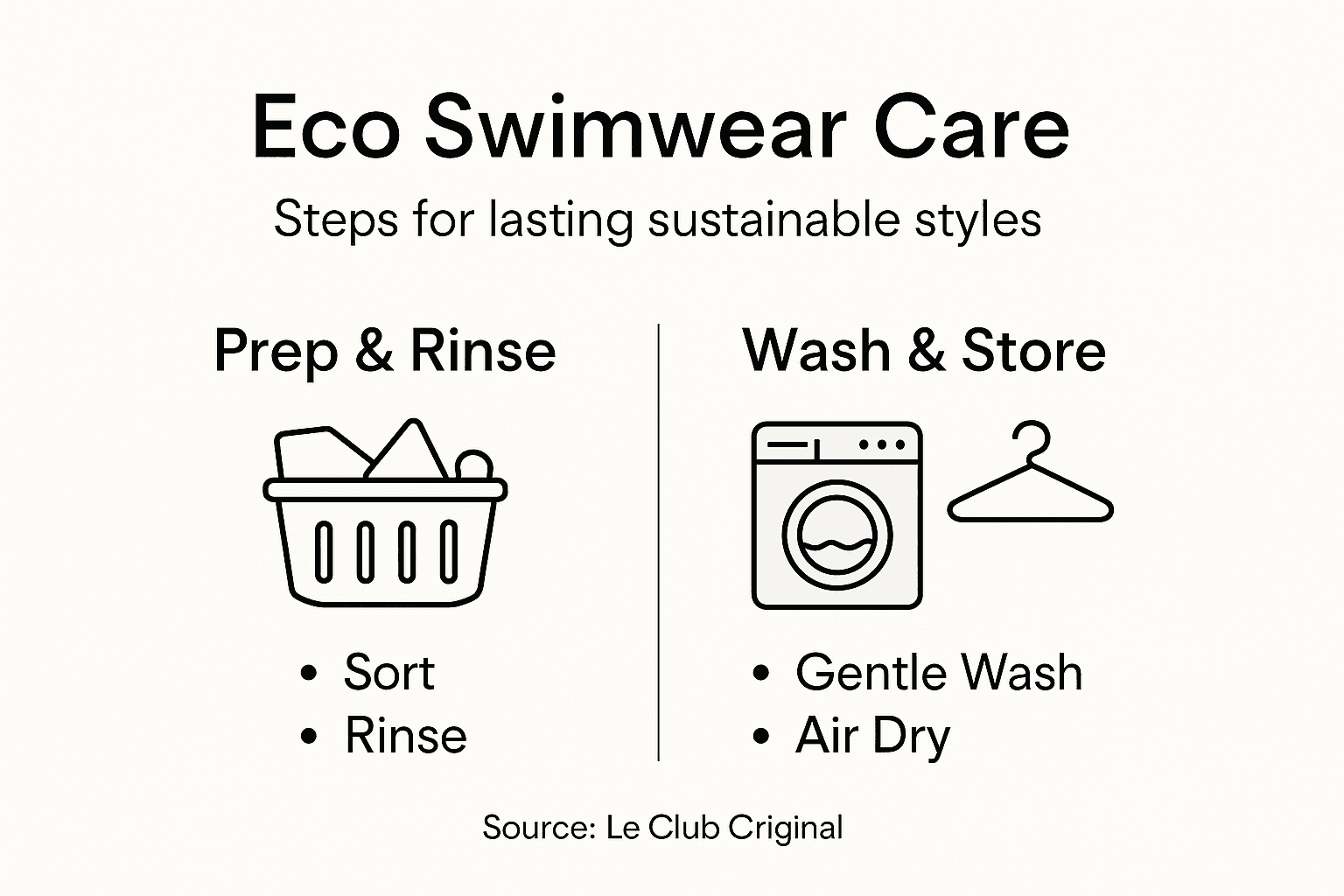
Here’s a quick summary of key swimwear care steps and their benefits:
| Step | Main Action | Why It Matters |
|---|---|---|
| Gentle Sorting | Inspect and separate items | Prevents color transfer, damage |
| Rinse in Cool Water | Remove salt and chlorine | Stops fiber breakdown early |
| Eco-Friendly Hand Wash | Use mild detergent, cold water | Maintains elasticity, eco-safe |
| Air Dry in Shade | Lay flat, avoid sun/heat | Prevents fading and brittleness |
| Store Sustainably | Use breathable storage | Blocks mildew, preserves quality |
Protect Your Eco-Friendly Swimwear With the Right Care and Style
Taking care of your sustainable swim trunks and beachwear goes beyond washing It is about honoring your commitment to the planet and preserving your investment over time The article highlights common swimwear care challenges like preventing fiber breakdown from chlorine and salt protecting colors from fading and choosing eco-friendly detergents These steps are vital for anyone who wants to enjoy longer lasting styles without compromising sustainability
Shopping at Le Club Original offers you a curated collection of eco-conscious men’s swim trunks and beach essentials designed for durability and style Our products reflect the very care principles described in this guide including quality sustainable materials and thoughtful design so your swimwear stays vibrant without extra waste Start exploring new arrivals that suit your lifestyle while supporting ocean pollution reduction efforts
Experience sustainable swimwear made for lasting comfort and responsible wear

Care for your eco-friendly swimwear the right way and discover styles that stand the test of time Shop now to benefit from seasonal sales and free shipping on qualifying orders Visit Le Club Original to find your next favorite sustainable beachwear piece today
Frequently Asked Questions
How can I sort my eco-friendly swimwear before washing?
Start by checking each piece for any damage, loose seams, or care instructions. Sort them by color and fabric type to prevent dye transfer and customize your washing method for each item.
What is the best way to rinse my swimwear after wearing it?
Rinse your swimsuit under cool running water as soon as possible after use. Work the fabric gently with your fingers for about two to three minutes to remove salt and chlorine, especially from seams and folds.
How should I wash my sustainable swimwear?
Wash your swimwear by hand in cool water using an eco-friendly detergent designed for delicate fabrics. Soak the pieces for 15 to 20 minutes and gently agitate the water to clean thoroughly without damaging the fibers.
What is the proper way to dry my eco-friendly swimwear?
Air dry your swimsuit by laying it flat in a shaded area, avoiding direct sunlight and heat sources. Ensure it is completely dry before storing to prevent mold or mildew from developing.
How should I store my swimwear to keep it in good condition?
Store your swimwear in a cool, dry location away from sunlight, ideally in a breathable mesh or cotton bag. Avoid cramming it into tight spaces; instead, lay it flat or loosely folded to prevent creases and stress on the fabric.
What mistakes should I avoid when caring for my swimwear?
Avoid machine washing on hot and using generic detergents, as these can damage the fabric. Stick to hand washing in cold water and using eco-friendly products to ensure your swimwear lasts longer.
Recommended
- Why Invest in Long-Lasting Swimwear: Lasting Value for Families – Le Club Original
- Why Invest in Long-Lasting Swimwear: Lasting Value for Families – Le Club Original
- Eco-Conscious Swimwear: Style with Ocean Impact – Le Club Original
- How to Wash Swimwear Sustainably for Lasting Wear – Le Club Original