

Many American dads want durable swimwear for their families but still fall for marketing myths about quality and longevity. Over 60 percent of parents look for eco-friendly features yet often miss out on real scientific advancements in sustainable swimwear. High-performance fabrics and smart production choices can give you and your son swimwear that lasts longer, feels comfortable, and reduces environmental harm—all while keeping you stylish for every pool or beach day.
Table of Contents
- Defining Long-Lasting Swimwear And Myths
- Types Of Durable And Sustainable Swimwear
- How Eco-Friendly Swimwear Reduces Impact
- Performance, Comfort, And Longevity Factors
- Comparing Costs: Fast Fashion Vs. Sustainable
- Common Pitfalls When Choosing Swimwear
Key Takeaways
| Point | Details |
|---|---|
| Swimwear Longevity | Long-lasting swimwear requires UV resistance, elasticity retention, and chlorinated water tolerance to ensure durability beyond initial quality. |
| Sustainable Materials | Swimwear made from recycled polyester and innovations like ECONYL® offer environmental benefits and enhanced durability. |
| Cost Efficiency | Investing in sustainable swimwear may have higher upfront costs but saves money in the long term due to reduced replacement frequency. |
| Shopping Considerations | Avoid common pitfalls in swimwear selection by prioritizing fit and performance over trendy designs for better comfort and satisfaction. |
Defining Long-Lasting Swimwear and Myths
Understanding what truly constitutes long-lasting swimwear requires moving beyond marketing claims and examining scientific research. Material degradation studies reveal complex interactions between fabric composition, environmental exposure, and performance durability. The key is recognizing that swimwear longevity isn’t just about initial quality but sustained functional integrity across multiple wear conditions.
Traditional assumptions about swimwear durability often miss critical scientific insights. Ultraviolet and environmental exposure research demonstrates that synthetic materials like polyester and polyamide experience significant degradation under real-world conditions. This means a swimsuit’s lifespan depends on more than initial fabric strength - it requires understanding how materials respond to chlorine, sunlight, saltwater, and repeated physical stress.
Key factors that define long-lasting swimwear include:
- UV resistance that prevents color fading and material weakening
- Elasticity retention maintaining shape and fit after multiple uses
- Chlorine and saltwater tolerance preventing rapid material breakdown
- Structural integrity resisting thinning, stretching, and unexpected tears
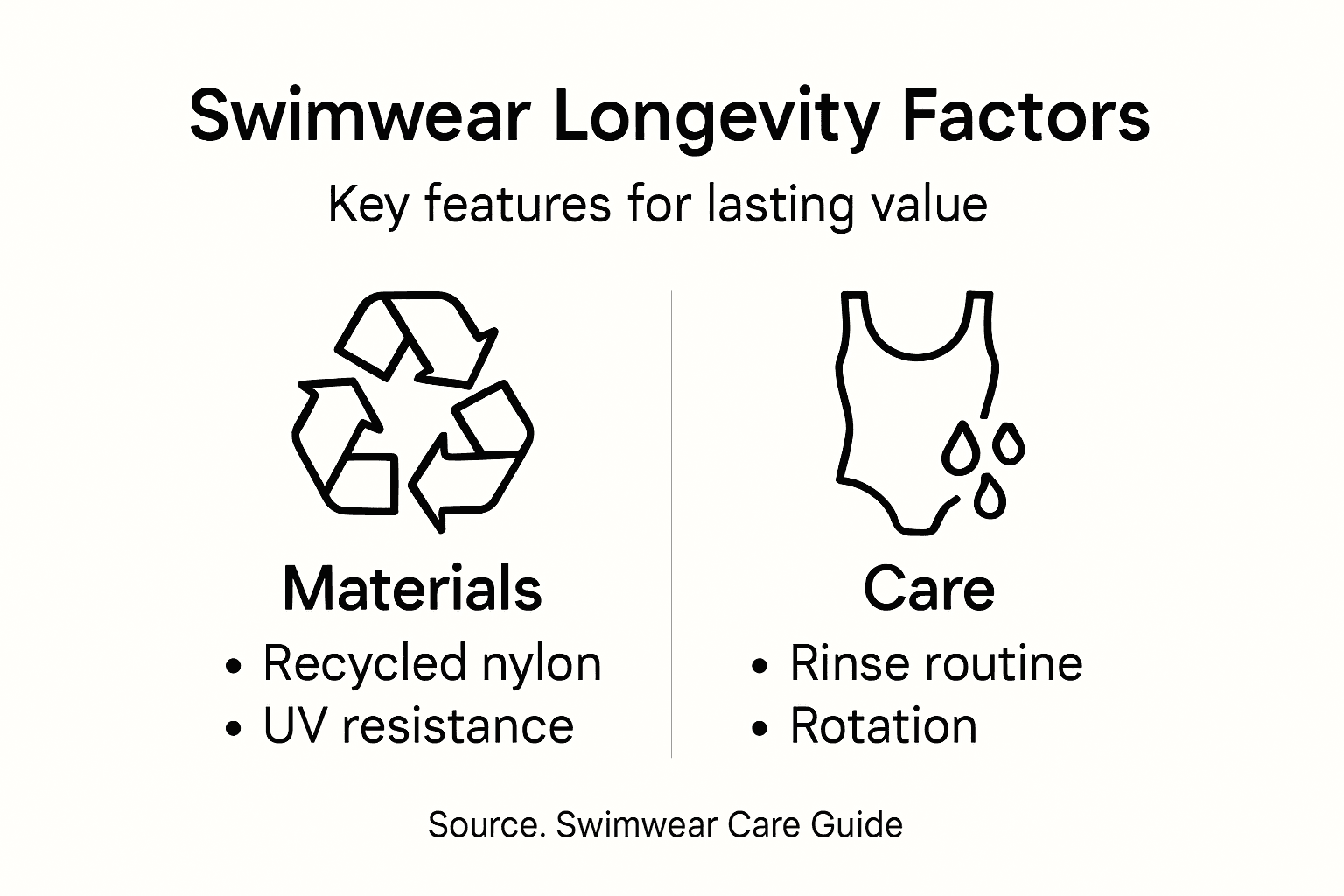
Pro tip: Rotate between multiple swimsuits and rinse thoroughly with fresh water after each use to significantly extend the functional lifespan of your swimwear.
Types of Durable and Sustainable Swimwear
Understanding the landscape of modern sustainable swimwear requires examining innovative fabric technologies that balance performance and environmental responsibility. Sustainable fabric innovations have revolutionized how manufacturers approach swimwear design, creating materials that not only perform exceptionally but also minimize ecological impact.
The most promising sustainable swimwear materials include recycled polyester blended with spandex and regenerated nylon like ECONYL®. These advanced fabrics offer remarkable properties that traditional materials cannot match. Swimwear fabric technologies demonstrate that eco-friendly options can provide exceptional durability, featuring characteristics like:
- Strong stretch and recovery
- Excellent colorfastness
- Superior chlorine resistance
- Rapid moisture-wicking capabilities
- UV protection
For environmentally conscious families, choosing swimwear made from recycled materials represents a meaningful commitment to sustainable fashion. Brands utilizing REPREVE and ECONYL fabrics transform plastic waste into high-performance swimwear, creating a circular economy that reduces environmental strain while delivering premium product quality.
Pro tip: When shopping for sustainable swimwear, look for certifications like Global Recycled Standard to ensure authentic eco-friendly manufacturing processes.
How Eco-Friendly Swimwear Reduces Impact
The environmental impact of traditional swimwear manufacturing is profound, with conventional production methods generating significant waste and pollution. Sustainable swimwear innovations demonstrate how transformative materials like ECONYL® nylon can revolutionize the fashion industry by repurposing discarded fishing nets and other ocean plastics into high-performance swimwear.
Eco-friendly swimwear tackles environmental challenges through multiple strategic approaches. By utilizing recycled plastics, organic materials, and innovative manufacturing techniques, sustainable brands significantly reduce carbon emissions and chemical pollution. Eco-conscious production methods prioritize critical environmental considerations such as:
- Minimizing microplastic pollution
- Reducing water consumption
- Lowering carbon emissions
- Preventing chemical runoff
- Supporting circular fashion economies
The broader impact extends beyond individual product choices. When families choose sustainable swimwear, they contribute to a global movement that challenges traditional fast fashion practices, supporting brands committed to regenerative manufacturing processes and ocean conservation. This collective approach transforms consumer decisions into meaningful environmental action.
Pro tip: Research swimwear brands that provide transparent sustainability reports and third-party environmental certifications to ensure your purchase genuinely supports ecological conservation efforts.
Performance, Comfort, and Longevity Factors
Understanding the complex interplay between performance, comfort, and durability is crucial for selecting high-quality swimwear that meets families’ diverse needs. Swimwear fabric performance studies reveal that material composition dramatically influences how swimwear functions across different environmental conditions.
Innovative fabric technologies have transformed swimwear design, introducing advanced features that enhance overall performance. Key characteristics that determine a swimsuit’s quality include:
- Chlorine resistance
- UV protection
- Moisture-wicking capabilities
- Elasticity and shape retention
- Quick-drying properties
- Breathability
- Seamless construction
The most exceptional swimwear strikes a delicate balance between technical performance and user comfort. Advanced fabric blends combining polyamide, polyester, and elastane create swimwear that adapts to body movement, provides compression where needed, and maintains structural integrity through repeated uses and challenging environmental conditions. This approach ensures that families can invest in swimwear that performs consistently across swimming pools, beaches, and various recreational settings.
Pro tip: Rotate between multiple swimsuits and rinse thoroughly with fresh water after each use to maximize fabric longevity and maintain optimal performance.
The following table summarizes how advanced swimwear features benefit families:
| Feature | Practical Benefit for Families | Long-Term Impact |
|---|---|---|
| UV Protection | Safeguards skin during outdoor swimming | Reduces sun damage |
| Chlorine Resistance | Maintains color and fabric quality | Longer-lasting swimsuits |
| Moisture Wicking | Quick drying for comfort after swimming | Less chafing, better experience |
| Shape Retention | Consistent fit and appearance | Avoids premature sagging |
| Seamless Construction | Smooth feel, fewer irritations | Greater overall comfort |
Comparing Costs: Fast Fashion vs. Sustainable
The true cost of swimwear extends far beyond its initial price tag, requiring a nuanced understanding of long-term value and environmental impact. Fast fashion cost analysis reveals that cheap swimwear often carries hidden expenses that accumulate through frequent replacements and environmental damage.
Sustainable swimwear economics demonstrate a compelling alternative to disposable fashion. While sustainable options typically have higher upfront costs, they deliver significant long-term benefits:
- Longer product lifespan
- Reduced environmental waste
- Higher quality materials
- Ethical manufacturing processes
- Lower cost per wear
- Decreased overall consumer spending
For families committed to responsible consumption, sustainable swimwear represents an investment in quality, durability, and environmental stewardship. The initial price difference is quickly offset by reduced replacement frequency, superior fabric performance, and the intangible value of supporting ethical manufacturing practices. By choosing swimwear that prioritizes longevity and sustainability, consumers can make a meaningful economic and environmental impact.
Here’s a side-by-side comparison of traditional versus sustainable swimwear:
| Criteria | Traditional Swimwear | Sustainable Swimwear |
|---|---|---|
| Common Materials | Polyester, nylon, elastane | Recycled polyester, ECONYL®, REPREVE |
| Environmental Impact | High due to waste and pollution | Reduced through recycling and reuse |
| Longevity and Durability | Prone to faster degradation | Enhanced fabric lifespan |
| Typical Upfront Cost | Lower purchase price | Higher initial investment |
| Certifications Available | Rare | Frequently GRS, OEKO-TEX certified |
| Replacement Frequency | Higher, more frequent replacements | Lower, designed for long-term use |
Pro tip: Calculate your potential savings by comparing the cost per wear of sustainable swimwear against cheaper, less durable alternatives, factoring in replacement frequency and environmental impact.
Common Pitfalls When Choosing Swimwear
Navigating the complex world of swimwear selection requires more than just aesthetic considerations. Swimwear shopping mistakes reveal that many consumers fall into predictable traps that compromise comfort, performance, and long-term satisfaction.
The most critical pitfalls families should avoid include:
- Prioritizing trendy designs over functional fit
- Ignoring personal body shape and support requirements
- Choosing incorrect sizing
- Overlooking fabric quality and durability
- Neglecting sun protection capabilities
- Failing to consider versatility and activity type
Successful swimwear selection demands a holistic approach that balances aesthetic preferences with practical performance needs. Consumers must look beyond surface-level attractiveness and evaluate how a swimsuit will perform across different environments, body movements, and activity levels. This means considering factors like material stretch, chlorine resistance, UV protection, and comfort during extended wear.
Pro tip: Always try on swimwear and perform a few physical movements in the fitting room to assess true fit, comfort, and potential limitations in actual usage conditions.
Choose Long-Lasting Swimwear That Supports Your Family and the Planet
The article highlights the real challenge families face when selecting swimwear that lasts — navigating complex factors like UV resistance, chlorine tolerance, and sustainable fabric technologies. Many end up replacing cheaply made swimsuits repeatedly, which costs more over time and harms the environment. You want swimwear that holds its shape, protects skin, and meets your eco-conscious values without compromising style or comfort.
At Le Club Original, we understand these concerns. Our collection of eco-friendly swim trunks for men and boys combines durable, sustainable materials like recycled polyester and ECONYL® with stylish cuts designed for lasting wear. With features addressing elasticity retention, UV protection, and chlorine resistance, our swimwear helps extend the functional lifespan of your investment. Rotate swimwear more easily by browsing our New Arrivals or taking advantage of sitewide sales up to 50% off.
Ready to make a lasting difference in your swimwear choices? Explore the full range of premium sustainable swimwear that supports your family’s lifestyle and helps reduce ocean plastic pollution. Visit Le Club Original now to shop quality swim trunks built to perform season after season.
Frequently Asked Questions
What defines long-lasting swimwear?
Long-lasting swimwear is characterized by its resistance to UV exposure, chlorine, and saltwater, as well as its ability to retain elasticity, shape, and structural integrity through multiple uses.
How can I extend the lifespan of my swimwear?
To extend the lifespan of your swimwear, rotate between multiple suits, rinse them thoroughly with fresh water after each use, and avoid prolonged exposure to chlorine and sunlight.
What materials should I look for in sustainable swimwear?
Look for swimwear made from recycled polyester blended with spandex or regenerated nylon like ECONYL®, as these materials provide durability while minimizing environmental impact.
Why is sustainable swimwear often more expensive than traditional options?
Sustainable swimwear typically has a higher upfront cost due to the use of premium, eco-friendly materials and ethical manufacturing processes, but it offers a longer lifespan and reduced environmental impact, making it a more valuable investment over time.