

Sun protection is more than just a quick layer of sunscreen when you are hitting the shore. For the eco-minded guy who wants both style and sustainability, the quest for reliable skin defense often gets tangled with common myths about swimwear. UPF swimwear blocks harmful UVA and UVB rays far more effectively than regular clothes, offering peace of mind and lasting comfort while also reflecting your commitment to a cleaner environment.
Table of Contents
- UPF Swimwear Explained and Misconceptions
- Skin Protection and Health Risks Addressed
- Eco-Friendly Materials and Sustainability
- UPF Ratings, Features, and How It Works
- Choosing Safe, Effective Swimwear and What to Avoid
Key Takeaways
| Point | Details |
|---|---|
| UPF Protection vs. SPF | UPF measures how fabric blocks UV radiation; true UPF swimwear offers significant sun protection compared to regular clothing. |
| Importance of UPF Ratings | Opt for swimwear with UPF 50+ for optimal protection, especially if spending long hours outdoors. |
| Material Matters | Choose sustainably made swimwear to protect your skin while supporting eco-friendly practices. |
| Fit and Quality | Ensure a snug fit and check for certified UPF ratings to guarantee effective sun defense during water activities. |
UPF Swimwear Explained and Misconceptions
UPF stands for Ultraviolet Protection Factor, and it works differently than the SPF you find on sunscreen bottles. While SPF measures how well sunscreen blocks ultraviolet rays on skin, UPF measures how effectively fabric prevents UV radiation from reaching your skin in the first place. Think of it as the difference between a defensive shield (UPF clothing) versus a topical barrier (sunscreen).
The science behind UPF ratings is straightforward. UPF fabric blocks both UVA and UVB rays, whereas regular sunscreen primarily targets UVB. A UPF 50+ rating means the fabric blocks approximately 98% of harmful UV radiation from penetrating to your skin. UPF 30 blocks about 97%, while UPF 15 blocks roughly 93%.
Here’s where many guys get confused about sun protection through clothing:
- Regular t-shirts aren’t enough. Most everyday cotton shirts only have a UPF of 5, meaning they let roughly 20% of UV rays through to your skin.
- Color and weave matter significantly. Darker colors and tighter weaves provide better UV blocking than light, loose fabrics.
- Wet fabric loses some protection. When your regular shirt gets soaked, UV rays penetrate more easily than when it’s dry.
- Not all “athletic” clothing is UPF-rated. Performance doesn’t automatically equal sun protection.
UPF-rated swimwear provides consistent, reliable protection based on specialized fabric treatment, unlike the variable protection from regular clothing.
The biggest misconception? That any clothing protects your skin from the sun equally. A regular linen shirt looks like it should protect you, but it doesn’t. UPF swimwear uses specially engineered fabrics with tighter construction and often chemical treatments that absorb or reflect UV rays before they reach your body.
Eco-conscious swimmers benefit from understanding this because sustainable UPF swimwear combines two benefits: genuine skin protection during water activities and environmentally responsible manufacturing. You’re not just choosing protection—you’re choosing a product designed to last longer and reduce your environmental footprint.
When shopping for UPF swimwear, check the label for the actual rating (UPF 50+ is ideal for extended sun exposure). Lower ratings like UPF 15 provide basic protection for casual beach time, but serious swimmers and those spending full days in the sun should prioritize UPF 50+.
Pro tip: Rinse your UPF swimwear in fresh water after each ocean or chlorine exposure to maintain the fabric’s UV-blocking properties and extend its lifespan by up to 50 wears compared to neglected suits.
Skin Protection and Health Risks Addressed
Your skin is constantly under attack from UV radiation whenever you’re outdoors. Most men don’t realize how serious this threat becomes over time, especially during beach days and water activities where sun exposure intensity peaks.
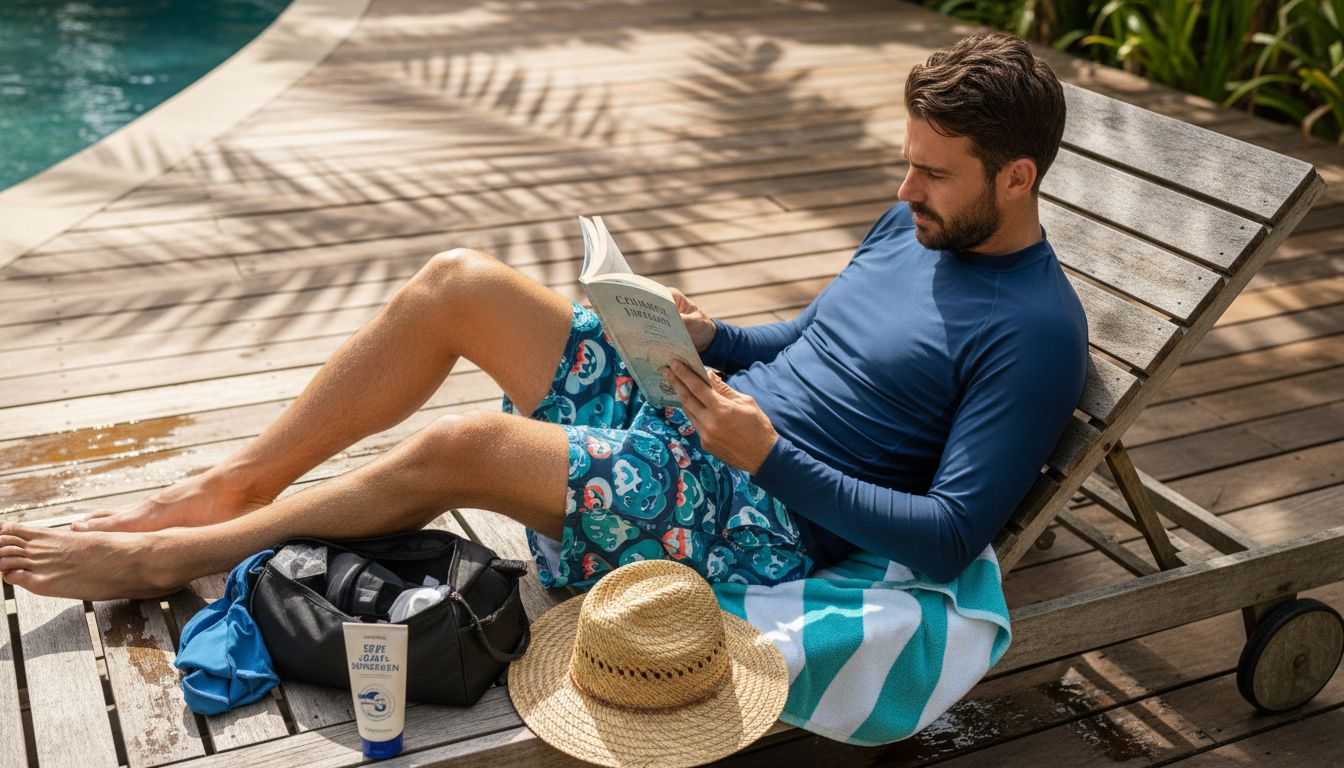
UV radiation causes real, measurable damage to your skin at the cellular level. Skin exposure to ultraviolet radiation significantly contributes to skin aging and the development of skin cancers, including melanoma. This isn’t just about looking older—it’s about preventing disease.
Here’s what happens when your skin absorbs too much UV:
- Premature wrinkles and age spots develop from collagen breakdown in deeper skin layers
- DNA damage accumulates in skin cells, potentially triggering cancerous growth
- Melanoma risk increases with repeated sun exposure, especially during adolescence and young adulthood
- Sun damage is cumulative—today’s beach day adds to damage from years past
Sun protective clothing with high UPF ratings is one of the best defenses against harmful UV radiation that causes skin damage, premature aging, and skin cancers.
Many guys think sunscreen alone handles sun protection. That’s incomplete thinking. Sunscreen requires reapplication every two hours, especially after swimming. UPF swimwear provides continuous barrier coverage without interruption—you’re protected the entire time you’re in the water.
Your face and shoulders absorb tremendous UV exposure during beach activities. Men often neglect these areas or apply sunscreen inconsistently. Swimwear with UPF protection eliminates this problem by covering your torso, shoulders, and chest with reliable, constant defense.
Sensitive skin types benefit most from UPF swimwear. If you have a history of skin reactions, family history of skin cancer, or naturally lighter skin, UPF coverage becomes even more critical. Wearing protective swimwear from the start of your beach day prevents the damage that leads to painful sunburns and long-term cancer risk.
The relationship between eco-conscious choices and health protection matters here too. Sustainable UPF swimwear made from recycled materials performs the same protective function as conventional options—you’re not sacrificing health when you choose environmentally responsible products.
Pro tip: Wear your UPF swimwear even on cloudy days, since UV rays penetrate clouds and reflect off water, sand, and concrete, delivering 80% of daily UV exposure even when the sun feels hidden.
Eco-Friendly Materials and Sustainability
Choosing UPF swimwear goes beyond personal protection—it’s about what happens to the ocean after you leave the beach. The materials your swimwear is made from directly impact marine ecosystems and global environmental health.
Traditional synthetic swimwear fabrics shed microfibers into water systems with every wash. These tiny plastic particles accumulate in fish, coral, and eventually work their way up the food chain. Eco-conscious swimmers recognize that conventional materials create pollution they’re trying to prevent.
Ocean-friendly materials like organic cotton, hemp, and linen offer effective sun protection while breaking down naturally without releasing microplastics. These natural fibers align perfectly with your environmental values.
Here’s what makes sustainable UPF swimwear different:
- Biodegradable materials decompose naturally instead of persisting in landfills for decades
- Renewable resources reduce dependence on petroleum-based synthetics
- Lower water consumption during production compared to conventional fabrics
- Reduced chemical processing means less pollution entering waterways
- Recyclable fabrics can be transformed into new products at end of life
Wool is a natural fiber that inherently offers UV protection while supporting sustainability efforts through its biodegradability and renewable nature.
Wool deserves special mention because it provides natural UV defense without chemical treatments. The fiber’s structure blocks UV rays naturally, making it an elegant solution for swimmers wanting protection with zero synthetic additives.
Modern eco-friendly treatments enhance UV protection in sustainable fabrics without harsh chemicals. Manufacturers now apply dyes and finishes that maintain sun safety while keeping environmental impact minimal. You get legitimate UPF ratings from genuinely sustainable materials.
When you buy eco-conscious UPF swimwear, you’re voting with your wallet for cleaner oceans. Every purchase signals to manufacturers that consumers demand sustainable options. This market pressure drives innovation toward better materials and responsible production practices.
Price sometimes feels higher for eco-friendly swimwear, but consider durability. Sustainable fabrics often outlast synthetic alternatives, meaning fewer replacements and less overall waste. The long-term environmental cost actually decreases.
Pro tip: Check product labels for certifications like GOTS (Global Organic Textile Standard) or bluesign, which verify genuine sustainable practices rather than greenwashing claims.
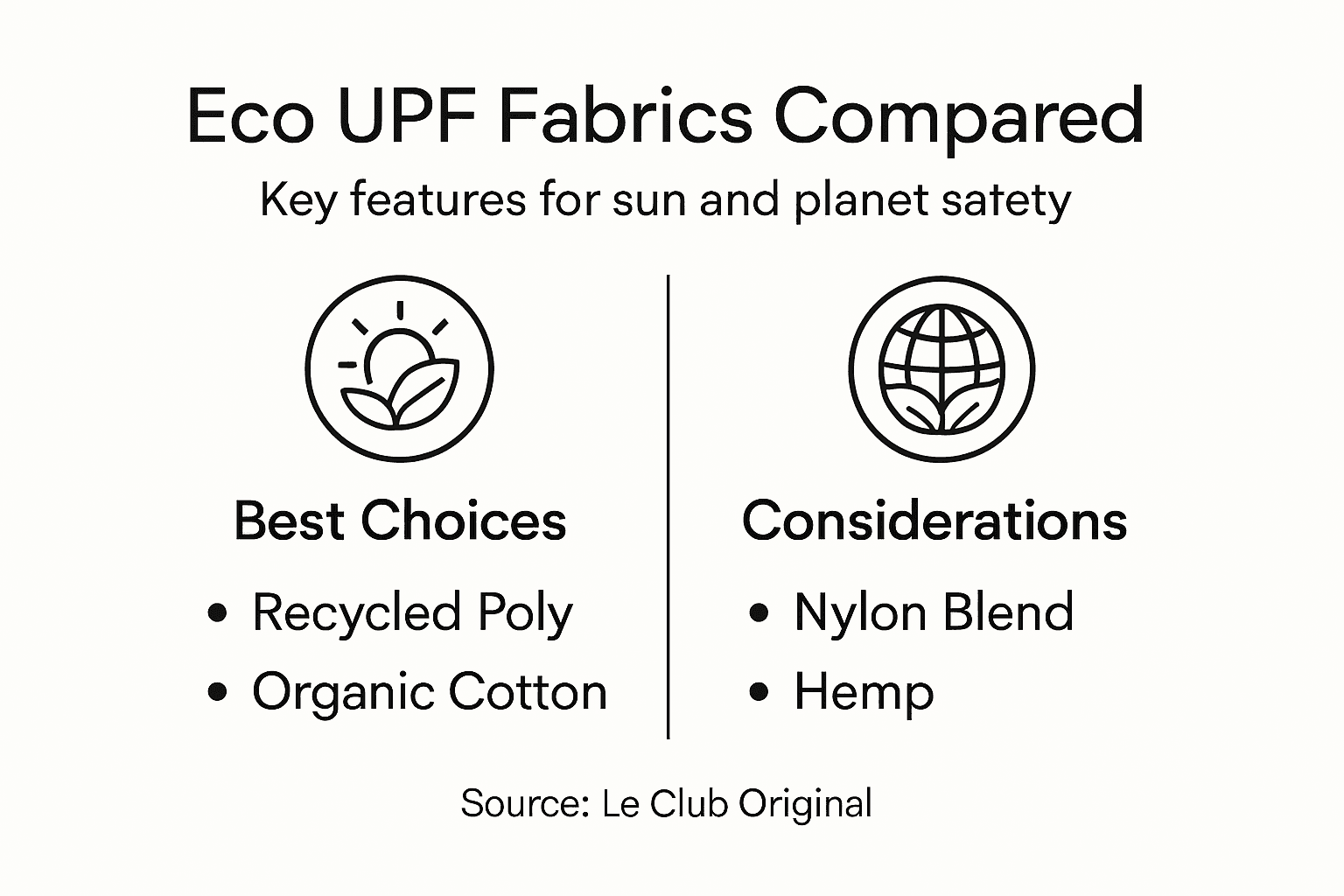
Here’s a concise comparison of typical fabrics used in swimwear and their UV-blocking performance:
| Fabric Type | Typical UPF Rating | Environmental Impact | Durability in Water |
|---|---|---|---|
| Regular Cotton | Around UPF 5 | Biodegrades, but low UV protection | Loses structure, low protection when wet |
| Synthetic Polyester | UPF 10-50+ (if treated) | Shedding microplastics, not biodegradable | Good, but can degrade after many washes |
| Organic Cotton | UPF 15-30 | Biodegradable, low pollution | Moderate, protects best when dry |
| Treated Nylon/Spandex | UPF 30-50+ | Microfiber pollution concern | Very good, maintains shape |
| Wool | UPF 30-50+ (natural) | Renewable, biodegradable | Good, but less common for swimwear |
| Recycled Synthetics | UPF 30-50+ | Reduces plastic waste | Good if high quality |
UPF Ratings, Features, and How It Works
UPF ratings tell you exactly how much UV protection you’re getting from your swimwear. The number represents a fraction—how much ultraviolet radiation actually reaches your skin through the fabric. Higher numbers mean less UV penetration, and the difference between ratings matters more than you might think.
Let’s break down what the numbers actually mean. UPF 15 blocks roughly 93% of UV rays, leaving 7% to reach your skin. UPF 30 blocks about 97%, while UPF 50+ blocks approximately 98% of UV radiation. That 1% difference between UPF 30 and UPF 50+ matters when you’re spending hours at the beach.
Three key factors determine how well a fabric blocks UV rays:
- Weave density creates a tighter barrier that UV rays struggle to penetrate
- Color intensity affects UV absorption, with darker or vibrant hues blocking more effectively than pastels
- Chemical treatments enhance UV-blocking properties through specialized finishes applied during manufacturing
Fabric thickness also plays a role. Heavier materials naturally block more UV than lightweight fabrics. This is why long-sleeve rash guards typically offer better protection than sleeveless designs—more fabric coverage equals more defense.
Standardized testing measures ultraviolet light transmission to ensure reliable UPF labels when selecting sun-protective apparel.
When you see a UPF rating on swimwear, that number comes from laboratory testing under controlled conditions. Manufacturers don’t just guess—they send fabric samples to certified testing facilities that measure exactly how many UV rays penetrate. This standardization means you can trust the label.
Not all UPF swimwear is equal, even at the same rating level. Quality matters. Premium eco-conscious brands use superior fabric construction and treatment methods that maintain UPF protection through repeated washing. Cheaper options may degrade faster, losing protective capability after 20-30 washes.
Choosing UPF 50+ makes sense for serious beach time. If you’re spending 6+ hours in the sun weekly, or swimming regularly, the extra 1% protection adds meaningful cumulative defense over a season. For occasional beach visitors, UPF 30 provides solid protection.
Pro tip: Verify your swimwear’s UPF rating remains effective by checking it hasn’t faded or degraded—discolored areas suggest the protective treatment may be compromised, signaling it’s time for a replacement.
Choosing Safe, Effective Swimwear and What to Avoid
Not all swimwear labeled as protective actually delivers reliable sun defense. Learning what to look for—and what red flags to ignore—keeps you safe without wasting money on ineffective options.
Start with the label. Prioritize items labeled with UPF 30 or higher for effective UV protection during water activities. If a swimwear piece doesn’t display a UPF number, walk away. Marketing claims about “sun protection” mean nothing without verified testing behind them.
Here’s what makes swimwear actually effective:
- Certified UPF ratings come from standardized laboratory testing, not marketing departments
- Tight weaves create physical barriers UV rays cannot penetrate easily
- Darker or vibrant colors absorb more UV radiation than light pastels
- Adequate coverage means protecting vulnerable areas like shoulders and chest
- Quality construction maintains protection through repeated washing and swimming
Now for the red flags—swimwear features that compromise protection:
- Loose or stretched fabric allows UV rays through the gaps
- Thin materials don’t provide enough density to block radiation
- Faded coloring suggests the fabric’s UV-absorbing properties have degraded
- No visible UPF label indicates no certified testing was performed
- Cheap elastic that wears out quickly signals overall poor durability
Safe swimwear should have a certified UPF rating and tight weaves, with adequate coverage that retains protection when wet.
Water exposure affects your swimwear’s protection. Some fabrics lose effectiveness when soaked, especially cheaper options with inadequate UV treatment. Quality sustainable swimwear maintains UPF ratings even when saturated, keeping you protected during long water sessions.
Fit matters more than aesthetics. Loose, baggy swimwear shifts around in water, exposing unprotected skin. Snug fit ensures the fabric stays in place, providing consistent coverage. This is why brands design rash guards and swim shirts with performance cuts—protection requires proper positioning.
Brand reputation signals quality. Established eco-conscious swimwear manufacturers invest in superior fabrics and treatments because their reputation depends on it. Unknown brands cutting corners on fabric quality save money but sacrifice your safety.
Pro tip: Before purchasing, stretch the fabric with your fingers—if you can see light coming through when held to a window, the weave is too loose for effective UV blocking regardless of the UPF label.
Here’s a summary of what to prioritize and avoid when choosing effective swimwear:
| What to Prioritize | What to Avoid |
|---|---|
| Certified UPF 30+ labels | No listed UPF rating |
| Dense, tight weaves | Thin, see-through fabrics |
| Quality construction | Poor stitching or elastic |
| Adequate torso/shoulder coverage | Minimal coverage swimwear |
| Dark or vibrant colors | Faded or pastel shades |
Protect Your Skin and the Planet With Sustainable UPF Swimwear
The article highlights the challenge many men face when choosing swimwear that truly safeguards against harmful UV radiation while honoring eco-conscious values. Regular swimwear often falls short on sun protection and contributes to ocean pollution through microfiber shedding. You deserve swim trunks that provide certified UPF 50+ protection with durable, tight-weave fabrics that keep your skin safe during long hours in the sun and water. It is equally important your swimwear aligns with your commitment to reducing environmental impact.
At Le Club Original you will find a curated selection of stylish, sustainable swimwear designed specifically for men who want both reliable sun protection and ocean-friendly materials. Enjoy fashionable trunks that combine natural fibers, recycled fabrics, and eco-conscious manufacturing for a durable ultraviolet shield that lasts. Our collection embraces vibrant colors and innovative UPF treatments without compromising the environment or your health.
Ready to upgrade your beachwear for full-spectrum protection and sustainability? Discover the difference with eco-conscious swimwear that defends your skin while preserving the oceans you love.

Experience sun-safe style today. Visit Le Club Original to shop sustainable swim trunks that offer proven UPF protection and ocean-friendly craftsmanship. Protect your skin and make a meaningful impact every time you hit the water. Act now to join a community of men dedicated to healthier skin and a cleaner planet.
Frequently Asked Questions
What is UPF swimwear and how does it work?
UPF swimwear is specially designed clothing that provides protection against harmful ultraviolet (UV) rays from the sun. The Ultraviolet Protection Factor (UPF) rating indicates how much UV radiation can penetrate the fabric and reach your skin. Higher UPF ratings mean better protection, with UPF 50+ blocking about 98% of UV rays.
Why is UPF protection important for eco-conscious men?
UPF protection is crucial for eco-conscious men because it combines skin health with sustainable choices. Eco-friendly UPF swimwear not only protects against UV radiation but is also made from sustainable materials, minimizing environmental impact and contributing to healthier oceans and ecosystems.
How do I maintain the effectiveness of my UPF swimwear?
To maintain the effectiveness of your UPF swimwear, rinse it in fresh water after each use to remove salt and chlorine, which can degrade the fabric’s UV-blocking properties. Regularly check the fabric for signs of discoloration or wear, as faded areas may indicate reduced protection.
Can I rely solely on UPF swimwear for sun protection?
While UPF swimwear provides significant protection against UV rays, it’s important to complement it with other sun safety practices, such as applying sunscreen on exposed skin and seeking shade during the peak sun hours. Combining these methods offers the best overall defense against sun damage.