

Finding swimwear that matches your style and respects the environment can feel overwhelming when every brand claims to be green. For eco-conscious men and boys dreaming of summer adventures, selecting the right swim trunks means more than just looking good—it is about making choices that actually help reduce ocean pollution. This guide shows you how to define your priorities, spot authentic sustainable materials, and choose brands whose efforts go beyond marketing, so you can invest in ethical, durable swimwear backed by real certifications.
Table of Contents
- Step 1: Define Your Eco Swimwear Criteria
- Step 2: Research Trusted Sustainable Swim Brands
- Step 3: Evaluate Brand Sustainability Claims
- Step 4: Verify Certifications And Material Transparency
Quick Summary
| Key Point | Explanation |
|---|---|
| 1. Define Your Swimwear Criteria | Identify your top priorities, such as sustainable materials and ethical labor practices, before shopping to guide your decisions. |
| 2. Research Trustworthy Brands | Look for brands that are transparent about their materials and practices, ensuring they align with your values and avoid greenwashing. |
| 3. Verify Sustainability Claims | Check for specific material certifications and demand clarity on sourcing to ensure genuine sustainability practices are upheld. |
| 4. Use Third-Party Certifications | Recognized certifications like OEKO-TEX and GRS can validate brands’ sustainability claims, making it easier to distinguish between marketing and reality. |
| 5. Check for Size Inclusivity | Consider brands that offer diverse sizing, as this reflects their commitment to serving a broader market, enhancing their credibility. |
Step 1: Define your eco swimwear criteria
Before you start shopping, get clear on what matters to you. Your criteria become your filter for making smart decisions instead of getting swayed by marketing hype or trending styles that don’t align with your values.
Start by identifying your top priorities. Are you most concerned about reducing ocean pollution through sustainable materials, or do you prioritize ethical labor practices in manufacturing? Maybe both matter equally. Write these down so you have a reference point when comparing brands.
Next, research the specific materials used in sustainable swimwear. Recycled fabrics like ECONYL® and REPREVE® significantly outperform virgin synthetics in durability and UV protection while cutting carbon emissions. These materials also resist chlorine damage and microplastic shedding better than conventional synthetics. Understanding these differences helps you recognize quality construction when you see it.
Consider your practical needs too:
- Fit preferences and body type requirements
- Chlorine resistance for frequent pool swimmers
- UV protection level you need
- Budget range for investment pieces
- Style preferences that keep you excited to wear them
Check if brands have eco-certifications that verify real environmental impact. Look for third-party verification rather than self-created labels. Brands should be transparent about material sourcing, manufacturing locations, and their supply chain practices.
The best eco swimwear criteria balance your environmental values with your real-world lifestyle needs and preferences.
Size inclusivity matters too. Sustainable brands that offer diverse sizing show they’re committed to serving everyone, not just a narrow market segment. This demonstrates genuine commitment beyond marketing claims.
Pro tip: Create a simple checklist of your top five non-negotiable criteria, then add three nice-to-haves. When researching brands, score them against this list so you compare apples to apples instead of getting distracted by shiny marketing.
Step 2: Research trusted sustainable swim brands
Now that you know your criteria, it’s time to find brands that actually match your values. The swimwear market is shifting toward eco-conscious brands, and learning how to spot the real deal from the greenwashing will save you time and money.
Start by checking if brands display clear transparency about their materials. Trusted sustainable brands openly share where their fabrics come from, how they’re manufactured, and what environmental impact their process reduces. Look for brands that explain the difference between recycled materials and virgin synthetics, and why their choices matter.
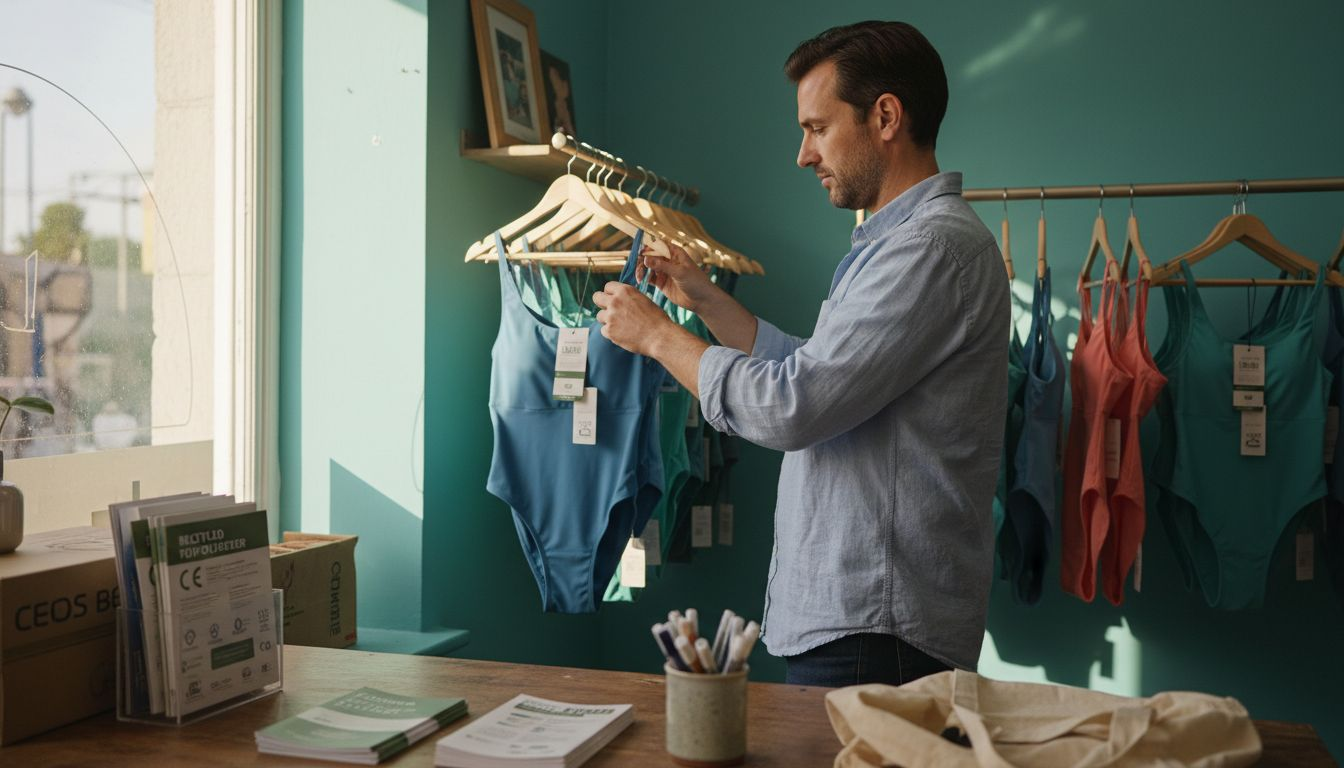
Third-party certifications are your trust signal. Brands earning recognized certifications demonstrate their commitment goes beyond marketing claims. Verify certifications come from independent organizations, not made-up labels the brand invented themselves. This distinction matters more than you might think.
Research specific brand practices:
- Ethical labor standards and transparent supply chains
- Carbon-neutral or low-carbon manufacturing processes
- Ocean and resource conservation commitments
- Size inclusivity across their collections
- Performance standards for durability and UV protection
Read actual customer reviews beyond the brand’s website. Look for feedback on how well swimwear holds up to chlorine, salt water, and regular wear. Sustainable construction should mean your pieces last multiple seasons, not just look good in photos.
Check if brands publicly communicate their environmental impact and carbon reduction goals. Brands serious about sustainability report metrics like carbon emissions reduced, water saved, or plastic diverted from landfills. Vague promises mean less than concrete numbers.
The following table summarizes key ways to spot genuine sustainable swimwear brands:
| Indicator | Why It Matters | Example Action |
|---|---|---|
| Third-party certifications | Proves environmental claims | GRS or OEKO-TEX certificates |
| Material transparency | Shows fabric origin and impact | Detailed supply chain info |
| Public impact reports | Demonstrates ongoing commitment | Published carbon reduction data |
| Size inclusivity | Reflects ethical and inclusive values | Wide variety of fits and sizes |
Trusted brands make their sustainability practices easy to find and understand without requiring a detective investigation.
Follow brands on social media or sign up for their newsletters. This reveals how they communicate about sustainability over time and whether they’re genuinely committed or just riding trends. Consistent messaging about eco-values shows real dedication.
Pro tip: Create a simple spreadsheet comparing your top five brands across criteria like certifications, material transparency, size range, and price point. This prevents decision fatigue and helps you spot patterns about which brands align with your priorities.
Step 3: Evaluate brand sustainability claims
Marketing language can sound impressive, but real sustainability requires proof. Learning to separate genuine commitments from greenwashing protects your wallet and ensures your purchases actually align with your environmental values.
Start by looking for specific material certifications. Brands claiming recycled fabrics should name the exact materials like ECONYL® or REPREVE®. These are real, traceable products with documented environmental benefits. Generic claims about “recycled content” without naming the material deserve skepticism.
Third-party certifications carry weight because independent organizations verify claims. Look for certifications like GRS (Global Recycled Standard) and OEKO-TEX, which confirm both material sourcing and chemical safety. A brand displaying these labels has submitted to external audit and inspection. Self-created certifications or vague “eco-friendly” badges mean nothing.
Dig into supply chain transparency with these questions:
- Where are fabrics sourced and manufactured?
- Which countries handle production steps?
- What chemical processes are used in dyeing and finishing?
- Does the brand publish sustainability reports with actual data?
- Are labor practices certified by independent organizations?
Watch for greenwashing tactics. Brands using nature imagery, green colors, or buzzwords like “eco-friendly” without backing claims deserve extra scrutiny. Legitimate sustainable brands lead with certifications and data, not aesthetics.
Read third-party certifications carefully to verify supply chain and chemical safety standards. Many certifications are industry-recognized, but some carry more weight than others. Cross-reference any certification against the issuing organization’s website to confirm legitimacy.
Real sustainability claims include specific materials, transparent supply chains, and third-party verification you can actually investigate.
Check if brands publish annual sustainability reports or environmental impact statements. Companies serious about their commitments quantify progress using metrics like tons of plastic recycled, carbon emissions reduced, or water consumption saved. Numbers are harder to fake than vague promises.
Pro tip: Screenshot or bookmark a brand’s sustainability page before making a purchase. Revisit it six months later to see if they’ve added transparency, improved certifications, or updated their impact metrics—genuine commitment shows progress over time.
Step 4: Verify certifications and material transparency
Certifications are your proof that a brand’s sustainability claims actually mean something. This step teaches you which certifications matter and how to confirm they’re legitimate, not just marketing decorations.
Understand the major certifications that validate eco swimwear. OEKO-TEX confirms chemical safety and non-toxic materials. Global Recycled Standard (GRS) verifies that recycled materials actually came from reclaimed sources and tracks them through production. Fair Trade certifications ensure workers earned decent wages and worked in safe conditions. Each certification addresses different aspects of sustainability.
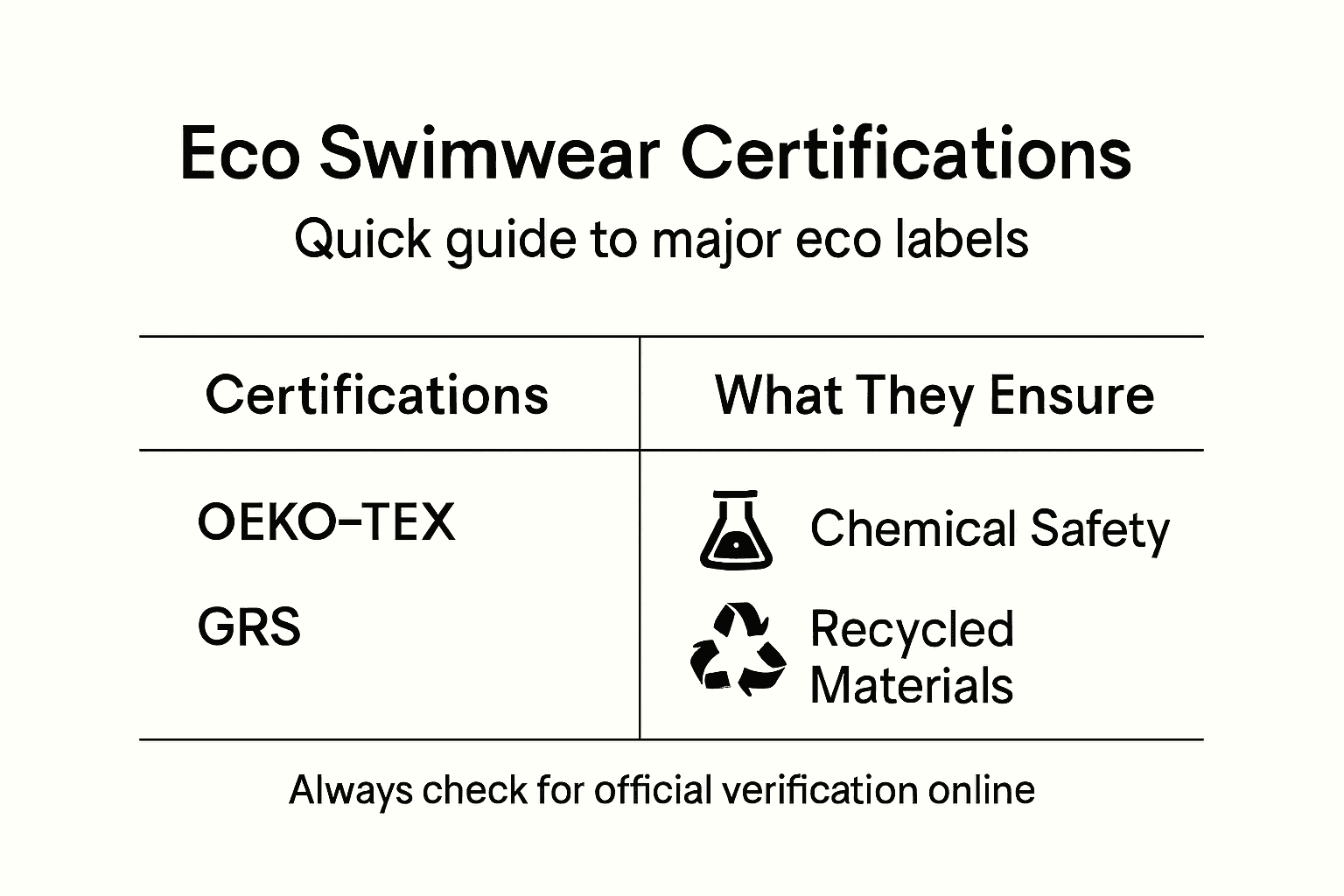
Here’s a quick reference to major eco swimwear certifications and what they verify:
| Certification Name | What It Verifies | Who Issues It |
|---|---|---|
| OEKO-TEX | Chemical safety testing | International OEKO-TEX Association |
| GRS | Recycled material tracking | Textile Exchange |
| Fair Trade | Ethical labor conditions | Fair Trade International |
| REPREVE | Recycled fabric source | Unifi, Inc. |
| ECONYL | Nylon made from ocean waste | Aquafil S.p.A. |
Not all certifications carry equal weight. Look for third-party certifications from independent organizations that conduct actual audits. Brands displaying certifications should link directly to the issuing organization so you can verify the claim is real. If you can’t confirm a certification exists, that’s a red flag.
Verify material transparency across your research:
- Request specific details about fabric sourcing and origin
- Check if brands disclose which factories manufacture their products
- Look for documentation of chemical safety testing results
- Confirm recycled materials have GRS or similar tracking verification
- Ask about the supply chain journey from raw material to finished product
Many brands hide behind vague language about “sustainable practices” without naming specific certifications or materials. Real transparency means you can trace materials back to their source and understand exactly what standards they meet.
Use certification systems like OEKO-TEX, GRS, and Fair Trade to validate sustainability claims. Cross-reference any certification on the issuing organization’s website to confirm the brand actually holds that credential. This takes five minutes and eliminates most greenwashing attempts.
Legitimate certifications come with accountability and external verification you can independently confirm.
Contact brands directly if information isn’t available online. Ask specific questions about their materials, certifications, and supply chain. How a brand responds reveals whether they’re genuinely transparent or just avoiding scrutiny.
Pro tip: Save the official websites of major certification bodies (OEKO-TEX, GRS, Fair Trade) in your bookmarks, then cross-check any brand claim against these databases before trusting it.
Discover Your Perfect Eco-Friendly Swimwear Today
Finding truly sustainable swimwear can feel overwhelming with so many brands making claims without proof. This article helps you navigate confusing terminology like “material transparency” and certifications such as OEKO-TEX and GRS to make confident, eco-conscious choices. If you want swim trunks, bikinis, or beach accessories that combine style with verified environmental responsibility, your search ends here.
Explore our carefully curated collection where every piece reflects real commitments to reducing ocean pollution and ethical manufacturing. Enjoy styles designed for durability, chlorine resistance, and UV protection while supporting fair labor and recycled fabric innovations.
Ready to make a positive impact while looking great this beach season

Shop sustainable swimwear now at Le Club Original and join a community passionate about eco-responsibility. Discover our new arrivals and seasonal sales to refresh your beach style without compromise. Don’t miss out on free shipping and exciting promotions that make choosing the planet-friendly option easy and rewarding.
Frequently Asked Questions
What criteria should I consider when looking for eco swim brands for sustainable beach style?
Before shopping, define your criteria based on your values and lifestyle needs. Focus on factors like material sustainability, ethical labor practices, size inclusivity, and performance standards to compare brands effectively.
How can I research trusted sustainable swim brands?
Look for brands that are transparent about their materials and manufacturing processes. Research online for customer reviews and seek out brands with recognized third-party certifications to confirm their sustainability claims.
What does it mean for a brand to have third-party certifications for their eco swimwear?
Third-party certifications indicate that a brand’s claims about sustainable materials and practices have been independently verified. Check for recognized certifications such as Global Recycled Standard or OEKO-TEX to ensure authenticity and accountability.
How can I evaluate the sustainability claims of a swimwear brand?
To evaluate sustainability claims, verify the materials used and check for specific certifications. Investigate their supply chain transparency and look for detailed reports on their environmental impact to ensure they are not engaging in greenwashing.
Why is size inclusivity important when choosing eco swim brands?
Size inclusivity reflects a brand’s commitment to serving a diverse range of body types, emphasizing ethical values and social responsibility. Choose brands that offer various sizes so you can support companies committed to inclusive fashion.
What is the best way to keep track of the sustainable swim brands I’m interested in?
Create a spreadsheet to compare your top brands based on key criteria like certifications, material transparency, size range, and price point. This organized approach will help you make informed decisions and reduce decision fatigue.