

Over 8 million tons of plastic end up in our oceans every year, and american swimwear brands are stepping up to challenge this crisis. For eco-conscious men who value both style and responsibility, picking sustainable swimwear is more than just a fashion statement, it is a commitment to environmental change. Discover how advanced materials and ethical manufacturing are reshaping swim trunks for beach vacations, helping you reduce plastic waste and support brands making a global impact.
Table of Contents
- What Makes Swimwear Sustainable in 2026
- Leading Materials and Eco-Friendly Processes
- Key Sustainable Swimwear Styles This Year
- Color, Pattern, and Texture Innovations
- Responsible Manufacturing and Brand Ethics
- Choosing the Right Sustainable Swim Trunks
Key Takeaways
| Point | Details |
|---|---|
| Sustainable Materials Are Key | Emphasis on innovative materials like Recycled Polyester and TENCEL™ Lyocell enhances environmental performance. |
| Ethical Manufacturing Matters | Brands are adopting transparent, ethical production processes, ensuring fair labor and reduced environmental impact. |
| Versatile Design Trends | Swimwear is evolving towards multi-functional pieces that maximize wearability and reduce waste. |
| Focus on Certifications | Look for certifications such as GOTS or Bluesign® to validate the sustainability of swimwear brands. |
What Makes Swimwear Sustainable in 2026
Sustainable swimwear in 2026 transcends traditional fabric production by integrating innovative materials, ethical manufacturing processes, and advanced textile technologies. Unlike past approaches focused solely on appearance, modern sustainable swimwear prioritizes environmental impact, durability, and responsible resource management.
Manufacturers are pioneering groundbreaking strategies, with textile innovation driving sustainability through materials like CiCLO® that enable biodegradability. These advanced fabrics address critical challenges in synthetic fiber production, reducing petrochemical dependency while maintaining performance and aesthetic quality. Key developments include:
- Biodegradable synthetic blends
- Water-repellent coatings that extend garment life
- Textile technologies minimizing microplastic shedding
- Multi-purpose design promoting extended wearability
The 2026 swimwear landscape emphasizes versatility and conscientious design. Eco-conscious fashion now balances performance with style, creating pieces that transition seamlessly between beach, pool, and casual wear. This approach reduces waste by creating garments with expanded utility and longer functional lifespans.
Pro tip: When shopping for sustainable swimwear, prioritize brands offering transparent manufacturing processes and using regenerative or biodegradable materials.
Leading Materials and Eco-Friendly Processes
Sustainable swimwear materials in 2026 represent a sophisticated evolution of textile engineering, blending environmental consciousness with advanced performance technologies. Innovative eco-friendly manufacturing strategies are transforming the swimwear landscape through carefully selected sustainable materials that minimize environmental impact while maximizing durability and style.
Key sustainable materials driving this transformation include:
- Recycled Polyester: Derived from plastic waste, converting ocean and landfill materials into high-performance swim fabrics
- Organic Cotton: Grown without harmful pesticides, reducing water consumption and chemical pollution
- TENCEL™ Lyocell: Manufactured from wood pulp using closed-loop production processes
- Hemp: A rapidly renewable fiber requiring minimal water and no pesticides
Eco-friendly manufacturing processes are equally critical in sustainable swimwear production. These innovative approaches include waterless dyeing techniques, closed-loop water recycling systems, and ethical labor practices that ensure fair wages and safe working conditions. Manufacturers are now prioritizing transparent supply chains that dramatically reduce water usage, chemical pollution, and overall carbon footprint.
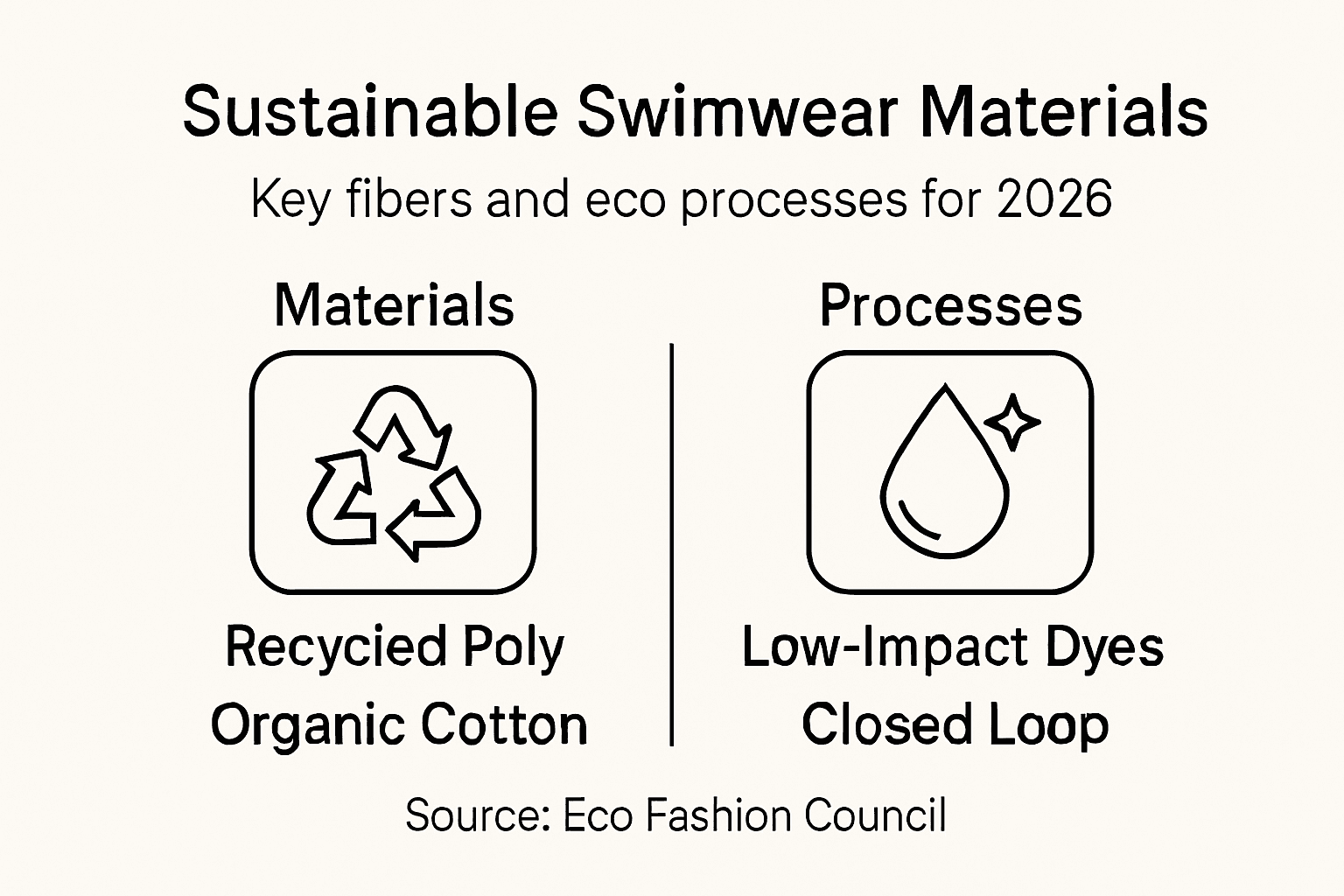
Pro tip: When evaluating sustainable swimwear, look for certifications like Global Organic Textile Standard (GOTS) or Bluesign® that validate environmentally responsible production.
Here’s how sustainable swimwear materials compare in terms of impact and performance:
| Material | Environmental Benefit | Comfort/Performance |
|---|---|---|
| Recycled Polyester | Reduces plastic waste, energy use | Soft, quick dry, durable |
| Organic Cotton | Low water, no toxic pesticides | Breathable, gentle on skin |
| TENCEL™ Lyocell | Closed-loop, renewable resource | Smooth, strong, absorbs well |
| Hemp | Minimal water, fast growth | Sturdy, UV resistant, airy |
Key Sustainable Swimwear Styles This Year
The swimwear landscape in 2026 is experiencing a radical transformation, where sustainability meets cutting-edge design. Innovative design approaches are reshaping traditional swimwear concepts, creating versatile pieces that transcend conventional beach and pool attire.
Key sustainable swimwear styles emerging this year include:
- Modular Swimwear: Pieces that can be reconfigured or layered for multiple looks
- Structured Minimalist Designs: Clean lines with architectural silhouettes
- Multi-Functional Pieces: Swimwear that transitions from beach to street
- Textured Eco-Fabrics: Lightweight materials with intricate surface treatments
Designers are prioritizing adaptable garments that offer both environmental responsibility and style flexibility. These swimwear innovations reflect a broader commitment to reducing fashion waste by creating garments with extended wearability and purpose. The trend goes beyond aesthetics, embedding sustainability into the core design philosophy of modern swimwear.

Pro tip: Invest in versatile, well-constructed swimwear pieces that can be styled multiple ways, maximizing your wardrobe while minimizing environmental impact.
Color, Pattern, and Texture Innovations
Sustainable swimwear in 2026 is experiencing a vibrant revolution in color and texture, moving far beyond traditional design constraints. Innovative color trend narratives are transforming swimwear into expressive, environmentally conscious art forms that tell a deeper story about personal style and ecological commitment.
The emerging color palette for sustainable swimwear showcases six distinct themes:
- Golden Earth Tones: Warm, natural hues reflecting environmental harmony
- Aquatic Blues: Oceanic shades representing water conservation awareness
- Solar-Charged Brights: Energetic colors symbolizing renewable energy
- Ethereal Softness: Delicate, muted tones suggesting environmental gentleness
- Metallic Accents: Recycled fiber finishes with luxurious, sustainable shine
- Matte Sustainable Textures: Understated surfaces with ecological certifications
These color and texture innovations represent more than aesthetic choices. They are deliberate statements about environmental responsibility, transforming swimwear from simple functional garments into powerful expressions of ecological consciousness. By integrating sustainable materials with sophisticated design narratives, designers are creating pieces that communicate commitment to planetary well-being.
Pro tip: Choose swimwear with colors and textures that not only complement your personal style but also tell a story about your environmental values.
Responsible Manufacturing and Brand Ethics
The swimwear industry is undergoing a profound transformation, with ethical manufacturing practices becoming the cornerstone of responsible production. Brands are moving beyond traditional profit models to create holistic approaches that prioritize environmental sustainability, worker welfare, and transparent supply chains.
Key ethical manufacturing strategies include:
- Recycled Material Sourcing: Using regenerated fibers like ECONYL
- Fair Labor Standards: Ensuring safe working conditions and living wages
- Low-Impact Production: Minimizing water consumption and chemical usage
- Circular Economy Design: Creating garments with end-of-life recyclability
- Supply Chain Transparency: Providing complete traceability of manufacturing processes
Sustainable swimwear production represents more than an environmental choice—it’s a commitment to global social responsibility. By integrating innovative materials, ethical labor practices, and transparent manufacturing, brands are redefining the relationship between fashion, environmental stewardship, and human dignity. This approach transforms swimwear from a simple commodity into a powerful statement of collective environmental consciousness.
Pro tip: Research brands’ sustainability certifications and manufacturing practices before purchasing, looking beyond marketing claims to understand their genuine environmental and social commitments.
See how key swimwear features support sustainability and consumer needs:
| Feature | Sustainability Benefit | Consumer Value |
|---|---|---|
| Modular Design | Encourages longer garment use | Multiple style options |
| Waterless Dyeing | Reduces chemical and water waste | Brighter, lasting colors |
| Circular Economy Model | Enables recycling and waste reduction | Garments never go to landfill |
| Transparent Supply Chain | Builds consumer trust | Confidence in ethical sourcing |
Choosing the Right Sustainable Swim Trunks
Selecting sustainable swim trunks requires a strategic approach that balances performance, style, and environmental responsibility. Sustainable swim trunk technology has evolved dramatically, challenging outdated perceptions about eco-friendly swimwear’s limitations and offering innovative solutions for environmentally conscious men.
Key considerations when choosing sustainable swim trunks include:
- Material Composition: Prioritize recycled plastics, organic fabrics, and regenerative materials
- Manufacturing Transparency: Research brands with clear ethical production practices
- Durability: Select trunks designed for extended wear and multiple seasons
- Performance Features: Ensure water-resistance, quick-drying capabilities, and comfort
- Versatility: Choose designs that transition between beach, pool, and casual settings
Modern sustainable swim trunks represent more than a clothing choice—they are a statement of environmental commitment. By selecting high-quality, responsibly produced swimwear, consumers directly support ocean conservation efforts and reduce the fashion industry’s ecological footprint. The technology now enables swim trunks that are competitively priced, stylish, and genuinely sustainable.
Pro tip: Always check for third-party sustainability certifications and detailed material sourcing information when purchasing eco-friendly swim trunks.
Embrace Sustainable Swimwear That Matches 2026 Trends and Your Values
The challenge of finding swimwear that combines style, performance, and real sustainability is clear. As the article highlights, modern eco-conscious swimwear must use innovative materials, embrace ethical manufacturing, and offer versatile designs that last longer. You want swim trunks that not only look great but also reduce plastic pollution and support fair labor practices. This is where Le Club Original meets your need for responsible fashion without compromise.
Explore our collection of sustainable swim trunks and beachwear crafted from recycled fabrics and produced through transparent, low-impact processes. Each piece is designed to keep you comfortable and stylish while supporting ocean conservation. Don’t wait to make a positive impact—discover the latest in eco-friendly swimwear and enjoy free shipping on orders over $50. Start your journey toward an eco-style that truly matters at Le Club Original. See how responsible fashion can become part of your beach and poolside wardrobe today.
Frequently Asked Questions
What are the key features of sustainable swimwear in 2026?
Sustainable swimwear in 2026 includes biodegradable materials, water-repellent coatings, reduced microplastic shedding, and multi-purpose designs that enhance wearability and environmental impact.
How do I identify sustainable swimwear brands?
Look for brands that offer transparent manufacturing processes, use biodegradable or regenerative materials, and have sustainability certifications such as Global Organic Textile Standard (GOTS) or Bluesign®.
What materials are commonly used in sustainable swimwear?
Common materials in sustainable swimwear include recycled polyester, organic cotton, TENCEL™ Lyocell, and hemp, all known for their minimal environmental impact and high performance.
Why is ethical manufacturing important in swimwear production?
Ethical manufacturing ensures safe working conditions, fair wages, and environmentally responsible practices, contributing to a sustainable future in fashion while promoting social responsibility.
Recommended
- What Is Sustainable Swimwear and Why It Matters – Le Club Original
- What Is Sustainable Swimwear and Why It Matters – Le Club Original
- 7 Essential Summer Beachwear Trends 2025 for Eco Style – Le Club Original
- 7 Essential Summer Beachwear Trends 2025 for Eco Style – Le Club Original
- Complete Guide to Sustainable Phone Cases – StudioShake