

Recycled nylon swim trunks can cut your carbon footprint by up to 60% compared to conventional fabrics, making a measurable difference with every beach trip. Yet eco-conscious men and boys often struggle to find stylish, sustainable beachwear that truly aligns with their environmental values. This guide breaks down sustainable textiles, from materials and production to durability and care, so you can make informed choices that protect oceans while keeping you looking sharp.
Table of Contents
- Introduction To Sustainable Textiles In Beachwear
- Types Of Sustainable Textiles Used In Beachwear
- Environmental Impact Reduction Mechanisms
- Durability And Performance Of Sustainable Beachwear Fabrics
- Certifications And Standards For Sustainable Textiles
- Common Misconceptions About Sustainable Textiles
- Choosing And Caring For Sustainable Beachwear
- Explore Stylish Sustainable Swimwear Options
- Frequently Asked Questions About Sustainable Textiles In Beachwear
Key Takeaways
| Point | Details |
|---|---|
| Sustainable textiles reduce environmental impact | They maintain style and durability while cutting emissions and waste. |
| Recycled nylon cuts carbon emissions by 60% | Choosing recycled fabrics significantly lowers your swimwear’s footprint. |
| Certifications verify eco-friendly claims | GOTS and similar standards ensure ethical production and material integrity. |
| Proper care extends swimwear lifespan | Washing cold and air drying maximize sustainability benefits. |
| Quality misconceptions are outdated | Recycled fabrics often outperform conventional materials in durability. |
Introduction to Sustainable Textiles in Beachwear
Sustainable textiles use eco-friendly raw materials and production processes designed to minimize environmental harm throughout their lifecycle. For beachwear specifically, this matters because swimwear faces harsh conditions like saltwater, chlorine, and UV exposure, requiring durable fabrics that won’t quickly degrade and contribute to waste. Traditional textile production poses significant environmental challenges like excessive water consumption, carbon emissions, and chemical pollution that contaminate waterways.
Understanding these challenges helps you appreciate why fabric choices matter so much. The fashion industry contributes nearly 2 to 10% of global carbon emissions, with conventional textile manufacturing consuming massive amounts of fresh water and releasing harmful dyes into ecosystems. When you choose sustainable swimwear, you’re directly addressing these problems.
The framework for evaluating sustainable textiles includes three key dimensions:
- Material source: Are fibers recycled, organic, or renewably grown?
- Production methods: Does manufacturing use renewable energy and closed-loop systems?
- Lifecycle impact: How long does the garment last, and what happens at end of life?
By grasping these fundamentals, you can see beyond marketing claims to identify genuinely eco-friendly beachwear. The next step is exploring specific sustainable materials that deliver on both environmental promises and performance needs.
Types of Sustainable Textiles Used in Beachwear
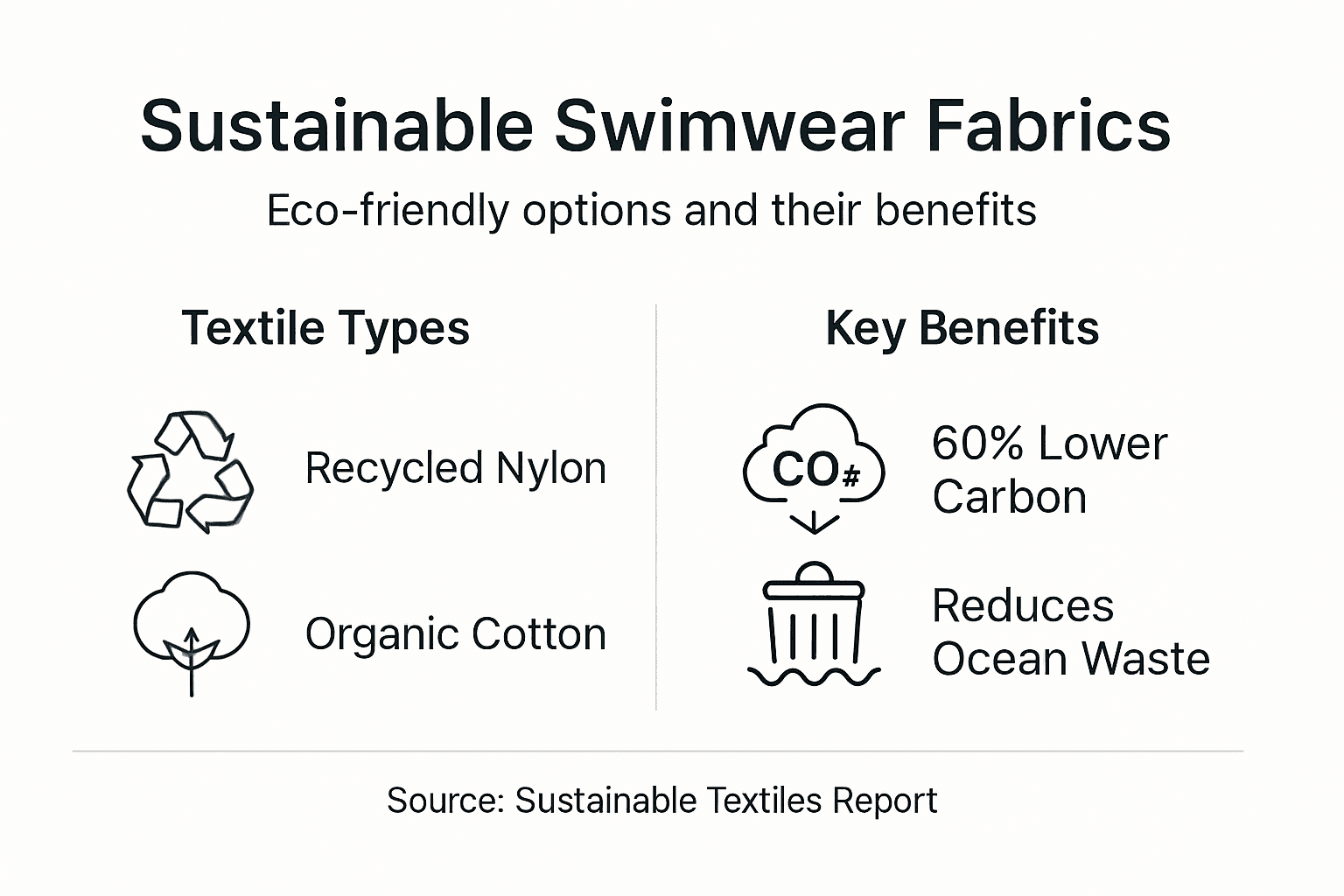
Recycled nylon stands out as a game changer for swimwear sustainability. Made from discarded fishing nets, fabric scraps, and industrial plastic waste, recycled nylon reduces carbon emissions by approximately 60% compared to virgin nylon production. It’s incredibly durable, resists degradation from chlorine and saltwater, and helps remove waste from oceans before it breaks down into microplastics.
Organic cotton offers another compelling option, especially for beach cover-ups and hybrid styles. Unlike conventional cotton farming that relies heavily on pesticides and irrigation, organic cotton uses 91% less water and eliminates toxic chemicals from the production process. It’s naturally biodegradable and incredibly soft against skin, though it dries slower than synthetic alternatives.
Tencel represents innovative fiber technology derived from sustainably harvested eucalyptus trees. The production process recycles 99% of solvents and water in a closed-loop system, preventing chemical discharge into the environment. Tencel fibers are naturally moisture-wicking, breathable, and gentler on sensitive skin than many synthetics.
Here’s how these materials compare:
| Material | Environmental Benefit | Source | Best Application |
|---|---|---|---|
| Recycled Nylon | 60% lower carbon emissions | Fishing nets, fabric waste | Swim trunks, performance swimwear |
| Organic Cotton | 91% less water usage | Pesticide-free farms | Beach cover-ups, casual styles |
| Tencel | 99% solvent/water recycling | Eucalyptus trees | Lightweight beachwear, quick-dry items |
Each material brings unique advantages. Recycled nylon excels in durability and ocean waste reduction. Organic cotton prioritizes chemical-free farming and biodegradability. Tencel balances renewable sourcing with minimal water impact. Choosing ocean-friendly clothing materials means understanding which benefits align best with your values and intended use.
Environmental Impact Reduction Mechanisms
Sustainable textiles tackle environmental damage through several concrete mechanisms. Understanding how these work helps you appreciate the real-world benefits of your purchasing decisions.
- Carbon footprint reduction: Recycled materials eliminate the energy-intensive extraction and refining of virgin petroleum-based fibers, cutting emissions dramatically.
- Water conservation: Closed-loop production systems and organic farming methods drastically reduce freshwater consumption compared to conventional processes.
- Chemical pollution prevention: Eliminating synthetic pesticides and recycling solvents keeps toxins out of soil and waterways.
- Microplastic mitigation: Higher quality sustainable fabrics shed fewer microplastic fibers during washing and maintain structural integrity longer.
Fashion contributes nearly 2 to 10% of global carbon emissions, a figure that sustainable fibers can significantly reduce. When manufacturers use renewable energy sources like solar or wind power for production, the carbon savings multiply. Some brands have cut their manufacturing emissions by over 80% through renewable energy investments alone.
Water waste represents another critical concern. Traditional textile dyeing and finishing processes discharge heated, chemically contaminated water into rivers and oceans. Sustainable production methods either eliminate wet processing entirely or treat and reuse water multiple times before safe discharge. This approach protects aquatic ecosystems and conserves increasingly scarce freshwater resources.
The microplastic problem deserves special attention for swimwear. Every time synthetic fabrics go through a wash cycle, tiny plastic fibers break off and flow into wastewater systems. Sustainable textiles can minimize microplastic pollution common in traditional synthetic fabrics by using higher quality fibers that resist breakdown and incorporating filtration-friendly designs.
Pro tip: Look for brands that explicitly mention renewable energy use and microplastic reduction strategies in their production. These details signal genuine commitment to reducing pollution through ocean-friendly apparel rather than surface-level greenwashing.
Durability and Performance of Sustainable Beachwear Fabrics
A common worry holds that recycled or organic fabrics sacrifice quality for environmental benefits. Real-world testing proves otherwise. Sustainable swimwear often lasts 30% longer than conventional options, translating to fewer replacements and less waste over time.
Consider this performance comparison:
| Feature | Recycled Nylon Swimwear | Conventional Nylon Swimwear |
|---|---|---|
| Average Lifespan | 3-4 years | 2-3 years |
| UV Protection | UPF 50+ rating | UPF 30-40 rating |
| Chlorine Resistance | Excellent | Good |
| Color Retention | Superior | Moderate |
| Stretch Recovery | 95%+ after 100 wears | 85-90% after 100 wears |
Sustainable swimwear demonstrates 30% longer functional lifespan compared to conventional alternatives, saving resources and money while reducing landfill waste.
The durability advantage stems from manufacturing precision. Companies producing recycled textiles typically employ advanced processing technologies that create stronger fiber bonds. These fabrics resist pilling, maintain elasticity better, and hold color longer despite repeated exposure to harsh conditions.
Recycled textiles match or exceed conventional fabric performance in virtually every category that matters for beachwear. They offer excellent four-way stretch for comfortable movement, quick-dry properties for convenience, and robust UV protection to shield your skin. Some recycled fabrics even incorporate antimicrobial treatments derived from natural sources like silver ions or plant extracts.
The quality difference becomes obvious after multiple seasons. While conventional swimwear often shows fading, sagging elastic, and thinning fabric after one summer of regular use, well-made sustainable options maintain their shape, color vibrancy, and structural integrity for years.
Pro tip: Invest in fewer, higher-quality eco-conscious swimwear pieces rather than multiple cheap alternatives. The upfront cost pays off through extended wear and reduced environmental impact.
Certifications and Standards for Sustainable Textiles
Navigating sustainability claims requires understanding credible third-party certifications. These standards provide transparent verification that cuts through marketing language to reveal genuine eco-friendly practices.
The Global Organic Textile Standard (GOTS) represents the gold standard for organic fiber certification. GOTS verification ensures textiles contain at least 70% organic fibers, prohibits harmful chemicals throughout production, and mandates fair labor practices. Factories undergo annual audits covering environmental management systems, wastewater treatment, and worker safety.
Other important certifications include:
- OEKO-TEX Standard 100: Tests finished products for over 100 harmful substances, ensuring fabric safety against skin
- bluesign: Certifies sustainable chemical management and resource efficiency throughout the supply chain
- Recycled Claim Standard (RCS): Verifies recycled content percentages and tracks materials from source to final product
- Global Recycled Standard (GRS): Combines recycled content verification with social and environmental production criteria
These certifications matter because they require documented proof and independent auditing. A brand can claim anything in marketing copy, but certification bodies demand supply chain transparency, regular testing, and compliance verification. This accountability protects you from greenwashing while supporting genuinely responsible manufacturers.
When shopping for sustainable swimwear, look for certification logos on product tags and detailed information on brand websites. Legitimate companies proudly display their certifications and explain what each one means. If a brand makes bold environmental claims without any third-party verification, approach with healthy skepticism.
Certifications also address social responsibility. Many standards require fair wages, safe working conditions, and prohibitions on child labor. Your purchase thus supports not just environmental health but also human dignity throughout the production chain.
Common Misconceptions About Sustainable Textiles
Several persistent myths prevent people from confidently choosing sustainable beachwear. Let’s separate fact from fiction with evidence.
- Myth: Recycled textiles feel rough and uncomfortable. Fact: Modern recycling processes produce fibers identical in softness and hand feel to virgin materials, often with enhanced moisture-wicking properties.
- Myth: Sustainable means boring, limited styles. Fact: Leading sustainable brands prioritize cutting-edge design, offering bold prints, modern fits, and fashion-forward aesthetics that rival any conventional brand.
- Myth: Eco-friendly fabrics compromise performance. Fact: Durability tests contradict beliefs that recycled textiles are less durable; sustainable fabrics frequently outlast conventional options while providing superior UV protection and stretch.
- Myth: You sacrifice functionality for sustainability. Fact: Recycled nylon and Tencel offer excellent quick-dry properties, four-way stretch, and chlorine resistance matching or exceeding traditional swimwear fabrics.
- Myth: Sustainable swimwear costs prohibitively more. Fact: While initial prices may run slightly higher, extended lifespan and durability make sustainable options more cost-effective over time.
These misconceptions often trace back to outdated information from early sustainable fashion experiments. Today’s textile technology has advanced dramatically. Recycled nylon feels indistinguishable from virgin nylon. Organic cotton rivals conventional cotton in softness. Tencel provides luxurious drape and comfort.
The style concern particularly lacks merit. Sustainable swimwear brands employ talented designers who understand that eco-conscious consumers refuse to compromise on aesthetics. You’ll find everything from classic solid colors to vibrant tropical prints, retro-inspired cuts to sleek modern silhouettes.
Performance testing backs up these claims. Independent laboratories subject sustainable fabrics to the same rigorous standards as conventional materials, measuring stretch recovery, colorfastness, UV protection, and durability through simulated years of use. Sustainable textiles consistently meet or exceed industry benchmarks.
Overcoming skepticism requires examining actual products and reading verified customer reviews. The proof lies in real-world performance across thousands of beach days, pool sessions, and ocean swims.
Choosing and Caring for Sustainable Beachwear
Making smart purchasing decisions and properly maintaining your swimwear maximizes both environmental benefits and personal value. Here’s your action plan.
When selecting sustainable swimwear:
- Verify certifications like GOTS, OEKO-TEX, or GRS on product descriptions and tags.
- Check material composition labels for recycled nylon, organic cotton, or Tencel content percentages.
- Research brand transparency by reviewing their website sustainability pages for detailed production information.
- Read customer reviews focusing on durability, fit retention, and color fastness over time.
- Compare warranty or guarantee policies that signal manufacturer confidence in product longevity.
Proper care extends swimwear life significantly. Proper care can significantly extend the lifespan of sustainable swimwear, enhancing its ecological benefits through these practices:
- Rinse immediately after each use in cool fresh water to remove salt, chlorine, and sunscreen residues.
- Hand wash with mild, eco-friendly detergent or use delicate machine cycle in cold water only.
- Never wring or twist fabric; gently squeeze excess water and lay flat or hang to air dry.
- Avoid direct sunlight during drying to prevent UV damage and color fading.
- Store in a cool, dry place away from heat sources that can degrade elastic fibers.
- Alternate between multiple swimwear pieces to allow full drying time and reduce wear on any single item.
These steps matter because improper care causes most premature swimwear failure. Hot water breaks down elastic fibers. Machine drying generates excessive heat that weakens fabric bonds. Harsh detergents strip color and damage textile structure. Following the eco-friendly swimwear care guide preserves your investment while minimizing environmental impact.
Pro tip: Keep three to four swimwear pieces in rotation rather than wearing the same pair repeatedly. This rotation allows each piece to fully dry and rest between uses, dramatically extending overall lifespan. You can learn more about how to wash swimwear sustainably to protect both fabric and environment.
Explore Stylish Sustainable Swimwear Options
Ready to put this knowledge into action? Discover curated collections of stylish sustainable swimwear that delivers on both environmental commitments and head-turning design. From classic cuts to bold contemporary styles, you’ll find options that align with your values without compromising on quality or aesthetics.

Explore top sustainable swimwear options designed specifically for eco-conscious men and boys who refuse to choose between style and sustainability. Each piece features verified sustainable materials and thoughtful construction for maximum durability. Pair your new swimwear with proven swimwear washing tips to extend its life and amplify your positive impact. Continue your journey by learning more about what makes swimwear truly sustainable and join a community committed to protecting the oceans we love.
Frequently Asked Questions about Sustainable Textiles in Beachwear
What fabrics are best for eco-friendly swimwear?
Recycled nylon leads for durability and ocean waste reduction, cutting carbon emissions by 60% compared to virgin materials. Organic cotton works well for cover-ups with 91% less water usage, while Tencel offers renewable sourcing with closed-loop production that recycles 99% of solvents.
How can I verify if swimwear is truly sustainable?
Look for third-party certifications like GOTS, OEKO-TEX, or Global Recycled Standard on product tags and descriptions. Check brand websites for transparent supply chain information, specific material percentages, and detailed environmental claims backed by verifiable data rather than vague marketing language.
Does sustainable swimwear offer UV protection?
Yes, many sustainable fabrics provide excellent UV protection, often exceeding conventional materials. Recycled nylon swimwear typically offers UPF 50+ ratings, blocking over 98% of harmful UV rays. Quality sustainable textiles maintain this protection throughout their extended lifespan without degradation.
Can caring for swimwear really reduce environmental impact?
Absolutely. Proper care extends swimwear life by 30% or more, reducing the need for replacements and associated manufacturing emissions. Washing in cold water, air drying, and avoiding harsh chemicals prevents premature breakdown while using less energy and protecting waterways from detergent pollution.
Are sustainable swimwear options more expensive?
Initial prices may run 10 to 30% higher than conventional swimwear, but superior durability makes sustainable options more cost-effective over time. When a garment lasts three to four years instead of two, the per-wear cost drops significantly while delivering measurably lower environmental impact.