

Searching for sustainable swimwear that truly delivers on eco promises while protecting your family’s skin can feel overwhelming. With over 60% of buyers experiencing dissatisfaction due to non-certified fabrics and poor UV protection, finding stylish, durable options requires clear guidance. This guide walks you through certifications, fit, seasonal considerations, and care to help you choose swimwear that lasts 25% longer while aligning with your environmental values.
Table of Contents
- Prerequisites: What You Need Before Selecting Seasonal Sustainable Swimwear
- Identifying Sustainable Swimwear Materials And Certifications
- Seasonal Functional Considerations: Climate, UV Protection, And Comfort
- Fit And Sizing Guidance For Men And Boys
- Ensuring Durability And Performance In Seasonal Swimwear
- Troubleshooting Common Mistakes In Eco Swimwear Selection
- Maintenance And Longevity Tips For Sustainable Swimwear
- Expected Outcomes And Benefits Of Following This Guide
- Explore Top Sustainable Swimwear For Pool Enthusiasts 2026
- Frequently Asked Questions
Key takeaways
| Point | Details |
|---|---|
| Verify sustainability | Look for GRS and OEKO-TEX certifications to confirm authentic eco-friendly materials and safe chemical standards. |
| Match fabric to season | Choose fabric weight and UPF 50+ protection based on North American climate and activity type for optimal comfort. |
| Prioritize proper fit | Accurate sizing reduces skin irritation by 40% and prevents slippage during swimming and beach activities. |
| Select durable features | Quick-drying and chlorine-resistant fabrics extend swimwear lifespan by 25-30% compared to conventional options. |
| Follow care guidelines | Hand wash with mild detergent and air dry to preserve eco-friendly treatments and fabric integrity. |
Prerequisites: what you need before selecting seasonal sustainable swimwear
Before you start shopping, gather the knowledge and tools that ensure confident decisions. Understanding what makes swimwear truly sustainable prevents costly mistakes and buyer’s remorse.
First, familiarize yourself with key certifications. GRS (Global Recycled Standard) and OEKO-TEX validate that fabrics meet strict environmental and chemical safety requirements. These aren’t marketing buzzwords but verified standards backed by independent testing. Without them, you’re trusting brand claims alone.
Next, learn basic swimwear fabric types and their environmental impacts. Recycled nylon, polyester, and regenerative materials like ECONYL transform ocean plastics into high-performance swimwear. Conventional fabrics contribute to microplastic pollution and require petroleum-based production.
Consider North American seasonal climates when evaluating fabric weight and breathability. Summer heat in Florida demands lighter, quick-drying materials, while cooler Pacific Northwest beach days benefit from slightly heavier fabrics. Matching fabric to climate enhances comfort and encourages regular use.
Access accurate sizing charts for both men and boys. Each brand sizes differently, and proper measurements prevent returns and waste. Keep a soft measuring tape handy and note waist, hip, and inseam measurements.
Finally, understand UV protection basics. UPF ratings indicate how much ultraviolet radiation fabrics block. UPF 50+ blocks over 98% of harmful rays, crucial for extended outdoor activities. Knowing this baseline helps you evaluate product claims critically.
- Identify GRS and OEKO-TEX certifications on product labels
- Research recycled nylon, polyester, and ECONYL fabric benefits
- Note your local seasonal climate patterns and typical water activities
- Measure waist and hip circumference accurately with a soft tape
- Learn UPF rating scale and minimum protection levels needed
Identifying sustainable swimwear materials and certifications
Once you understand prerequisites, focus on spotting genuinely eco-friendly materials. The swimwear market floods with vague sustainability claims, making verification essential.
Recycled materials form the foundation of sustainable swimwear. Recycled nylon swimwear reduces carbon footprint by up to 75% compared to virgin fabrics. ECONYL, a regenerative nylon made from fishing nets and ocean waste, transforms pollution into durable swim fabric. Recycled polyester offers similar benefits with excellent chlorine resistance.

Certifications separate authentic products from greenwashing. GRS confirms that fabrics contain verified recycled content and meet environmental processing standards. OEKO-TEX guarantees no harmful chemicals contact your skin, critical for children’s sensitive skin and prolonged water exposure. Both eco certifications and fabrics undergo third-party testing, providing accountability brands can’t fake.
Beware of misleading marketing language. Terms like “eco-conscious” or “earth-friendly” mean nothing without certification backing. Some brands highlight one sustainable feature while ignoring problematic manufacturing processes. Always look for specific certification logos and detailed material breakdowns on product pages.
Regeneration goes beyond recycling by actively removing pollution. ECONYL and similar regenerative materials pull waste from oceans, creating a closed-loop system. Each swimsuit purchase contributes to cleaning marine environments rather than adding to the problem.
- Choose fabrics labeled with GRS or OEKO-TEX certification marks
- Prioritize recycled nylon, polyester, or ECONYL materials
- Verify certification claims by checking official certification databases
- Avoid products with vague sustainability language lacking proof
- Support brands transparently sharing supply chain information
Pro Tip: Screenshot certification logos from product pages and verify them on official GRS and OEKO-TEX websites before purchasing to confirm authenticity.
Seasonal functional considerations: climate, UV protection, and comfort
Matching swimwear features to seasonal conditions maximizes both comfort and safety. North American climates vary dramatically, requiring thoughtful fabric selection.
Fabric weight and breathability shift with temperature. Lightweight fabrics (under 200 GSM) dry rapidly in hot summer conditions, preventing sweat buildup and bacterial growth. Slightly heavier fabrics (200-250 GSM) provide warmth during cooler spring and fall beach days without sacrificing quick-drying properties. Consider your typical water temperature and air conditions when selecting weight.
UV protection becomes non-negotiable for extended outdoor use. UPF 50+ fabrics block over 98% of UVA and UVB radiation, preventing sunburn and long-term skin damage. This protection remains constant even when wet, unlike sunscreen that washes off. For boys especially, built-in UV protection reduces application struggles and ensures consistent coverage.
Swimsuits with integrated UV protective technology and water-repellent finishes maintain effectiveness after 30 washes without toxic chemicals. Eco-friendly treatments use plant-based or non-toxic alternatives to conventional chemical coatings. These finishes enhance performance while preserving sustainability commitments.
Pool versus beach environments demand different considerations. Chlorinated pools require stronger chemical resistance to prevent fabric degradation and color fading. Saltwater and sand exposure need abrasion-resistant fabrics that rinse clean easily. If you split time between both, prioritize chlorine resistance as it typically handles saltwater well too.
- Select lightweight fabrics (under 200 GSM) for hot summer climates
- Choose slightly heavier fabrics (200-250 GSM) for cooler seasonal conditions
- Verify UPF 50+ rating for maximum sun protection during activities
- Look for eco-friendly water-repellent and UV treatments lasting 30+ washes
- Match chlorine or saltwater resistance to your primary swimming environment
Key Stat: UPF swimwear and sun protection technology blocks 98.5% of UV radiation, reducing sunburn risk by over 95% compared to unprotected skin during 4+ hour beach days.
Fit and sizing guidance for men and boys
Proper fit transforms swimwear from functional to genuinely enjoyable. Poor sizing causes irritation, slippage, and safety concerns that undermine even the best sustainable fabrics.
Proper swimwear fit reduces skin irritation by 40% and improves comfort during swimming, running, and beach activities. Chafing from loose waistbands or tight leg openings creates painful hot spots. Accurate measurements prevent these issues from the start.
For men, measure waist circumference at the natural waistline where you typically wear pants. Measure hips at the fullest point. Compare both measurements to brand size charts, as swim trunks vary between athletic and relaxed fits. Most sustainable swimwear runs true to size but check customer reviews for fit feedback.
Boys’ swimwear requires extra attention to growth and activity level. Measure waist and hips similarly, but prioritize adjustable features. Elastic waistbands with drawstrings accommodate growth spurts and active play. Avoid overly loose fits that create drag while swimming or pose safety risks in strong currents.
Fit considerations differ between men’s and boys’ styles. Men typically prefer longer inseams (7-9 inches) for coverage, while boys benefit from shorter lengths (5-7 inches) that don’t restrict movement. Leg opening width affects both comfort and swimming efficiency. Too tight restricts circulation; too loose creates drag.
- Measure waist circumference at natural waistline using soft measuring tape
- Measure hip circumference at fullest point for accurate size matching
- Compare measurements to brand-specific size charts before ordering
- For boys, choose adjustable waistbands with drawstrings for growth
- Consider activity level when selecting between athletic and relaxed fits
- Check customer reviews for insights on whether items run large or small
Pro Tip: Order one size up for boys if measurements fall between sizes, as adjustable waistbands easily accommodate the extra room while providing longer wear as they grow.
For detailed guidance on men’s swimwear sizing and fit tips, reference brand-specific recommendations that account for different body types and style preferences.
Ensuring durability and performance in seasonal swimwear
Durability directly impacts sustainability by reducing replacement frequency. Selecting performance features extends swimwear life while maintaining comfort and appearance.
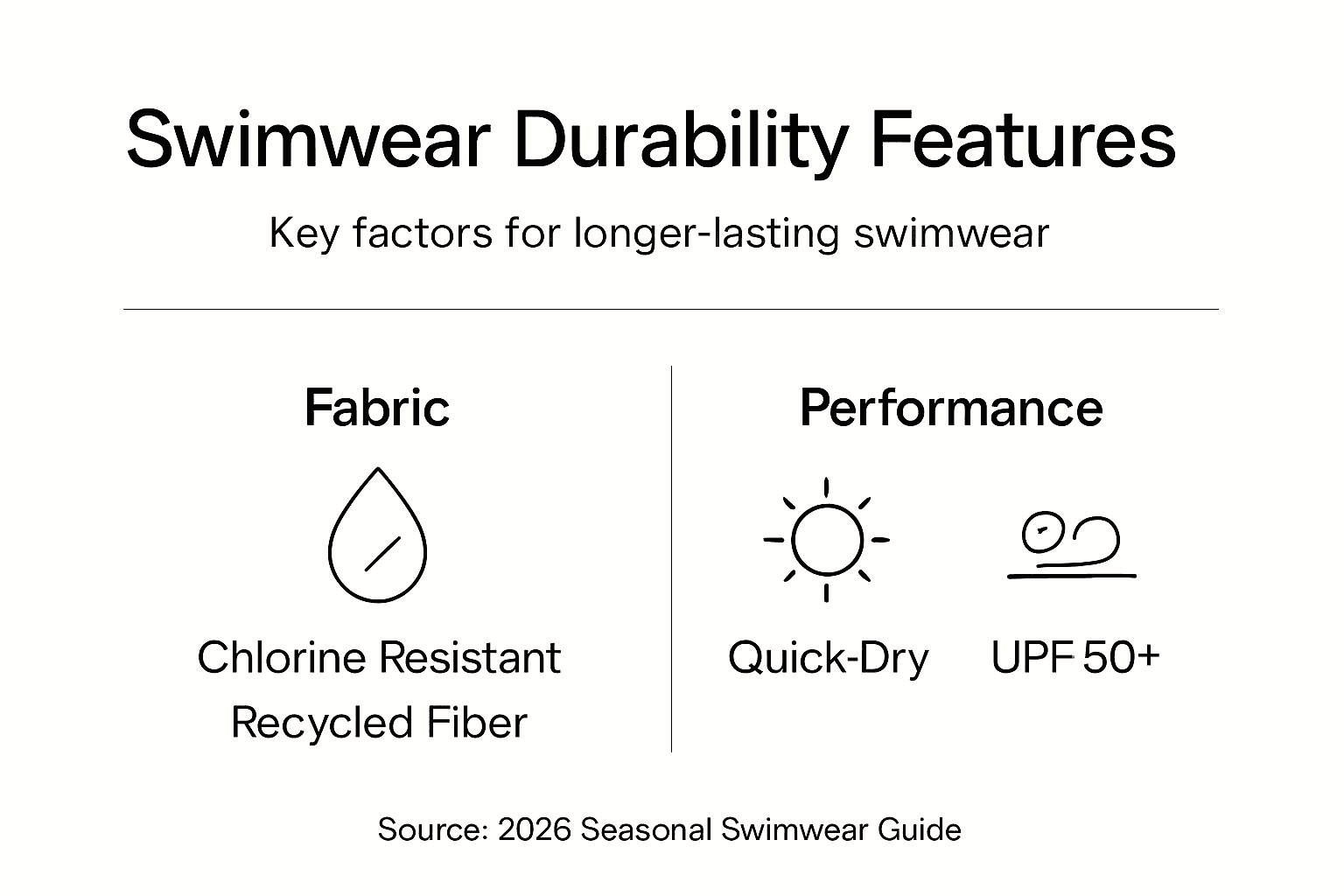
Chlorine resistance preserves fabric integrity in pools. Chlorine breaks down conventional swimwear fibers, causing fading, stretching, and thinning after 20-30 uses. Quality sustainable fabrics with chlorine-resistant treatments maintain shape and color through 100+ pool sessions. This longevity reduces waste and provides better value.
Quick-drying fabrics prevent bacterial growth and odor between uses. Moisture-wicking technology pulls water away from skin, accelerating evaporation. Faster drying means less time spent in damp swimwear, reducing bacterial colonization that causes unpleasant smells. This feature proves especially valuable for boys who resist changing immediately after swimming.
Comparing fabric characteristics helps match options to your priorities:
| Fabric Type | Chlorine Resistance | Quick-Dry Speed | UV Protection | Durability Rating |
|---|---|---|---|---|
| Recycled Nylon | Excellent | Very Fast | UPF 50+ | High (100+ uses) |
| Recycled Polyester | Outstanding | Fast | UPF 50+ | Very High (150+ uses) |
| ECONYL | Excellent | Very Fast | UPF 50+ | High (100+ uses) |
| Conventional Nylon | Good | Fast | Variable | Medium (50-75 uses) |
Eco-friendly performance treatments enhance functionality without toxic chemicals. Plant-based water repellents shed moisture faster while maintaining breathability. Non-toxic UV stabilizers prevent fabric degradation from sun exposure. These treatments align with sustainability goals while delivering professional-grade performance.
- Prioritize chlorine-resistant fabrics for frequent pool use
- Choose quick-drying materials to prevent bacterial odor buildup
- Verify UPF 50+ rating remains consistent across fabric types
- Look for eco-friendly performance treatments over conventional chemicals
- Consider expected use frequency when evaluating durability ratings
Maintaining these performance features requires proper care. Visit sustainable swimwear care tips for washing guidance, and review swimwear durability guidelines for storage and maintenance practices that preserve fabric treatments.
Troubleshooting common mistakes in eco swimwear selection
Avoiding frequent pitfalls saves money and disappointment. Understanding where buyers typically stumble helps you make smarter choices from the start.
The biggest mistake involves trusting uncertified sustainability claims. Brands slap “eco-friendly” labels on conventional products, hoping buyers won’t verify. Always confirm GRS or OEKO-TEX certification before believing environmental promises. If certifications aren’t prominently displayed, assume the product doesn’t qualify.
Ignoring UV protection creates health risks that undermine swimwear’s purpose. Many buyers prioritize style over sun safety, choosing fashionable options without UPF ratings. This gamble exposes skin to cumulative UV damage that compounds over seasons. Never compromise on UPF 50+ protection, especially for children whose skin damage accumulates more severely.
A persistent misconception claims sustainable swimwear sacrifices style or durability. Modern eco fabrics match or exceed conventional performance while offering contemporary designs. This outdated belief prevents buyers from exploring superior sustainable options. Quality sustainable swimwear delivers fashion, function, and environmental benefits simultaneously.
Low-quality materials masquerade as eco-friendly through clever marketing. Thin, poorly constructed swimwear with recycled content still fails after a few uses, creating waste despite sustainable origins. Evaluate construction quality, stitching, and fabric weight alongside environmental credentials. True sustainability combines responsible materials with durability.
Size selection errors cause returns that increase shipping emissions and packaging waste. Measure accurately and consult size charts thoroughly before ordering. When measurements fall between sizes, consider whether adjustable features or fabric stretch compensates. Taking extra time upfront prevents multiple shipments.
- Verify GRS or OEKO-TEX certification before trusting eco-friendly claims
- Never compromise on UPF 50+ protection for style preferences
- Reject the misconception that sustainable swimwear lacks style or durability
- Evaluate construction quality alongside recycled material content
- Measure carefully and consult size charts to avoid return shipping waste
- Research brand reputation for transparency and customer satisfaction
Maintenance and longevity tips for sustainable swimwear
Proper care extends swimwear life significantly, maximizing your environmental and financial investment. Simple maintenance practices preserve performance features through hundreds of uses.
Hand washing protects delicate eco-friendly treatments and fabric integrity. Fill a basin with cool water and add a small amount of mild, eco-friendly detergent. Gently agitate swimwear for 2-3 minutes, focusing on areas with sunscreen or chlorine buildup. Rinse thoroughly with cool water until no soap remains.
Machine dryers destroy swimwear faster than any other factor. High heat breaks down elastic fibers, degrades UV treatments, and causes shrinkage. Air drying preserves fabric structure and maintains fit. Lay swimwear flat on a clean towel away from direct sunlight, which can fade colors despite UV protection designed for wearing.
Storage practices prevent unnecessary damage during off-seasons. Store completely dry swimwear in a cool, dark drawer or closet. Avoid plastic bags that trap moisture and promote mildew. Fold rather than hang to prevent stretching. Keep away from sharp objects that might snag delicate fabrics.
Wash frequency balances cleanliness with fabric preservation. Rinse swimwear in cool fresh water immediately after each use to remove chlorine, salt, and sunscreen. Perform a full wash with detergent every 3-4 uses or whenever odor develops. Overwashing accelerates wear unnecessarily.
- Rinse swimwear in cool fresh water immediately after each use
- Hand wash with mild eco-friendly detergent every 3-4 uses
- Gently squeeze excess water without wringing or twisting fabric
- Lay flat on clean towel away from direct sunlight to air dry
- Store completely dry swimwear folded in cool, dark location
- Avoid machine washing and drying to preserve fabric treatments
- Inspect regularly for loose threads or weak seams needing repair
Pro Tip: Keep a small bottle of mild detergent in your beach bag for immediate post-swim rinsing at outdoor showers, preventing chlorine and salt from setting into fibers before you get home.
Detailed swimwear washing instructions provide additional techniques for removing stubborn stains and maintaining specific fabric types.
Expected outcomes and benefits of following this guide
Applying this guide’s principles delivers measurable improvements in protection, longevity, and satisfaction. Understanding realistic expectations helps you evaluate success.
Skin protection improves dramatically with UPF 50+ fabrics. You’ll experience fewer sunburns, reduced sun damage accumulation, and greater comfort during extended outdoor activities. For children, this protection builds healthy sun safety habits that last into adulthood. UV protection works consistently without reapplication, unlike sunscreen that washes off or wears away.
Swimwear lifespan extends 25-30% compared to conventional options when you choose durable, certified fabrics and follow proper care. This translates to 2-3 additional seasons of regular use before replacement. Fewer replacements reduce environmental impact and provide significant cost savings over time.
Environmental impact decreases through verified sustainable materials. Each purchase supports ocean plastic removal, reduces petroleum-based production, and promotes ethical manufacturing. You’ll contribute to measurable pollution reduction rather than adding to the problem. This impact multiplies as your purchasing decisions influence market demand.
Comfort and confidence increase when swimwear fits properly and performs reliably. No more adjusting slipping waistbands, dealing with chafing, or worrying about inadequate sun protection. Boys stay focused on activities rather than uncomfortable swimwear. You’ll spend more time enjoying water activities and less time managing gear issues.
Style satisfaction aligns with environmental values, eliminating the compromise many buyers accept. Modern sustainable swimwear offers contemporary designs, flattering fits, and appealing colors that match conventional fashion standards. You’ll feel good about your choices both aesthetically and ethically.
- Achieve over 98% UV protection blocking harmful rays during outdoor activities
- Extend swimwear functional life by 25-30% through quality and proper care
- Reduce personal environmental footprint with verified sustainable materials
- Experience 40% less skin irritation from proper fit and safe fabrics
- Gain style confidence that matches your eco-conscious values
- Support ocean plastic removal and ethical manufacturing practices
Explore top sustainable swimwear for pool enthusiasts 2026
Ready to put this knowledge into practice? Le Club Original offers carefully curated sustainable swimwear meeting every criterion covered in this guide. Our collection features GRS and OEKO-TEX certified fabrics that deliver authentic environmental benefits without compromising style or performance.
Every design incorporates UPF 50+ protection, ensuring your family’s skin stays safe during marathon beach days and pool sessions. Our fabrics combine quick-drying technology with chlorine resistance, extending lifespan well beyond conventional swimwear. Styles for men and boys reflect current trends while maintaining the timeless appeal that keeps pieces relevant season after season.
Our top sustainable swimwear picks showcase performance fabrics optimized for North American seasonal conditions, from humid summer heat to cooler shoulder season beach weather. Each product page provides detailed certification information, sizing guidance, and material breakdowns so you can shop confidently.
Maintaining your investment is simple with our comprehensive guides. Visit sustainable swimwear care tips for washing techniques that preserve eco-friendly treatments and extend wear life. Our care recommendations help you achieve the 25-30% longevity improvement this guide promises.
Frequently asked questions
What certifications should I look for in sustainable swimwear?
Prioritize GRS (Global Recycled Standard) and OEKO-TEX certifications when shopping. GRS confirms fabrics contain verified recycled content and meet environmental processing standards. OEKO-TEX guarantees no harmful chemicals contact your skin, essential for children’s sensitive skin during prolonged water exposure. Both trusted swimwear certifications undergo independent third-party testing, providing accountability beyond brand marketing claims.
How do I ensure swimwear fits my son properly?
Measure your son’s waist and hip circumference accurately using a soft measuring tape at the natural waistline and fullest hip point. Compare these measurements to brand-specific size charts rather than assuming standard sizing. Choose styles with adjustable waistbands featuring drawstrings that accommodate growth spurts and active play. When measurements fall between sizes, order one size up since adjustable features easily compensate for extra room. Detailed men and boys’ swimwear sizing tips provide additional guidance for different body types.
What makes swimwear truly UV protective and sustainable?
Authentic UV protection requires UPF 50+ rated fabrics that block over 98% of harmful UVA and UVB radiation. This protection remains constant even when wet, unlike sunscreen that washes away. Eco-friendly UV and water-repellent treatments maintain protective functions through many washes without toxic chemicals, using plant-based alternatives instead. Sustainability comes from verified recycled materials like ECONYL or recycled nylon carrying GRS certification. Learn more about UPF 50+ swimwear technology and how it protects skin while supporting environmental goals.
How can I extend the life of my sustainable swimwear?
Hand wash swimwear with mild, eco-friendly detergent in cool water every 3-4 uses or when odor develops. Rinse thoroughly in cool fresh water immediately after each use to remove chlorine, salt, and sunscreen before they set into fibers. Never use machine dryers, as high heat destroys elastic fibers and degrades UV treatments. Instead, lay swimwear flat on a clean towel away from direct sunlight to air dry completely before storage. Following these sustainable swimwear care tips preserves fabric treatments and extends functional life by 25-30% compared to conventional care methods.