

Finding eco swim trunks that blend style, comfort, and genuine sustainability can feel overwhelming. With claims of carbon footprint reductions up to 60%, knowing what’s real and what’s greenwashing matters. This guide walks you through each buying step to shop smart, support ocean conservation, and wear trunks you’ll love.
Table of Contents
- Prerequisites: What You Need Before Buying Eco Swim Trunks
- Step 1: Identify Eco-Friendly Materials and Certifications
- Step 2: Research Ethical Swimwear Brands and Their Practices
- Step 3: Compare Product Features and Sustainability Efforts
Key Takeaways
| Point | Details |
|---|---|
| Identify eco-certified materials | Look for ECONYL®, REPREVE®, and hemp with verified certifications like GRS and OEKO-TEX®. |
| Research ethical brands | Verify fair labor practices, supply chain transparency, and ocean conservation commitments. |
| Compare sustainability metrics | Assess carbon footprint reduction, chemical safety, and microplastic prevention strategies. |
| Avoid common mistakes | Never skip size charts or buy trunks without recognized certifications to prevent greenwashing. |
| Maximize your impact | Support brands donating to ocean cleanup and social justice while optimizing shipping choices. |
Prerequisites: What You Need Before Buying Eco Swim Trunks
Before diving into your purchase, you need foundational knowledge to navigate the eco swimwear landscape effectively. Understanding sustainable fabrics sets the stage for smart decisions.
Familiarize yourself with these core materials:
- ECONYL® regenerated nylon from ocean plastics and fishing nets
- REPREVE® polyester made from recycled plastic bottles
- Hemp fiber requiring minimal water and pesticides
Knowing key certifications in swimwear helps you verify genuine sustainability claims. According to Eco-Certifications in Swimwear: Ensuring Real Impact, certifications like Global Recycled Standard (GRS), OEKO-TEX® STANDARD 100, and Bluesign® validate real sustainability claims in swimwear. These credentials confirm recycled content, chemical safety, and responsible production practices.
Set a realistic budget. Quality eco swim trunks typically cost more upfront but deliver superior durability and environmental benefits. Expect to invest between $50 and $120 for certified sustainable options that last multiple seasons.
Access reliable size charts directly from brands. Proper fit reduces returns and waste, maximizing your eco impact. Research brands offering detailed measurements and transparent information about their manufacturing processes. Resources like safe and sustainable swimwear materials provide comprehensive guidance on what to look for in ethical swimwear companies.
Step 1: Identify Eco-Friendly Materials and Certifications
Your first shopping step focuses on spotting genuinely sustainable swim trunks through materials and certifications. This knowledge protects you from greenwashing and ensures your purchase supports real environmental progress.
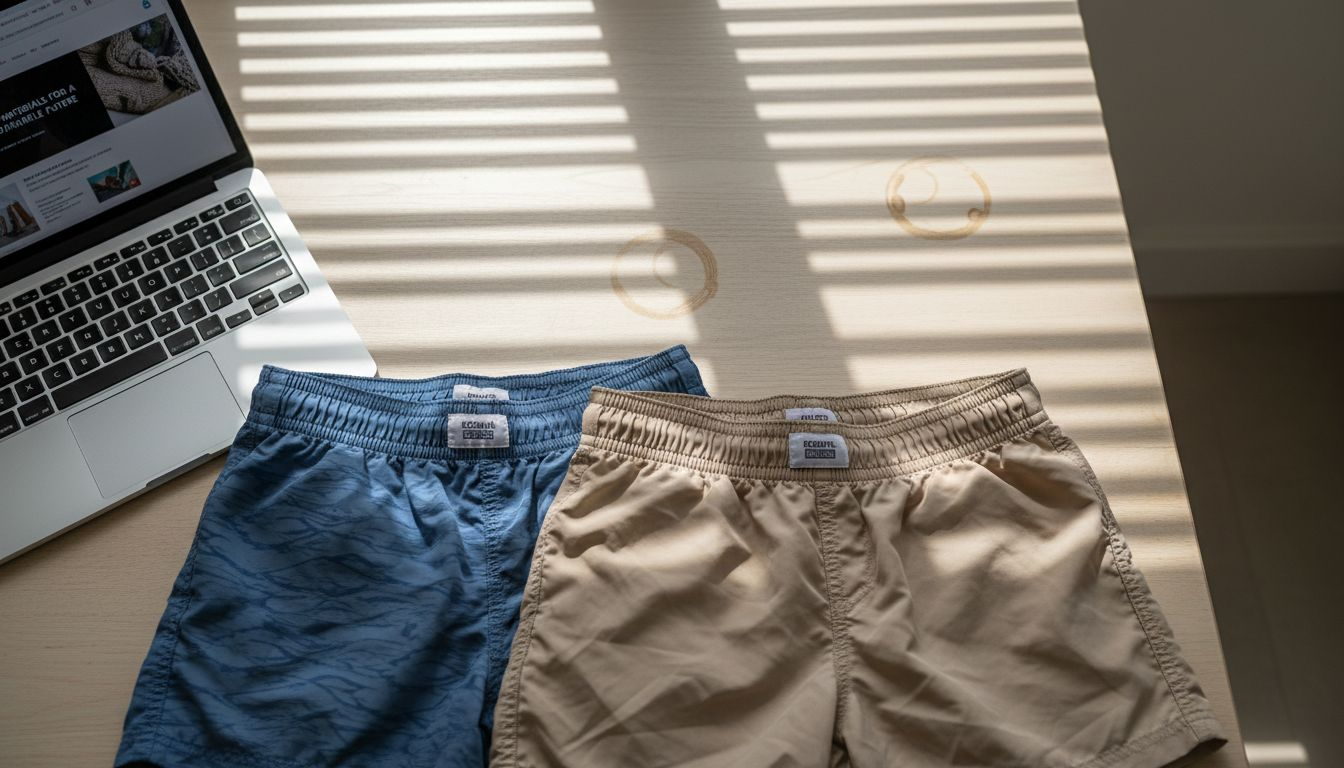
Recognize recycled fabrics that repurpose waste. ECONYL® regenerates nylon from abandoned fishing nets and other ocean plastics, giving new life to materials that would otherwise harm marine ecosystems. REPREVE® transforms plastic bottles into high-performance polyester fiber, diverting waste from landfills. Both materials perform exceptionally well in swimwear, offering durability and quick-dry properties.
Certifications matter more than marketing claims. Look for these key credentials:
- Global Recycled Standard (GRS) verifying recycled content percentage
- OEKO-TEX® STANDARD 100 guaranteeing chemical safety for skin contact
- Bluesign® ensuring responsible production from raw material to finished product
According to Eco-Certifications in Swimwear: Ensuring Real Impact, certifications like Global Recycled Standard (GRS), OEKO-TEX® STANDARD 100, and Bluesign® validate real sustainability claims in swimwear. These third-party verifications provide accountability that self-reported eco claims lack.
Understand that recycled doesn’t automatically mean chemical-free. Some recycled fabrics still contain harmful substances from their previous life or manufacturing process. OEKO-TEX® certification specifically tests for toxic chemicals, protecting your skin from irritants and carcinogens. When you shop ethical swim trunks, prioritize products displaying multiple certifications.
Pro Tip: Always cross-check both material claims and certifications on product pages and brand websites. A truly sustainable brand proudly displays certification badges with clickable verification links. Resources like ethical swimwear materials and certifications help you understand what genuine credentials look like versus vague eco-language.
Step 2: Research Ethical Swimwear Brands and Their Practices
After identifying sustainable materials and certifications, you need to vet the brands behind the products. Ethical manufacturing and fair labor practices separate genuinely responsible companies from those simply capitalizing on eco trends.
Check for Fair Trade certification and social justice commitments. These credentials demonstrate that workers receive fair wages, safe working conditions, and respect for their rights. Brands with Fair Trade partnerships often provide detailed information about their factory locations and labor standards.
Verify supply chain transparency. Responsible brands openly share where and how their products are made. Look for companies publishing supplier lists, factory audit results, and manufacturing process details on their websites. This openness indicates accountability and confidence in their ethical practices.
Favor brands actively participating in ocean conservation. According to 15 Sustainable Swimwear Brands Ranked For 2026, shopping from brands with transparent ethical manufacturing and fair labor certification ensures support for responsible business and reduces ocean plastic pollution. Many sustainable swimwear companies donate portions of proceeds to marine cleanup initiatives or partner with environmental organizations.
Consider these brand evaluation criteria:
- Published sustainability reports with measurable impact data
- Membership in industry sustainability coalitions
- Clear communication about manufacturing locations and partners
- Active social media engagement on environmental and social issues
Investigate fair labor and ethical production standards the brand follows. Ethical manufacturing extends beyond environmental concerns to encompass worker welfare and community impact. Brands supporting local economies and investing in worker education create positive ripple effects beyond the product itself.
Look for companies collaborating with nonprofits focused on ocean health, plastic pollution reduction, or coastal community support. These partnerships amplify your purchasing power, turning your swim trunk investment into broader environmental and social change. Resources like brands supporting ocean conservation help you identify companies genuinely committed to marine protection.
Step 3: Compare Product Features and Sustainability Efforts
With your shortlist of ethical brands, you can now evaluate specific products based on functionality and environmental impact. This comparison ensures you find swim trunks meeting your style, comfort, and sustainability requirements.
Compare environmental footprints of different materials. According to 15 Safest Non-Toxic & Organic Swimwear Brands In 2026, eco-friendly swim trunks can reduce carbon footprint by up to 60% compared to virgin nylon products. ECONYL® regenerated nylon offers this significant carbon emission reduction while maintaining durability and performance.
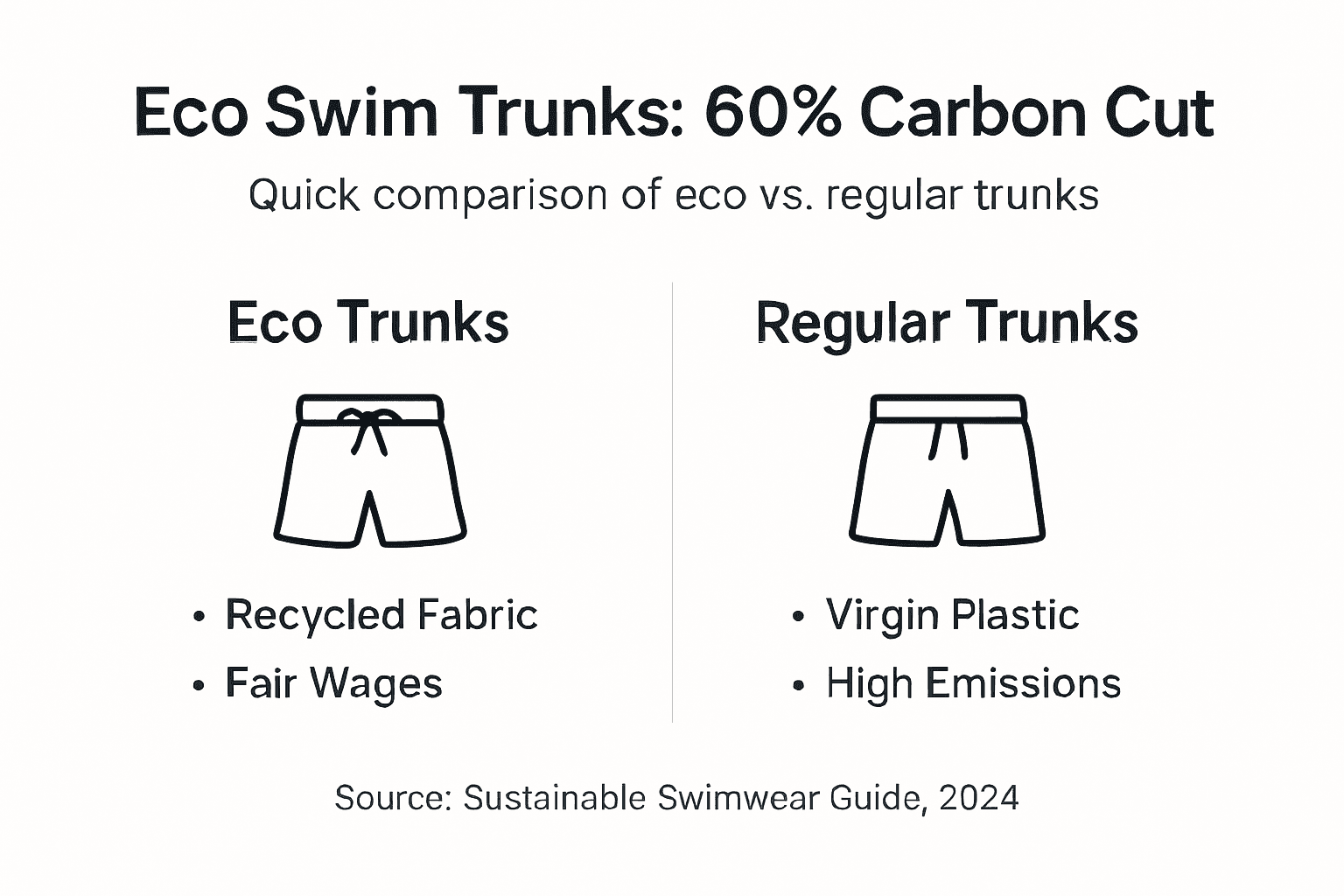
| Feature | Recycled Materials | Virgin Synthetics | Natural Fibers |
|---|---|---|---|
| Carbon Footprint | 60% lower than virgin | Highest impact | Variable, often moderate |
| Durability | Excellent with proper care | Excellent | Good but may degrade faster |
| Quick-Dry Performance | Excellent | Excellent | Slower drying time |
| Chemical Safety | Requires OEKO-TEX® verification | Often contains harmful chemicals | Generally safer but check dyes |
Evaluate practical functionality factors:
- Mesh lining for comfort and support
- Quick-dry fabric technology for convenience
- Sizing accuracy based on customer reviews
- Pocket design and drainage features
- Drawstring quality and waistband construction
Assess sustainability efforts beyond fabric choice. Leading brands implement eco-friendly packaging using recycled or compostable materials, reducing waste from your purchase. Water-efficient dyeing processes significantly lower environmental impact, as textile dyeing traditionally consumes massive water quantities. Some companies employ waterless dyeing technology or use natural, low-impact dyes.
Consider microplastic reduction strategies. Swim trunks shed tiny plastic fibers during washing, contributing to ocean pollution. Brands addressing this issue through special fabric treatments, washing bag recommendations, or partnerships with filtration solution companies demonstrate comprehensive environmental thinking.
Pro Tip: Prioritize trunks with multiple certifications and transparent impact data over vague eco-marketing claims. When you choose eco swimwear, look for specific metrics like carbon savings, water reduction percentages, or plastic bottles diverted rather than generic