

Ever wonder how a simple swim trunk can block 98% of harmful UV rays while also protecting our oceans? UPF swimwear offers serious sun protection through specialized fabrics, but many buyers still confuse it with sunscreen or assume all UPF options are sustainable. This article breaks down what UPF actually means, how the technology works, and how to choose eco-friendly options that deliver real protection without compromising style or environmental values.
Table of Contents
- Understanding UPF: What Does UPF Mean in Swimwear?
- How UPF Swimwear Provides Sun Protection
- Sustainability in UPF Swimwear Materials
- Common Misconceptions About UPF Swimwear
- UPF Swimwear Versus Sunscreen: A Comparison
- Fashion and Functionality in UPF Swimwear
- Choosing the Right UPF Swimwear: Practical Guidance for Eco-Conscious Buyers
- Explore Stylish, Sustainable UPF Swimwear at Le Club Original
Key Takeaways
| Point | Details |
|---|---|
| UPF measures fabric UV blocking | UPF rates how much UV radiation fabric blocks, separate from SPF sunscreen ratings. |
| UPF 50+ blocks 98% of UV rays | High UPF ratings provide reliable sun protection when fabric covers skin. |
| Sustainable UPF uses recycled materials | Eco-friendly options incorporate ocean plastics and recycled fibers. |
| UPF complements sunscreen | Apply sunscreen to exposed skin since fabric only protects covered areas. |
| Check certifications for sustainability | Verify recycled content and manufacturing transparency before purchase. |
Understanding UPF: What Does UPF Mean in Swimwear?
UPF stands for Ultraviolet Protection Factor. It measures how effectively fabric blocks UV radiation from reaching your skin. Think of it as the fabric version of sunscreen ratings, but with key differences.
The UPF rating scale ranges from 15 to 50+, indicating protection levels. A garment rated UPF 15 blocks about 93% of UV rays, while UPF 50+ blocks approximately 98%. These numbers tell you exactly what fraction of UV radiation penetrates the fabric.
Unlike SPF, which measures how long you can stay in the sun before burning compared to unprotected skin, UPF directly indicates the percentage of UV blocked. Detail on UPF swimwear definition helps clarify this distinction further.
Key UPF categories include:
- UPF 15 to 24: Good protection, blocks 93.3% to 95.9% UV
- UPF 25 to 39: Very good protection, blocks 96% to 97.4% UV
- UPF 40 to 50+: Excellent protection, blocks 97.5% to 98%+ UV
UPF ratings cover both UVA rays (which age skin) and UVB rays (which burn skin). Testing occurs under standardized laboratory conditions to ensure reliability and consistency across manufacturers. When you see a UPF label, you can trust those numbers represent real, measured protection.
How UPF Swimwear Provides Sun Protection
UPF swimwear blocks UVA and UVB rays effectively through specialized fabric construction and treatments. The technology combines physical barriers with chemical enhancements to create reliable sun defense.
Dense weaves form the foundation. Tightly woven synthetic fibers leave fewer gaps for UV light to penetrate. Polyester and nylon naturally offer better UV blocking than cotton because their molecular structure absorbs and scatters UV radiation more effectively.
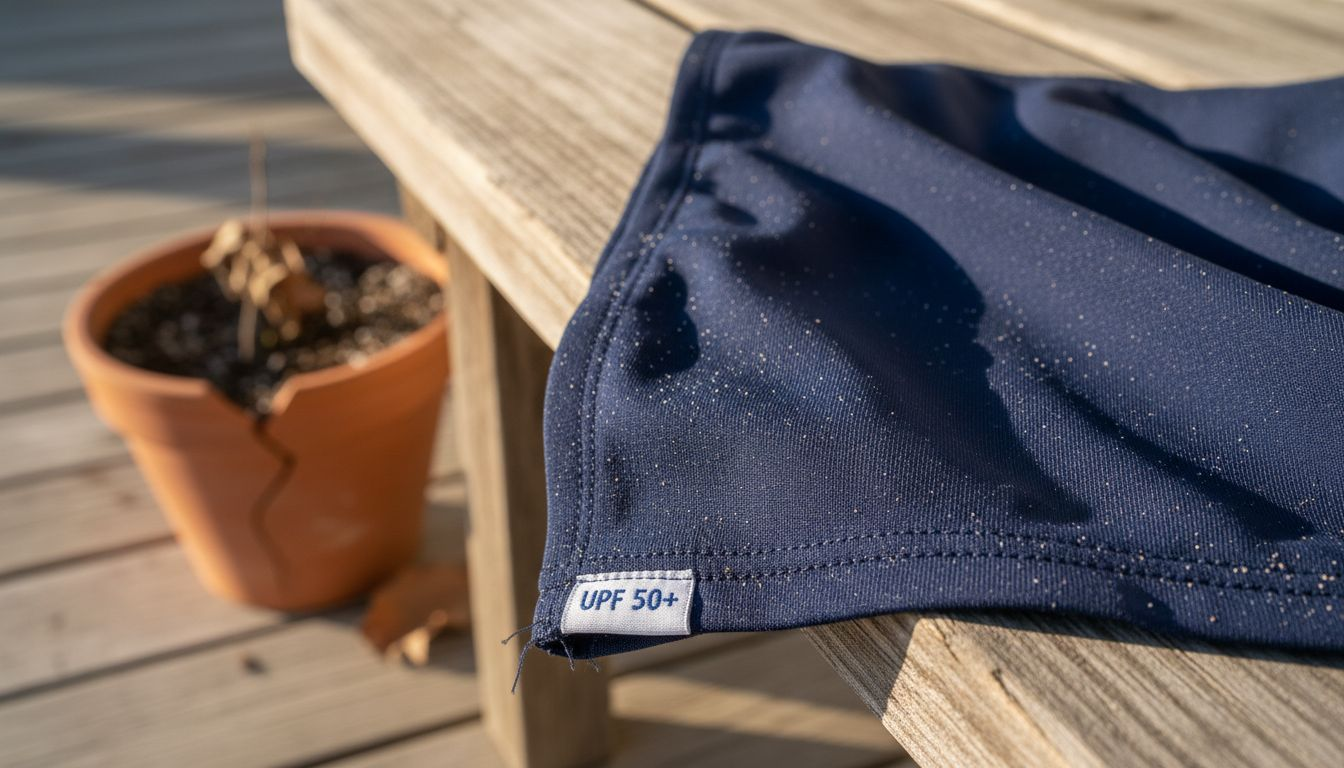
Chemical treatments add another protection layer. Manufacturers apply UV absorbing compounds or reflective coatings to fabric surfaces. These treatments work by either absorbing UV energy and converting it to harmless heat or reflecting UV rays away from skin entirely.
Both UVA and UVB protection matter equally. UVA rays penetrate deeper into skin, causing premature aging and potential DNA damage. UVB rays affect surface layers, causing sunburn. Quality UPF protection addresses both wavelengths simultaneously.
Unlike sunscreen, fabric maintains its protective rating when wet. Water actually enhances UV blocking in some synthetic materials because wet fibers swell slightly, closing gaps in the weave. This makes UPF swimwear particularly valuable for water activities where sunscreen washes off quickly.
How protection mechanisms combine:
- Tight weave density blocks UV physically
- Synthetic fiber composition absorbs UV naturally
- Chemical treatments enhance absorption or reflection
- Fabric thickness adds additional barrier layers
- Dark colors typically block more UV than light colors
Pro tip: Look for swimwear combining fabric density with eco-friendly treatments rather than relying solely on chemical coatings that may degrade over time. Natural fiber density provides lasting protection.
Sustainability in UPF Swimwear Materials
Eco-conscious UPF swimwear transforms environmental waste into functional protection. Recycled nylon and polyester made from ocean plastics and discarded fishing nets now form the backbone of sustainable swim fabric production.
These recycled materials maintain the same UV blocking properties as virgin synthetics while diverting tons of plastic from landfills and oceans. The manufacturing process melts down collected plastics, purifies them, and extrudes new fibers with identical performance characteristics to conventional materials.
Durability extends environmental benefits significantly. High quality recycled fabrics resist chlorine, saltwater, and sun exposure for years. This longevity reduces replacement frequency, minimizing overall consumption and waste. A swimsuit lasting five years beats buying new conventional options annually.
Sustainable manufacturing initiatives go beyond materials. Leading brands invest in closed loop water systems, renewable energy powered facilities, and transparent supply chains. These practices reduce carbon footprints while ensuring ethical labor conditions.
Common eco-friendly swimwear materials include:
- Econyl: Regenerated nylon from fishing nets and ocean waste
- Repreve: Recycled polyester from plastic bottles
- Recycled polyamide: Post consumer textile waste conversion
- Organic cotton blends: For limited UV applications with natural fibers
Brand transparency matters enormously. Companies genuinely committed to sustainability publish detailed information about fiber sources, percentage of recycled content, and third party certifications. They explain their manufacturing processes and acknowledge areas still needing improvement.
Environmental impact extends to packaging too. Sustainable brands use recycled shipping materials, minimal plastic packaging, and carbon offset programs for delivery. Every element of the product lifecycle receives scrutiny to minimize ecological harm while maximizing protective function.
Common Misconceptions About UPF Swimwear
Many people misunderstand how UPF swimwear actually works, leading to inadequate sun protection or unrealistic sustainability expectations.
-
UPF swimwear eliminates need for sunscreen entirely. False. Fabric only protects covered skin. Your face, hands, feet, and any exposed areas still need sunscreen application. UPF swimwear works best as part of comprehensive sun safety.
-
SPF and UPF mean the same thing. Not true. SPF rates how sunscreen extends time before burning. UPF measures UV percentage blocked by fabric. The rating systems measure completely different protection mechanisms.
-
All UPF rated swimwear is environmentally friendly. Absolutely not. Many brands achieve high UPF ratings using virgin petroleum based fabrics and chemical treatments harmful to ecosystems. Always verify sustainability claims through certifications.
-
UPF protection never decreases. Incorrect. Fabric damage from stretching, chlorine exposure, or improper washing can reduce effectiveness. Tears, thinning areas, or degraded coatings compromise protection significantly.
-
Darker colors always provide better UPF. Partially true. While darker shades typically block more UV, fabric construction matters more. A tightly woven light colored synthetic can outperform a loosely woven dark cotton.
-
UPF swimwear feels hot and uncomfortable. Modern technology proves otherwise. Advanced synthetic blends offer excellent breathability and moisture wicking while maintaining high UPF ratings. Comfort and protection coexist beautifully in quality designs.
Pro tip: Combine UPF swimwear with broad spectrum sunscreen, protective habits like seeking shade during peak hours, and regular skin checks. Layered protection strategies provide the safest approach to sun exposure.
UPF Swimwear Versus Sunscreen: A Comparison
Understanding how UPF swimwear and sunscreen differ helps you build effective sun protection strategies.
| Feature | UPF Swimwear | Sunscreen |
|---|---|---|
| Protection Type | Physical UV barrier | Chemical/mineral UV absorption |
| Application | Wear once | Reapply every 2 hours |
| Water Resistance | Maintains full protection when wet | Washes off, requires reapplication |
| Coverage | Only protects covered skin areas | Can cover all exposed skin |
| Effectiveness Duration | Lasts all day without degradation | Degrades from sweat, water, rubbing |
| Ease of Use | Put on and forget | Requires careful, repeated application |
| Cost Over Time | Single purchase lasts years | Ongoing repurchase needed |
| Environmental Impact | Depends on materials | Chemical formulas can harm reefs |
UPF swimwear blocks UV rays physically, creating a consistent barrier between sun and skin. This protection remains constant regardless of swimming, sweating, or activity level. You never worry about reapplication or coverage gaps.
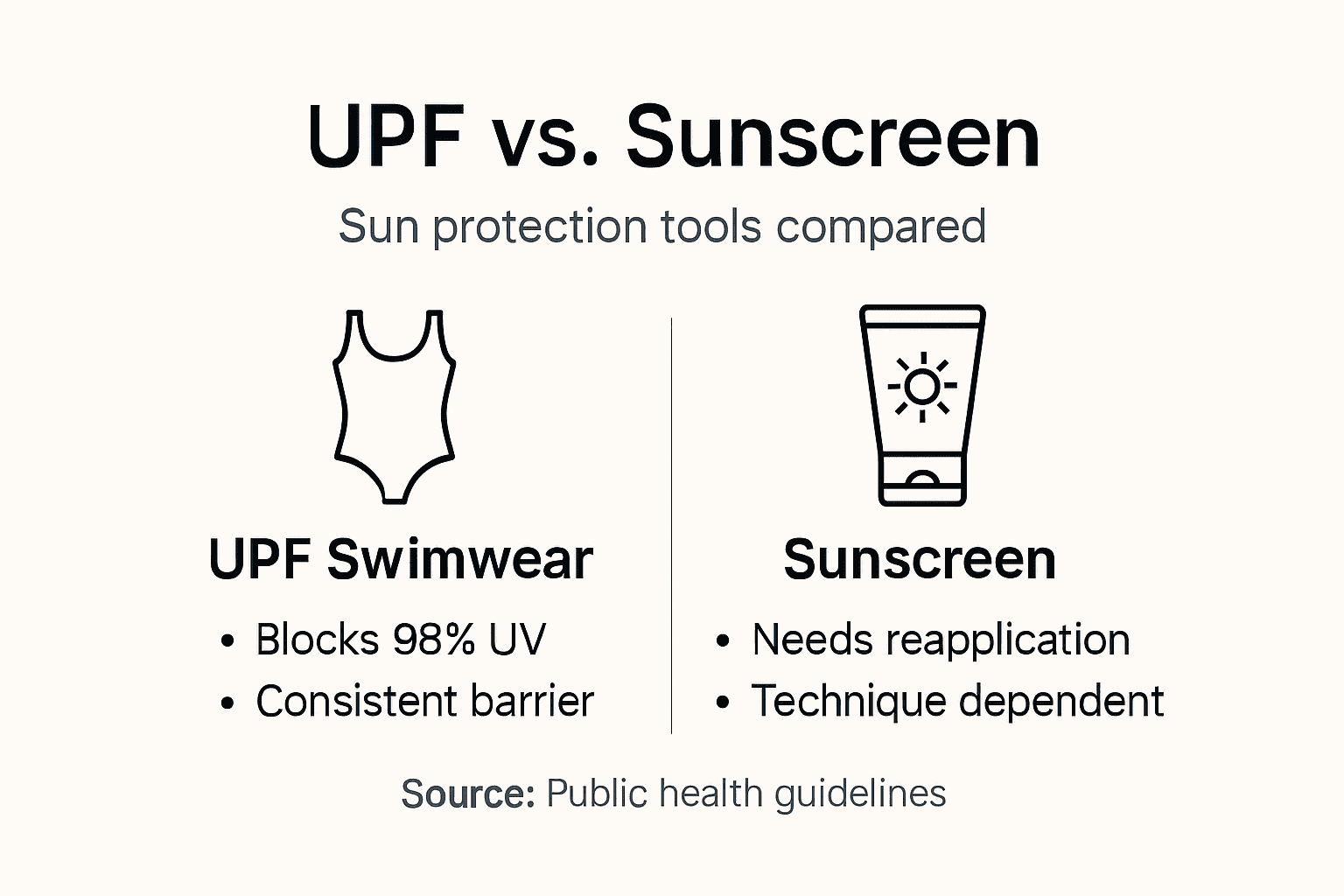
Sunscreen requires perfect application technique. Missing spots, applying too thin a layer, or forgetting to reapply creates vulnerability. Studies show most people apply only 25% to 50% of recommended sunscreen amounts, drastically reducing actual SPF protection achieved.
The synergy between both methods delivers optimal safety. UPF swimwear handles body coverage effortlessly while sunscreen protects face, hands, feet, and other exposed areas. This combination eliminates the weakness of either method alone.
Best practices combine:
- UPF 50+ swimwear for torso and leg protection
- Broad spectrum SPF 30+ sunscreen on face and exposed skin
- Wide brimmed hats for scalp and facial shade
- UV blocking sunglasses for eye protection
Neither option replaces the other. Think of UPF swimwear as your foundation layer and sunscreen as necessary finishing protection. Together they create comprehensive defense against both immediate sunburn and long term skin damage.
Fashion and Functionality in UPF Swimwear
Gone are the days when sun protective swimwear meant bulky, unflattering designs. Modern innovations deliver style alongside safety.
Advanced textile engineering creates breathable, lightweight fabrics that block UV rays without trapping heat. Moisture wicking technologies pull sweat away from skin, maintaining comfort during intense beach activities. These fabrics dry faster than conventional swimwear, enhancing convenience.
Sustainable materials now enable vibrant colors, bold patterns, and fashion forward cuts. Recycled polyester and nylon hold dye beautifully, allowing designers to create eye catching prints that appeal to style conscious consumers. The days of choosing between protection and appearance have ended.
Consumer preferences increasingly demand multifunctional apparel. Beach goers want swimwear transitioning seamlessly from water to boardwalk, looking sharp while providing sun safety. Modern UPF designs deliver this versatility through thoughtful construction and contemporary aesthetics.
Current eco-friendly UPF swimwear fashion trends include:
- Retro inspired prints on recycled fabrics
- Minimalist solid colors with architectural cuts
- Quick dry performance blends for active lifestyles
- Longer inseam options providing extra coverage
- Mix and match separates for personalized style
Fit technology enhances both function and appearance. Four way stretch fabrics move naturally with your body while maintaining shape integrity. Flatlock seams reduce chafing during swimming or sports. Strategic paneling provides support where needed without bulk.
The fashion evolution makes sun safety appealing rather than clinical. When protection looks good and feels comfortable, people actually wear it consistently. This behavioral shift translates to real health benefits as more individuals adopt proper sun safety habits naturally.
Choosing the Right UPF Swimwear: Practical Guidance for Eco-Conscious Buyers
Smart selection ensures your investment delivers protection, sustainability, and lasting value.
Start by verifying UPF 50+ rating labels from recognized testing organizations. Look for tags indicating standardized testing rather than manufacturer claims alone. Certifications provide accountability and assurance.
Examine material composition carefully. Genuine sustainable options explicitly state recycled content percentages and fiber sources. Phrases like “made from ocean plastics” or “Econyl regenerated nylon” indicate authentic eco-credentials. Vague green marketing without specifics suggests greenwashing.
Research brand transparency regarding manufacturing. Ethical companies publish information about factory conditions, water usage, energy sources, and waste management. They welcome questions and provide detailed answers about their supply chains.
Assess construction quality indicators:
- Double stitched or flatlock seams for durability
- Reinforced stress points at waistbands and pockets
- Colorfast dyes that resist fading from chlorine and sun
- Quality hardware like rust resistant grommets or zippers
- Substantial fabric weight suggesting longevity
Consider fit and comfort for your specific needs. Longer styles provide more coverage and protection. Athletic cuts suit active water sports while relaxed fits work for casual beach days. Try before buying when possible to ensure proper sizing.
Evaluate care requirements to maintain protection and sustainability. Quality UPF swimwear should withstand regular washing without losing effectiveness. Brands providing clear care instructions demonstrate commitment to product longevity.
Pro tip: Buy from brands publishing clear environmental and social responsibility statements with measurable goals and progress reports. Genuine commitment shows through transparent communication rather than marketing slogans.
Explore Stylish, Sustainable UPF Swimwear at Le Club Original
Ready to experience swimwear that protects both you and the planet? Le Club Original offers UPF 50+ rated swim trunks crafted from recycled ocean plastics, delivering 98% UV blocking while supporting marine conservation.

Every piece combines cutting edge sun protection with contemporary style, proving sustainable choices never require aesthetic compromise. From classic solids to bold prints, designs suit every preference while maintaining rigorous environmental standards. Explore top sustainable swimwear picks that align perfectly with eco-conscious values. Proper care extends your investment, so check out the sustainable swimwear care guide for maintenance tips. Discover additional eco-friendly swim trunks benefits beyond sun protection.
Frequently Asked Questions
What is the difference between UPF and SPF?
UPF measures how much UV radiation fabric blocks, rating textile sun protection on a scale typically from 15 to 50+. SPF indicates how long sunscreen extends the time before skin burns compared to unprotected exposure. Both address UV protection but through completely different mechanisms and measurement systems.
Can UPF swimwear replace sunscreen completely?
No, UPF swimwear only protects skin covered by fabric. You must apply sunscreen to exposed areas like face, neck, hands, feet, and any skin not covered by your swimwear. Using both methods together provides the most comprehensive sun protection strategy.
How can I verify if UPF swimwear is truly sustainable?
Check for recognized certifications like OEKO-TEX Standard 100 or Global Recycled Standard (GRS) on product labels. Review brand websites for transparent information about recycled material percentages, fiber sources, and manufacturing processes. Look for explicit statements about verified sustainable practices rather than vague environmental claims.
Is UPF protection affected if swimwear gets wet or stretched?
Quality UPF fabrics maintain their protective rating when wet, and moisture sometimes enhances UV blocking in synthetic materials. However, excessive stretching or fabric damage from wear can reduce effectiveness by creating larger gaps between fibers. Follow care instructions carefully to preserve protection over time.
How long does UPF swimwear maintain its protective rating?
Well constructed UPF swimwear from quality materials maintains effectiveness for several years with proper care. Avoid harsh detergents, excessive heat drying, and rough surfaces that damage fabric. Replace swimwear showing visible wear, thinning, or stretching since compromised fabric structure reduces UV blocking capability.