

You’ve seen swimwear brands claiming eco-friendly practices, but how do you know which ones truly deliver? Greenwashing is prevalent in swimwear marketing, making it hard to separate genuine sustainability from misleading claims. Certifications provide the verification you need to shop confidently. This guide explains how recognized standards protect both you and the planet, helping you identify truly sustainable swimwear that aligns with your values.
Table of Contents
- Why Certifications Matter In Sustainable Swimwear
- Overview Of Key Swimwear Certifications
- How Certifications Verify Sustainability: Standards And Testing
- Choosing Certified Swimwear: What Eco-Conscious Shoppers Should Know
- Explore Genuine Sustainable Swimwear Collections
Key takeaways
| Point | Details |
|---|---|
| Certifications verify genuine practices | Recognized standards confirm sustainability claims through independent audits and testing |
| Multiple standards cover different aspects | Certifications address material safety, recycled content percentages, and ethical production methods |
| Greenwashing remains widespread | Many brands use misleading eco terms without credible certification backing |
| Standards drive industry improvement | Certifications push manufacturers toward better environmental and social practices |
| Knowledge empowers better choices | Understanding certifications helps you align purchases with environmental values |
Why certifications matter in sustainable swimwear
Fast fashion brands frequently make environmental claims that sound impressive but lack substance. Misleading eco claims appear on swimwear marketed as sustainable despite minimal recycled content or questionable production methods. Without independent verification, you’re left guessing whether a brand’s sustainability promises hold up.
Certifications cut through marketing noise by providing trustworthy verification from independent third parties. These standards assess everything from chemical safety to recycled material traceability, giving you confidence that products meet established environmental criteria. You can make purchases knowing they align with your values rather than relying on brand marketing alone.
Transparency separates genuine sustainable brands from those simply jumping on trends. When companies submit to certification audits and testing, they demonstrate commitment beyond surface-level claims. This accountability helps you support businesses genuinely working toward environmental responsibility.
Pro Tip: Always verify certification logos are genuine by checking the certifying body’s database online before making purchases.
Recognized certifications also benefit the planet by pushing manufacturers toward better practices. As more consumers demand certified products, brands face pressure to improve material sourcing, reduce chemical use, and ensure fair labor conditions. Your purchasing decisions directly influence industry standards.
For practical guidance on evaluating swimwear sustainability beyond certifications, explore our green swimwear shopping guide for additional tips.
Overview of key swimwear certifications
Several major certifications apply to swimwear, each addressing specific environmental and safety concerns. Understanding what each standard verifies helps you evaluate which certifications matter most for your priorities.
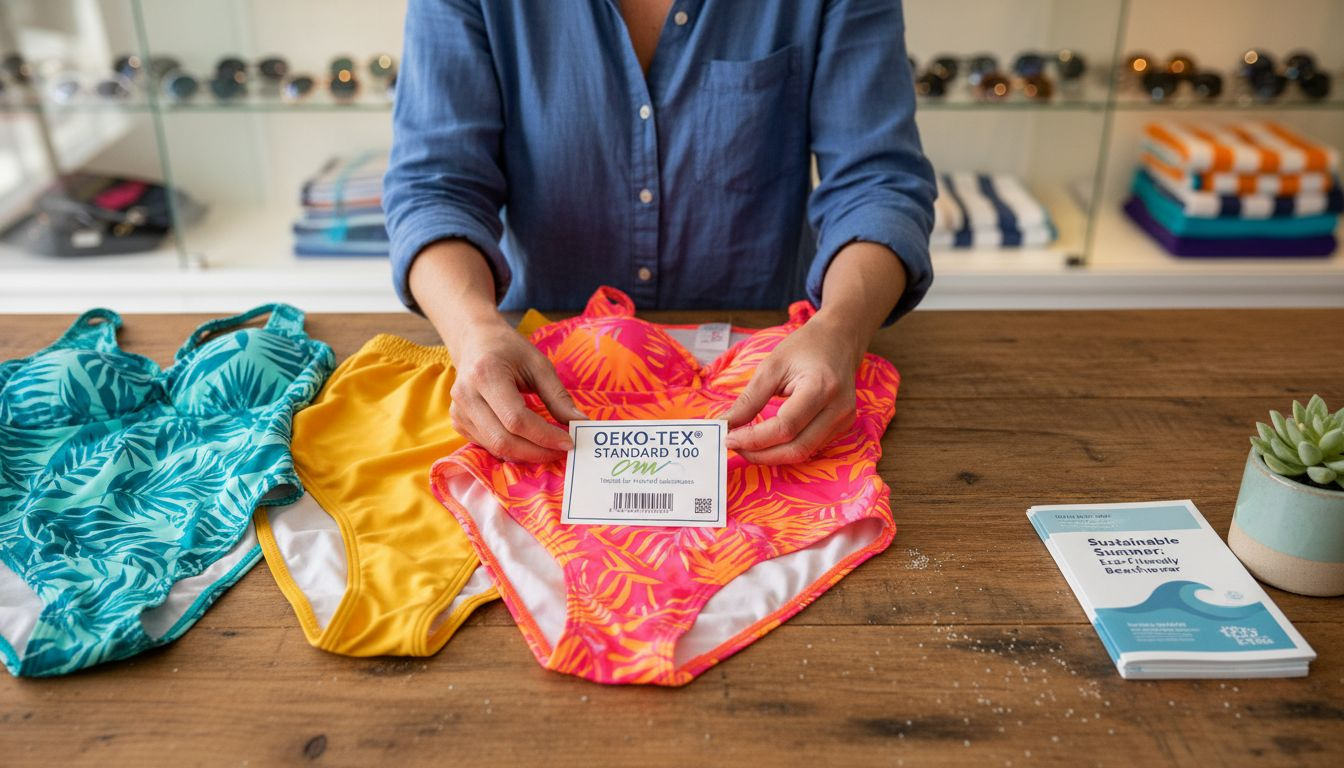
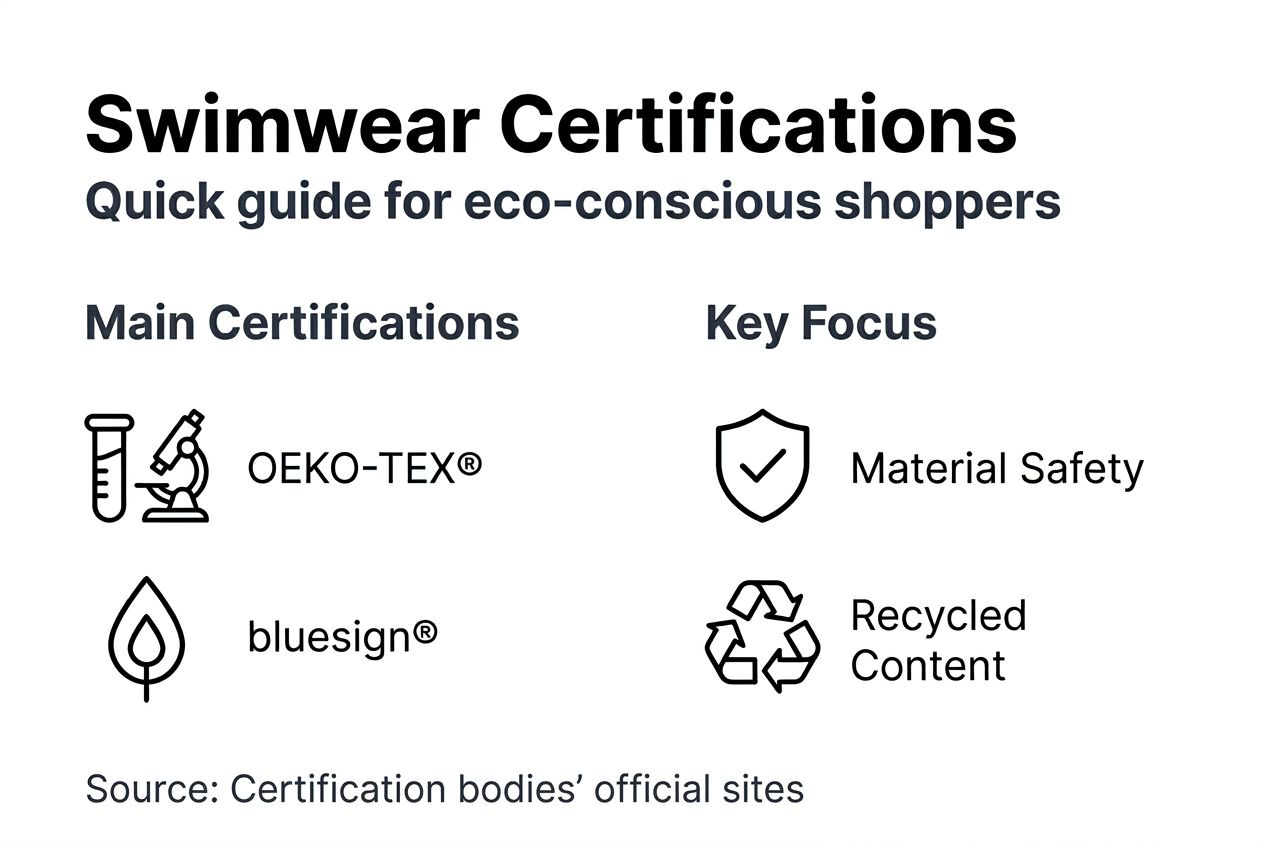
OEKO-TEX® Standard 100 ensures textiles are free from harmful substances and meet strict human safety criteria. This certification tests for hundreds of regulated and unregulated chemicals, protecting your skin from toxic residues. Every component of certified swimwear undergoes testing, from fabric to elastic to decorative elements.
bluesign® system focuses on minimizing environmental impact throughout production. Partners implementing bluesign standards reduce CO2 emissions and water consumption while eliminating harmful chemicals from manufacturing processes. This comprehensive approach addresses sustainability from raw material extraction through final production.
Global Recycled Standard (GRS) verifies recycled content and establishes traceability requirements. Products must contain minimum percentages of recycled materials with full supply chain documentation. This standard prevents brands from making vague recycled content claims without proof.
Organic Content Standard (OCS) certifies organically farmed materials when natural fibers appear in swimwear blends. This ensures cotton or other plant-based components come from organic agriculture without synthetic pesticides. For comprehensive information about various swimwear certifications, review our detailed guide on eco-certifications in swimwear.
| Certification | Primary Focus | Key Benefit |
|---|---|---|
| OEKO-TEX® Standard 100 | Chemical safety | Ensures materials are safe for skin contact |
| bluesign® system | Production impact | Minimizes environmental footprint in manufacturing |
| Global Recycled Standard | Recycled content | Verifies and traces recycled materials |
| Organic Content Standard | Organic materials | Confirms organic farming practices |
How certifications verify sustainability: standards and testing
Certification bodies employ rigorous processes to ensure brands meet established criteria. Understanding these verification methods shows why certified products offer more reliability than self-proclaimed eco-friendly items.
Independent audits examine supply chains and production facilities to verify compliance with certification requirements. Auditors inspect factories, review documentation, and interview workers to confirm environmental and social standards are met. This third-party oversight prevents brands from certifying their own products without accountability.
Material testing forms a critical verification component. Laboratories analyze swimwear samples for chemical content, recycled material percentages, and other physical properties. OEKO-TEX Standard 100 testing checks for substances harmful to human health, ensuring textiles are safe for direct skin contact.
Traceability systems track materials from origin through finished products. For recycled content certifications, this means documenting where recycled materials come from, how they’re processed, and what percentage appears in final swimwear. This chain of custody prevents fraud and ensures recycled content claims are accurate.
- Application submission where brands provide detailed information about materials, suppliers, and production methods
- Document review where certification bodies examine supply chain records and environmental policies
- Facility inspections where auditors visit factories to verify practices match documentation
- Material testing where laboratories analyze samples for compliance with chemical, content, and safety standards
- Certification decision where bodies grant, deny, or request improvements before certifying products
- Ongoing monitoring where regular audits and testing ensure continued compliance over time
Pro Tip: Certifications require renewal and periodic audits, so check that logos reflect current certification status rather than expired credentials.
These verification steps create accountability that self-certification cannot match. When you see recognized certification logos, you know products passed independent scrutiny. Learn more about specific testing requirements through our resource on eco-certifications in swimwear.
Choosing certified swimwear: what eco-conscious shoppers should know
Applying certification knowledge to actual purchases requires understanding how to interpret labels and assess brand transparency. These practical strategies help you identify genuinely sustainable options.
Look for multiple certifications covering different sustainability aspects. A swimsuit with both OEKO-TEX® for safety and GRS for recycled content demonstrates more comprehensive commitment than products with single certifications. Multiple standards indicate brands address various environmental concerns rather than focusing narrowly on one area.
Verify certification scope and validity. Some certifications apply only to specific materials or production stages rather than entire products. Check what percentage of materials are certified and whether certifications cover finished garments or just raw fabrics. This prevents misunderstanding partial certifications as complete product endorsements.
Question vague sustainability language. Terms like eco-friendly, green, or sustainable mean nothing without certification backing. Transparency is crucial when evaluating environmental claims, and lack of disclosure warrants skepticism. Brands genuinely committed to sustainability readily provide specific certification information.
Research brand transparency about material sources and supply chains. Companies serious about sustainability share detailed information about where materials come from, how products are made, and what environmental standards they follow. This openness indicates accountability beyond minimum certification requirements.
Support innovation leaders driving industry change through rigorous certification compliance. Brands investing in multiple certifications and transparent practices push competitors toward better standards. Your purchases signal market demand for verified sustainability over greenwashing.
- Check certification databases online to confirm logos are genuine and current
- Compare recycled content percentages across certified products to find highest percentages
- Read certification details on product pages to understand what specific standards verify
- Prioritize brands sharing full supply chain information beyond basic certification claims
- Ask customer service about certification coverage if product descriptions lack details
For comprehensive guidance on sustainable swimwear selection, visit our green swimwear shopping guide with additional evaluation criteria.
Explore genuine sustainable swimwear collections
Now that you understand how certifications verify sustainability claims, put this knowledge into action. Le Club Original offers swimwear collections meeting rigorous environmental and safety standards, crafted with transparency and genuine eco values. Our commitment to certified materials and ethical production means you can shop confidently knowing your purchases align with your principles.

Explore our certified sustainable collections designed for style without compromising environmental responsibility. Each piece reflects our dedication to ocean protection and responsible manufacturing, backed by recognized certifications you can trust. Make your next swimwear purchase count toward the sustainable future you want to support.
FAQ
What does OEKO-TEX® certification guarantee for swimwear?
OEKO-TEX® Standard 100 guarantees textiles are safe for direct skin contact, free from harmful chemicals and substances. This certification covers all components from raw materials through finished swimwear products, ensuring every element meets strict safety criteria.
How does the Global Recycled Standard (GRS) ensure swimwear sustainability?
GRS verifies recycled content percentages with full traceability from source materials to finished products. This certification requires at least 20% recycled content while ensuring environmentally and socially responsible production processes throughout the supply chain.
Why should consumers be cautious of swimwear labeled simply ‘eco’ or ‘green’?
Many brands use minimal recycled content but market products as sustainable without credible verification. Nearly 60% of eco-labeled clothing on fast fashion platforms contains misleading claims. Look for recognized certifications confirming genuine sustainability rather than trusting vague environmental terms.
Can swimwear have multiple certifications simultaneously?
Yes, swimwear can earn multiple certifications addressing different sustainability aspects. Products might combine OEKO-TEX® for chemical safety with GRS for recycled content verification. Multiple certifications indicate comprehensive commitment to environmental and safety standards across various production areas.
How often do brands need to renew swimwear certifications?
Certification bodies require periodic renewal and ongoing audits to maintain certification status. Renewal schedules vary by certification type but typically occur annually or every few years. This regular verification ensures brands continue meeting standards rather than relying on one-time certification.