

Packing for your next beach getaway often means weighing style against environmental impact. For eco-conscious men who want swimwear that stands out and genuinely protects our oceans, making the right choice can feel complicated. Upcycled swimwear is transforming the industry by turning ocean plastics, discarded fishing nets, and industrial waste into premium, sustainable garments. Explore how these innovative options combine bold style with a real commitment to reducing pollution and supporting circular economies worldwide.
Table of Contents
- What Sets Upcycled Swimwear Apart
- Common Materials and Sourcing Methods
- How Upcycled Swimwear Is Made
- Environmental Impact and Benefits
- Comparing Upcycled and Traditional Options
Key Takeaways
| Point | Details |
|---|---|
| Sustainable Materials | Upcycled swimwear is made from recycled plastics and waste, significantly reducing environmental impact compared to traditional swimwear. |
| Manufacturing Transparency | Brands often provide detailed information on material sourcing and processing, allowing consumers to make informed choices. |
| Circular Economy Support | This swimwear approach supports a circular economy by transforming waste into valuable resources, minimizing reliance on virgin materials. |
| Performance and Longevity | Upcycled swimwear offers durability and high performance, matching or exceeding traditional materials while promoting sustainable fashion. |
What Sets Upcycled Swimwear Apart
Upcycled swimwear represents a groundbreaking approach to combating ocean pollution while delivering exceptional style for eco-conscious men. Unlike traditional swimwear that relies on virgin petroleum-based materials, these innovative garments transform waste into wearable art. Addressing environmental drawbacks directly, upcycled swimwear provides a sustainable alternative that minimizes ecological impact.
The key distinguishing factors of upcycled swimwear include:
- Waste Transformation: Converts discarded plastics, fishing nets, and industrial materials into high-performance fabric
- Reduced Environmental Footprint: Eliminates new raw material production
- Circular Economy Support: Creates value from existing waste streams
- Innovative Manufacturing: Uses advanced recycling technologies to produce premium textiles
By reimagining waste as a valuable resource, upcycled swimwear challenges conventional fashion production. Manufacturers carefully collect ocean plastics, discarded fishing nets, and industrial waste, then meticulously process these materials into durable, quick-drying, and stylish swim garments. This approach not only prevents additional pollution but actively removes existing waste from marine ecosystems.
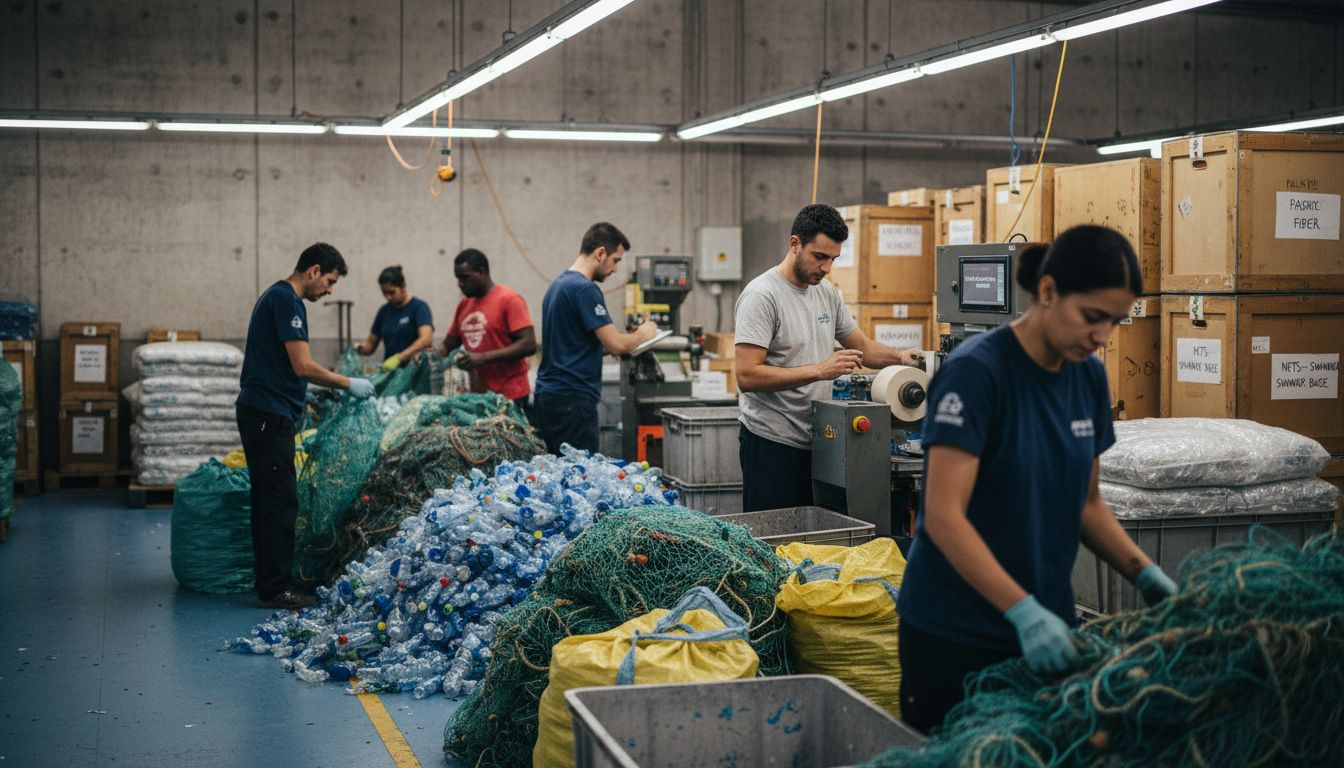
Manufacturing Transparency becomes another critical differentiator. Unlike traditional swimwear brands that often obscure their supply chains, upcycled swimwear manufacturers typically provide detailed information about material sourcing, processing, and environmental impact. This commitment to openness allows environmentally conscious consumers to make informed purchasing decisions.
Pro tip: When shopping for upcycled swimwear, look for brands that provide clear documentation about their waste collection and transformation processes.
Common Materials and Sourcing Methods
Upcycled swimwear manufacturers have revolutionized textile production by transforming waste materials into high-performance fabrics. Advanced recycling techniques enable brands to create innovative swimwear using materials that would otherwise pollute our oceans and landfills.
The primary materials used in upcycled swimwear include:
- ECONYL Yarn: Regenerated nylon made from discarded fishing nets, fabric scraps, and industrial plastics
- Bio-based Materials: Innovative textiles sourced from renewable resources like sugarcane waste
- Ocean Plastics: Recovered plastic waste collected directly from marine environments
- Industrial Remnants: Fabric scraps and manufacturing byproducts repurposed into new textiles
Recycling processes for these materials involve complex transformation techniques. Manufacturers carefully collect and sort waste materials, then clean and process them into high-performance yarns. ECONYL technology stands out as a particularly innovative approach, breaking down nylon waste into its chemical components and reconstructing it into virgin-quality fabric without losing performance characteristics.
Beyond synthetic materials, some forward-thinking brands are exploring unique natural additions. Interesting innovations include integrating local materials like leftover coconut shells for accessories and developing bio-based textiles from agricultural waste. These approaches not only reduce environmental impact but also support local economies and create truly unique sustainable fashion products.
Here is a quick comparison of the main textile sources used in upcycled swimwear and their sustainability impact:
| Material Type | Source Location | Environmental Benefit |
|---|---|---|
| ECONYL Yarn | Discarded nets, factories | Reduces nylon waste, pollution |
| Bio-based Textiles | Agricultural byproducts | Lowers dependence on synthetics |
| Ocean Plastics | Marine cleanups | Removes debris from oceans |
| Industrial Remnants | Manufacturing leftovers | Less landfill, closed-loop use |
The future of swimwear lies in transforming waste into wearable, high-performance textiles that protect our oceans while looking great.
Pro tip: When purchasing upcycled swimwear, check the brand’s detailed material sourcing information to understand the full environmental impact of your clothing.
How Upcycled Swimwear Is Made
The production of upcycled swimwear represents a complex journey from waste material to stylish, functional garment. Manufacturers employ sophisticated recycling techniques that transform discarded materials into high-performance textiles. Zero waste manufacturing approaches have revolutionized the way sustainable swimwear is conceptualized and created.
The manufacturing process typically involves several critical stages:
- Collection: Gathering waste materials from ocean cleanups, industrial sites, and recycling centers
- Sorting: Carefully separating different types of recyclable materials
- Cleaning: Thoroughly sanitizing and preparing materials for transformation
- Regeneration: Breaking down materials into base chemical components
- Spinning: Creating new yarn from regenerated materials
- Weaving/Knitting: Constructing fabric from regenerated yarn
- Cutting and Sewing: Designing and assembling final swimwear pieces
Chemical Regeneration plays a crucial role in this process. Manufacturers use advanced technologies to break down waste materials like discarded fishing nets and plastic bottles into their molecular components. This allows them to reconstruct these materials into virgin-quality fabrics with performance characteristics identical to new textiles.
The most innovative brands go beyond simple recycling, developing closed-loop production systems that minimize waste at every stage. They collaborate with environmental organizations, invest in cutting-edge recycling technologies, and continuously explore new methods of transforming waste into wearable, high-performance garments. These approaches not only reduce environmental impact but also create a compelling narrative of sustainability and innovation.
Upcycled swimwear transforms waste from an environmental problem into a stylish solution.
Pro tip: Ask swimwear brands about their specific recycling processes to understand the true environmental impact of your purchase.
Environmental Impact and Benefits
Upcycled swimwear represents a powerful solution to environmental challenges in the fashion industry. Reducing microplastic pollution stands as a critical advantage of these innovative garments, offering a sustainable alternative to traditional petroleum-based swimwear production.
The key environmental benefits of upcycled swimwear include:
- Waste Diversion: Preventing plastic waste from ending up in landfills and oceans
- Carbon Emissions Reduction: Lowering greenhouse gas emissions through recycled material use
- Resource Conservation: Minimizing virgin material extraction
- Circular Economy Support: Creating value from existing waste streams
- Petroleum Dependency Reduction: Decreasing reliance on fossil fuel-based textiles
Lifecycle Analysis reveals the profound environmental advantages of upcycled swimwear. Traditional swimwear production relies heavily on virgin petroleum-based materials, which contribute significantly to environmental degradation. In contrast, upcycled swimwear transforms waste materials into high-performance textiles, dramatically reducing the overall environmental footprint of each garment.
Beyond immediate environmental benefits, upcycled swimwear promotes a broader shift in consumer consciousness. The durable design and advanced textile technologies ensure longer product lifespans, directly challenging the fast-fashion model of disposable clothing. By investing in these sustainable garments, consumers actively participate in a more responsible approach to fashion consumption.
Every upcycled swimwear purchase represents a direct action against ocean pollution and environmental waste.
Pro tip: Calculate the potential environmental impact of your wardrobe by tracking the number of upcycled and recycled items you own.
Comparing Upcycled and Traditional Options
The swimwear industry stands at a critical crossroads, with eco-conscious manufacturing dramatically transforming traditional production methods. Upcycled swimwear represents a revolutionary approach that challenges conventional textile manufacturing by reimagining waste as a valuable resource.
Key differences between upcycled and traditional swimwear include:
-
Material Source:
- Traditional: Virgin petroleum-based synthetics
- Upcycled: Recycled plastics, ocean waste, industrial remnants
-
Environmental Impact:
- Traditional: High carbon emissions, microplastic pollution
- Upcycled: Reduced waste, lower carbon footprint
-
Production Ethics:
- Traditional: Often opaque supply chains
- Upcycled: Transparent, sustainable manufacturing processes
-
Longevity:
- Traditional: Disposable, quick to degrade
- Upcycled: Durable, designed for extended use
-
Cost Consideration:
- Traditional: Lower initial price
- Upcycled: Higher upfront cost, better long-term value
Performance Comparison reveals that upcycled swimwear is not just an environmental statement but a technological advancement. Modern recycling techniques ensure that regenerated fabrics match or exceed the performance of traditional materials. Swimmers can expect the same durability, stretch, and comfort they would find in conventional swimwear, with the added benefit of knowing their clothing supports environmental conservation.
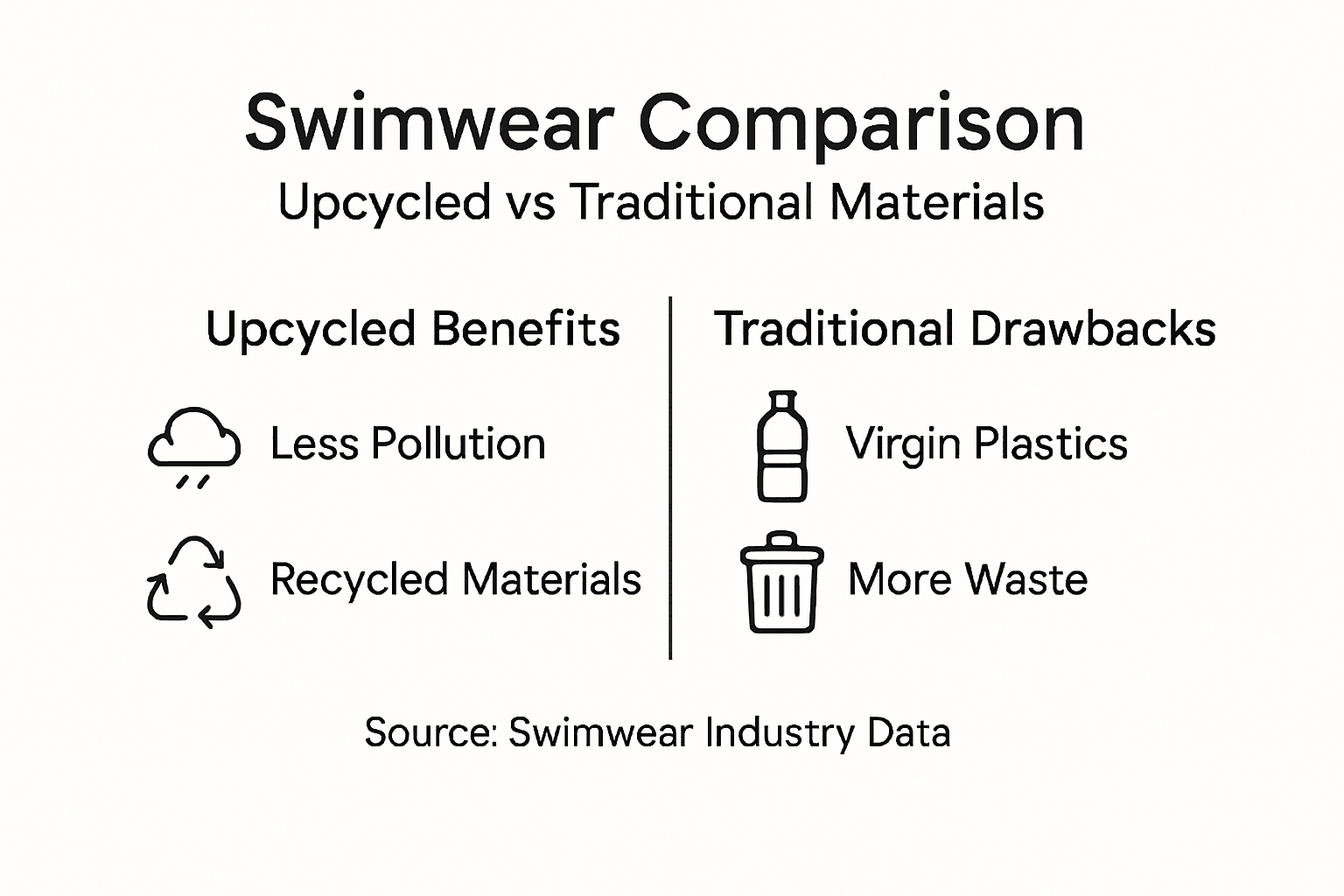
This table summarizes performance and environmental features of upcycled versus traditional swimwear:
| Aspect | Upcycled Swimwear | Traditional Swimwear |
|---|---|---|
| Durability | Designed for extended wear | Often degrades quickly |
| Transparency | Detailed sourcing information | Supply chain seldom disclosed |
| Microplastic | Reduced fiber shedding | Higher microfiber pollution |
| Long-term Cost | Higher upfront, better longevity | Lower cost, fast replacement cycle |
The shift towards upcycled swimwear represents more than a fashion trend—it’s a fundamental reimagining of textile production. By challenging the linear ‘take-make-dispose’ model, these innovative garments demonstrate how consumer choices can drive meaningful environmental change. The increasing sophistication of recycling technologies means that upcycled swimwear is rapidly becoming not just a sustainable option, but the superior choice for environmentally conscious consumers.
Choosing upcycled swimwear is an investment in both personal style and global sustainability.
Pro tip: Compare the lifecycle environmental impact of your clothing by researching the specific recycling and production methods used by different brands.
Embrace Style and Sustainability with Upcycled Swimwear
Upcycled swimwear offers an inspiring solution to ocean pollution by transforming discarded plastics into high-performance, stylish garments. If you care deeply about protecting marine ecosystems while looking great on your next beach vacation, you face the challenge of finding swimwear that truly embodies environmental responsibility without sacrificing style or durability. Key concepts like waste transformation, ECONYL yarn, and closed-loop production show how innovative brands tackle this challenge.
At Le Club Original, we share your passion for reducing ocean pollution through eco-conscious manufacturing practices. Our curated collections of sustainable swim trunks and beach apparel for men and boys feature premium upcycled materials that support a circular economy and minimize environmental footprint.
Discover how taking action today can make a real difference. Shop our latest arrivals and seasonal sales to wear swimwear that stands for more than fashion.

Explore our eco-friendly swimwear collections now at Le Club Original and join a community committed to sustainable style and ocean preservation. Don’t wait—choose swimwear that supports a healthier planet with every purchase. Start your journey with upcycled sustainable styles designed to last season after season.
Frequently Asked Questions
What is upcycled swimwear?
Upcycled swimwear is swimwear made from recycled materials, primarily waste such as discarded plastics, fishing nets, and industrial remnants. It transforms these materials into fashionable and high-performance garments, reducing ocean pollution.
How does upcycled swimwear help reduce ocean pollution?
Upcycled swimwear helps reduce ocean pollution by repurposing waste materials that would otherwise contribute to environmental harm. By using recovered ocean plastics and fishing nets, it minimizes the amount of debris in marine ecosystems and supports waste prevention initiatives.
What materials are typically used in upcycled swimwear?
Common materials used in upcycled swimwear include ECONYL yarn (regenerated nylon from discarded fishing nets), bio-based textiles sourced from renewable resources, and ocean plastics collected through clean-up processes. These materials provide durability and performance while being environmentally friendly.
How is the production process of upcycled swimwear different from traditional swimwear?
The production process of upcycled swimwear involves collecting and transforming waste materials through advanced recycling techniques, whereas traditional swimwear typically relies on virgin petroleum-based materials. Upcycled swimwear emphasizes transparency, sustainability, and reduced environmental impact throughout its lifecycle.
Recommended
- 7 Advantages of Upcycled Swimwear Every Beachgoer Should Know – Le Club Original
- 7 Advantages of Upcycled Swimwear Every Beachgoer Should Know – Le Club Original
- 7 Advantages of Upcycled Swimwear Every Beachgoer Should Know – Le Club Original
- Zero Waste Swimwear: Impact on Oceans and Style – Le Club Original