

Shopping for stylish beachwear can feel like a compromise between what looks good and what feels right for the planet. With growing concern about fast fashion’s impact, ethical beachwear is reshaping how modern men approach summer essentials. Bold designs now meet fair labor practices and environmental innovation, so you do not have to settle on your values or style. This article exposes myths about ethical beachwear, showing how real social justice and eco-conscious choices come together for the next generation.
Table of Contents
- Ethical Beachwear Defined And Common Myths
- What Sets Ethical Beachwear Apart
- The Myths Holding You Back
- The Real Cost Of Ignoring Ethics
- Eco-Friendly Materials And Swimwear Innovations
- Revolutionary Materials Leading The Way
- Technology That Protects Both You And The Planet
- The Circular Fashion Model
- Ethical Manufacturing And Fair Labor Practices
- The Non-Negotiable Standards
- Transparency You Can Actually Trust
- Worker Empowerment Beyond Wages
- The Cost Transparency Question
- Ocean Health And Environmental Benefits
- How Ethical Beachwear Protects Ocean Health
- The Microplastic Problem You Actually Solve
- Chemical Runoff And Coastal Community Protection
- Supporting Marine Biodiversity
- Comparing Costs And Longevity With Fast Fashion
- The Hidden Cost Of Fast Fashion Swimwear
- Ethical Beachwear’s Long-Term Financial Advantage
- The True Cost Comparison Over Time
- Quality Features That Justify Higher Prices
Key Takeaways
| Point | Details |
|---|---|
| Ethical Beachwear Prioritizes Responsibility | It tackles labor exploitation, environmental pollution, and social justice throughout the supply chain. |
| Investing in Ethical Brands is Cost-Effective | Higher initial prices reflect durability and long-term savings compared to fast fashion. |
| Transparency is Crucial | Authentic ethical brands openly share their labor practices and material sourcing, providing customers with trustworthy information. |
| Environmental Impact Matters | Choosing ethical options helps reduce microplastic pollution and supports healthy ocean ecosystems. |
Ethical Beachwear Defined and Common Myths
Ethical beachwear means something specific. It’s not just a buzzword or a label slapped on swim trunks to justify a higher price. Ethical beachwear addresses labor exploitation, environmental pollution, and social justice throughout the entire supply chain—from raw material sourcing to the factory floor to your hands.
When you buy ethical beachwear, you’re supporting brands that care about more than just profit margins. These companies prioritize fair wages for workers, safe working conditions, and transparent sourcing. Environmental responsibility matters too, but that’s only part of the equation.
The fashion industry has serious problems. Traditional fast fashion creates massive environmental waste while workers in developing countries earn poverty wages. Ethical beachwear represents a direct response to these systemic issues, balancing sustainability with genuine social responsibility.
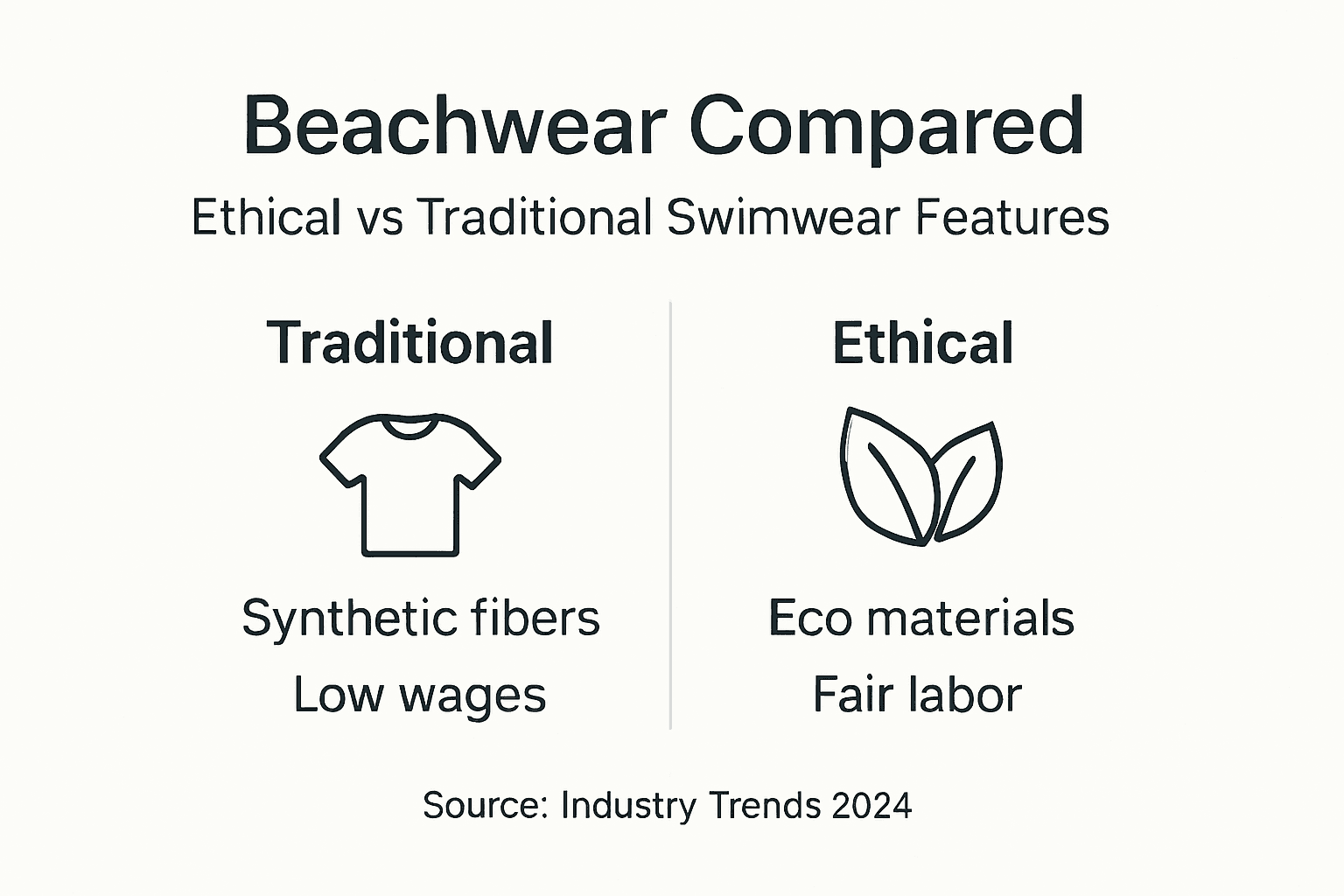
Here’s a concise comparison of traditional versus ethical beachwear impacts:
| Aspect | Traditional Beachwear | Ethical Beachwear |
|---|---|---|
| Environmental Impact | High waste and pollution | Reduced waste and pollution |
| Labor Practices | Often exploitative | Fair wages, safe conditions |
| Material Sourcing | Petroleum-based, synthetic | Recycled or plant-based |
| Product Longevity | Short lifespan, frequent buy | Long-lasting, fewer buys |
What Sets Ethical Beachwear Apart
Ethical brands operate differently from mainstream competitors:
- Fair labor practices with documented wages and safe conditions
- Transparent supply chains so you know exactly where your trunks come from
- Eco-conscious materials that minimize ocean and environmental damage
- Limited production runs to reduce waste and overproduction
- Community investment that supports workers and local economies
Ethical beachwear goes beyond environmental issues—it includes social equity and fair labor practices globally.
The Myths Holding You Back
You’ve probably heard objections to ethical beachwear. Most of them aren’t true.
Myth 1: Ethical beachwear costs way too much. Reality: Ethical brands offer options at multiple price points. Yes, some cost more, but that reflects actual production costs—fair wages and quality materials. Budget-friendly ethical options exist if you know where to look.
Myth 2: Ethical means ugly or boring. Reality: Ethical beachwear styling proves style and sustainability coexist perfectly. You don’t sacrifice design or fit when choosing responsible brands. Modern ethical beachwear looks as sharp as any mainstream competitor.
Myth 3: It’s just a trend that’ll disappear. Reality: Debunking common myths about sustainable fashion reveals that ethical consumption reflects genuine consumer demand, not temporary hype. Conscious consumers aren’t going anywhere.
Myth 4: One purchase won’t make a difference. Reality: Your individual choice matters. When enough people choose ethical brands, market pressure forces industry-wide change. Every purchase sends a signal.
Myth 5: Ethical brands engage in “greenwashing.” Reality: Legitimate ethical brands maintain transparency about their practices. They document worker conditions, publish sustainability reports, and welcome audits. Greenwashing exists, but genuine ethical brands differentiate themselves through accountability.
The Real Cost of Ignoring Ethics
Cheap beachwear comes with hidden costs. Factory workers earn less than minimum wage. Ocean ecosystems suffer from chemical runoff and synthetic material waste. Communities absorb environmental damage while corporations keep profits.
Choosing ethical beachwear means rejecting that model entirely.
Pro tip: Start by researching brand transparency—check their labor practices, material sourcing, and environmental reports before buying. Brands that openly share this information typically operate with genuine ethical standards.
Eco-Friendly Materials and Swimwear Innovations
The beachwear industry is transforming. Eco-friendly materials and cutting-edge innovations are replacing traditional synthetic fabrics that harm oceans and take decades to decompose. This shift isn’t just about feeling good—it’s about real environmental impact.
Traditional polyester swimwear comes from petroleum, sheds microplastics, and persists in ecosystems for 200+ years. Ethical beachwear brands are rejecting this model entirely, choosing materials engineered for performance and planet health.
Modern swimwear now combines sustainability with technology. You get durability, style, and environmental responsibility in one package—something that was nearly impossible just five years ago.
Revolutionary Materials Leading the Way
Several game-changing materials are reshaping beachwear production:
- ECONYL recycled nylon from ocean waste and fishing nets
- Plant-based fabrics derived from seaweed, kelp, and agricultural byproducts
- Biodegradable options that decompose naturally without harming ecosystems
- Recycled polyester made from plastic bottles diverted from landfills
- Cork and natural rubber blends for sustainable board shorts and accessories
These aren’t laboratory experiments anymore. Leading brands use them in production today, proving that performance doesn’t require environmental destruction.
Eco-friendly fabrics and wearable tech innovations are fundamentally changing how beachwear protects your skin and the ocean simultaneously.
Technology That Protects Both You and the Planet
Innovation extends far beyond materials. Modern ethical swimwear integrates advanced features:
- Advanced UV protection without toxic chemical coatings
- Durability treatments that extend product life and reduce replacement waste
- Moisture-wicking technology using natural fiber blends
- Antimicrobial finishes derived from plant sources, not synthetic chemicals
- Quick-dry capabilities engineered into sustainable fabrics
Wearable tech is emerging too. Some brands now incorporate smart fabrics that monitor water quality or sun exposure, giving you real-time data while maintaining environmental standards.
These innovations address a critical truth: durable, high-performing swimwear reduces waste more than any single material choice. When your trunks last five years instead of one, your environmental footprint drops dramatically.
The Circular Fashion Model
Ethical brands increasingly embrace circular design principles. This means creating products engineered for longevity and eventual recycling or composting, not landfill disposal.
Some companies now offer take-back programs. Wear out your trunks? Send them back for recycling into new products. This closes the loop, eliminating waste entirely.
Low-impact manufacturing processes accompany these material innovations. Brands are minimizing water usage, reducing chemical runoff, and eliminating toxic dyes—changes that protect both workers and local ecosystems.
Here is a quick reference to key innovations in ethical swimwear:
| Innovation Type | Examples | Main Environmental Benefit |
|---|---|---|
| Recycled Materials | ECONYL, recycled polyester | Diverts waste, lowers emissions |
| Biodegradable Fabrics | Seaweed, plant-based blends | Reduces landfill, microplastic ban |
| Wearable Technology | UV sensors, water monitors | Promotes safety, eco-awareness |
| Eco-Manufacturing | Closed-loop dyeing, low water | Protects water, shrinks pollution |
Pro tip: Look for brands that publish specific material sourcing information and manufacturing certifications rather than vague “eco-friendly” claims—transparency reveals genuine commitment to innovation and sustainability.
Ethical Manufacturing and Fair Labor Practices
Where your beachwear gets made matters. The factories that produce ethical swimwear operate under completely different standards than fast fashion manufacturers. Fair labor practices aren’t optional add-ons—they’re foundational to what makes beachwear truly ethical.

Many garment workers earn poverty wages despite working 12-hour days in unsafe conditions. Ethical manufacturers reject this model entirely. They invest in worker welfare because it’s right, not because marketing demands it.
When you buy from brands committed to fair labor, your money directly supports real people and real change in communities that desperately need it.
The Non-Negotiable Standards
Ethical manufacturers maintain strict guidelines across their operations:
- Living wages that actually cover housing, food, healthcare, and education
- Safe working environments with proper ventilation, lighting, and ergonomic equipment
- No child labor policies with strict age verification and enforcement
- Reasonable working hours capped at 48 hours per week with overtime pay
- Freedom of association allowing workers to organize and voice concerns
- Written contracts in workers’ native languages with clear terms
These aren’t aspirational goals. Legitimate ethical brands verify compliance through independent audits and third-party certifications, publishing results publicly for accountability.
Fair labor practices and transparency in supply chains form the foundation of ethical manufacturing, ensuring worker empowerment and social justice throughout production.
Transparency You Can Actually Trust
Here’s what separates real ethical brands from greenwashers: transparency. Genuine manufacturers openly share where products are made, who makes them, and what those workers earn.
Some brands publish factory locations publicly. Others invite customers to visit production facilities. A few conduct regular third-party audits and post results online. This radical openness exists because ethical manufacturers have nothing to hide.
When considering a brand, ask direct questions. Can they name their factories? Do they publish audit reports? What certifications do they hold? Vague answers signal problems.
Worker Empowerment Beyond Wages
Fair labor goes deeper than paychecks. Ethical manufacturers invest in workforce development, offering skills training, education support, and career advancement opportunities.
Some brands provide healthcare benefits, childcare support, and mental health resources. Others fund community projects in factory towns—schools, clean water systems, small business loans for workers’ families.
This approach builds loyalty and reduces turnover while genuinely improving workers’ lives. It also produces better quality products because experienced, valued workers care about their craft.
The Cost Transparency Question
Yes, ethical manufacturing costs more. Fair wages, safe facilities, and independent auditing require real investment. But that cost directly translates to human dignity and environmental protection.
Compare prices honestly. If two brands cost similarly but one emphasizes fair labor and one doesn’t, the ethical choice costs nothing extra. Many ethical beachwear brands compete on price precisely because they prioritize workers alongside profit.
Pro tip: Before purchasing, check brand websites for factory lists, certification badges, and worker impact reports—this transparency directly indicates commitment to genuine fair labor practices.
Ocean Health and Environmental Benefits
Your beachwear choice directly impacts marine ecosystems. Traditional swimwear sheds microplastics, leaches chemicals into water, and relies on non-renewable petroleum sources. Ethical beachwear breaks this cycle, protecting the ocean you swim in while supporting the life beneath the surface.
The numbers are sobering. Conventional polyester swimwear releases thousands of microfiber particles with every wash, accumulating in fish and coral. Dyeing facilities dump toxic chemicals into waterways, poisoning drinking water for coastal communities. Ethical brands refuse to participate in this destruction.
Choosing sustainable beachwear creates a ripple effect. Your purchase signals demand for ocean-friendly fashion, pressuring the entire industry toward responsibility.
How Ethical Beachwear Protects Ocean Health
The environmental benefits extend far beyond the initial purchase:
- Recycled fishing nets recovered from oceans become beachwear instead of ghost nets trapping marine life
- Zero chemical runoff from ethical dye facilities protects coral reefs and fish populations
- No microplastic shedding with sustainable fabrics that decompose naturally
- Reduced water consumption in production, preserving freshwater ecosystems
- Lower carbon footprints from localized manufacturing and efficient supply chains
- Ocean cleanup initiatives funded by ethical brands investing profits back into restoration
These aren’t theoretical benefits. Real ethical brands implement these practices daily, creating measurable environmental impact.
Ethical beachwear reduces microfiber pollution while supporting ocean restoration through sustainable material sourcing and responsible production.
The Microplastic Problem You Actually Solve
Standard synthetic swimwear is a microplastic factory. Each wash releases synthetic fibers that never fully decompose, accumulating in marine food chains and eventually reaching your dinner plate.
Sustainable beachwear materials eliminate this contamination entirely. Plant-based fabrics and recycled materials biodegrade naturally or wear out without shedding harmful particles.
Switch to ethical beachwear, and you stop contributing to this pollution. Over a decade, one person switching prevents hundreds of thousands of microplastics from entering marine ecosystems.
Chemical Runoff and Coastal Community Protection
Traditional beachwear manufacturing uses toxic dyes and chemical treatments. These end up in rivers and coastal waters where millions drink, fish, and swim.
Ethical manufacturers use natural dyes, water-based treatments, and closed-loop production systems. Wastewater gets treated before release. Some brands invest in water purification for communities surrounding their factories.
This matters beyond environmental metrics. Real people’s health improves when toxic chemical exposure decreases.
Supporting Marine Biodiversity
Healthy oceans require thriving coral reefs, diverse fish populations, and functioning food chains. Pollution from conventional beachwear damages all three.
Ethical beachwear supports ocean recovery through reduced pollution and active restoration funding. Some brands partner with marine conservation organizations, dedicating sales percentages to reef restoration, mangrove replanting, and marine sanctuary protection.
Pro tip: Choose brands that publicly commit to ocean restoration funding and partner with marine conservation organizations—their commitment transforms your purchase into measurable coastal ecosystem protection.
Comparing Costs and Longevity with Fast Fashion
Fast fashion beachwear looks cheap upfront. Then reality hits. That $15 pair of trunks falls apart after three beach trips. The elastic fails. The fabric fades. You’re buying replacements constantly.
Ethical beachwear costs more initially, but the math changes dramatically when you factor in durability and longevity. One pair of quality trunks outlasts ten cheap pairs, making your actual cost per wear significantly lower.
This isn’t just about saving money. Understanding true cost reveals why ethical brands offer better value while protecting your wallet and the planet simultaneously.
The Hidden Cost of Fast Fashion Swimwear
Fast fashion pricing is deceptively attractive until you do the math:
- Initial price: $15-30 per pair sounds great in the moment
- Lifespan: Typically lasts 2-5 wears before elastic fails or fabric deteriorates
- Annual replacement cost: Buying 3-4 pairs yearly means spending $45-120 annually
- 10-year cost: Over $450-1,200 on beachwear that constantly needs replacing
- Environmental cost: Multiplied waste from frequent discards
- Quality issues: Poor fit, fading, uncomfortable materials
That cheap initial price becomes expensive when multiplied across repeated purchases and disposal cycles.
Cost per wear analysis reveals that ethical beachwear delivers superior long-term value despite higher upfront investment.
Ethical Beachwear’s Long-Term Financial Advantage
Ethical brands charge $50-150 per pair. That higher price reflects real value:
- Premium materials that withstand 50+ beach trips
- Superior construction with reinforced seams and elastic that lasts years
- Colorfastness that resists fading even after 100+ washes
- Comfort that improves with wear as natural fibers soften
- Timeless design that stays stylish across multiple seasons
One ethical pair replaces five to ten cheap pairs. Over a decade, buying two ethical pairs costs $100-300 total versus $450-1,200 on replacements. That’s a savings of 70-75% while getting better style and environmental responsibility.
The True Cost Comparison Over Time
Let’s break down a realistic 10-year scenario:
Fast Fashion Path:
- Year 1: Buy 3 pairs at $25 each = $75
- Years 2-10: Buy 3 pairs yearly = $675
- Total spent: $750
- Pairs purchased: 30
- Waste generated: 30 pairs to landfill
Ethical Beachwear Path:
- Year 1: Buy 2 pairs at $80 each = $160
- Years 2-10: Buy 1 pair yearly = $80
- Total spent: $240
- Pairs purchased: 11
- Waste generated: 11 pairs (mostly recyclable)
You save $510 while producing 65% less waste. That’s financial sense and environmental responsibility aligned.
Quality Features That Justify Higher Prices
Quality beachwear investments deliver features cheap alternatives simply cannot match. Better materials resist chlorine damage. Superior construction prevents seam failure. Advanced fabrics provide better UV protection and comfort.
These aren’t luxury extras. They’re practical features that extend product life and improve your actual beach experience significantly.
Pro tip: Calculate cost per wear by dividing total price by estimated uses—ethical beachwear typically costs $2-3 per wear versus $5-8 for fast fashion, revealing true financial advantage over time.
Choose Ethical Beachwear That Makes a Real Difference Today
The article highlights the challenges of fast fashion swimwear, from environmental damage like microplastic pollution to unfair labor practices and short product lifespans. If you want beachwear that combines style, durability, and genuine social responsibility your search ends here. At Le Club Original, we understand your desire to invest in swim trunks and beach apparel made with eco-conscious materials, fair labor standards, and innovation that protects ocean health. Shop with confidence knowing your purchase supports transparency and sustainability every step of the way.

Discover our curated collection of ethically crafted beachwear designed to last season after season while reducing your environmental footprint. Start your journey toward a stylish, responsible lifestyle by exploring what sets our swimwear apart at Le Club Original. Make the shift now and feel good about every beach day knowing you chose quality and ethics hand in hand.
Frequently Asked Questions
What is ethical beachwear?
Ethical beachwear refers to swimwear that prioritizes fair labor practices, environmentally friendly materials, and transparency throughout the supply chain, ensuring that workers are treated fairly and that ecological impacts are minimized.
How does ethical beachwear differ from traditional swimwear?
Ethical beachwear typically uses sustainable materials, maintains fair labor practices, and has a transparent supply chain, while traditional swimwear often relies on cheap labor and environmentally harmful materials.
Are ethical beachwear products stylish?
Yes, ethical beachwear brands focus on contemporary designs and styles that do not compromise on aesthetics. You can find stylish and modern options that align with your values without sacrificing design.
Does choosing ethical beachwear really make a difference?
Absolutely! Every purchase of ethical beachwear supports fair labor, reduces environmental harm, and contributes to a demand for sustainable practices, which encourages the industry to adopt more responsible methods.