

Finding swimwear that matches your style and values can feel challenging when you care about both looking sharp on the beach and protecting the planet. Today’s eco-conscious travelers know that every clothing choice has a ripple effect, from the materials used to the working conditions behind the scenes. By embracing ethical swimwear, you support brands delivering sustainability, fair labor, and transparency without sacrificing performance or design. Discover how conscious shopping helps you leave a lighter footprint while making a meaningful difference.
Table of Contents
- Defining Ethical Swimwear And Core Principles
- How Ethical Swimwear Differs From Fast Fashion
- Environmental Impact Of Eco-Friendly Materials
- Supply Chain Transparency And Fair Labor Practices
- Ocean Conservation And Pollution Reduction Efforts
- Risks Of Ignoring Non-Ethical Alternatives
Key Takeaways
| Point | Details |
|---|---|
| Ethical Swimwear Focuses on Sustainability | Prioritizes eco-friendly materials and sustainable production practices to minimize environmental impact. |
| Impact of Consumer Choices | Consumers can drive change by supporting ethical brands and making informed purchasing decisions. |
| Transparency and Fair Labor | Brands must ensure supply chain transparency and uphold fair wages and safe working conditions. |
| Risks of Non-Ethical Practices | Supporting fast fashion perpetuates environmental degradation and labor exploitation, impacting global systems. |
Defining Ethical Swimwear and Core Principles
Ethical swimwear represents a transformative approach to beach and swim fashion that goes far beyond traditional clothing production. At its core, this movement prioritizes environmental sustainability, worker welfare, and transparent manufacturing processes. Ethical swimwear fundamentally reimagines how swimwear is conceived, produced, and consumed.
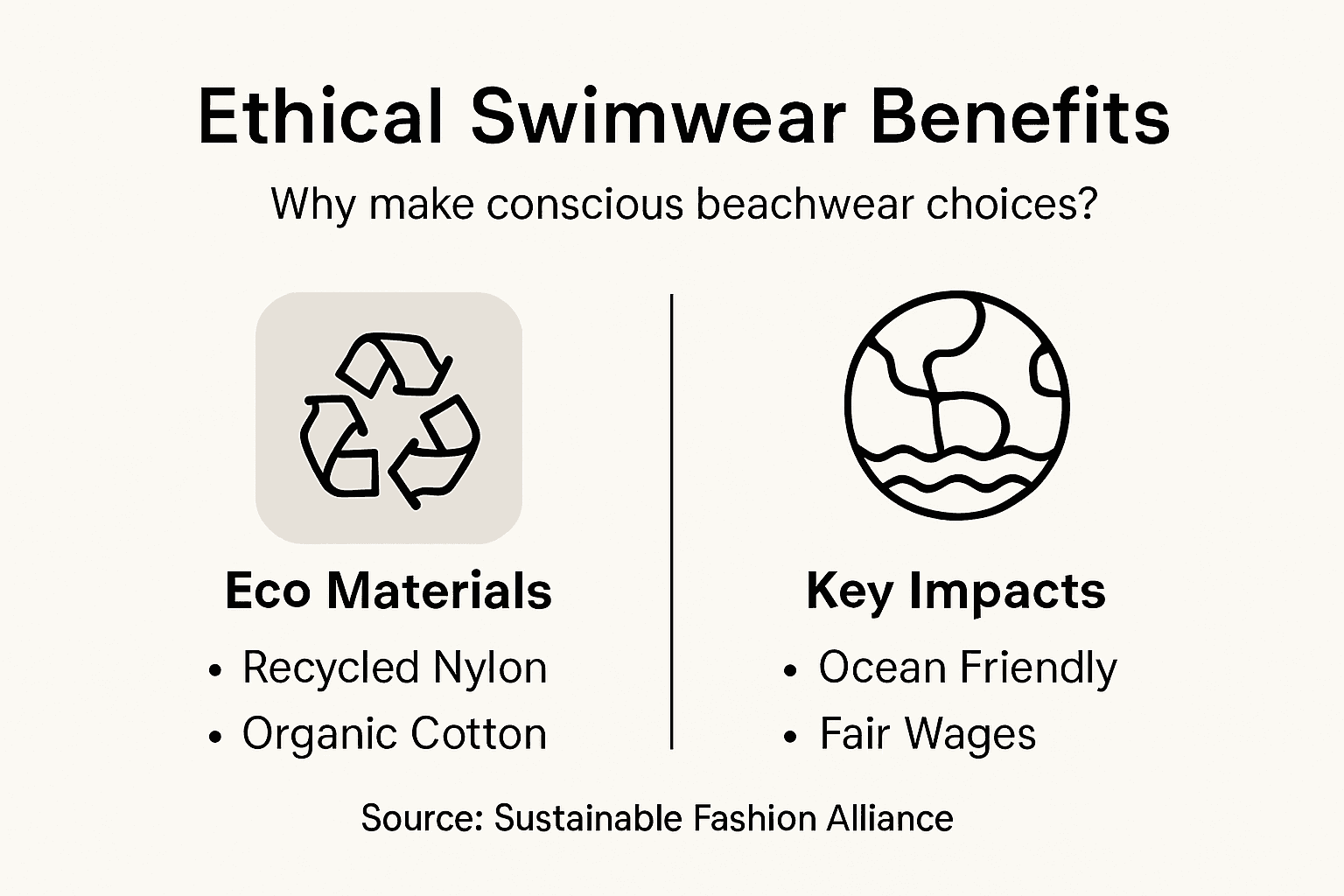
The core principles of ethical swimwear are grounded in a comprehensive approach to responsible production. Sustainable development principles guide these brands, focusing on minimizing environmental impact while ensuring fair treatment of workers throughout the supply chain. Key elements include using eco-friendly materials like recycled plastics, organic cotton, and regenerated nylon, reducing water consumption during production, and creating long-lasting products that resist rapid fashion turnover.
Understanding the ethical framework means recognizing that each swimwear piece tells a complex story of global interconnectedness. Applied ethical principles translate into concrete practices such as fair wages, safe working conditions, reduced carbon footprints, and supporting local communities where production occurs. Brands committed to these principles demonstrate that fashion can be both aesthetically pleasing and socially responsible.
These ethical practices extend beyond manufacturing to include responsible packaging, carbon-neutral shipping, and transparent communication about environmental and social impact. By supporting such brands, consumers directly contribute to a more sustainable and equitable global fashion ecosystem.
Pro tip: When shopping for ethical swimwear, look for certifications like Fair Trade, GOTS (Global Organic Textile Standard), or B Corp that validate a brand’s commitment to sustainable and ethical practices.
How Ethical Swimwear Differs From Fast Fashion
The distinction between ethical swimwear and fast fashion represents a profound philosophical and practical divergence in clothing production and consumption. While fast fashion prioritizes rapid, low-cost manufacturing with minimal regard for environmental or social consequences, ethical swimwear emerges as a comprehensive alternative that reimagines clothing as a holistic ecosystem of responsibility and sustainability.
Fast fashion’s detrimental environmental impact creates massive ecological challenges, including significant water resource depletion and excessive carbon emissions. Ethical swimwear brands deliberately counter these destructive practices by implementing sustainable production methods that dramatically reduce environmental footprints. This includes utilizing recycled materials, minimizing water consumption, ensuring fair labor practices, and creating products designed for longevity rather than disposability.
The fundamental differences extend beyond material choices into broader systemic approaches. Ethical swimwear brands invest in transparent supply chains, provide fair wages to workers, and prioritize long-term environmental stewardship. In contrast, fast fashion operates through high-volume production models that exploit labor markets, generate massive textile waste, and contribute to global environmental degradation. These brands view clothing not as disposable commodities but as carefully crafted items with meaningful social and ecological implications.
Consumers play a critical role in this transformation by making intentional purchasing decisions that support sustainable fashion ecosystems. By choosing ethical swimwear, individuals directly challenge the exploitative fast fashion model and support brands committed to environmental preservation and social justice.
Here is a concise comparison of ethical swimwear versus fast fashion:
| Aspect | Ethical Swimwear | Fast Fashion |
|---|---|---|
| Production Model | Low volume, quality-focused | High volume, speed-focused |
| Environmental Impact | Minimizes resource depletion and waste | High water use and pollution |
| Labor Standards | Emphasizes fair wages and safe conditions | Often associated with worker exploitation |
| Product Longevity | Designed for durability and longevity | Short lifespan; disposable mindset |
| Brand Transparency | Open disclosure of manufacturing processes | Limited or no supply chain transparency |
Pro tip: Research brands thoroughly and look for specific sustainability certifications that validate their ethical manufacturing claims before making a purchase.
Environmental Impact of Eco-Friendly Materials
The evolution of swimwear materials represents a critical frontier in environmental sustainability, transforming how we conceptualize clothing production and its global ecological consequences. Eco-friendly materials are not just a trend but a necessary revolution in textile manufacturing, offering innovative solutions to reduce environmental degradation and mitigate the fashion industry’s substantial carbon footprint.
Sustainable textile innovations play a pivotal role in addressing ocean microplastic pollution and industrial waste generation. Recycled nylon, organic cotton, and regenerated fibers represent groundbreaking alternatives to traditional petroleum-based materials. These advanced textiles dramatically reduce greenhouse gas emissions, minimize water consumption, and create a circular economy model that transforms waste into valuable resources. By intercepting plastic waste from oceans and landfills, these materials provide a second life to discarded plastics while preventing additional environmental contamination.
The environmental benefits of eco-friendly materials extend far beyond immediate waste reduction. Manufacturing processes for sustainable textiles consume significantly less energy, generate fewer toxic emissions, and support more ethical production ecosystems. Brands utilizing these materials demonstrate a commitment to comprehensive environmental stewardship that encompasses not just material selection but holistic supply chain transformation. This approach challenges traditional linear production models by prioritizing regenerative practices that actively restore and protect natural environments.

Consumers increasingly recognize that material choices represent powerful ecological statements. Each sustainable swimwear purchase contributes to a broader movement challenging conventional textile production, supporting innovative technologies, and driving systemic change in global manufacturing practices. The cumulative impact of these individual decisions can reshape entire industrial landscapes, promoting more responsible and environmentally conscious production methods.
Here is a summary of leading eco-friendly swimwear materials and their environmental benefits:
| Material Type | Main Source | Key Benefit |
|---|---|---|
| Recycled Nylon | Discarded fishing nets | Reduces ocean plastic waste |
| Organic Cotton | Sustainably grown cotton | Lower pesticide and water use |
| Regenerated Fiber | Industrial plastic waste | Promotes circular economy |
Pro tip: Learn to read fabric composition labels and prioritize swimwear made from recycled or organic materials to maximize your personal environmental impact.
Supply Chain Transparency and Fair Labor Practices
Supply chain transparency represents a critical ethical imperative in modern swimwear production, transforming how consumers understand and engage with clothing manufacturing processes. Ethical swimwear brands are increasingly recognizing that true sustainability extends far beyond material choices, encompassing comprehensive human rights and labor practices throughout global production networks.
Supply chain transparency mechanisms enable brands to openly disclose production details, ensuring accountability and combating exploitative labor practices. By providing comprehensive insights into manufacturing processes, ethical swimwear companies create unprecedented visibility into working conditions, wage structures, and environmental practices across multiple production tiers. This approach empowers consumers to make informed purchasing decisions that align with their social and ethical values, creating a powerful mechanism for driving systemic change in global textile manufacturing.
Ethical management practices require deep commitment from senior leadership to implement meaningful transparency. This involves rigorous auditing, third-party verification, and continuous improvement of labor standards. Brands committed to fair labor practices go beyond minimal compliance, actively investing in worker training, safety infrastructure, and community development programs that create holistic economic opportunities in manufacturing regions. Such comprehensive approaches demonstrate that ethical swimwear is not just about producing sustainable clothing, but about creating meaningful social impact.
Consumers play a pivotal role in this transformation by demanding accountability and supporting brands that prioritize human rights. Each purchase becomes a vote for more ethical, transparent, and socially responsible manufacturing practices. By choosing swimwear brands that openly share their production processes, consumers contribute to a global movement challenging traditional exploitative industrial models and promoting more equitable global economic systems.
Pro tip: Research brands’ published sustainability reports and look for detailed supply chain disclosures before making your swimwear purchase.
Ocean Conservation and Pollution Reduction Efforts
Ocean conservation has emerged as a critical battleground for environmental preservation, with ethical swimwear brands positioned at the forefront of transformative sustainability efforts. Marine ecosystem protection represents more than an environmental strategy; it is a comprehensive approach to addressing global ecological challenges through intentional consumer choices and innovative manufacturing practices.
Ocean conservation initiatives highlight the profound interconnection between textile production and marine health. Ethical swimwear brands are pioneering strategies that dramatically reduce microplastic pollution, intercept potential ocean waste, and create regenerative manufacturing processes that actively support marine biodiversity. By transforming discarded plastics into high-performance swimwear materials, these brands create a circular economy model that directly removes potential ocean pollutants while creating functional, stylish beachwear.
Innovative cleanup technologies are revolutionizing how the fashion industry approaches environmental stewardship. Advanced recycling techniques now allow manufacturers to transform ocean-bound plastics into sophisticated textile fibers, creating a direct link between consumer products and marine ecosystem restoration. These breakthrough technologies demonstrate that sustainable fashion can be both an environmental solution and a powerful mechanism for global ecological regeneration, turning potential waste into valuable, high-performance materials.
Consumers play a crucial role in this environmental transformation by making conscious purchasing decisions that support ocean conservation. Each ethical swimwear purchase represents a direct investment in marine ecosystem protection, supporting brands that prioritize comprehensive environmental strategies. By choosing swimwear created with regenerative materials and supporting companies committed to ocean health, individuals become active participants in a global movement to protect and restore marine environments.
Pro tip: Look for swimwear brands that can transparently demonstrate their ocean plastic recovery and recycling processes before making your purchase.
Risks of Ignoring Non-Ethical Alternatives
The consequences of perpetuating non-ethical swimwear consumption extend far beyond individual purchasing decisions, representing a critical global challenge with profound environmental and social implications. Unsustainable fashion practices create a cascading series of destructive consequences that impact ecosystems, worker communities, and long-term planetary health.
Fast fashion’s environmental consequences reveal a stark and alarming reality of industrial waste and ecological destruction. Non-ethical swimwear production generates massive carbon emissions, consumes extraordinary quantities of water, and creates textile waste that overwhelms landfills and pollutes marine environments. Each disposable swimwear item represents a complex network of environmental degradation, from resource extraction through manufacturing to eventual waste management, creating a systemic problem that cannot be ignored.
Alternative fashion movements underscore the urgent need to transform traditional production models. Continuing to support non-ethical alternatives perpetuates cycles of worker exploitation, environmental damage, and systemic inequity. The human cost of cheap, disposable swimwear includes unsafe working conditions, inadequate wages, and the marginalization of communities involved in global textile production. By choosing non-ethical alternatives, consumers inadvertently support a system that prioritizes short-term profit over long-term sustainability and human dignity.
The risks extend beyond immediate environmental and social impacts, threatening broader economic and ecological stability. Continued reliance on non-sustainable fashion practices undermines innovation, reduces biodiversity, and accelerates climate change. Consumers possess significant power to drive systemic change through intentional purchasing decisions that prioritize ethical, sustainable, and socially responsible fashion production.
Pro tip: Educate yourself about the true cost of cheap swimwear by researching the complete production lifecycle before making a purchase.
Choose Ethical Swimwear That Makes a Real Difference Today
The article highlights the urgent challenges of fast fashion’s environmental harm and the importance of supporting ethical swimwear brands that prioritize sustainability, fair labor, and ocean conservation. If you want to avoid contributing to pollution and exploitation while enjoying stylish, durable swimwear, acting now is essential. By embracing swimwear made with eco-friendly materials and transparent supply chains, you help protect oceans and support communities worldwide.

Discover how you can align your beachwear choices with these powerful values by exploring the curated collections at Le Club Original. From recycled nylon trunks to organic fabric bikinis designed for longevity and performance, this platform embodies the ethical swimwear principles discussed in the article. Shop confidently today, take advantage of seasonal sales, and join a community dedicated to making sustainable fashion the future. Visit Le Club Original now to find your perfect swimwear that reflects your commitment to our planet and people.
Frequently Asked Questions
What is ethical swimwear?
Ethical swimwear prioritizes environmental sustainability, worker welfare, and transparent manufacturing processes, reimagining how swimwear is created and consumed.
How does ethical swimwear differ from fast fashion?
Ethical swimwear focuses on low-volume, quality production with sustainable practices, while fast fashion emphasizes high-volume, low-cost manufacturing with minimal regard for environmental or social consequences.
What materials are commonly used in ethical swimwear?
Eco-friendly materials like recycled nylon, organic cotton, and regenerated fibers are commonly used in ethical swimwear, significantly reducing environmental impact and promoting a circular economy.
Why is supply chain transparency important in ethical swimwear?
Supply chain transparency ensures accountability in manufacturing processes, allowing consumers to make informed decisions and supporting fair labor practices and ethical manufacturing methods.