

Finding stylish beachwear that matches your commitment to sustainability can feel like a challenge for the eco-conscious man. As more brands claim to offer green collections, understanding what truly makes a piece environmentally responsible has never been more important. This guide helps you easily spot genuine eco-friendly markers, select durable materials like ECONYL® regenerated nylon, and make confident choices that support both your style and global environmental initiatives.
Table of Contents
- Step 1: Identify Sustainable Beachwear Essentials
- Step 2: Choose Eco-Friendly Swim Trunks and Tops
- Step 3: Coordinate Accessories for Practical Style
- Step 4: Layer with Sun Protection Apparel
- Step 5: Review and Refine Your Beachwear Ensemble
Quick Summary
| Key Takeaway | Explanation |
|---|---|
| 1. Choose Sustainable Fabrics | Opt for recycled polyester, organic cotton, and ECONYL® to minimize environmental impact while ensuring durability. |
| 2. Assess Construction Quality | Look for reinforced seams and proper stitching to guarantee longevity, avoiding waste from poorly made beachwear. |
| 3. Verify Brand Transparency | Check if brands disclose their manufacturing processes and labor practices to ensure ethical sourcing and production. |
| 4. Prioritize Versatile Accessories | Select multifunctional accessories that enhance your beach experience and remain consistent with sustainability goals. |
| 5. Commit to Maintenance Routines | Regular care through hand washing and proper drying extends the life of your beachwear, maximizing your investment. |
Step 1: Identify Sustainable Beachwear Essentials
Starting your sustainable beachwear journey means understanding what actually makes a piece environmentally responsible. This step is about learning to spot the key markers that separate greenwashing from genuine eco-friendly options. You’ll develop the ability to read labels, understand fabric choices, and recognize production methods that align with your values as an environmentally conscious consumer.
Begin by examining the materials themselves. Quality sustainable beachwear relies on specific fabric choices that reduce environmental impact. Look for recycled polyester, organic cotton, and innovative blends that prioritize durability and performance. When evaluating swim trunks or cover-ups, check whether the manufacturer uses sustainable fabrics like polyester-spandex blends that incorporate advanced production techniques. These materials matter because they directly affect water consumption and chemical waste during manufacturing. Beyond the base fabric, pay attention to construction details. Seams should be reinforced, stitching tight, and finishes professional. Poorly made beachwear falls apart after one season, creating unnecessary waste. Sustainable pieces are designed to last multiple years, which is the real measure of environmental responsibility.
Next, understand the manufacturing process. Sustainable design techniques that minimize fabric waste through innovative pattern cutting reduce the environmental footprint significantly. Many conventional beachwear brands waste 10 to 15 percent of their fabric during production. Companies committed to sustainability use flat pattern designs and efficient cutting methods to eliminate this waste. Additionally, ask yourself whether the brand provides transparency about their supply chain. Where are the garments made? What are their labor practices? Do they use renewable energy in their facilities? Genuine sustainable brands answer these questions openly because they stand behind their practices. You should also consider certifications like GOTS (Global Organic Textile Standard) or Bluesign, which verify environmental and social responsibility throughout production.
Finally, evaluate the cover-up game. Beach cover-ups are essential for UV protection and versatility, and they’re an area where brands can make significant environmental choices. Look for styles crafted from the same sustainable materials as your swim trunks, ensuring your entire beach outfit aligns with your values. The best sustainable cover-ups serve multiple purposes, allowing you to wear them beyond the beach as casual shirts or lightweight layers. This versatility extends the lifespan of each piece and justifies the investment.
Here’s a quick reference on sustainable fabric options and their environmental advantages:
| Fabric Type | Environmental Benefit | Durability | Typical Beachwear Use |
|---|---|---|---|
| Recycled Polyester | Reduces plastic waste, less energy | High | Swim trunks, cover-ups |
| Organic Cotton | Lower water usage, no pesticides | Medium | Shirts, cover-ups |
| ECONYL® Nylon | Made from ocean waste, cuts CO2 | High | Swimwear, rash guards |
| Polyester-Spandex | Stretchy, advanced low-waste methods | High | Fitted swimwear, shirts |
Pro tip: Check the product tag for material percentages and certifications before adding anything to your cart. True sustainable beachwear brands proudly display this information because it’s their competitive advantage, not something they hide in fine print.
Step 2: Choose Eco-Friendly Swim Trunks and Tops
This step focuses on making informed decisions about the actual pieces you’ll wear. You’ll learn which materials and brands deliver real environmental benefits while maintaining the style and performance you expect from quality beachwear. The choices you make here directly impact both your wardrobe’s longevity and the planet’s health.
Start by prioritizing materials that prove their worth. Look for swim trunks and tops made from recycled polyester and regenerated nylon fibers, particularly ECONYL® nylon that’s regenerated from ocean waste. These materials sound technical, but what matters is understanding why they’re better. Recycled polyester reduces demand for new petroleum extraction, while regenerated nylon transforms discarded fishing nets and plastic bottles into functional swimwear. When you choose these materials, you’re literally preventing ocean plastic pollution. Beyond the core fabric, check whether the manufacturer includes UV protection in their construction. Modern sustainable swim trunks don’t sacrifice sun protection, and quality brands integrate UPF technology without adding harmful chemicals to the water. Read the product descriptions carefully. Reputable brands are transparent about their fabric composition and protective features because they want you to understand exactly what you’re getting.
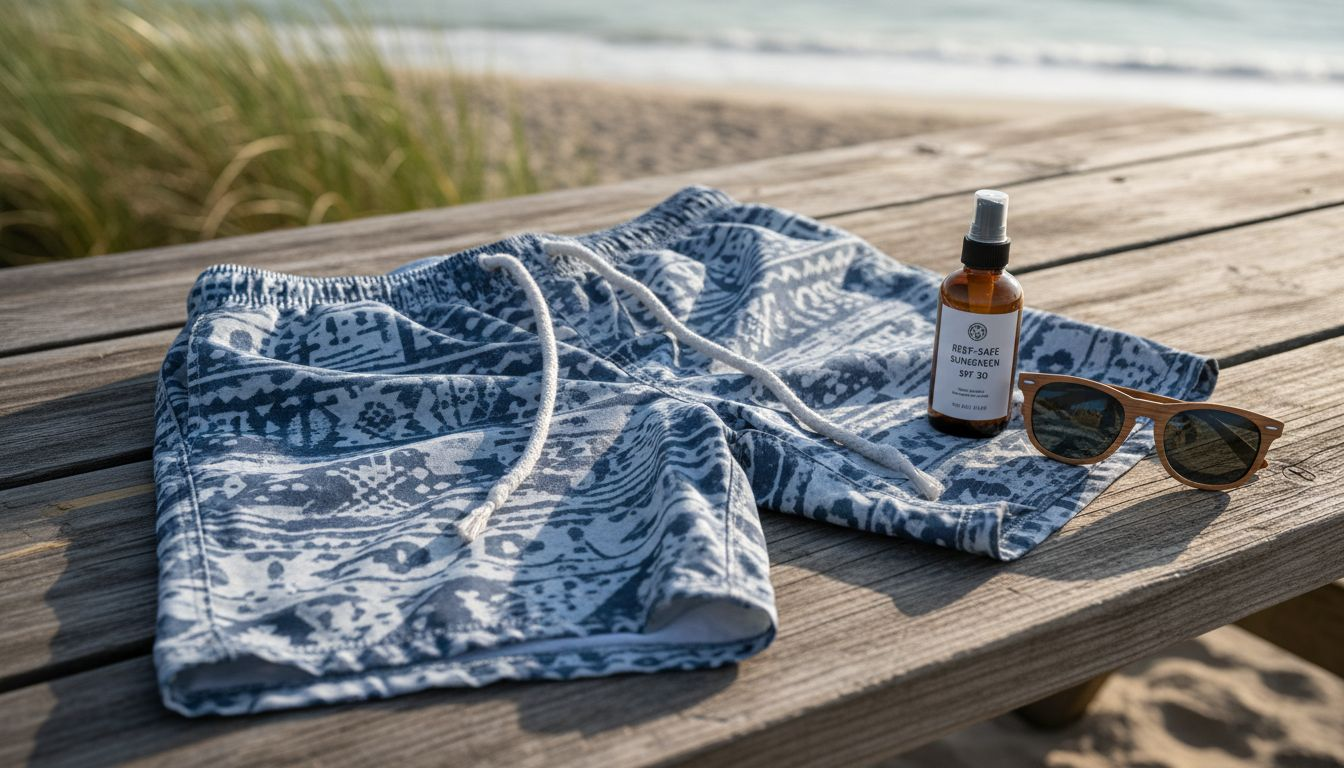
Next, evaluate the construction quality and ethical sourcing. Sustainable swimwear brands prioritize ethical manufacturing alongside durability, which means your purchase supports fair labor practices and responsible production. Check whether the brand provides information about where their garments are made and what quality standards they maintain. Size inclusivity matters too. Brands genuinely committed to sustainability offer a range of sizes because wasteful overproduction from limited size runs contradicts environmental values. Look for companies that provide transparency in their production practices without vague marketing language. When you’re comparing options, check for certifications or third-party verifications that confirm their environmental claims. Brands that have nothing to hide openly share their sustainability reports and material sourcing details.
Finally, remember that choosing eco-friendly swim trunks and tops is an investment in pieces that will last multiple seasons. The initial cost might feel higher than conventional options, but the durability and timeless styling mean these pieces become wardrobe staples rather than seasonal throwaway items. Quality sustainable beachwear performs better in chlorine, maintains its color through repeated washing, and holds its shape year after year.
Pro tip: Look for brands that offer size charts with detailed measurements and fabric care instructions, as this transparency indicates they’ve thought through long-term durability and customer satisfaction rather than quick sales.
Step 3: Coordinate Accessories for Practical Style
Accessories transform your sustainable beachwear from functional to finished. This step teaches you how to select complementary pieces that enhance your overall look while maintaining your commitment to environmental responsibility. The right accessories aren’t just about aesthetics. They solve real problems and complete your beach day experience.
Start with the essentials that serve a purpose beyond style. A quality beach bag should carry your keys, wallet, and phone while protecting them from sand and saltwater. Look for drawstring bags made from recycled fabrics that pair naturally with your sustainable swim trunks. These bags typically use materials like recycled polyester or organic cotton, maintaining consistency with your core beachwear choices. The best beach bags dry quickly, resist mildew, and don’t require special care. Avoid single-use plastic bags entirely. They contradict your sustainability values and create more waste. A durable, reusable beach bag becomes a permanent part of your rotation, getting used season after season. Beyond bags, consider footwear carefully. Sustainable sandals and water shoes made from recycled rubber or natural materials like cork complement your eco-conscious wardrobe. They should perform well in wet conditions while supporting proper foot health. Quality sandals with reinforced straps won’t fall apart mid-hike to your favorite beach spot.
Eye protection deserves equal attention to your other gear. Sunglasses using recycled plastics offer the dual benefit of protecting your eyes from harmful UV rays while reducing plastic waste. Look for frames made from recycled ocean-bound plastics or bio-based materials that deliver style without environmental guilt. Quality lenses with proper UV filtering are essential. Cheap sunglasses without adequate protection actually damage your eyes more than wearing no sunglasses at all. Round out your accessory collection with a waterproof watch or rash guard to complete your practical look. These items serve genuine functions, whether tracking your time, providing additional sun protection, or offering a versatile layer for cooler beach days. Every piece should earn its place in your beach bag through utility and durability.
The key to coordinating accessories is selecting pieces that work together functionally while supporting your sustainability goals. Your bag, shoes, sunglasses, and additional layers should feel like a cohesive system rather than mismatched add-ons. When brands specialize in sustainable beachwear, they understand this coordination better than generic retailers. They design complementary pieces that fit your lifestyle and values.
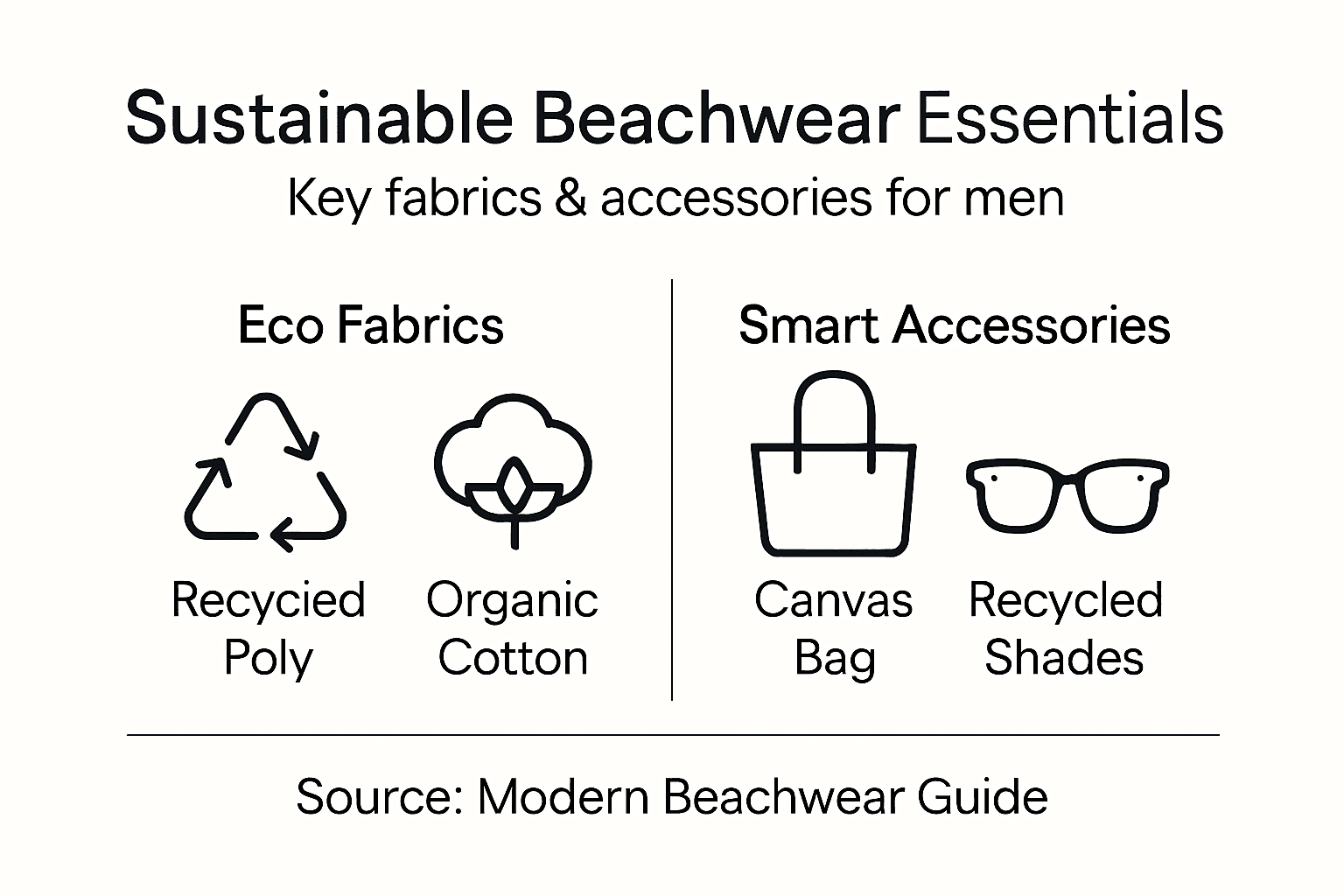
Compare these accessory types for practical sustainable beachwear:
| Accessory | Sustainability Advantage | Utility Feature | Care Requirement |
|---|---|---|---|
| Recycled Fabric Bag | Reduces landfill waste, reusable | Quick-drying, mildew resistant | Air dry, spot clean |
| Cork Sandals | Renewable material, biodegradable | Water resistance, foot support | Wipe clean |
| Recycled Plastic Sunglasses | Ocean-bound plastic used | UV protection for eyes | Store safely |
| Waterproof Watch | Long lifespan, minimal battery use | Time tracking, durable | Rinse after use |
Pro tip: Choose accessories in neutral colors like black, navy, or earth tones so they coordinate effortlessly with different swim trunks and tops without requiring multiple items for different outfits.
Step 4: Layer with Sun Protection Apparel
Sun protection goes beyond sunscreen and hats. This step focuses on selecting layering pieces that shield your skin from harmful UV rays while maintaining breathability and comfort during long beach days. Quality sun protection apparel becomes your second line of defense, allowing you to spend more time outdoors without constant reapplication of sunscreen.
Begin by understanding what makes effective sun protection clothing. Men’s sun protection shirts provide UPF 50+ fabric that blocks the majority of harmful UV rays while allowing moisture to evaporate, keeping you cool rather than overheated. This is crucial because traditional cotton t-shirts offer minimal UV protection and become heavy and uncomfortable when wet. Look for rash guards or swim shirts made from recycled polyester and organic cotton blends that combine performance with environmental responsibility. The fabric weight matters significantly. Lightweight options work best for beach environments because they won’t trap heat against your skin. Quality sun shirts dry quickly after swimming, preventing that uncomfortable clammy feeling that makes you want to remove your protection. Check the label for UPF ratings. Anything rated UPF 50 or higher blocks at least 98 percent of UV rays. Some brands exceed this standard, offering UPF 80 or even UPF 100 plus ratings for maximum protection. Don’t settle for unmarked shirts claiming sun protection. That’s marketing without substance.
Consider your layering strategy based on your beach activities. If you’re primarily swimming, a fitted rash guard works best because it won’t ride up or restrict movement in the water. For beach volleyball, hiking, or casual lounging, a looser fit sun shirt provides comfort and coverage. Many quality sun apparel pieces work equally well in the water and out of it, eliminating the need for multiple items. The best sustainable sun shirts use the same eco-friendly materials as your swim trunks and tops, creating a cohesive wardrobe where everything supports your environmental values. Look for pieces with flat seams that won’t chafe during extended wear, reinforced necklines that maintain their shape, and thoughtful construction details that show the manufacturer cares about durability.
Remember that layering with sun protection apparel means you’ll spend less time reapplying sunscreen and more time enjoying the beach. Your skin accumulates damage cumulatively, so consistent protection throughout the day matters more than occasional heavy sunscreen applications. Quality sun shirts become workhorses in your beach rotation, offering year-round protection whether you’re swimming in summer or taking winter beach walks.
Pro tip: Pack a lightweight sun shirt that doubles as a beach cover-up so it earns double duty in your beach bag and reduces the total number of items you need to carry.
Step 5: Review and Refine Your Beachwear Ensemble
Now that you’ve assembled your sustainable beachwear pieces, step back and evaluate your complete ensemble. This step involves assessing how your selections work together, identifying any gaps, and ensuring your collection truly reflects your sustainability values. You’ll refine your choices to create a versatile, lasting wardrobe that serves you well across multiple seasons.
Start by examining each piece critically. Lay out your swim trunks, tops, cover-ups, and accessories together and ask yourself honest questions. Do these items feel cohesive? Can you mix and match them to create multiple outfits? Are there gaps where you need additional pieces? Look at the materials again. Every item should meet the same sustainability standards you established in earlier steps. If you find pieces that don’t align with your eco-conscious values, consider whether they earned their place in your rotation through exceptional durability or functionality. Most importantly, verify that reviewing your sustainable beachwear involves assessing materials and production practices confirms your choices support ethical labor conditions and genuine environmental responsibility. Don’t keep items just because you own them. Your beachwear ensemble should represent intentional purchasing, not accumulated mistakes.
Next, establish a maintenance routine that extends the life of your pieces. Proper care and maintenance extend the lifespan of sustainable beachwear through hand washing with gentle detergents, avoiding bleach, air drying away from direct sunlight, and minimizing washing frequency. These practices might seem tedious, but they’re essential to realizing the environmental benefit of your investment. A swim trunk that lasts five years instead of one reduces your cumulative environmental impact dramatically. Create a simple system for yourself. After each beach visit, rinse your beachwear in fresh water to remove salt and sand. Once weekly, hand wash items gently with mild soap and hang dry completely before storing. This routine takes minimal effort and pays dividends in garment longevity. Store your pieces in a cool, dry location away from direct sunlight, which degrades fabrics over time.
Finally, commit to regular ensemble reviews. Every three months, assess your collection and identify items needing repair or replacement. Quality beachwear develops small issues like loose seams or faded colors that warrant attention. Address these problems promptly rather than letting them worsen. If an item truly no longer serves you, explore responsible disposal options. Donate quality pieces to thrift stores or organizations that support beach communities. This circular approach ensures your sustainable choices continue benefiting the environment even after you’ve moved on from specific pieces.
Pro tip: Create a simple inventory list of your beachwear items and photograph them together so you remember exactly what you own when shopping for future pieces, helping you avoid duplicate purchases and fill genuine wardrobe gaps.
Elevate Your Sustainable Beachwear Style Today
The challenge of finding truly sustainable men’s beachwear that combines durability, style, and environmental responsibility can feel overwhelming. This article highlights the importance of choosing eco-friendly fabrics such as recycled polyester and ECONYL® nylon, prioritizing ethical manufacturing, and coordinating accessories that support your values without sacrificing practicality. If you are seeking to build a wardrobe that lasts multiple seasons while reducing your ocean plastic footprint and embracing modern, sustainable design principles, your search ends here.
Discover how Le Club Original makes it easy to upgrade your beachwear collection with high-quality swim trunks and sun protection apparel crafted from recycled materials.
Start shopping now to enjoy fashion that respects the planet and supports fair labor practices. Take advantage of seasonal sales with up to 50% off and free shipping on orders over $50. Browse our eco-friendly swimwear and accessories to create a cohesive, modern, and sustainable look that stands out wherever you go. Visit Le Club Original and transform your beach style with purpose today.
Frequently Asked Questions
How can I identify sustainable beachwear?
To identify sustainable beachwear, look for items made from eco-friendly materials like recycled polyester or organic cotton. Check labels for certifications that verify ethical production, and evaluate the construction to ensure durability. Prioritize pieces designed to last multiple seasons to align with your sustainability goals.
What types of fabrics should I choose for men’s sustainable beachwear?
Choose fabrics such as recycled polyester, organic cotton, and ECONYL® nylon for your beachwear. These materials help reduce waste and often have a lower environmental impact compared to conventional fabrics. Aim to select pieces that are both functional and stylish, ensuring they meet your aesthetic and ecological standards.
How can I style my beach ensembles for versatility?
To style your beach ensembles for versatility, mix and match swim trunks with cover-ups that can transition from beach to casual outings. Select neutral colors for your accessories and garments to create cohesive looks. This approach allows for multiple outfit combinations with fewer pieces, maximizing the usage of your wardrobe.
What should I look for in accessories for sustainable beachwear?
When selecting accessories for sustainable beachwear, opt for items made from recycled or organic materials, such as bags and sandals. Ensure these accessories serve practical purposes, like a beach bag that keeps items dry and protected. By choosing versatile accessories, you can enhance your overall look while supporting your sustainability commitment.
How can I maintain my sustainable beachwear for longevity?
To maintain your sustainable beachwear, wash items gently by hand with mild soap and air dry away from direct sunlight. Rinse them after each beach visit to remove sand and salt, which can damage the fabric. Establish a routine to regularly inspect your pieces for wear, enabling them to last considerably longer than less durable options.
Recommended
- 7 Essential Summer Beachwear Trends 2025 for Eco Style – Le Club Original
- 7 Essential Summer Beachwear Trends 2025 for Eco Style – Le Club Original
- How to Style Swimwear for Men for a Modern Beach Look – Le Club Original
- How to Style Swimwear for Men for a Modern Beach Look – Le Club Original
- What Is Unisex Streetwear? Complete Style Overview – ChillStitchApparel