

Dragging heavy trunks through the surf gets old fast when you know there are smarter, more sustainable options. Eco-conscious guys from cities in Canada to beaches in Australia want swimwear that looks sharp, lasts longer, and actually keeps oceans cleaner. Discover the difference that water-safe design and eco-friendly materials make in your comfort, your safety, and the health of the planet with every swim.
Table of Contents
- Defining Water-Safe Swimwear For Men And Boys
- Key Materials And Their Functional Differences
- Water Safety Standards And Certification Labels
- Eco-Friendly Options In Water-Safe Swimwear
- Common Mistakes And Risks To Avoid
Key Takeaways
| Point | Details |
|---|---|
| Choosing the Right Swimwear | Opt for water-safe swimwear designed for aquatic environments to enhance safety and performance. |
| Material Matters | Select non-absorbent materials, such as Lycra or OEKO-TEX certified options, to prevent waterlogging and promote durability. |
| Consider Visibility and Fit | Wear bright colors for better visibility in water and ensure a snug fit to reduce drag and entanglement risks. |
| Check Certifications | Look for certification labels like OEKO-TEX to ensure your swimwear meets safety and environmental standards. |
Defining Water-Safe Swimwear for Men and Boys
Water-safe swimwear is clothing specifically designed for aquatic environments that prioritizes both your safety and performance in the water. Unlike regular beach wear or street clothes, proper swimwear is engineered to function effectively when wet, stay securely in place, and maintain your comfort during extended water activities. Think of it as the difference between wearing gym clothes to the gym versus wearing a t-shirt to the gym. One is built for the job, the other just happens to be there.
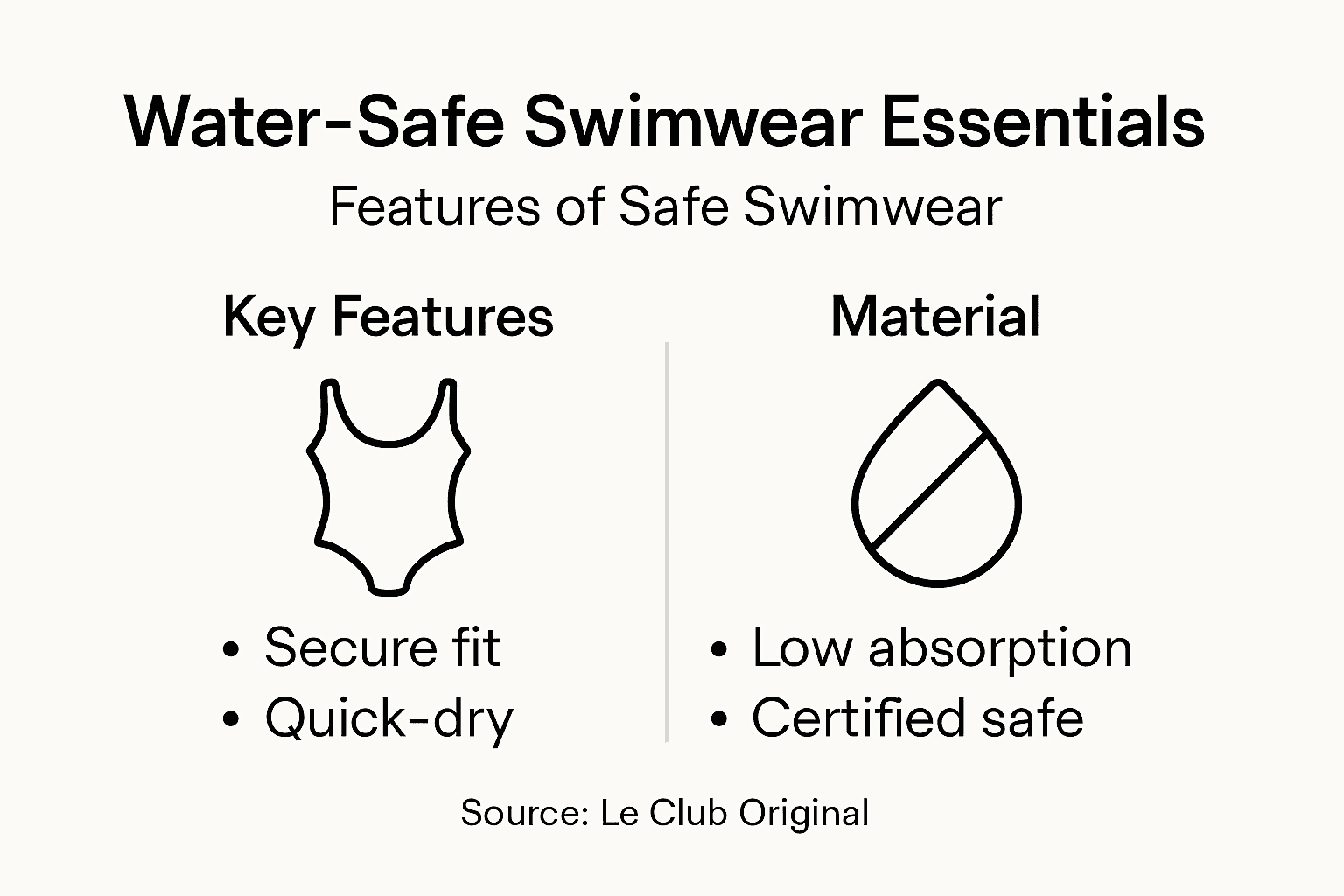
The core of water-safe swimwear comes down to a few critical design features. First, secure fit to prevent slippage ensures your swimwear stays where it belongs, eliminating distractions and safety risks while you’re swimming or diving. Second, materials resistant to water absorption mean your trunks won’t become waterlogged and heavy, pulling you down or creating drag. Third, the fabric itself must be appropriate for the activity, whether that’s a quick dip at the beach or lap swimming at a pool.
What makes swimwear truly water-safe goes beyond just fit and material. Your swimwear should support mobility, allowing full range of motion for your shoulders, hips, and legs without restriction. It should dry quickly once you’re out of the water, prevent chafing during extended wear, and maintain its integrity through repeated exposure to chlorine, saltwater, and UV rays. Many eco-conscious swimmers also look for fabrics that won’t shed microplastics into the ocean, protecting marine ecosystems while they enjoy themselves.
Think about the context where you’re swimming too. Pool swimwear might prioritize different features than ocean-ready trunks. Features of high-quality swim trunks for men include considerations like liner construction, pocket security, and inseam length that all contribute to how well your swimwear performs in specific water conditions.
The distinction between water-safe and unsafe swimwear matters most when you’re actually in the water. Loose basketball shorts, gym shorts, or street clothes absorb water, become heavy, restrict movement, and can create safety hazards. Proper swimwear lets you focus on enjoying the water instead of worrying whether your gear will stay put.
Pro tip: Choose swimwear with a quick-dry rating of 30 minutes or less if you plan to spend significant time in and out of the water, keeping you comfortable throughout your beach day.
Key Materials and Their Functional Differences
Not all swimwear fabrics perform the same way in water. The material you choose directly impacts how your trunks feel, how long they last, and what they actually do to the environment. Understanding these differences helps you make smarter choices about what goes on your body and what ends up in the ocean.
Lycra and Nylon: The Performance Standards
Lycra and nylon are non-absorbent materials that dominate water-safe swimwear design for good reason. Lycra stretches and recovers perfectly, giving you full mobility without baggy areas that catch water. Nylon resists water absorption completely, meaning your trunks stay lightweight even after hours in the pool or ocean. Both fabrics maintain their shape through repeated use and dry remarkably fast. You won’t experience the heavy, waterlogged feeling that comes from cotton or other absorbent materials.
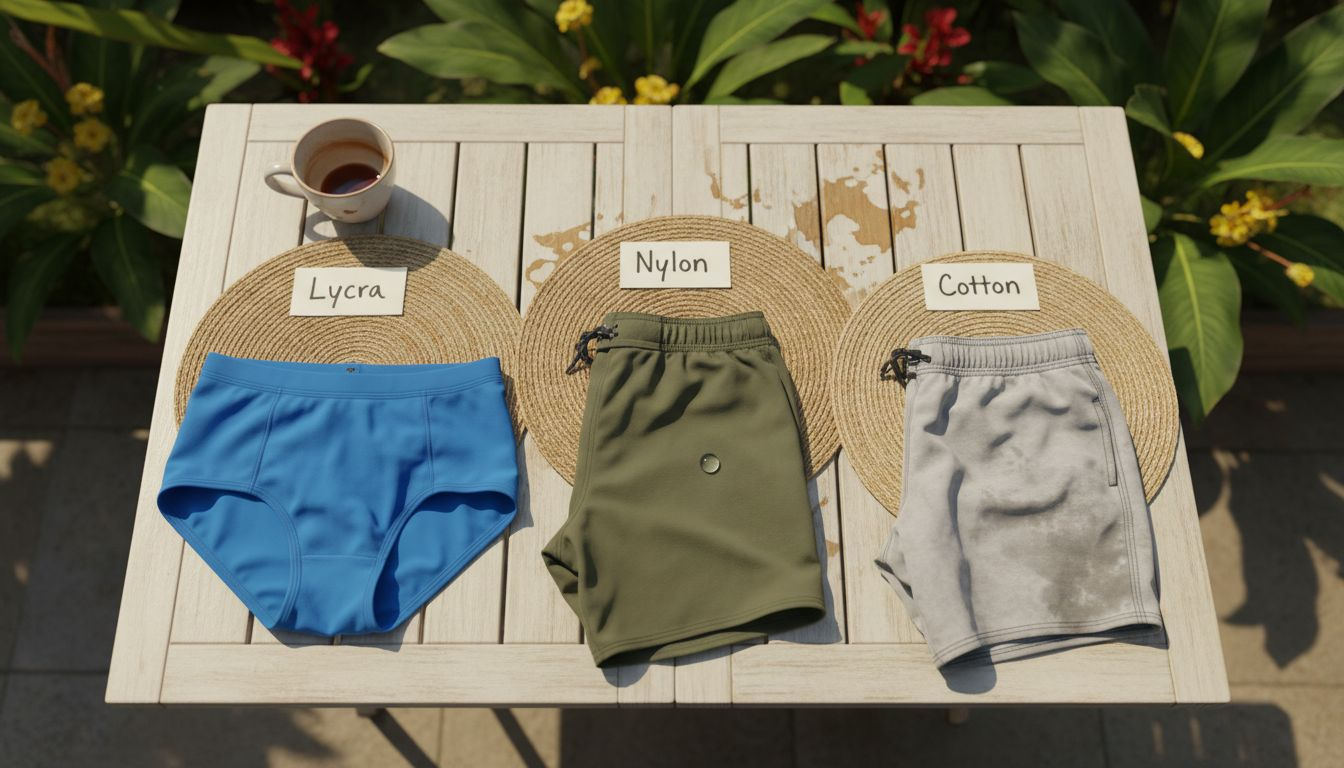
These synthetics also prevent the drag that slows you down. When fabric absorbs water, it becomes heavy and creates resistance. Non-absorbent materials keep you streamlined and efficient in the water, whether you’re swimming laps or just floating around.
The Sustainability Question
Here’s where things get complicated. Synthetic fabrics deliver performance, but traditional polyester, nylon, and elastane come with environmental and health costs. Chemical additives used in manufacturing can leach into your skin and eventually into waterways. For eco-conscious swimmers, this creates a real tension between personal performance and planet impact.
Certified Alternatives That Work
The solution exists in a middle ground. OEKO-TEX certified synthetics reduce toxic substances while keeping the performance benefits you need. These materials maintain quick-drying properties, durability, and comfort without the chemical baggage. You get water-safe performance paired with lower health and environmental risk.
The key difference between materials ultimately comes down to absorption and durability. Cotton and natural fibers absorb water, get heavy, and degrade quickly. Quality synthetics repel water and last for years. Certified options give you both performance and peace of mind.
Here’s a quick comparison of common swimwear materials and their key effects:
| Material | Water Absorption | Durability | Environmental Impact |
|---|---|---|---|
| Nylon/Lycra | Minimal | High, resists stretching | Sheds some microplastics |
| Standard Polyester | Low | Good, holds color well | Often contains chemicals |
| Cotton | High | Poor, degrades quickly | Biodegradable, but unsafe |
| OEKO-TEX Synthetic | Minimal | High, tested for toxins | Safer for skin & water |
| Organic Fabrics | Moderate | Medium, less chlorine-tolerant | Lower, may use less energy |
Pro tip: Check for OEKO-TEX certification on swimwear labels before buying, ensuring you get performance without unnecessary chemical exposure to your skin or the ocean.
Water Safety Standards and Certification Labels
When you’re buying swimwear, you’re not just picking a color and fit. Behind every quality pair of swim trunks sits a system of testing, standards, and certifications designed to keep you safe in the water. These standards exist because swimwear performance directly affects your comfort, mobility, and how well you can actually swim.
The most recognized authority in competitive swimming is World Aquatics. World Aquatics sets criteria for swimwear performance including buoyancy, compression, and water resistance. These aren’t arbitrary numbers. They’re based on decades of research into how fabric behaves when wet, how it affects body positioning in water, and how it impacts athletic performance. If a swimwear brand has gone through World Aquatics testing, you know it meets strict safety benchmarks.
What Testing Actually Involves
Certified swimwear undergoes rigorous laboratory testing. Manufacturers submit samples that get evaluated for multiple factors: how much water the fabric absorbs, how the material responds to different water temperatures, and whether it maintains its properties after repeated use. Approved items receive unique digital certificates like QR codes that provide transparent verification. You can actually scan these codes to confirm a product’s legitimacy and see exactly what standards it meets.
This certification process matters whether you’re swimming competitively or casually. The same performance standards that ensure fairness in Olympic competitions also guarantee that recreational swimmers get dependable, safe products.
Reading Certification Labels
Look for official certification markings when shopping. World Aquatics approved items display specific logos and digital certificates. OEKO-TEX certifications indicate safety regarding chemical content. These labels tell you the product has been independently tested and verified, not just claimed by the manufacturer.
When a swimwear brand invests in getting certified, they’re signaling confidence in their product. They’ve paid for testing because they know their trunks actually perform. That’s worth something when you’re choosing what to wear in the water.
Pro tip: Scan QR codes on certified swimwear labels with your phone to instantly verify authenticity and review the specific performance standards your trunks meet before purchasing.
Eco-Friendly Options in Water-Safe Swimwear
Choosing water-safe swimwear doesn’t mean sacrificing your values about the environment. The good news is that performance and sustainability now go hand in hand. Eco-friendly swim trunks deliver the same safety and durability as conventional options while reducing your impact on the oceans you swim in.
The shift toward sustainable swimwear centers on eliminating harmful chemicals that leak into water systems and your body. OEKO-TEX certified materials and organic fabrics avoid harmful chemicals like PFAS and BPA that traditional synthetic swimwear contains. PFAS, called “forever chemicals,” don’t break down in nature and accumulate in marine ecosystems. When you wear non-toxic swimwear, you’re literally preventing pollution from entering the water where you swim.
Durability Equals Sustainability
Eco-friendly water-safe swimwear emphasizes durability because a pair of trunks that lasts three years is infinitely more sustainable than one that falls apart in six months. Quality matters. When brands invest in better materials and construction, they’re reducing waste at the source. You buy less, which means fewer manufacturing cycles and less resource consumption overall.
Microplastics and Ocean Impact
Conventional synthetic fabrics shed tiny plastic fibers every time you wash them or wear them in water. These microplastics end up in fish, coral, and eventually back in your food chain. Ocean-friendly clothing materials minimize or eliminate this shedding through thoughtful fabric selection and construction methods.
The Performance Question
Here’s what matters most: eco-friendly swimwear performs just as well as traditional options. You don’t sacrifice fit, stretch, quick-drying ability, or water resistance by choosing sustainable materials. The trade-off isn’t performance versus planet. It’s choosing brands that have done the work to deliver both.
When you select certified, non-toxic options, you’re supporting companies that take environmental responsibility seriously. That vote with your wallet matters more than you might think.
Pro tip: Look for swimwear with both OEKO-TEX and durability guarantees, ensuring your purchase protects both your body and the ocean ecosystem.
Common Mistakes and Risks to Avoid
Most guys don’t think much about swimwear safety until something goes wrong. You grab whatever looks good, hit the beach, and assume it’ll work fine. But there are real mistakes that can turn a relaxing beach day into a dangerous situation. Knowing what to avoid makes a massive difference.
The first mistake happens before you even get in the water: choosing dark or muted swimwear colors. Neon shades improve swimmer visibility and detection in water, which matters more than you might think. Lifeguards spot swimmers in bright colors faster. If something goes wrong, rescue happens quicker. Dark colors blend into water and shadows, making you harder to see. This isn’t about fashion. It’s about survival.
Loose Fit Kills Performance
Wearing oversized or loose-fitting swimwear creates multiple hazards at once. Baggy trunks catch water, becoming heavy and dragging you down. The excess fabric can wrap around your legs or catch on pool edges, restricting movement. If you’re trying to swim hard or need to move quickly, loose material actively works against you.
Beyond fit, loose fabrics increase entanglement risk. Pool jets, drains, and underwater obstacles can snag baggy material in ways that tight-fitting swimwear won’t. The seconds you lose struggling to free yourself could be critical.
Material Matters for Safety
Cotton and absorbent materials are disasters in water. They soak up liquid like sponges, becoming progressively heavier as you swim. Your body has to work harder just to stay afloat. Street clothes are even worse. They restrict movement, absorb water rapidly, and can cause panic if you end up in deep water unexpectedly.
The Right Choices
Proper water-safe swimwear prevents these issues entirely. Well-fitting trunks stay in place, repel water, and let you move freely. Bright colors keep you visible. Quality materials don’t absorb water or create drag. These aren’t optional upgrades. They’re foundational safety features.
The table below summarizes mistakes to avoid and the safer alternatives:
| Common Mistake | Risk Introduced | Safer Alternative |
|---|---|---|
| Choosing dark colors | Low visibility for rescue | Wear neon or bright tones |
| Wearing baggy/loose fit | Drag, entanglement, restricted movement | Snug, secure fitting trunks |
| Using cotton or street clothes | Heavy, poor mobility, chafing | Choose non-absorbent swimwear |
| Ignoring certification labels | Potential toxicity, poor performance | Select OEKO-TEX or approved brands |
Pro tip: Choose bright neon or high-visibility colors paired with a snug, secure fit to maximize both water safety and visibility for lifeguards monitoring the area.
Discover Water-Safe Swimwear That Protects You and the Ocean
Understanding what makes swimwear truly water-safe is essential for enjoying your time in the water without worries about comfort, safety, or environmental impact. The article highlights key challenges like staying visible with bright colors, choosing secure fits to prevent drag and accidents, and selecting sustainable, non-toxic materials that protect both your skin and the oceans from harmful chemicals and microplastics. If you want swim trunks that combine performance, durability, and eco-responsibility, your search ends here.

Explore our curated collection of sustainable swim trunks at Le Club Original designed to meet all those water safety standards while reflecting your commitment to the planet. From OEKO-TEX certified fabrics to vibrant, high-visibility colors, each piece supports your safety and reduces ocean pollution. Make the smart, eco-friendly choice today and enjoy peace of mind in every swim. Visit Le Club Original swimwear selection now and upgrade to water-safe swimwear that truly matters.
Frequently Asked Questions
What is water-safe swimwear?
Water-safe swimwear is clothing specifically designed for aquatic environments, emphasizing fit, mobility, and durability to enhance performance and safety while swimming.
Why does water-safe swimwear matter?
Water-safe swimwear is crucial as it prevents slippage, absorbs minimal water, and allows for complete freedom of movement, ensuring safety and comfort during water activities.
How should I choose the right materials for swimwear?
Opt for non-absorbent materials like Lycra and nylon, which are lightweight and dry quickly, or consider OEKO-TEX certified fabrics to avoid harmful substances while maintaining performance.
What are common mistakes to avoid when choosing swimwear?
Avoid dark colors that reduce visibility, loose-fitting styles that can create drag and entangle you, and absorbent materials like cotton that become heavy in water.