

The fashion industry generates 10% of global greenhouse gas emissions, surpassing the combined impact of international flights and maritime shipping. For men and boys seeking stylish beachwear, this reality challenges the assumption that swimwear choices carry minimal environmental weight. Sustainable fashion offers a powerful alternative, transforming how we approach vacation wardrobes while protecting the oceans we love to enjoy. This guide reveals the environmental stakes of swimwear production and equips you with practical knowledge to choose eco-friendly swim trunks that align style with planetary health, ensuring your beach adventures support rather than harm marine ecosystems.
Table of Contents
- The Environmental Footprint Of Fashion And Swimwear
- How Sustainable Fashion Reduces Environmental Harm
- Benefits Of Choosing Sustainable Swimwear For Men And Boys
- Challenges And Innovations In Sustainability Data And Choosing Swimwear
- Explore Sustainable Swimwear Options At Le Club Original
- Frequently Asked Questions
Key takeaways
| Point | Details |
|---|---|
| Fashion’s massive footprint | The fashion industry causes 10% of global emissions and 35% of ocean microplastic pollution |
| Fabric production dominates impact | Textile manufacturing contributes over 60% of total emissions in clothing production |
| Recycled materials cut waste | Sustainable swimwear using recycled fabrics reduces raw material extraction by up to 90% |
| Multiple benefits converge | Eco-friendly swim trunks support ocean health, ethical labor, durability, and skin safety |
| Consumer power drives change | Growing demand for sustainable beachwear accelerates innovation in stylish, eco-conscious options |
The environmental footprint of fashion and swimwear
The fashion industry’s environmental impact extends far beyond what most people realize when shopping for vacation gear. This sector accounts for roughly 10% of global greenhouse gas emissions, exceeding the carbon footprint of all international flights and maritime shipping combined. For context, that’s more pollution than the entire economies of France, Germany, and the United Kingdom produce annually.
Textile production drives the majority of this environmental damage. Fabric production contributes over 60% of total emissions in manufacturing processes, making material choices the single most impactful decision in reducing a garment’s carbon footprint. This reality holds especially true for swimwear, where synthetic fabrics dominate the market and fossil fuel extraction feeds production lines.
The pollution extends beyond carbon emissions into our waterways and oceans:
- Fashion causes 35% of ocean microplastic pollution worldwide
- The industry generates 20% of industrial water pollution globally
- Traditional synthetic swimwear sheds microfibers with every wash, contaminating marine ecosystems
- Fashion events and trade shows add an estimated 241,000 tonnes of CO2 annually through travel alone
Traditional swimwear production follows a particularly damaging path. Manufacturers extract petroleum to create virgin polyester and nylon, process these materials through energy-intensive facilities, dye fabrics with chemical treatments that pollute waterways, and ultimately produce garments designed for short lifespans. When these swim trunks reach end of life, they sit in landfills for centuries or break down into microplastics that infiltrate ocean food chains.
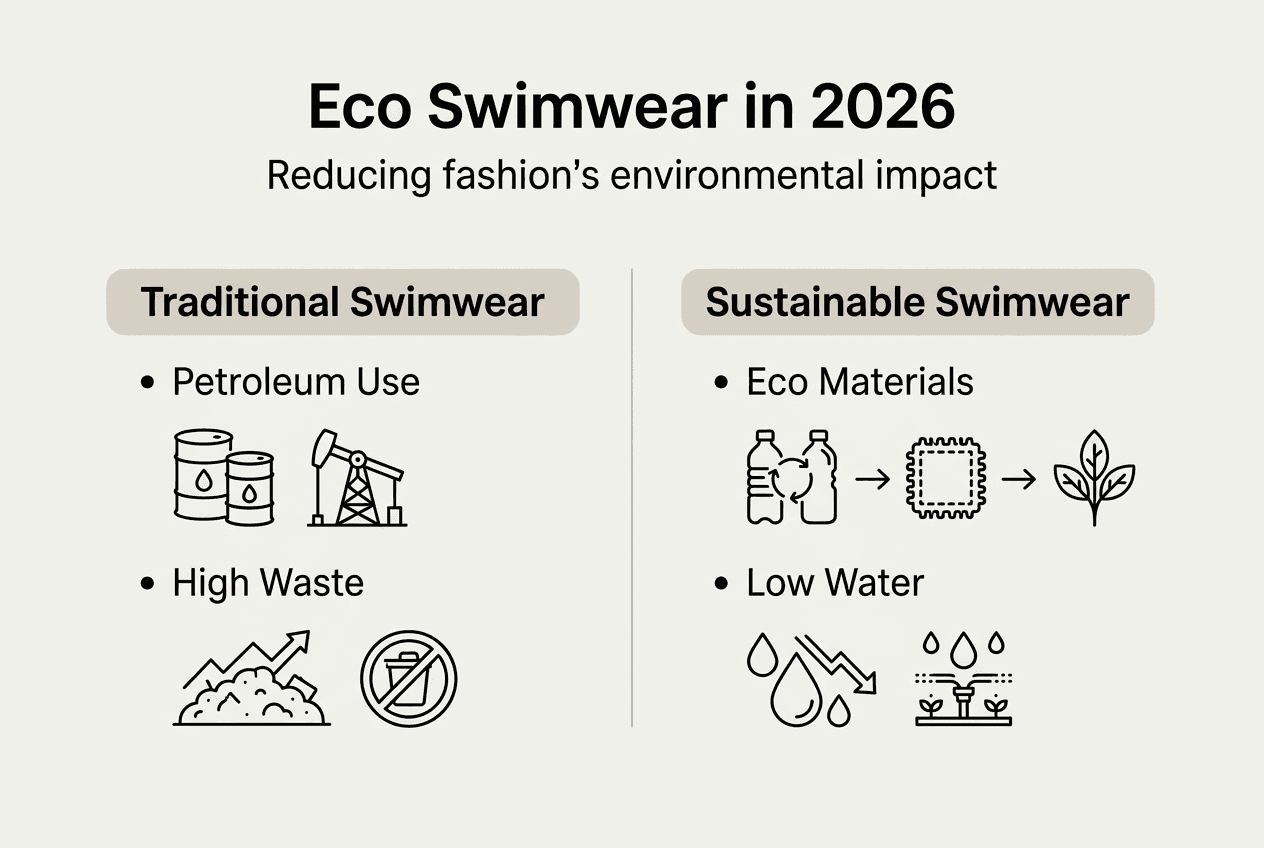
The scale becomes personal when you consider that a single pair of conventional swim trunks represents roughly 10 to 12 plastic bottles worth of virgin material extraction. Multiply that by the millions of swimwear pieces sold globally each year, and the environmental burden becomes staggering. For men and boys who value ocean recreation, this reality creates a direct conflict between enjoying beaches and preserving the marine environments that make those experiences possible.
How sustainable fashion reduces environmental harm
Sustainable fashion operates on fundamentally different principles than conventional production, integrating environmental health and social ethics throughout every stage of a product’s lifecycle. This approach transforms swimwear from an environmental liability into a tool for positive change, addressing the pollution problems outlined above through deliberate material choices and manufacturing practices.
Sustainable swimwear relies on eco materials, ethical labor, and circular lifecycle practices that minimize waste from design through disposal. Rather than extracting virgin petroleum, eco-conscious brands source recycled materials like ECONYL® regenerated nylon, created from recovered fishing nets and other nylon waste pulled from oceans. This process diverts pollution while avoiding new resource extraction, creating a double environmental benefit.
The impact of material substitution proves dramatic. Recycled fabrics reduce raw material extraction by 90% compared to virgin alternatives, slashing the energy consumption and emissions associated with petroleum processing. When brands incorporate ocean-friendly clothing materials into swim trunks, they simultaneously clean existing pollution and prevent new environmental damage.
Circular practices extend product value beyond single-use mindsets:
- Designing for durability ensures swim trunks withstand multiple seasons rather than deteriorating after one summer
- Creating timeless styles reduces the pressure to replace garments based on fleeting trends
- Establishing take-back programs allows brands to recycle old swimwear into new products
- Using modular construction enables repairs rather than disposal when damage occurs
These principles directly address the waste streams plaguing conventional fashion. By keeping materials in use longer and designing for eventual recycling, sustainable swimwear minimizes landfill contributions and reduces the demand for virgin resource extraction. The upcycled swimwear approach to ocean pollution transforms discarded materials into valuable products, closing loops that traditionally remained open.
Pro Tip: When evaluating sustainable swimwear, prioritize brands that disclose their supply chain and material sourcing. Transparency indicates genuine commitment rather than superficial greenwashing, helping you identify companies that deliver measurable environmental benefits.
The ecosystem impacts extend beyond carbon reduction. Choosing eco materials positively affects water consumption, chemical pollution, and biodiversity preservation throughout production regions. Ethical labor practices ensure workers receive fair wages and safe conditions, addressing the social dimension of sustainability that conventional fast fashion often ignores.

Benefits of choosing sustainable swimwear for men and boys
Sustainable swimwear delivers practical advantages that extend well beyond environmental benefits, creating compelling reasons for eco-conscious men and boys to prioritize these choices in their vacation wardrobes. The convergence of style, performance, and planetary health makes sustainable swim trunks a smart investment rather than a compromise.
Modern eco-friendly swimwear rivals conventional options in aesthetic appeal and design innovation. Brands now offer vibrant patterns, contemporary cuts, and fashion-forward styles that align with current trends while maintaining environmental integrity. You no longer face a choice between looking good and doing good, as sustainable collections feature the same attention to visual appeal and fit that defines premium beachwear.
Durability emerges as a significant economic benefit. Sustainable swim trunks typically outlast conventional alternatives by substantial margins, thanks to higher-quality construction and materials engineered for longevity. This extended lifespan means fewer replacements over time, reducing both your spending and your environmental footprint. A single pair of well-made eco swim trunks can serve multiple vacation seasons where cheaper alternatives might last only one summer.
The ocean conservation impact proves particularly meaningful for beach enthusiasts:
- Eco-friendly swim trunks prevent 10 to 12 plastic bottles from reaching landfills or oceans per pair
- Choosing recycled materials reduces microplastic shedding compared to virgin synthetics
- Supporting sustainable brands funds ongoing ocean cleanup initiatives and conservation programs
- Wearing swimwear made from recovered fishing nets directly removes ghost gear that threatens marine life
Health considerations add another dimension to the sustainable swimwear advantage. Eco fabrics eliminate many harmful chemicals found in conventional swimwear production, including certain dyes, flame retardants, and finishing treatments that can irritate sensitive skin. For boys with allergies or skin sensitivities, this cleaner material composition reduces the risk of rashes and discomfort during beach activities.
The manufacturing ethics behind sustainable swimwear ensure your purchase supports fair labor practices and safe working conditions. Conventional fashion often relies on exploitative labor in regions with weak regulatory oversight, while sustainable brands typically maintain transparent supply chains with third-party certifications verifying ethical treatment of workers. Your swimwear choice becomes a vote for human dignity alongside environmental protection.
Performance characteristics match or exceed conventional options. Modern recycled fabrics offer excellent stretch, quick-drying properties, chlorine resistance, and UV protection that meets the demands of active beach and pool use. The notion that sustainable means sacrificing functionality no longer holds true, as material science advances have closed any performance gaps that once existed.
Challenges and innovations in sustainability data and choosing swimwear
Navigating sustainability claims requires understanding the complexities and limitations of environmental impact measurement, particularly regarding Life Cycle Assessment methodologies that brands use to support their eco-friendly assertions. This knowledge empowers you to critically evaluate marketing messages and identify genuinely sustainable swimwear options.
Life Cycle Assessment evaluates environmental impacts across a product’s entire existence, from raw material extraction through manufacturing, use, and disposal. However, methodological inconsistencies and data limitations reduce reliability when comparing results across different studies or fiber types. The same swimwear product might show vastly different environmental footprints depending on which LCA methodology researchers apply and what assumptions they make about production processes.
Several factors complicate straightforward comparisons:
- System boundaries vary, with some assessments including only manufacturing while others incorporate consumer use and end-of-life disposal
- Data availability differs dramatically between established materials like cotton and emerging alternatives like recycled ocean plastics
- Geographic considerations affect results, as energy grids, water sources, and transportation distances vary by production location
- Temporal factors matter, since manufacturing technologies and material sourcing evolve over time
Industry-wide integrity and transparency in LCA data prove critical for credible sustainability claims. Brands demonstrating genuine environmental commitment disclose their assessment methodologies, acknowledge uncertainties, and avoid cherry-picking favorable data points while ignoring less flattering metrics. This transparency allows informed consumers to evaluate claims rather than accepting marketing assertions at face value.
The table below illustrates how different assessment approaches can yield varying conclusions:
| Assessment Factor | Traditional LCA | Expanded LCA+ | | — | — | | Metrics included | Carbon, water, energy | Carbon, water, energy, biodiversity, soil health, animal welfare | | System boundary | Cradle to gate | Cradle to cradle with circular considerations | | Data transparency | Often proprietary | Open methodology disclosure | | Comparative reliability | Moderate due to inconsistencies | Higher with standardized protocols |
Innovations in sustainability measurement aim to address these limitations. Expanded LCA+ approaches incorporate biodiversity impacts, soil health considerations, and animal welfare metrics that traditional assessments overlook. These comprehensive evaluations provide a more complete picture of environmental and ethical performance, helping consumers understand the full implications of their swimwear choices.
Pro Tip: When researching sustainable swimwear brands, look for companies that publish detailed sustainability reports with third-party verification. Certifications from organizations like Bluesign, OEKO-TEX, or the Global Recycled Standard indicate independent validation of environmental claims rather than self-reported assertions.
Practical guidance for evaluating swimwear sustainability focuses on tangible indicators. Prioritize brands using upcycled fabrics in swimwear with clear sourcing documentation, demonstrating where recycled materials originate and how they’re processed. Examine durability claims supported by warranty programs or customer reviews confirming longevity. Investigate whether companies offer repair services or take-back programs, signaling commitment to circular principles beyond initial sales.
The evolving landscape of sustainability data requires consumers to remain informed and skeptical of oversimplified claims. Environmental impact rarely reduces to a single number or certification, instead representing a complex interplay of factors that vary by context and priorities. By understanding these nuances, you can make swimwear choices that genuinely align with your environmental values rather than falling for greenwashing tactics.
Explore sustainable swimwear options at Le Club Original
Your journey toward eco-conscious beachwear finds a natural destination at Le Club Original, where sustainable swimwear meets contemporary style without compromise. The collections embody the principles explored throughout this guide, transforming environmental responsibility into wearable fashion designed for men and boys who refuse to choose between looking good and protecting the planet.

Each piece in the upcycled swimwear collection demonstrates how recycled materials and ethical manufacturing create swim trunks that perform beautifully while reducing ocean pollution. The designs feature vibrant patterns and modern cuts that work equally well for beach volleyball, poolside relaxation, or casual summer wear. By choosing eco-friendly swim trunks from Le Club Original, you join a community of environmentally conscious consumers driving positive change through everyday fashion choices that support ocean conservation and sustainable manufacturing practices.
Frequently asked questions
What is sustainable fashion, and why does it matter?
Sustainable fashion integrates environmental protection and social ethics throughout a garment’s lifecycle, from material sourcing through manufacturing, use, and disposal. It matters because conventional fashion generates 10% of global emissions and massive pollution, while sustainable alternatives dramatically reduce these impacts. Choosing sustainable options protects ecosystems and supports fair labor practices.
How does conventional swimwear production harm the environment?
Conventional swimwear relies on virgin petroleum extraction to create synthetic fabrics, consuming significant energy and generating greenhouse gas emissions. The production process releases chemical pollutants into waterways, while finished garments shed microplastics during washing that contaminate oceans. These swim trunks also typically end up in landfills where they persist for centuries.
What materials are considered eco-friendly for swimwear?
Eco-friendly swimwear materials include ECONYL® regenerated nylon made from fishing nets and ocean waste, recycled polyester created from plastic bottles, and fabrics incorporating recovered ocean plastics. These alternatives reduce virgin resource extraction by up to 90% while diverting pollution from marine environments. Look for certifications like Global Recycled Standard to verify material claims.
How can consumers be sure sustainability claims are trustworthy?
Trustworthy sustainability claims include disclosed Life Cycle Assessment methodologies, transparent supply chain documentation, and third-party certifications from organizations like Bluesign or OEKO-TEX. Reliable brands publish detailed sustainability reports acknowledging both achievements and limitations rather than making vague environmental assertions. Independent verification provides stronger assurance than self-reported marketing claims.
Do sustainable swim trunks perform as well as conventional options?
Modern sustainable swim trunks match or exceed conventional performance across durability, stretch, quick-drying properties, and UV protection. Advances in recycled fabric technology have eliminated previous performance gaps, delivering the same functionality active beach users require. Many eco-friendly options actually outlast cheaper conventional alternatives due to higher-quality construction and materials.