

Choosing swimwear for a beach getaway often means weighing style against environmental impact. More men are seeking options that reflect their values, prioritizing both ocean protection and ethical fashion. Fair trade swimwear brands follow strict principles, including fair wages, safe working conditions, and eco-friendly materials such as recycled nylon and organic cotton. This guide explores how these standards create apparel that supports workers and the planet, helping you make choices that align with your commitment to sustainable living.
Table of Contents
- Defining Fair Trade Swimwear Principles
- Key Standards and Certification Bodies
- Materials, Manufacturing, and Environmental Impact
- Benefits for Workers, Oceans, and Consumers
- Comparing Fair Trade and Conventional Swimwear
Key Takeaways
| Point | Details |
|---|---|
| Fair Trade Principles | Fair trade swimwear emphasizes ethical manufacturing, worker welfare, and environmental sustainability through fair compensation and safe working conditions. |
| Certification Importance | Look for certifications from recognized bodies like the World Fair Trade Organization to ensure genuine ethical practices in swimwear production. |
| Sustainable Materials | Fair trade brands utilize eco-friendly materials such as recycled nylon and organic cotton to minimize environmental impact. |
| Consumer Empowerment | Purchasing fair trade swimwear supports social justice and environmental responsibility, making consumers active participants in global change. |
Defining Fair Trade Swimwear Principles
Fair trade swimwear represents a transformative approach to fashion that prioritizes ethical manufacturing, worker welfare, and environmental sustainability. At its core, fair trade principles ensure that every swimsuit produced supports dignified working conditions, equitable compensation, and responsible production practices.
The World Fair Trade Organization defines core principles that guide ethical clothing production, emphasizing human and environmental considerations over pure profit margins. These principles encompass several critical dimensions:
- Fair Compensation: Guaranteeing living wages for workers
- Safe Working Conditions: Ensuring safe, healthy manufacturing environments
- No Child Labor: Strictly prohibiting exploitative child employment
- Environmental Sustainability: Minimizing ecological impact through responsible material sourcing
- Transparent Supply Chains: Providing complete visibility into production processes
By embracing these standards, fair trade swimwear brands transform traditional manufacturing models. They create garments that are not just stylish and functional, but also carry a profound social and environmental commitment. Each piece becomes more than clothing - it represents a statement of global responsibility.
Fair trade is about creating economic opportunities for marginalized producers and workers, ensuring their rights are protected and respected.
Beyond ethical production, fair trade swimwear addresses systemic inequalities in global textile manufacturing. By prioritizing worker welfare and environmental stewardship, these brands challenge conventional fashion industry practices and demonstrate an alternative, more humane approach to clothing production.
Pro tip: When shopping for fair trade swimwear, look for certifications from recognized organizations like the World Fair Trade Organization to validate ethical manufacturing claims.
Key Standards and Certification Bodies
Certification bodies play a critical role in validating and enforcing fair trade standards across the global textile and swimwear industries. These independent organizations ensure that brands adhere to rigorous ethical and environmental guidelines, providing consumers with trustworthy verification of responsible manufacturing practices.
FLOCERT serves as a premier global certification and auditing organization responsible for evaluating fair trade compliance. Their comprehensive assessment process involves multiple critical dimensions of ethical production:
- Verifying fair wage structures
- Assessing workplace safety conditions
- Evaluating environmental protection measures
- Ensuring transparency in supply chains
- Monitoring labor rights and worker welfare
The Fairtrade International certification system establishes comprehensive standards that go beyond traditional manufacturing oversight. Fairtrade Standards represent a holistic approach to ethical production, incorporating social, economic, and environmental criteria that continuously evolve through collaborative expert input.
Certification is not just a label, but a comprehensive commitment to human dignity and environmental responsibility.
Consumers seeking authentic fair trade swimwear should look for specific certification marks that indicate rigorous third-party verification. These certifications represent more than aesthetic choices - they signify a direct investment in sustainable global manufacturing practices and worker empowerment.
Pro tip: Always check the specific certification details on swimwear labels, as different organizations have varying levels of stringency in their ethical standards.
Materials, Manufacturing, and Environmental Impact
The sustainable swimwear movement is revolutionizing textile production through innovative materials and manufacturing processes that dramatically reduce environmental harm. By prioritizing eco-friendly resources and responsible production techniques, fair trade swimwear brands are transforming the traditional fashion landscape.
Manufacturers are increasingly adopting sustainable textile technologies that minimize ecological footprints. The most progressive approaches involve using advanced sustainable materials:
- Recycled Nylon (ECONYL): Regenerated from ocean and landfill waste
- Organic Cotton: Grown without harmful pesticides
- Recycled Polyester: Transformed from plastic bottles
- Biodegradable Fabrics: Designed to decompose naturally
- Tencel: Produced using environmentally responsible processes
Beyond material selection, sustainable manufacturing encompasses comprehensive environmental strategies. These include water recycling systems, energy-efficient production methods, and waste reduction techniques that collectively minimize the industry’s carbon footprint.

Below is a quick reference to common sustainable swimwear materials and their distinctive benefits:
| Material | Main Source | Key Environmental Benefit |
|---|---|---|
| ECONYL | Recycled nylon waste | Reduces ocean plastics |
| Organic Cotton | Pesticide-free cotton farms | Less soil and water pollution |
| Recycled Polyester | Plastic bottles | Diverts waste from landfills |
| Tencel | Sustainable wood pulp | Biodegrades naturally |
| Biodegradable Fabrics | Plant-based polymers | Naturally decomposes after disposal |
Sustainable swimwear represents more than a fashion choice - it’s a commitment to planetary health and responsible consumption.
By integrating circular economy principles, fair trade swimwear brands are demonstrating that style and sustainability can coexist. Their approach challenges traditional manufacturing paradigms, proving that ethical production can deliver high-quality, environmentally conscious products.
Pro tip: Look for swimwear with transparent supply chain information and specific sustainability certifications to ensure genuine environmental commitment.
Benefits for Workers, Oceans, and Consumers
Fair trade swimwear represents a powerful approach to creating positive change across multiple dimensions, delivering tangible benefits for workers, marine ecosystems, and conscientious consumers. By reimagining traditional manufacturing practices, this ethical model generates meaningful impact far beyond simple clothing production.
Research confirms Fairtrade’s comprehensive positive effects, highlighting the multifaceted advantages of ethical production. The benefits can be categorized into three critical areas:
For Workers:
- Guaranteed fair living wages
- Safe and dignified working conditions
- Opportunities for skills development
- Protection from exploitative labor practices
- Economic stability and social inclusion
For Oceans:
- Reduced plastic pollution through recycled materials
- Minimized chemical runoff from manufacturing
- Support for marine ecosystem conservation
- Lower carbon footprint in production processes
- Promotion of sustainable resource management
For Consumers:
- Transparency in supply chain operations
- High-quality, ethically produced products
- Direct support for social justice initiatives
- Alignment with environmental conservation goals
- Personal empowerment through conscious purchasing
Ethical consumption is not just a choice, but a powerful mechanism for global transformation.
Through strategic purchasing decisions, consumers become active participants in a global movement that prioritizes human dignity, environmental protection, and sustainable development. Each fair trade swimwear purchase represents a vote for a more equitable and responsible global economy.
Pro tip: Research brands’ specific fair trade certifications to understand the depth of their commitment to worker welfare and environmental sustainability.
Comparing Fair Trade and Conventional Swimwear
The landscape of swimwear production reveals stark differences between fair trade and conventional manufacturing approaches. While both aim to create functional beachwear, their underlying philosophies and production methods diverge dramatically, impacting everything from environmental sustainability to worker welfare.
Conventional swimwear manufacturers prioritize cost efficiency through mass production techniques that often compromise ethical standards. Their approach typically involves:
- Using cheap virgin synthetic materials
- Minimizing production costs at worker expense
- Lacking supply chain transparency
- Generating significant environmental waste
- Prioritizing short-term profit margins
In contrast, fair trade swimwear brands invest in comprehensive ethical practices that fundamentally transform production paradigms:
- Utilizing recycled and sustainable materials
- Ensuring fair wages and safe working conditions
- Providing detailed supply chain documentation
- Minimizing environmental impact
- Supporting long-term social and ecological sustainability
The true cost of clothing extends far beyond its price tag - it includes human dignity, environmental health, and global economic justice.
The price difference between conventional and fair trade swimwear reflects deeper investments in human and environmental welfare. While fair trade options might initially seem more expensive, they represent a holistic approach to responsible consumption that creates meaningful global impact.
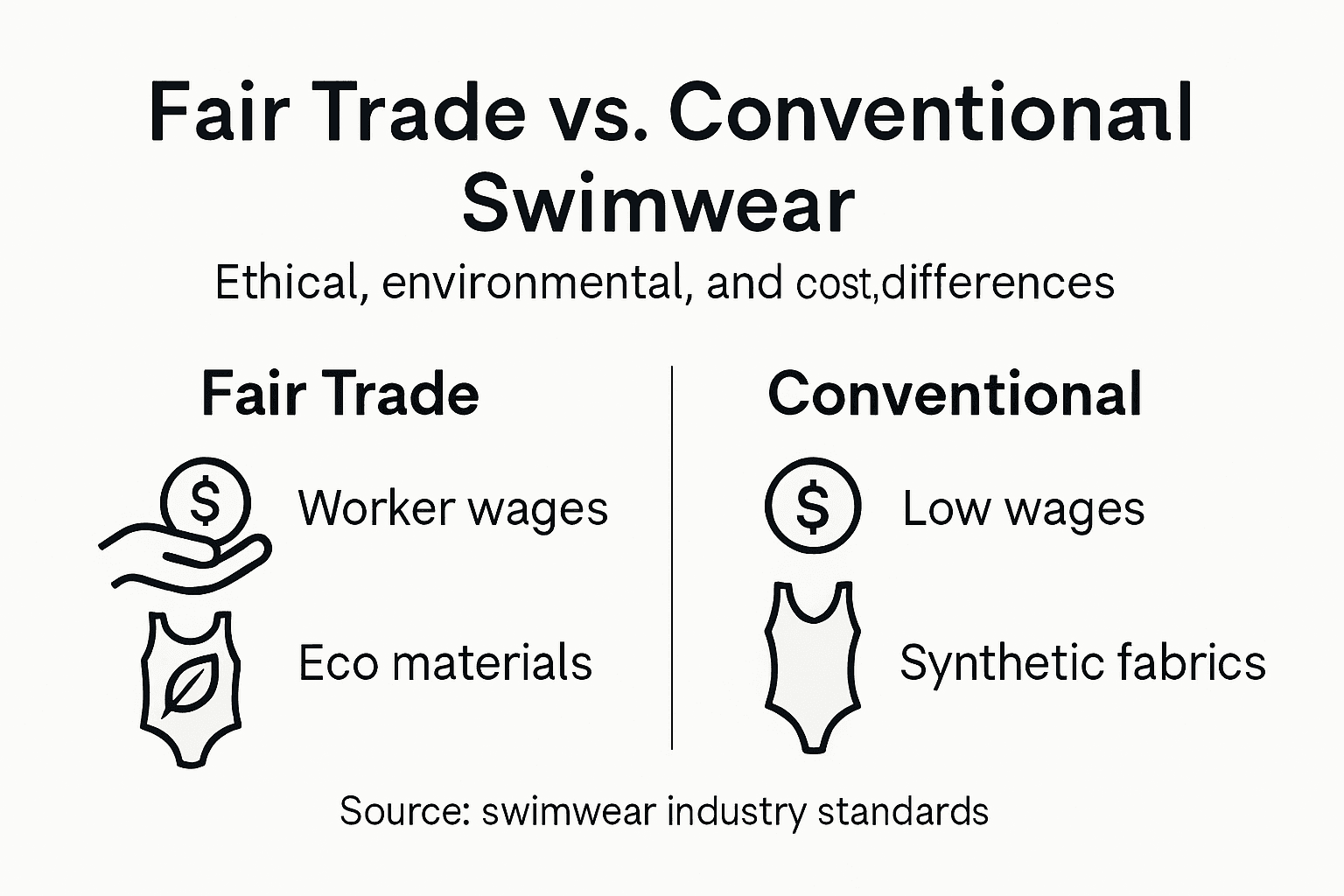
Here’s a side-by-side look at how fair trade and conventional swimwear differ:
| Aspect | Fair Trade Swimwear | Conventional Swimwear |
|---|---|---|
| Worker Treatment | Focuses on fair wages and rights | Often prioritizes low costs over welfare |
| Materials Used | Recycled, organic, biodegradable | Primarily virgin synthetic fibers |
| Environmental Impact | Low carbon footprint, sustainable methods | High waste, greater pollution risk |
| Supply Chain Transparency | Traceable and open | Opaque and difficult to verify |
| Price Drivers | Ethical premiums, compliance costs | Mass production, minimal regulation |
| Social Mission | Supports global equity | Driven by profit alone |
Pro tip: Compare the total lifecycle cost and environmental impact of swimwear, not just the initial purchase price, to understand its true value.
Choose Fair Trade Swimwear That Makes a Real Difference
Understanding the true impact of your swimwear goes beyond style and price. The article emphasizes challenges like unfair wages, unsafe working conditions, and environmental harm from conventional production. At Le Club Original, we share your commitment to fair compensation, sustainable materials, and ocean-friendly manufacturing. Our eco-conscious swim trunks and beachwear are designed with transparency and responsibility to support workers and protect the planet.

Discover how you can enjoy stylish, sustainable swimwear while standing up for ethical practices today. Explore our latest collections and seasonal sales at Le Club Original. Start your journey toward a more conscious beach lifestyle by shopping now and making a meaningful impact with every purchase.
Frequently Asked Questions
What principles define fair trade swimwear?
Fair trade swimwear is guided by principles that prioritize fair compensation, safe working conditions, prohibition of child labor, environmental sustainability, and transparent supply chains. These ensure that swimwear production supports worker welfare and ecological responsibility.
How does fair trade swimwear impact the environment?
Fair trade swimwear brands reduce environmental footprints by using sustainable materials like recycled nylon, organic cotton, and biodegradable fabrics, while also implementing eco-friendly manufacturing practices that minimize waste and pollution.
What are the benefits of choosing fair trade swimwear?
Choosing fair trade swimwear benefits workers by ensuring fair wages and safe working conditions, supports marine ecosystems by reducing plastic pollution, and provides consumers with high-quality, ethically produced products that align with social justice and environmental goals.
How can I identify certified fair trade swimwear brands?
Look for certification marks from recognized organizations such as Fairtrade International or FLOCERT on swimwear labels. These certifications indicate adherence to rigorous ethical and environmental standards, ensuring responsible manufacturing practices.