

Finding stylish swimwear for boys that balances comfort and eco values can feel like a challenge for many eco-conscious parents. The materials your child wears matter, especially when conventional options often contain harsh chemicals linked to skin irritation. Choosing organic cotton swimwear supports your child’s sensitive skin while helping protect the environment, since these natural fibers are grown and processed without toxic synthetic pesticides or dyes. Discover how this thoughtful choice can make every beach day gentler for your family and the planet.
Table of Contents
- What Makes Cotton Swimwear Organic
- Key Benefits For Skin And Comfort
- Reducing Ocean Pollution And Microplastics
- How Organic Cotton Differs From Synthetics
- Choosing And Caring For Organic Swimwear
Key Takeaways
| Point | Details |
|---|---|
| Organic Cotton Swimwear | Made without harmful chemicals, organic cotton swimwear prioritizes environmental sustainability and child health. |
| Environmental Benefits | Choosing organic cotton swimwear helps reduce ocean pollution and eliminate microplastic shedding, supporting marine ecosystem preservation. |
| Skin Comfort | Offers natural softness and hypoallergenic properties, making it ideal for children’s sensitive skin. |
| Responsible Production | Look for certifications like GOTS to ensure that the swimwear meets ecological and ethical manufacturing standards. |
What Makes Cotton Swimwear Organic
Organic cotton swimwear represents a thoughtful approach to creating apparel that prioritizes both environmental sustainability and child health. Unlike conventional cotton production, organic cotton swimwear follows strict ecological standards that significantly reduce environmental impact.
The key characteristics that define organic cotton swimwear include:
- Grown without synthetic pesticides or fertilizers
- Cultivated using sustainable agricultural practices
- Processed without harmful chemical treatments
- Certified by recognized organic standards organizations
To understand the depth of organic cotton’s environmental significance, organic cotton production may alleviate environmental impacts by dramatically reducing chemical inputs. This approach supports ecosystem health through natural farming techniques that promote biodiversity and soil regeneration.
The certification process for organic cotton swimwear is rigorous and comprehensive. Manufacturers must comply with international standards that track the entire production chain - from seed selection to final garment manufacturing. These standards ensure that every step of production maintains ecological integrity and minimizes environmental harm.
Sustainable Manufacturing Practices
Organic cotton swimwear production involves several critical steps:
- Selecting untreated, non-GMO cotton seeds
- Implementing crop rotation and natural pest management
- Hand-picking cotton to minimize machinery impact
- Processing fabric without toxic synthetic chemicals
- Using natural or low-impact dyes
Pro tip: When shopping for organic cotton swimwear, look for third-party certifications like GOTS (Global Organic Textile Standard) to ensure genuine sustainable production.
Key Benefits for Skin and Comfort
Organic cotton swimwear offers unparalleled advantages for children’s sensitive skin, providing a natural and protective clothing option that goes beyond traditional swimwear materials. Sustainable fibers like organic cotton are specifically preferred for children’s clothing due to their exceptional softness and reduced risk of skin irritation.
The key skin and comfort benefits of organic cotton swimwear include:
- Naturally soft and gentle against sensitive skin
- Superior breathability and moisture control
- Hypoallergenic properties that minimize skin reactions
- Free from harsh synthetic chemicals
- Enhanced air circulation to prevent overheating
Skin Health Protection
Unlike synthetic swimwear materials, organic cotton provides a protective barrier that shields children’s delicate skin from potential chemical irritants. Organic cotton fabric prevents toxic chemical exposure during both production and wear, making it an ideal choice for parents concerned about skin health.

Comfort Features
Organic cotton swimwear offers remarkable comfort through its natural fiber characteristics:
- Soft, lightweight texture that moves with the body
- Natural stretch and flexibility
- Quick-drying capabilities
- Temperature-regulating properties
- Reduced friction against skin
Organic cotton swimwear represents more than just clothing - it’s a commitment to your child’s comfort and health.
Pro tip: Always wash new organic cotton swimwear before first use to maximize softness and remove any residual manufacturing substances.
Reducing Ocean Pollution and Microplastics
Ocean pollution from synthetic textiles represents a critical environmental challenge, with microplastics posing significant threats to marine ecosystems. Microplastics from synthetic textiles contribute substantially to water pollution, making sustainable clothing choices increasingly important for environmental preservation.
The primary ways organic cotton swimwear helps reduce ocean pollution include:
- Eliminates synthetic microfiber shedding
- Produces zero plastic-based waste during manufacturing
- Biodegrades naturally without long-term environmental impact
- Reduces chemical runoff into marine environments
- Supports sustainable textile production practices
Microplastic Pollution Impact
Synthetic swimwear releases thousands of microplastic particles with every wash, which ultimately find their way into oceans and waterways. Plastic pollution threatens marine biodiversity by contaminating ecosystems and entering food chains through microscopic fragments.
Environmental Protection Strategies
Choosing organic cotton swimwear represents a proactive approach to marine conservation:
- Prevent microplastic release during washing
- Support sustainable textile manufacturing
- Reduce overall plastic waste in oceans
- Minimize chemical pollution
- Promote eco-friendly consumer choices
Every organic cotton swimwear purchase is a small but significant step towards protecting marine ecosystems.
Pro tip: Wash organic cotton swimwear in full loads and use microfiber-catching laundry bags to further minimize environmental impact.
How Organic Cotton Differs From Synthetics
Understanding the fundamental differences between organic cotton and synthetic swimwear materials is crucial for making informed, environmentally conscious clothing choices. Synthetics vs. natural cotton fabrics reveal significant disparities in environmental impact, comfort, and long-term sustainability.
Key differences between organic cotton and synthetic swimwear materials include:
- Origin of materials (natural vs. fossil-fuel based)
- Environmental manufacturing footprint
- Biodegradability
- Skin interaction and breathability
- Long-term ecological consequences
Material Composition
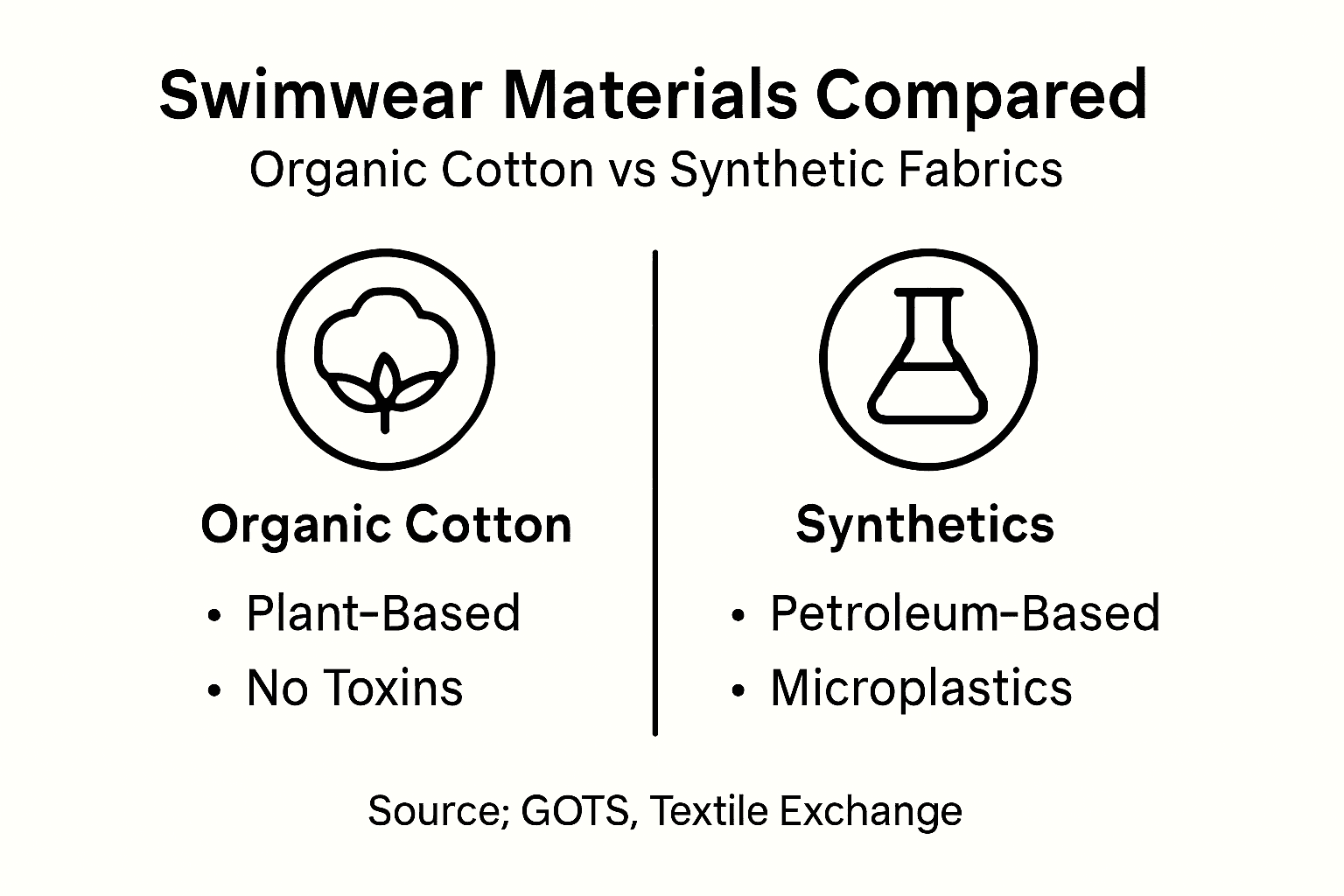
Synthetic swimwear materials like polyester and nylon are derived from petroleum-based chemicals, creating a direct link to fossil fuel industries. Synthetic fabrics produce microplastic pollution through their entire lifecycle, from production to washing, creating lasting environmental damage.
Performance Characteristics
Comparison of organic cotton and synthetic swimwear performance reveals critical differences:
Here’s a concise comparison of organic cotton and synthetic swimwear materials:
| Attribute | Organic Cotton Swimwear | Synthetic Swimwear |
|---|---|---|
| Raw Material Source | Natural, plant-based | Petroleum-derived |
| Environmental Footprint | Low water, energy, toxins | High resource consumption |
| End-of-Life Impact | Biodegradable, compostable | Long-lasting plastic waste |
| Skin Sensitivity | Gentle for sensitive skin | May cause irritation |
| Microplastic Release | None | Releases microplastics |
| Dyeing Process | Often uses natural dyes | Frequently uses chemical dyes |
- Breathability: Organic cotton allows superior air circulation
- Moisture management: Synthetics dry faster but trap heat
- Ecological impact: Cotton biodegrades, synthetics persist
- Chemical exposure: Cotton minimizes skin contact with toxins
- Manufacturing process: Organic cotton uses fewer resources
Natural fibers represent a holistic approach to clothing that considers both human and environmental health.
Pro tip: When shopping for swimwear, look beyond immediate performance and consider the long-term environmental and health implications of your fabric choice.
Choosing and Caring for Organic Swimwear
Making informed choices about organic cotton swimwear requires understanding both selection criteria and proper maintenance techniques. Organic cotton certification standards provide critical guidance for parents seeking sustainable and safe swimwear options for their children.
Key considerations when selecting organic cotton swimwear include:
- Verified organic certification (GOTS, USDA)
- Transparent manufacturing processes
- Chemical-free production methods
- Durability and fabric quality
- Fair labor practices
Selection Criteria
Discerning parents should look for swimwear that meets stringent organic standards, focusing on certifications that guarantee environmentally responsible production. Maintaining organic cotton quality requires careful selection and intentional care practices.
Care and Maintenance
Proper care of organic cotton swimwear ensures longevity and sustained performance:
Below is a summary of best practices for selecting and caring for organic cotton swimwear:
| Step | Selection Best Practice | Care Best Practice |
|---|---|---|
| Certification | Choose GOTS or USDA | Check label before washing |
| Fabric Quality | Inspect for durability | Wash in cold water |
| Manufacturing | Confirm chemical-free process | Use mild detergent |
| Labor Ethics | Ensure fair labor sourcing | Air dry in shade |
| Longevity | Opt for reinforced stitches | Rotate wear frequently |
- Wash in cold water
- Use mild, eco-friendly detergents
- Avoid harsh bleaching agents
- Air dry away from direct sunlight
- Store in cool, dry environments
Organic swimwear is an investment in both your child’s comfort and environmental sustainability.
Pro tip: Rotate between multiple swimwear pieces to reduce wear and extend the overall lifespan of your organic cotton swimwear.
Choose Sustainable Swimwear That Protects Kids and Our Oceans
The article highlights the critical need for organic cotton swimwear to safeguard children’s sensitive skin and reduce ocean pollution caused by synthetic fabrics. If you are looking to give your child superior comfort without exposing them to harsh chemicals or contributing to microplastic pollution, finding eco-friendly and certified swimwear is essential. Key concerns such as chemical-free production, hypoallergenic materials, and lowering environmental impact reflect your goals for safer, healthier swimwear options.
At Le Club Original, we share this commitment by offering stylish, sustainable swim trunks designed with sustainability and environmental responsibility in mind.

Explore our collection today to experience high-quality swimwear that supports your values and protects the planet. Act now to enjoy discounts of up to 50% sitewide and benefit from free shipping on orders over $50. Take the first step toward eco-conscious fashion with Le Club Original’s sustainable swimwear and help reduce plastic pollution in oceans while keeping your kids comfortable and safe. Visit Le Club Original now to discover more.
Frequently Asked Questions
What are the benefits of organic cotton swimwear for kids?
Organic cotton swimwear offers several benefits for children, including superior softness, breathability, hypoallergenic properties, and reduced risk of skin irritation. It’s also free from harsh synthetic chemicals, making it a healthier option for sensitive skin.
How does organic cotton swimwear reduce environmental impact?
Organic cotton swimwear is grown without synthetic pesticides and fertilizers, which helps support ecosystem health. It also biodegrades naturally, eliminating plastic waste, and reduces chemical runoff into marine environments, thereby decreasing ocean pollution.
What should I look for when choosing organic cotton swimwear?
When selecting organic cotton swimwear, look for verified organic certifications like GOTS or USDA, confirm that the manufacturing process is chemical-free, and ensure fair labor practices. Inspect the fabric quality for durability and comfort.
How should I care for organic cotton swimwear to ensure longevity?
To maintain organic cotton swimwear, wash it in cold water using mild, eco-friendly detergents. Avoid harsh bleaching agents and air dry away from direct sunlight. Rotating wear between pieces can also help extend their lifespan.
Recommended
- What Is Organic Cotton Swimwear and Its Impact – Le Club Original
- What Is Organic Cotton Swimwear and Its Impact – Le Club Original
- What Is Organic Cotton Swimwear and Its Impact – Le Club Original
- Why Organic Fabrics Matter for Swimwear Choices – Le Club Original
- Schwimmen im Meer – Wie es Kinder gesund stärkt