

Choosing sustainable swimwear for your 2026 beach vacation doesn’t have to feel overwhelming. With recycled materials like ECONYL® regenerated nylon dominating the market and innovative dyeing technologies cutting water usage by up to 90%, eco-friendly options now deliver both style and environmental responsibility. This guide breaks down the key trends, materials, and technologies you need to know to make confident, sustainable swimwear choices.
Table of Contents
- How To Choose Sustainable Swimwear For 2026 Beach Vacations
- Top Sustainable Materials Revolutionizing Men’s Swimwear In 2026
- Innovative Dyeing And Sun Protection Technologies For Eco-Friendly Swimwear
- Comparing The Top Sustainable Swimwear Options For Eco-Conscious Men
- Explore Stylish, Eco-Friendly Swimwear At Le Club Original
Key takeaways
| Point | Details |
|---|---|
| Recycled materials lead | ECONYL® and REPREVE® fabrics dramatically reduce environmental impact compared to virgin materials. |
| Innovative dyeing saves resources | Digital printing and waterless dyeing cut water consumption by 70 to 90 percent. |
| UPF 50+ requires maintenance | Sun protection fabrics work well initially but degrade with washing and exposure. |
| Circular economy matters | Brands designing for recyclability and reuse minimize waste throughout the product lifecycle. |
How to choose sustainable swimwear for 2026 beach vacations
Selecting eco-friendly swimwear starts with understanding the core criteria that separate genuinely sustainable options from greenwashing. Focus on recycled materials as your foundation. Recycled materials, such as ECONYL® regenerated nylon, reduce reliance on virgin resources and divert waste from landfills and oceans.
Next, evaluate the manufacturing process. Traditional dyeing consumes massive amounts of water and releases harmful chemicals. Look for brands using digital printing or waterless dyeing technologies that cut resource use by 70 to 90 percent. This manufacturing shift represents one of the most significant environmental improvements in textile production.
Sun protection deserves careful attention. UPF 50+ fabrics block over 98 percent of UV rays when new, but effectiveness drops with repeated washing and sun exposure. Choose swimwear from brands that provide care instructions to maintain protective qualities longer.
Durability directly impacts sustainability. A swimsuit that lasts three seasons beats one that fades or stretches after a few wears, regardless of its recycled content. Check reviews and product descriptions for mentions of reinforced stitching, colorfast guarantees, and fabric resilience.
Finally, assess the brand’s commitment to circular economy principles. Companies designing for recyclability offer take-back programs or use mono-materials that simplify recycling. These initiatives close the loop and prevent swimwear from ending up in landfills.
Pro Tip: Check for third-party certifications like Global Recycled Standard (GRS) or OEKO-TEX to verify a brand’s sustainability claims. These certifications provide independent verification of recycled content and chemical safety.
When shopping, use this checklist:
- Confirm recycled material content (aim for 80 percent or higher)
- Verify low-impact dyeing or printing methods
- Look for UPF 50+ rating with care instructions
- Research brand’s take-back or recycling program
- Read reviews about durability and color retention
For more insights on upcoming styles that incorporate these sustainable features, explore 7 swimwear trends 2025 for eco-conscious men.
Top sustainable materials revolutionizing men’s swimwear in 2026
The fabric you choose makes or breaks your swimwear’s environmental footprint. Sustainable materials are revolutionizing swimwear design, with ECONYL® and REPREVE® leading the charge as the most widely adopted recycled options.
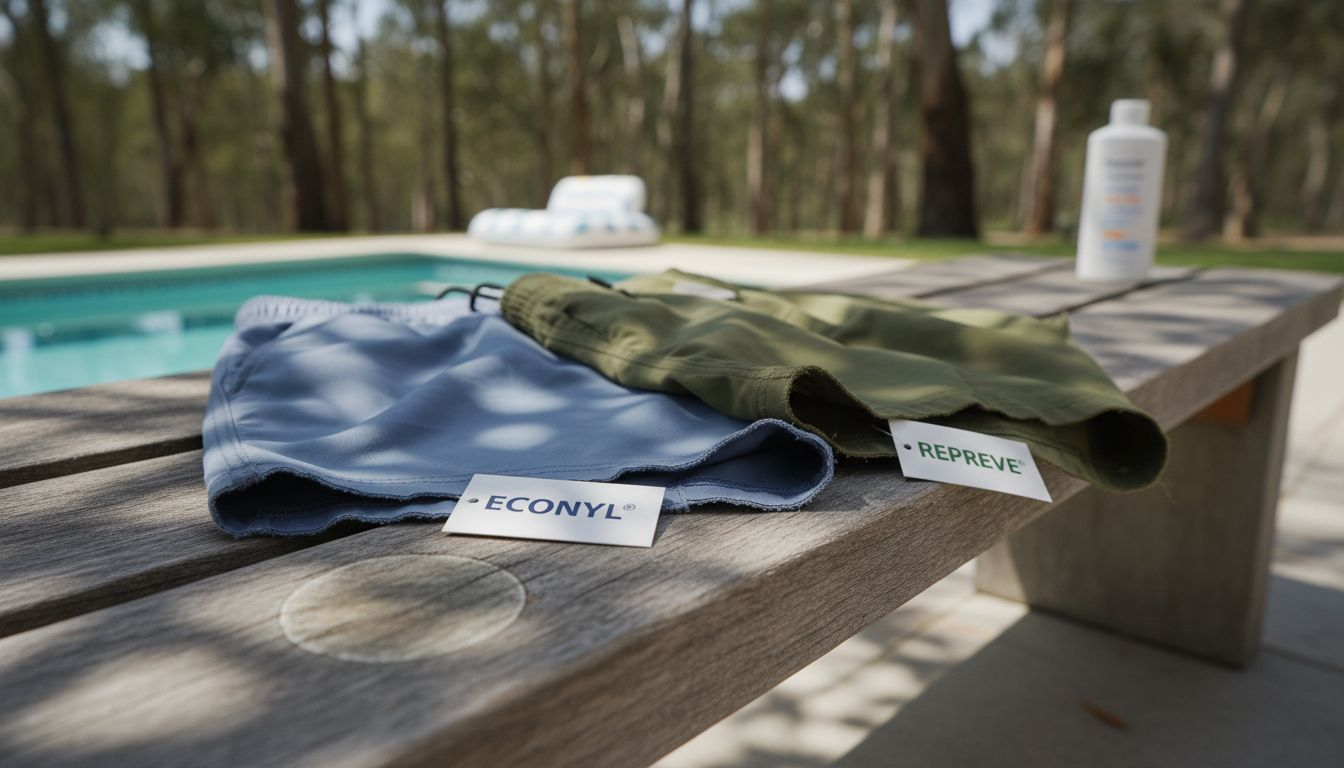
ECONYL® regenerated nylon comes from recovered fishing nets, fabric scraps, and industrial plastic waste. The material undergoes a chemical regeneration process that breaks down nylon waste to its molecular level, then rebuilds it into new yarn. This process diverts tons of waste from oceans and landfills while using significantly less energy than producing virgin nylon.
REPREVE® takes a different approach by transforming plastic bottles into high-performance polyester fiber. Each swimsuit made from REPREVE® typically contains 8 to 12 recycled bottles. The material offers excellent stretch, quick-drying properties, and color retention that rivals conventional polyester.
Both materials deliver performance that matches or exceeds traditional fabrics. You get the same stretch, comfort, and durability without the environmental cost. The key difference lies in their source materials and manufacturing processes, but both dramatically reduce carbon emissions and resource consumption.
Pro Tip: Look for swimwear labels that specify the percentage of recycled content. Premium sustainable brands typically use 80 to 100 percent recycled materials, while others may blend recycled and virgin fibers.
Here’s how these materials compare:
| Material | Source | Carbon Reduction | Key Benefit |
|---|---|---|---|
| ECONYL® | Fishing nets, fabric waste | Up to 90% vs virgin nylon | Ocean waste diversion |
| REPREVE® | Plastic bottles | Up to 75% vs virgin polyester | Bottle waste reduction |
| Organic Cotton | Certified organic farms | 46% vs conventional cotton | Chemical-free growing |
| Recycled Polyester | Post-consumer plastics | 59% vs virgin polyester | Energy savings |
When shopping, check for certifications that verify recycled content claims. The Global Recycled Standard (GRS) ensures materials meet strict environmental and social criteria throughout the supply chain.
Many leading swimwear brands now offer collections made entirely from these sustainable swimwear fabrics. The shift represents a fundamental change in how the industry approaches material sourcing. As demand grows, prices continue dropping, making sustainable options increasingly accessible.
Consider these factors when evaluating materials:
- Percentage of recycled content (higher is better)
- Third-party certification verification
- Performance characteristics for your activities
- Brand transparency about sourcing
- Care requirements to maintain longevity
Innovative dyeing and sun protection technologies for eco-friendly swimwear
Manufacturing processes matter as much as materials. Traditional textile dyeing ranks among the most polluting industrial activities, consuming up to 200 tons of water per ton of fabric and releasing toxic chemicals into waterways. Innovative dyeing techniques, like digital printing and waterless dyeing, cut water usage by 70 to 95 percent compared to conventional methods.
Digital printing applies color directly onto fabric using precision inkjet technology. This process eliminates the need for water baths and significantly reduces chemical waste. The color penetration remains strong, and designs can be more intricate without additional environmental cost. Brands using digital printing typically highlight this feature prominently because it represents such a significant sustainability improvement.
Waterless dyeing technologies like supercritical CO2 dyeing use pressurized carbon dioxide instead of water as the dyeing medium. The CO2 is captured and recycled within a closed-loop system, producing zero wastewater. While this technology costs more upfront, it delivers the cleanest dyeing process available.
Some innovative brands experiment with color-changing swimwear using thermochromic or photochromic pigments. These materials shift color with temperature or UV exposure. While visually striking, questions remain about the long-term environmental impact of these chemical treatments and their durability through repeated wear and washing.
Sun protection technology adds another layer of sustainability consideration. UPF 50+ protection in swimwear blocks over 98 percent of UVA and UVB rays when new. The rating indicates the fabric allows only 1/50th of UV radiation to reach your skin. However, this protection degrades over time with washing, chlorine exposure, and sun damage.
To maintain UPF effectiveness:
- Rinse swimwear immediately after each use
- Hand wash with gentle detergent when possible
- Avoid wringing or twisting fabric
- Air dry away from direct sunlight
- Replace swimwear after 30 to 40 wears or when fabric shows thinning
Here’s how different dyeing methods compare:
| Dyeing Method | Water Usage | Chemical Waste | Cost Premium | Availability |
|---|---|---|---|---|
| Traditional | 200L per kg | High | Baseline | Universal |
| Digital Printing | 5L per kg | Very Low | 15-25% higher | Growing |
| Waterless CO2 | Near zero | Minimal | 30-40% higher | Limited |
| Natural Dyes | 50L per kg | Low | 20-30% higher | Niche |
When evaluating swimwear, ask brands about their dyeing processes. Companies committed to sustainability will provide detailed information about their manufacturing methods. This transparency helps you make informed choices that align with your environmental values.
For detailed explanations of UPF swimwear protection and how to maintain it, research independent testing results and care recommendations from dermatologists.
Comparing the top sustainable swimwear options for eco-conscious men
With multiple sustainable options available, direct comparison helps you identify the best match for your needs and values. The circular economy model emphasizes designing swimwear for recyclability and reuse, but different brands approach this goal through varied strategies.
ECONYL® swimwear typically offers superior durability and maintains shape better through repeated wear. The regenerated nylon resists chlorine damage more effectively than recycled polyester, making it ideal if you frequent pools. REPREVE® swimwear dries slightly faster and often costs 10 to 20 percent less, appealing to budget-conscious shoppers who primarily swim in oceans or lakes.
Digital printing delivers vibrant, complex patterns with minimal environmental impact. Traditional dyeing produces more muted, solid colors but remains more widely available. If you prioritize bold designs, seek out digitally printed options. For classic styles, traditionally dyed sustainable fabrics still offer significant improvements over conventional production.
Durability differences directly affect UPF longevity. Higher-quality recycled fabrics maintain sun protection longer because they resist fiber breakdown from UV exposure and washing. Cheaper sustainable options may use lower percentages of recycled content or looser weaves that degrade faster.
Recyclability varies significantly. Swimwear made from single-material construction (100 percent ECONYL® or REPREVE®) recycles more easily than blended fabrics. However, blends often provide better stretch and comfort. Brands offering take-back programs solve this dilemma by handling the complex recycling process for you.
Pro Tip: Calculate cost per wear rather than upfront price. A $95 sustainable swimsuit that lasts three seasons and comes with a recycling program offers better value than a $60 option that fades after one summer.
Here’s a comprehensive comparison:
| Factor | ECONYL® Swimwear | REPREVE® Swimwear | Digitally Printed | Traditional Dyeing |
|---|---|---|---|---|
| Material Source | Fishing nets, waste | Plastic bottles | Varies | Varies |
| Durability | Excellent | Very Good | Depends on base | Depends on base |
| Chlorine Resistance | Superior | Good | Varies | Varies |
| Drying Speed | Fast | Very Fast | Fast | Fast |
| Design Options | Wide | Wide | Unlimited | Limited patterns |
| Price Range | $80-150 | $60-120 | $70-140 | $50-100 |
| Recyclability | High (mono-material) | High (mono-material) | Medium (depends) | Medium (depends) |
| Environmental Impact | Very Low | Very Low | Low (water savings) | Medium (improved) |
Consider your priorities:
- Frequent pool swimmers: Choose ECONYL® for chlorine resistance
- Budget-conscious: REPREVE® offers excellent value
- Design enthusiasts: Digital printing provides unique patterns
- Maximum sustainability: Look for mono-material with take-back programs
- Longevity focus: Invest in premium ECONYL® or REPREVE® construction
For comprehensive coverage of latest sustainable swimwear trends, review how different brands balance these factors. The best choice depends on your swimming habits, budget, and environmental priorities. No single option works perfectly for everyone, but understanding these trade-offs helps you select swimwear that aligns with your values and lifestyle.
Explore stylish, eco-friendly swimwear at Le Club Original
Finding swimwear that combines the sustainable materials, innovative dyeing methods, and protective features discussed throughout this guide requires a brand committed to environmental responsibility. Le Club Original curates collections specifically designed for eco-conscious men seeking both style and sustainability.

Their swimwear incorporates recycled fabrics like ECONYL® and REPREVE®, delivering the environmental benefits and durability covered in earlier sections. Each design focuses on longevity, with reinforced stitching and colorfast treatments that maintain appearance through multiple seasons. You’ll find UPF 50+ options that provide reliable sun protection when you follow proper care guidelines.
Le Club Original supports circular economy principles through thoughtful design choices that simplify eventual recycling. Their commitment extends beyond product selection to encompass the entire customer experience, from transparent material sourcing information to care instructions that maximize swimwear lifespan. Explore their collection to find sustainable swimwear that matches your vacation style without compromising your environmental values.
FAQ
What materials are best for sustainable swimwear?
Recycled materials like ECONYL® regenerated nylon and REPREVE® recycled polyester lead the sustainable swimwear industry. ECONYL® comes from fishing nets and industrial waste, while REPREVE® transforms plastic bottles into high-performance fabric. Both dramatically reduce carbon emissions compared to virgin materials while delivering excellent durability and comfort.
How effective is UPF 50+ protection in sustainable swimwear?
UPF 50+ provides strong sun protection by blocking over 98 percent of harmful UV rays when swimwear is new. However, this protection degrades with repeated washing, chlorine exposure, and sun damage over time. Proper care including immediate rinsing, gentle washing, and air drying helps maintain protective qualities longer, but plan to replace swimwear after 30 to 40 wears.
Are eco-friendly dyeing methods truly better for the environment?
Waterless and digital dyeing greatly reduce water and chemical use compared to traditional methods, cutting consumption by 70 to 95 percent. Digital printing applies color directly onto fabric with minimal waste, while waterless dyeing uses recycled CO2 in closed-loop systems. These innovations represent genuine environmental improvements, though they typically add 15 to 40 percent to manufacturing costs.
How long should sustainable swimwear last?
Quality sustainable swimwear made from ECONYL® or REPREVE® should last two to three beach seasons with proper care. This translates to 30 to 50 wears before fabric shows significant thinning or color fading. Durability depends on care practices, frequency of use, and exposure to chlorine or saltwater. Hand washing and avoiding harsh detergents extends lifespan significantly compared to machine washing.
What certifications verify sustainable swimwear claims?
Global Recycled Standard (GRS) certification verifies recycled content and tracks materials through the supply chain. OEKO-TEX certification ensures fabrics meet safety standards and contain no harmful chemicals. Bluesign certification indicates sustainable manufacturing processes throughout production. Look for these third-party certifications to confirm brands deliver genuine sustainability rather than marketing claims.