

Finding truly sustainable beach essentials can feel overwhelming when so many brands make vague environmental claims. You want stylish swimwear and accessories that genuinely reduce your footprint without sacrificing quality or design. This guide delivers clear criteria to evaluate sustainability, spotlights verified materials like ECONYL® regenerated nylon, and provides a practical list of eco-friendly beach essentials proven to minimize plastic pollution and maximize durability for your 2026 vacation.
Table of Contents
- How To Evaluate Sustainable Beach Essentials: Key Criteria
- Sustainable Swimwear: Materials And Brands To Choose In 2026
- Essential Sustainable Beach Accessories To Complete Your Kit
- Comparison Of Top Sustainable Beach Essentials In 2026
- Shop Stylish Sustainable Beach Essentials With Confidence
Key takeaways
| Point | Details |
|---|---|
| Advanced recycled materials | ECONYL® regenerated nylon and recycled polyester offer superior durability while reducing carbon emissions by up to 90% compared to virgin alternatives. |
| Biodegradable accessories | Natural materials like organic cotton, bamboo, and cork minimize plastic pollution and break down safely after their lifecycle ends. |
| Certifications matter | OEKO-TEX, GRS, and Fair Trade certifications verify genuine sustainability claims and help you avoid greenwashing tactics. |
| Durability reduces waste | High-quality, multifunctional beach essentials last longer, reducing replacement frequency and environmental impact over time. |
| UPF fabric benefits | UPF 50+ beach accessories provide sun protection, allowing you to reduce chemical sunscreen use and minimize reef damage. |
How to evaluate sustainable beach essentials: key criteria
Before investing in eco-friendly beachwear, establish clear evaluation criteria to separate authentic sustainability from marketing hype. Genuine sustainable brands provide specific material sourcing details, certifications, and environmental impact data, while vague claims can indicate greenwashing. Start by demanding transparency about material composition and supply chain practices from every brand you consider.
Third-party certifications provide the most reliable verification of sustainability claims. Look for these key certifications when shopping:
- OEKO-TEX Standard 100 confirms textiles are free from harmful chemicals
- Global Recycled Standard (GRS) verifies recycled content and ethical production
- Fair Trade certification ensures workers receive fair wages and safe conditions
- Bluesign certification guarantees responsible resource use throughout manufacturing
Fabric type dramatically affects environmental impact and product longevity. Regenerated nylon like ECONYL® offers superior durability compared to conventional synthetics, maintaining elasticity through hundreds of wear cycles. This material can be regenerated infinitely without quality degradation, creating a truly circular product lifecycle. You should also evaluate whether brands operate take-back or recycling programs, which demonstrate commitment to circular economy principles beyond initial purchase.
Pro Tip: Check eco certifications in swimwear details on brand websites before purchasing, and save documentation for future reference when evaluating competitors.
Durability assessment prevents waste from premature replacement. Ask brands about expected lifespan, washing instructions, and resistance to chlorine, salt water, and UV exposure. Products designed for multifunctional use, like convertible beach bags or quick-dry towels doubling as ponchos, reduce the total number of items you need to purchase and pack.
Sustainable swimwear: materials and brands to choose in 2026
The most innovative sustainable swimwear uses regenerated and recycled materials that match or exceed virgin fabric performance. ECONYL® nylon reduces global warming potential by up to 90% compared to virgin nylon and is made from waste like fishing nets and industrial plastic. This regenerated fiber can be recycled infinitely without losing strength, elasticity, or color vibrancy, making it ideal for swimwear that endures harsh beach conditions.
Recycled polyester offers another viable option, diverting plastic bottles from landfills and reducing virgin resource extraction. While it cuts CO₂ emissions during production, recycled polyester does not eliminate microplastic shedding during washing. Both materials deliver performance benefits:
- Exceptional chlorine resistance extending product life by 40% compared to conventional swimwear
- UV protection built into fibers preventing color fading and fabric degradation
- Quick-dry properties reducing bacterial growth and moisture retention
- Four-way stretch maintaining shape and comfort through repeated use
Leading sustainable swimwear brands in 2026 have adopted these advanced materials while expanding size inclusivity. Brands like Patagonia, Reformation, and Outerknown offer ECONYL® based collections with sizes ranging from XS to 3XL, ensuring accessibility matches environmental commitment. Premium recycled materials resist chlorine damage and maintain elasticity longer than conventional alternatives, reducing replacement frequency.
To maximize swimwear lifespan and minimize environmental impact, follow these care practices:
- Rinse immediately after ocean or pool exposure to remove salt and chlorine
- Hand wash with mild, eco-friendly detergent in cold water
- Air dry away from direct sunlight to prevent UV damage
- Store flat or hanging to maintain shape between uses
- Avoid machine drying, which degrades elastic fibers rapidly
Consider exploring master recycled materials stylish beachwear to understand how different recycled fabrics perform in various beach conditions. Proper maintenance can extend swimwear life by three to five years, dramatically reducing per-wear environmental cost.
Essential sustainable beach accessories to complete your kit
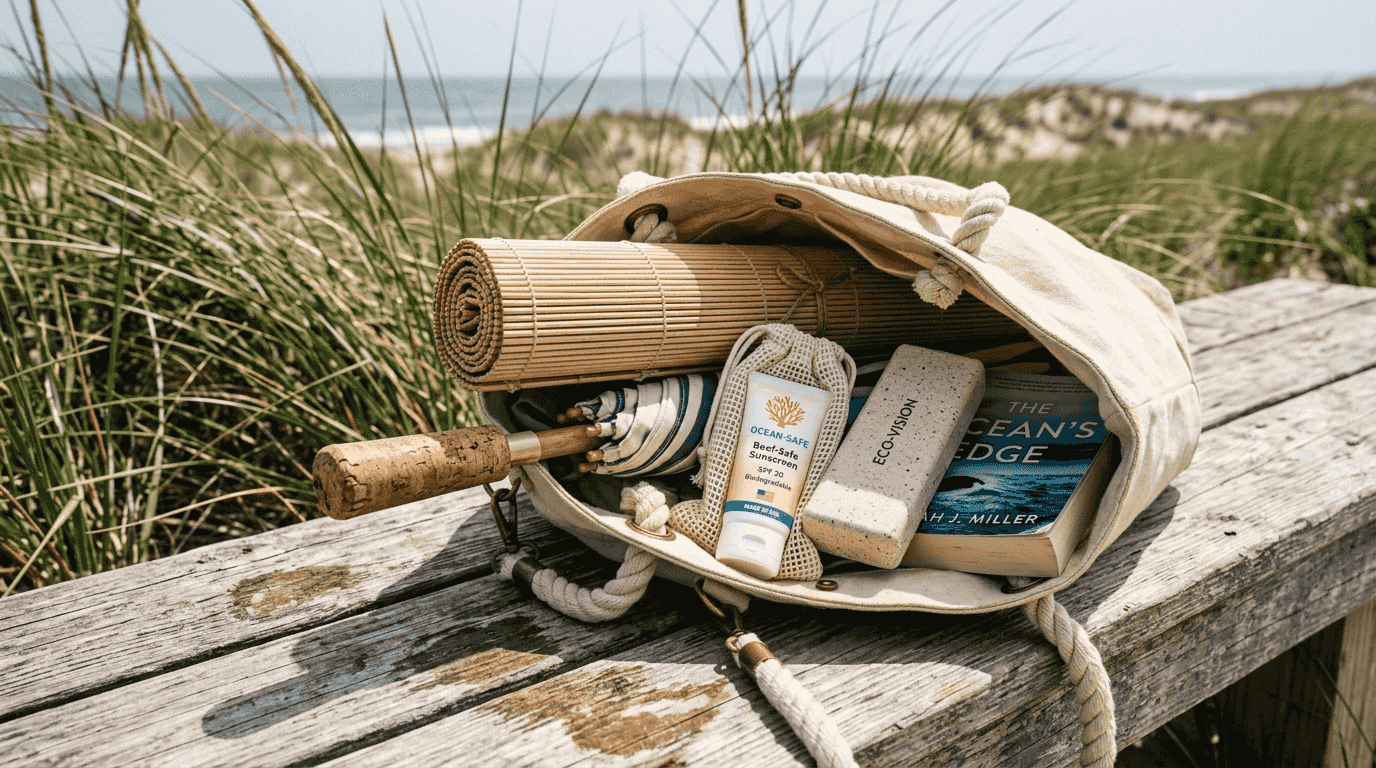
Beyond swimwear, choosing eco-friendly accessories significantly reduces your beach day’s environmental footprint. Beach towels made from organic cotton or bamboo offer quick-drying, sand-resistant properties while avoiding the pesticides and water consumption of conventional cotton production. Accessories made from natural biodegradable materials like organic cotton and cork minimize plastic pollution and reduce resource use throughout their lifecycle.
Poncho towels represent a multifunctional innovation combining changing privacy, warmth, and drying capability in one item. Poncho towels with quick-drying and sand-resistant features reduce washing frequency, conserving water and energy. Look for options with recycled polyester or organic cotton construction, UPF sun protection, and compact packing size for travel convenience.
Beach umbrellas featuring UPF 50+ fabrics provide superior sun protection, allowing you to minimize chemical sunscreen application that damages coral reefs. Choose umbrellas with aluminum or bamboo poles rather than plastic, and ensure fabric components use recycled materials. Additional essential accessories include:
- Reusable stainless steel or glass water bottles eliminating single-use plastic waste
- Biodegradable reef-safe sunscreen protecting marine ecosystems from chemical damage
- Beach bags constructed from organic cotton, hemp, or recycled sail cloth
- Sandals made from natural rubber, cork, or recycled materials instead of petroleum-based foam
- Snorkel gear from recycled silicone and tempered glass rather than disposable plastic versions
Pro Tip: Use a Guppyfriend washing bag when laundering synthetic swimwear and accessories to capture microfibers before they enter waterways, reducing plastic pollution at the source.
Consider the complete lifecycle when selecting accessories. Natural materials like cork and bamboo biodegrade safely, while durable recycled synthetics should be chosen only when performance demands justify potential microplastic issues. Review ethical swimwear shopping workflow guide for systematic evaluation of accessories alongside swimwear purchases.
Comparison of top sustainable beach essentials in 2026
Understanding how different sustainable options compare helps you balance budget, performance, and environmental impact. The table below contrasts leading materials and product categories based on key sustainability metrics:
| Essential Category | Material Option | Environmental Impact | Durability Rating | Price Premium | Best For |
|---|---|---|---|---|---|
| Swimwear | ECONYL® regenerated nylon | 90% lower carbon vs virgin nylon | Excellent (5+ years) | 30-50% higher | Maximum durability and lowest footprint |
| Swimwear | Recycled polyester | 60% lower carbon vs virgin polyester | Good (3-4 years) | 20-40% higher | Budget-conscious eco shoppers |
| Beach towels | Organic cotton | Eliminates pesticides, high water use | Good (3-5 years) | 25-45% higher | Softness and biodegradability priority |
| Beach towels | Bamboo fiber | Low water use, natural antimicrobial | Very good (4-6 years) | 30-50% higher | Quick-dry and odor resistance needs |
| Beach bags | Recycled sail cloth | Diverts maritime waste, waterproof | Excellent (7+ years) | 40-60% higher | Maximum durability and unique style |
| Beach bags | Organic cotton canvas | Biodegradable, pesticide-free | Good (3-5 years) | 20-35% higher | Classic style and affordability |
| Sun protection | UPF 50+ recycled umbrella | Reduces sunscreen use, durable frame | Very good (5-7 years) | 35-55% higher | Families and extended beach time |
Sustainable swimwear costs 20-50% more initially but offers longer durability and environmental benefits that offset upfront investment. When you divide cost by expected years of use, premium sustainable options often prove more economical than fast fashion alternatives requiring frequent replacement.
The global sustainable swimwear market is growing rapidly, reflecting increased consumer demand for responsible fashion. This growth drives innovation and competition, gradually reducing price premiums as production scales. Certifications like OEKO-TEX and GRS provide third-party verification of environmental claims, helping you identify brands with genuine commitment versus those engaging in greenwashing.
When balancing budget constraints with sustainability priorities, focus on items you use most frequently. Investing in premium ECONYL® swimwear makes sense if you swim regularly, while occasional beachgoers might prioritize sustainable accessories over top-tier swimsuit materials. Check why shop beachwear online 2026 growth eco benefits to understand how e-commerce platforms are expanding access to verified sustainable options.
Transparency separates authentic sustainable brands from greenwashers. Demand detailed material breakdowns showing exact percentages of recycled content, documentation of supply chain practices, and specific environmental impact reductions. Brands confident in their sustainability provide comprehensive information readily, while vague marketers hide behind generic eco-friendly language.
Shop stylish sustainable beach essentials with confidence
Ready to build your eco-friendly beach kit with verified sustainable products? Le Club Original sustainable beachwear offers curated swimwear and accessories meeting strict environmental and ethical standards. Every product features transparent material sourcing, third-party certifications, and detailed sustainability information so you can shop with complete confidence.

Discover ECONYL® regenerated nylon swim trunks and bikinis designed for durability and style without environmental compromise. Browse organic cotton towels, recycled beach bags, and UPF 50+ accessories that complete your sustainable beach setup. With inclusive sizing, fair trade production practices, and a commitment to ocean pollution reduction, Le Club Original makes responsible beach fashion accessible and appealing. Start your sustainable vacation preparation today and enjoy the beach knowing your choices actively protect the environments you love exploring.
FAQ
What materials are best for sustainable swimwear?
Regenerated nylon like ECONYL® offers the best combination of durability and environmental impact, reducing carbon footprint by up to 90% compared to virgin nylon. It is made from waste materials including fishing nets and industrial plastic rescued from oceans and landfills. Recycled polyester provides a more affordable alternative with good performance, though it does not match ECONYL®'s regeneration capability or microplastic reduction benefits.
How can I reduce microplastic pollution from beachwear?
Use washing bags like Guppyfriend to capture microfibers during laundry, preventing them from entering waterways and oceans. Choose regenerated nylon over recycled polyester when possible, as it may shed fewer fibers due to superior fiber construction. Limit washing frequency by rinsing swimwear in fresh water after use and air drying thoroughly, which maintains fabric integrity while reducing water and energy consumption.
What certifications verify sustainable swimwear claims?
Look for OEKO-TEX Standard 100, Global Recycled Standard (GRS), and Fair Trade certifications on product labels and brand websites. These third-party verifications confirm recycled content percentages, chemical safety, and ethical labor practices throughout production. Check eco certifications in swimwear for detailed explanations of what each certification guarantees. Avoid vague eco-friendly labels without specific certification backing, which often indicate greenwashing rather than genuine sustainability.
How long should sustainable swimwear last?
Premium sustainable swimwear made from ECONYL® or high-quality recycled polyester should last five to seven years with proper care and regular use. This lifespan is two to three times longer than conventional fast fashion swimwear, which typically degrades after one to two seasons. Proper maintenance including cold water hand washing, immediate rinsing after salt or chlorine exposure, and air drying away from direct sunlight maximizes durability and maintains fabric performance.
Are sustainable beach accessories worth the higher price?
Yes, sustainable accessories provide better long-term value despite higher upfront costs due to superior durability and reduced environmental impact. Natural materials like organic cotton and bamboo last longer than synthetic alternatives while biodegrading safely at end of life. Multifunctional items like poncho towels and convertible bags reduce the total number of purchases needed, offsetting price premiums through consolidation and extended use periods.