

Finding stylish, high-quality swimwear for your son that also supports your commitment to protecting the ocean can feel challenging in major cities worldwide. The shift to organic fabrics in swimwear gives eco-conscious fathers a real solution, moving away from petroleum-based synthetics that contribute to plastic pollution. These thoughtfully chosen materials offer a blend of comfort, safety, and environmental responsibility, making sustainable fashion choices easier as you shop for your family.
Table of Contents
- Organic Fabrics In Swimwear Explained
- Main Types Of Organic Swimwear Fabrics
- Environmental Impact Versus Synthetics
- Health, Comfort, And Skin Safety Benefits
- Care Needs And Limitations To Consider
Key Takeaways
| Point | Details |
|---|---|
| Organic Fabrics Are Environmentally Friendly | Organic swimwear fabrics minimize pollution and carbon footprints compared to traditional synthetic materials. |
| Diverse Material Options | Swimwear made from organic cotton, hemp, bamboo, Tencel, and recycled nylon offers varied benefits for eco-conscious consumers. |
| Comfort and Health Benefits | Organic fabrics provide superior comfort and are less likely to cause skin irritation, making them ideal for sensitive skin. |
| Care and Maintenance Considerations | Organic swimwear requires careful handling to maintain performance and longevity, including hand washing and air drying. |
Organic Fabrics in Swimwear Explained
Swimwear has undergone a significant transformation with the introduction of organic fabrics, offering an environmentally responsible alternative to traditional synthetic materials. Swimwear fabric production traditionally relies on petroleum-based synthetics like nylon and polyester, which contribute substantially to global plastic pollution.
Organic swimwear fabrics represent a groundbreaking approach to sustainable fashion, utilizing natural fibers grown without harmful chemicals. These materials provide several critical advantages:
- Reduced environmental impact
- Lower carbon footprint
- Elimination of toxic chemical processing
- Support for sustainable agricultural practices
- Biodegradability of materials
The production process for organic swimwear differs dramatically from conventional methods. Instead of extracting petroleum-based polymers, manufacturers cultivate natural fibers like organic cotton, hemp, and bamboo using environmentally conscious techniques. These materials are grown without synthetic pesticides, promoting soil health and protecting ecosystem biodiversity.
Organic swimwear isn’t just a fashion statement - it’s a commitment to environmental stewardship and responsible consumer choices.
Eco-conscious fathers can feel confident knowing that organic swimwear represents a tangible way to reduce environmental impact while providing high-quality, comfortable clothing for their sons. By choosing organic fabrics, they support sustainable manufacturing practices that minimize ocean plastic pollution and promote ethical production standards.
Pro tip: When shopping for organic swimwear, look for certifications like Global Organic Textile Standard (GOTS) to ensure authentic, sustainably produced materials.
Main Types of Organic Swimwear Fabrics
Organic swimwear fabrics represent a diverse and innovative approach to sustainable fashion, offering environmentally conscious consumers multiple options for eco-friendly swim attire. Sustainable materials in swimwear have expanded dramatically, providing swimmers with high-performance, earth-friendly alternatives to traditional synthetic fabrics.
The most prominent organic swimwear materials include:
- Organic Cotton: Soft, breathable, and grown without chemical pesticides
- Hemp: Extremely durable with natural UV-resistant properties
- Recycled Nylon (ECONYL): Regenerated from waste materials like fishing nets
- Tencel: Moisture-wicking and biodegradable
- Bamboo: Soft, naturally antimicrobial, and environmentally sustainable
Each of these materials offers unique advantages for eco-conscious swimmers. Organic cotton, for instance, provides exceptional comfort while supporting sustainable agricultural practices. Hemp stands out for its incredible durability and minimal resource requirements, making it an excellent choice for long-lasting swimwear that withstands repeated use and harsh environmental conditions.

Here’s a concise overview comparing major organic swimwear fabric types and their unique strengths:
| Fabric Type | Exceptional Property | Best For |
|---|---|---|
| Organic Cotton | Superior comfort | Everyday swimwear |
| Hemp | Outstanding durability | Frequent beach trips |
| Bamboo | Antimicrobial technology | Sensitive skin |
| Tencel | Fast moisture transport | High-performance swimming |
| Recycled Nylon | Reduces ocean plastics | Eco-friendly activewear |
Choosing organic swimwear fabrics is more than a fashion statement - it’s a commitment to environmental preservation and responsible consumer choices.
Recycled synthetic fabrics like ECONYL represent a innovative solution to ocean plastic pollution. By transforming waste materials such as abandoned fishing nets into high-performance swimwear, manufacturers create a circular economy that reduces environmental impact while providing high-quality, functional swim attire.
Pro tip: When selecting organic swimwear, examine fabric certifications and look for transparent manufacturing processes to ensure genuine sustainability.
Environmental Impact Versus Synthetics
The environmental consequences of synthetic swimwear fabrics represent a critical challenge in sustainable fashion. Synthetic textile waste creates substantial ecological problems, with traditional polyester and nylon materials consuming significant fossil fuel resources and generating extensive pollution throughout their production and disposal cycles.
Key environmental challenges of synthetic swimwear include:
- Reliance on non-renewable petroleum resources
- High carbon emissions during manufacturing
- Persistent microplastic pollution in marine ecosystems
- Extremely slow decomposition rates
- Significant energy consumption in production processes
Recycled synthetic fibers offer a promising alternative to traditional petroleum-based materials. Circular textile production transforms waste into functional swimwear, reducing the demand for virgin materials and minimizing environmental footprint. By repurposing discarded plastics and industrial waste, manufacturers can create high-performance swimwear while simultaneously addressing global waste management challenges.
Synthetic swimwear’s environmental impact extends far beyond its visible surface - each garment represents a complex ecological footprint.
Innovative technologies are emerging to mitigate the environmental challenges of synthetic fabrics. Biodegradable additives and advanced recycling techniques are helping to reduce the long-term ecological impact of swimwear production, creating more sustainable pathways for textile manufacturing.
Reviewing both organic and synthetic swimwear, here’s how their environmental impacts differ:
| Environmental Aspect | Organic Fabrics | Synthetic Fabrics |
|---|---|---|
| Resource Origin | Renewable crops | Petroleum-derived |
| End-of-life Disposal | Biodegrades naturally | Persists for centuries |
| Pollution Risk | Minimal chemical runoff | Microplastic release |
| Production Emissions | Lower overall carbon footprint | High CO2 and fossil energy need |
Pro tip: Look for swimwear brands that provide transparent information about their material sourcing and recycling processes to make truly sustainable choices.
Health, Comfort, and Skin Safety Benefits
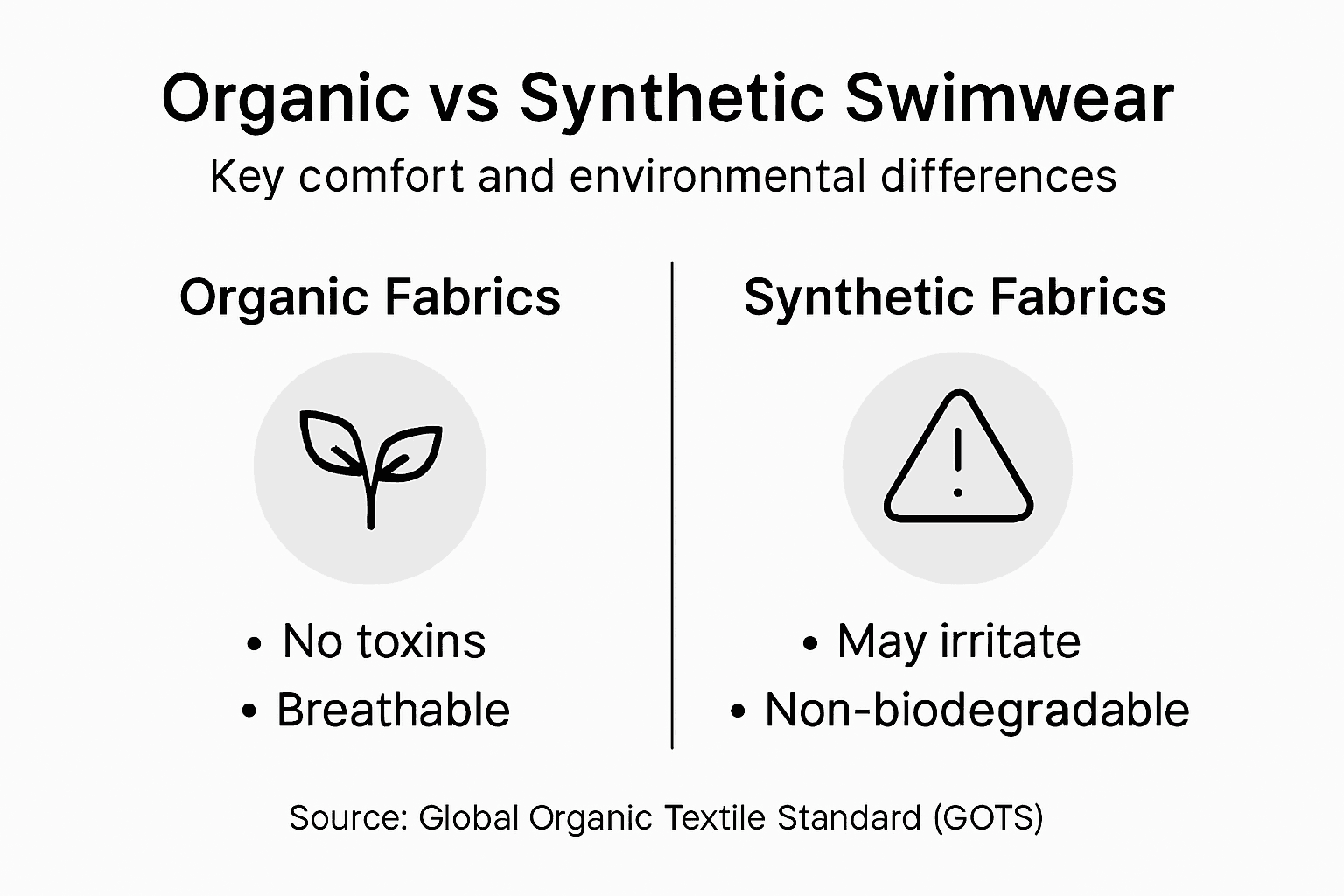
Organic swimwear offers far more than environmental advantages, providing significant health and comfort benefits for wearers. Sustainable swimwear fabrics deliver exceptional skin-friendly properties that distinguish them from traditional synthetic materials.
Key health and comfort advantages include:
- Hypoallergenic natural fiber composition
- Superior moisture-wicking capabilities
- Reduced risk of skin irritation
- Enhanced breathability
- Soft, gentle texture against skin
- Natural temperature regulation
Organic materials like bamboo and cotton provide remarkable benefits for individuals with sensitive skin. These natural fibers create a protective barrier that minimizes potential allergic reactions and skin complications often associated with synthetic swimwear materials. Their inherent breathability allows for better air circulation, reducing moisture buildup and potential bacterial growth.
Natural fabrics transform swimwear from a mere clothing item into a skin-nurturing experience.
Beyond immediate comfort, organic swimwear materials offer long-term skin health advantages. By avoiding harsh chemical treatments and synthetic polymers, these fabrics reduce potential exposure to toxins and minimize the risk of skin irritation, making them an excellent choice for individuals with dermatological sensitivities or environmental health concerns.
Pro tip: Always wash new organic swimwear before first use to remove any residual natural processing agents and maximize comfort.
Care Needs and Limitations to Consider
Organic swimwear demands specialized care to maintain its quality and performance. Sustainable swimwear fabrics require more delicate handling compared to traditional synthetic materials, presenting unique maintenance challenges for eco-conscious consumers.
Specific care considerations include:
- Hand washing recommended
- Avoid harsh chemical detergents
- Air dry in shade
- Minimal wringing or twisting
- Use mild, natural cleaning agents
- Separate from heavy or rough fabrics
Natural fibers are inherently more vulnerable to environmental stress. Unlike synthetic swimwear, organic materials have reduced resistance to chlorine, saltwater, and intense sun exposure. This means swimmers must adopt more careful maintenance practices to preserve the fabric’s integrity, softness, and overall performance.
Organic swimwear demands thoughtful care - it’s an investment in both personal comfort and environmental responsibility.
While organic swimwear offers numerous benefits, consumers should understand its performance limitations. Natural fibers typically have slower drying times, less elasticity, and potentially shorter lifespans compared to synthetic alternatives. However, many environmentally conscious swimmers consider these trade-offs acceptable given the significant ecological advantages.
Pro tip: Rinse organic swimwear in cool water immediately after use to remove salt, chlorine, and potential contaminants that could degrade the natural fibers.
Make Environmentally Responsible Swimwear Choices Today
Choosing organic fabrics for swimwear means embracing comfort and protecting the planet. The article highlights the challenge of synthetic fabric pollution and the importance of natural, biodegradable materials that reduce microplastic release and support sustainable agriculture. If you value swimwear that combines style with environmental stewardship, you understand the need for fabrics like organic cotton, hemp, and recycled nylon that offer skin-friendly benefits with a lower carbon footprint.

Explore a curated selection of eco-friendly swim trunks and beachwear at Le Club Original designed specifically to reduce ocean plastic pollution while keeping you comfortable and fashionable. Don’t wait to support sustainability with every purchase. Shop now to enjoy discounts up to 50% sitewide and free shipping on orders over $50. Discover stylish sustainable swimwear that makes a difference and join a community dedicated to protecting our oceans and skin health today.
Frequently Asked Questions
What are the benefits of using organic fabrics in swimwear?
Organic fabrics in swimwear provide reduced environmental impact, lower carbon footprint, and eliminate toxic chemical processing. They support sustainable agricultural practices and are biodegradable, making them an eco-friendly choice.
How do organic swimwear fabrics compare to traditional synthetic materials?
Organic swimwear fabrics are made from natural fibers such as organic cotton, hemp, and bamboo, offering advantages like durability, breathability, and skin safety. In contrast, traditional synthetic materials rely on petroleum resources and contribute to microplastic pollution.
What care instructions are important for organic swimwear fabrics?
Organic swimwear requires gentle care, including hand washing, air drying in the shade, and avoiding harsh chemical detergents. It’s also important to rinse swimwear after use to remove salt, chlorine, and contaminants.
Are there health benefits associated with wearing organic swimwear?
Yes, organic swimwear is hypoallergenic, has superior moisture-wicking capabilities, and reduces the risk of skin irritation. It is more suitable for individuals with sensitive skin, providing a soft and gentle texture against the skin.