

Most American men want their swimwear looking sharp and lasting through every summer adventure, but few realize that everyday washing can actually harm both fabric and the planet. Choosing eco-friendly methods matters because even a single machine wash can release thousands of microplastics into water systems. This guide helps you pick the best sustainable supplies and gentle techniques to keep your swimwear clean, fresh, and environmentally safe.
Table of Contents
- Step 1: Gather Eco-Friendly Washing Supplies
- Step 2: Rinse Swimwear Immediately After Use
- Step 3: Hand Wash Gently With Sustainable Detergent
- Step 4: Air Dry Properly For Optimal Longevity
- Step 5: Check For Cleanliness And Reuse Responsibly
Quick Summary
| Key Insight | Explanation |
|---|---|
| 1. Use Eco-Friendly Detergents | Choose mild, biodegradable detergents that are safe for delicate fabrics and minimize environmental impact. |
| 2. Rinse Swimwear Immediately | Quickly rinse swimwear after use to prevent damage from chlorine, salt, and oils that degrade fabric. |
| 3. Hand Wash for Best Care | Hand washing with cool water and gentle agitation preserves fabric quality better than machine washing. |
| 4. Air Dry Properly | Air dry swimwear laid flat in a ventilated area to avoid stretching and maintain shape. |
| 5. Assess Condition Before Reuse | Inspect swimwear for damage or stains before storing to ensure it remains in good condition. |
Step 1: Gather eco-friendly washing supplies
When preparing to wash your sustainable swimwear, selecting the right cleaning materials is crucial for maintaining fabric quality and environmental responsibility. You want supplies that are gentle on both your swimwear and the planet.
Start by choosing a mild eco-friendly detergent specifically designed for delicate fabrics. Look for biodegradable formulas free from harsh chemicals, bleach, and fabric softeners. These specialized detergents protect recycled materials and help preserve the integrity of your swimwear. Consider concentrated liquid detergents that require less packaging and minimize plastic waste. Natural plant-based options work exceptionally well for sustainable swimwear and reduce environmental impact.
Gather additional sustainable washing tools like a microfiber-catching laundry bag to prevent microplastic shedding during washing. A soft brush made from natural materials can help gently remove salt, chlorine, or sunscreen residue without damaging delicate fabric fibers. Opt for tools made from renewable resources like bamboo or recycled plastics.
Pro tip: Keep a dedicated mesh bag for your swimwear to protect it from abrasion and minimize potential fabric damage during washing.
Step 2: Rinse swimwear immediately after use
Rinsing your swimwear right after wearing it is a critical step in maintaining its quality and extending its lifespan. Quick rinsing helps remove potentially damaging substances like saltwater, chlorine, sunscreen, and body oils that can degrade fabric over time.
Immediately after leaving the beach or pool, find a fresh water source and thoroughly rinse your swimwear. Use cool or lukewarm water to gently flush out all residues. Pay special attention to areas with heavy contact like the seat and crotch, where sunscreen and body oils tend to accumulate. Avoid wringing or twisting the fabric, which can stretch and damage delicate sustainable materials. Instead, gently press and squeeze the swimwear to remove excess water.
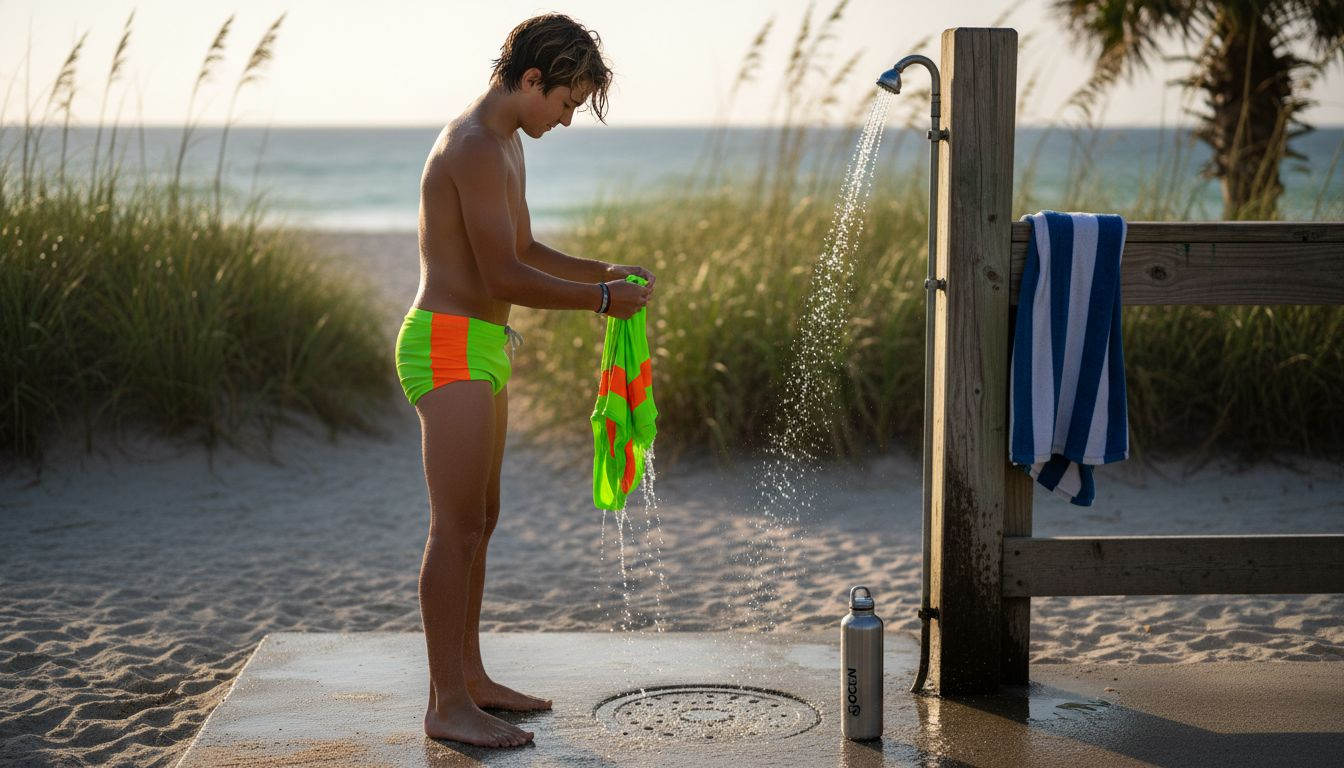
If you are not near a fresh water source, bring a small water bottle or use a clean water container to rinse your swimwear as soon as possible. The faster you can remove salt, chlorine, and other potentially harmful substances, the better you can preserve the fabric’s integrity and color.
Pro tip: Always pack a small mesh bag or waterproof dry bag when traveling to store wet swimwear and prevent it from contaminating other clothes.
Step 3: Hand wash gently with sustainable detergent
Hand washing is the most effective method for cleaning and preserving your sustainable swimwear. This gentle approach helps maintain the fabric integrity and prevents unnecessary wear and tear that can occur with machine washing.
Best practices for sustainable swimwear involve using cold water and a mild eco-friendly detergent specifically designed for delicate synthetic fabrics. Fill a clean sink or basin with cool water and add a small amount of your chosen sustainable detergent. Submerge your swimwear and gently agitate the fabric using your hands. Avoid scrubbing or twisting the material, which can cause stretching or damage to the delicate fibers. Focus on lightly pressing and releasing the fabric to remove dirt and residues.
Pay extra attention to areas with high contact like the seat and crotch, where sunscreen and body oils tend to accumulate. Spend about 3 to 5 minutes total washing your swimwear, ensuring you distribute the detergent evenly and thoroughly rinse out all soap residue. After washing, carefully squeeze out excess water without wringing or twisting the fabric.
Pro tip: Turn your swimwear inside out before washing to protect the outer surface and help maintain its color and texture.
Here’s a quick overview comparing common washing methods for sustainable swimwear:
| Cleaning Method | Fabric Protection | Environmental Impact | Convenience |
|---|---|---|---|
| Hand washing | Excellent | Minimal water, less waste | Requires more time |
| Machine washing | Often damaging | Higher energy and microplastics | Fast, less manual effort |
| Spot cleaning | Targeted care | Least detergent used | Best for minor stains |
| Dry cleaning | Poor for synthetics | Toxic chemicals used | Not recommended for swimwear |
Step 4: Air dry properly for optimal longevity
Proper air drying is crucial for maintaining the quality and extending the life of your sustainable swimwear. The right drying technique can prevent fabric damage and preserve the garment’s shape and elasticity.
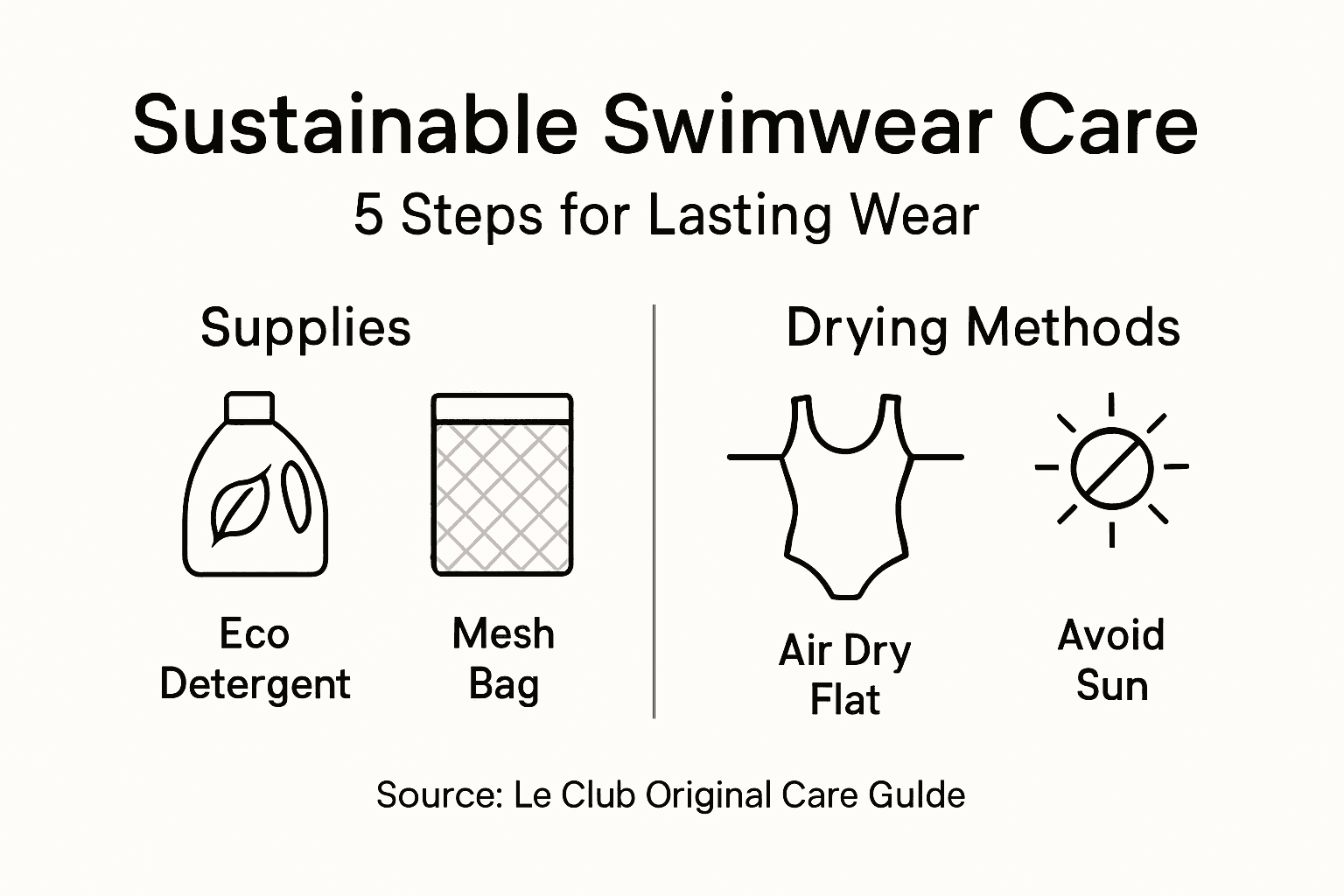
Choose a well-ventilated area away from direct sunlight to dry your swimwear. Spread the garment flat on a clean, dry towel or use a mesh drying rack that allows air circulation. Avoid hanging your swimwear by the straps or edges, which can cause stretching and distortion. Instead, gently reshape the fabric and lay it flat to maintain its original form. Keep the swimwear away from heat sources like radiators, dryers, or direct sunlight, as excessive heat can break down synthetic fibers and cause rapid degradation.
Plan ahead and allow sufficient time for natural air drying. Depending on humidity levels, your swimwear might take 4 to 12 hours to dry completely. Ensure the garment is entirely dry before storing to prevent mildew and bacterial growth. Rotate the swimwear occasionally to promote even drying and prevent any moisture from being trapped in the fabric.
Pro tip: Use a clean white towel underneath your swimwear to absorb excess moisture and speed up the drying process.
Step 5: Check for cleanliness and reuse responsibly
Before storing or reusing your sustainable swimwear, conduct a thorough cleanliness and condition assessment. This final step ensures your swimwear remains in optimal shape and continues to perform effectively through multiple wearing cycles.
Inspect your swimwear carefully for any lingering stains, salt residue, or signs of wear. Check the fabric for potential stretching, discoloration, or small tears that might compromise its integrity. Pay special attention to areas of high friction like the seat, crotch, and waistband. If you notice any minor issues, consider spot cleaning or gentle repair before your next use. Look for subtle signs of fabric degradation such as thinning material, loose threads, or changes in elasticity that could indicate it is time to replace the garment.
Responsible reuse means being mindful of your swimwear’s lifecycle. Rotate between multiple swimwear pieces to reduce individual wear and extend overall garment longevity. Store your cleaned and dried swimwear in a cool, dry place away from direct sunlight. Consider using breathable garment bags or folding techniques that prevent unnecessary stretching or fabric stress. By treating your sustainable swimwear with care, you contribute to reducing textile waste and supporting more environmentally conscious fashion practices.
Pro tip: Keep a small sewing kit with matching thread for quick repairs and preventative maintenance of your swimwear.
Refer to this table for signs your sustainable swimwear needs repair or replacement:
| Warning Sign | What It Means | Suggested Action |
|---|---|---|
| Faded color | UV or chlorine damage | Consider replacing |
| Stretched fit | Lost elasticity | Attempt sewing repair |
| Loose threads | Wear and tear | Trim or reinforce seams |
| Lingering odor | Trapped bacteria | Rewash or replace |
Protect Your Sustainable Swimwear with Eco-Friendly Styles from Le Club Original
Washing your sustainable swimwear properly is key to keeping it looking fresh and lasting longer, but choosing the right pieces also matters. At Le Club Original, we understand how important it is to combine gentle care practices with high-quality, eco-conscious swim trunks designed for durability and style. Our collection offers fashion-forward men and boys swimwear made responsibly, so you can enjoy every beach day while supporting environmental health.

Explore our latest sustainable swimwear that complements your careful washing routine with fabrics engineered for longevity. Take advantage of up to 50% sitewide discounts and free shipping on orders over $50. Visit Le Club Original now to find the perfect eco-friendly trunks and discover tips on sun protection and environmental awareness in our blog. Take action today to enhance your swimwear experience while reducing plastic pollution and textile waste.
Frequently Asked Questions
How can I wash my swimwear sustainably to extend its lifespan?
To wash your swimwear sustainably, hand wash it with a mild, eco-friendly detergent designed for delicate fabrics. Focus on using cool water and gently agitate the fabric for about 3 to 5 minutes to effectively remove residues without damaging the material.
What should I do immediately after wearing my swimwear?
Rinse your swimwear right after use in cool or lukewarm water to eliminate salt, chlorine, and sunscreen residues. Doing this promptly will help maintain the fabric quality and prevent long-term damage.
How should I dry my swimwear to preserve its shape?
Air dry your swimwear by laying it flat in a well-ventilated area away from direct sunlight and heat sources. Avoid hanging it up to prevent stretching, and allow it to dry thoroughly for about 4 to 12 hours before storing it.
How can I check if my swimwear needs repair or replacement?
Inspect your swimwear for signs like faded color, stretched fit, or loose threads. If you find any issues, consider spot cleaning or making minor repairs before your next use; if the fabric is excessively worn, it may be time to replace it.
What steps can I take to prevent fabric damage during washing?
Use a microfiber-catching laundry bag when washing to minimize microplastic shedding and wear. Additionally, always turn your swimwear inside out before washing to protect its outer surface from abrasion and help maintain its color.
Recommended
- 5 Reasons Why You Should Switch to Sustainable Swimwear – Le Club Original
- 5 Reasons Why You Should Switch to Sustainable Swimwear – Le Club Original
- Swim for a Cause: Beach Cleanup with The Surfrider Foundation – Le Club Original
- Swim for a Cause: Beach Cleanup with The Surfrider Foundation – Le Club Original
- 7 Practical Ways to Reduce Fashion Waste for a Greener Closet – The Cork Store