

Finding beachwear that matches your values while still looking sharp is a challenge faced by many eco-minded men. With clothing production recognized for its significant role in environmental pollution, every swim trunk or cover-up choice takes on new meaning. By taking a thoughtful look at your current wardrobe, you can begin a journey toward a more responsible approach to style. This guide helps you make informed, stylish choices that support a cleaner planet and fit your coastal lifestyle.
Table of Contents
- Step 1: Assess Your Current Beachwear
- Step 2: Research Sustainable Materials And Brands
- Step 3: Select Eco-Friendly Swimwear And Accessories
- Step 4: Style Outfits With Minimal Environmental Impact
- Step 5: Verify Sustainability Of Purchases
Quick Summary
| Key Insight | Explanation |
|---|---|
| 1. Evaluate your current swimwear | Assess your existing beachwear to identify items to keep, repair, or replace, focusing on sustainability and condition. |
| 2. Research sustainable materials and brands | Investigate eco-friendly materials and brands committed to reducing environmental impact for better beachwear choices. |
| 3. Select eco-friendly swimwear and accessories | Prioritize high-quality, sustainable materials and ethical production to minimize your beach fashion footprint. |
| 4. Style outfits for versatility | Choose timeless, multi-purpose pieces to reduce consumption while allowing for diverse beach outfits. |
| 5. Verify sustainability claims of purchases | Critically assess brands’ sustainability certifications to ensure genuine environmental impact rather than marketing hype. |
Step 1: Assess Your Current Beachwear
Gearing up for sustainable beach fashion starts with a critical evaluation of your existing swimwear. This step involves understanding the environmental impact of your current beach wardrobe and identifying opportunities for more eco-conscious choices.
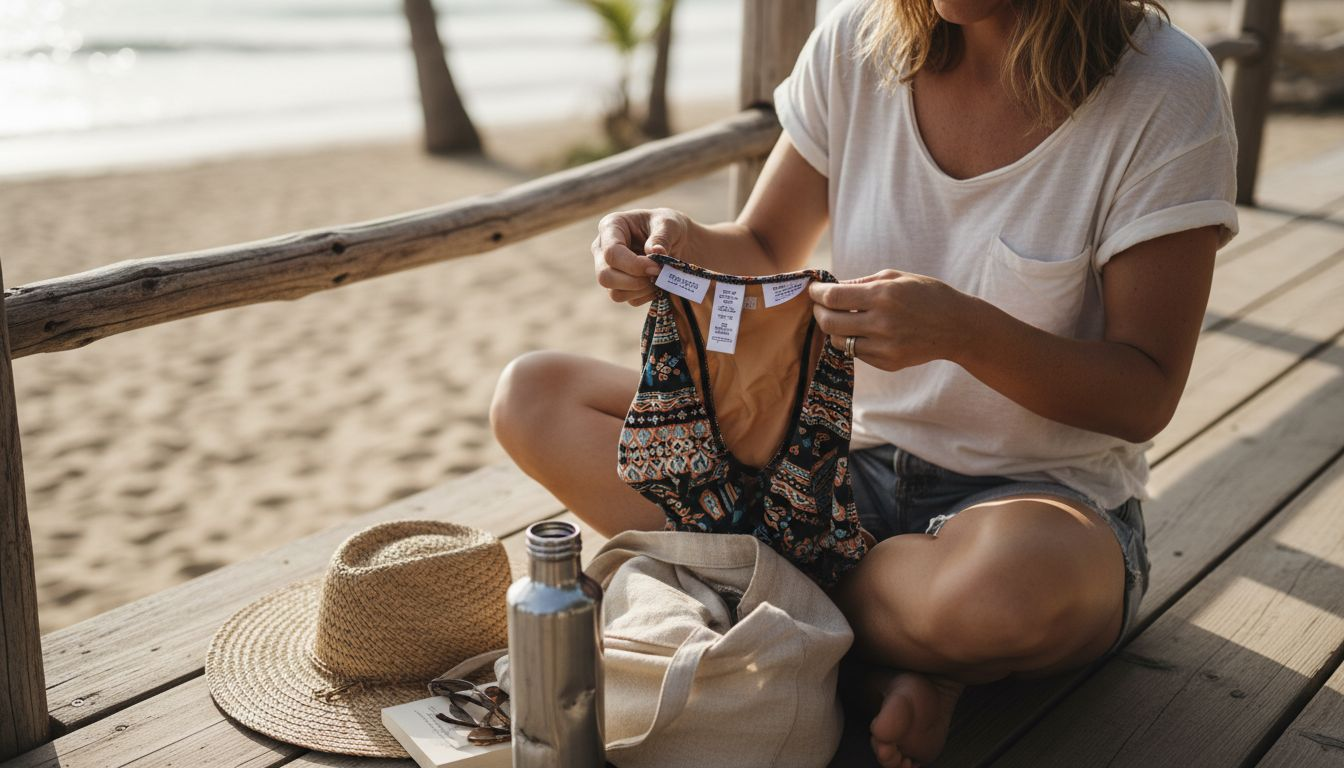
Begin by emptying your beach and swimwear drawer, laying out each piece systematically. Sustainability research reveals that clothing production significantly contributes to environmental pollution, making this assessment crucial. Look for the following characteristics in your current beachwear:
- Fabric composition: Check labels for material types
- Wear and tear: Note items with excessive damage
- Frequency of use: Identify rarely worn pieces
- Material sustainability: Evaluate environmental impact of current fabrics
Sort your beachwear into three primary categories:
- Keep: High-quality, frequently used items
- Repair: Pieces with minor damage that can be mended
- Replace: Worn-out or environmentally unsustainable garments
Pay special attention to synthetic materials like polyester and nylon, which often have significant environmental footprints. Modern sustainable design techniques can help minimize waste during production, making thoughtful replacement an important strategy.
Here’s a concise comparison of traditional vs. sustainable beachwear materials and their environmental benefits:
| Material Type | Environmental Impact | Durability | End-of-Life Options |
|---|---|---|---|
| Polyester/Nylon | High pollution | Long-lasting | Not biodegradable |
| Organic Cotton | Low impact | Moderate | Biodegradable, compostable |
| Recycled Polyester | Reduced pollution | Durable | Recyclable, not biodegradable |
| Algae-Based Biopolymers | Minimal footprint | Good durability | Biodegradable |
Thoughtful assessment is the first step toward a more sustainable beach wardrobe.
Pro tip: Take detailed photos of each item before sorting to help track your sustainability journey and make more informed future purchasing decisions.
Step 2: Research Sustainable Materials and Brands
Building a sustainable beach wardrobe requires deep understanding of innovative materials and eco-conscious brands transforming the fashion landscape. This step will help you navigate the complex world of environmentally friendly swimwear options.
Circular fashion innovations are revolutionizing how we think about beach apparel, introducing breakthrough materials that dramatically reduce environmental impact. Your research should focus on several key areas:
- Biopolymer materials: Explore alternatives to traditional synthetic fabrics
- Recycled fabric technologies: Investigate brands using ocean plastic and regenerated textiles
- Manufacturing transparency: Seek brands with clear sustainability reporting
- Certifications: Look for recognized environmental standards
Start your research by exploring brands and materials with these critical characteristics:
- Minimal carbon footprint
- Transparent supply chains
- Innovative sustainable design approaches
- Commitment to circular economy principles
Pay special attention to emerging technologies like biocomposites and nanocellulose, which represent cutting-edge solutions for reducing textile waste and environmental degradation.
Sustainable fashion is not just a trend - it’s a commitment to planetary health.
Pro tip: Create a spreadsheet tracking potential sustainable brands, noting their specific environmental certifications and material innovations for easy comparison.
Step 3: Select Eco-Friendly Swimwear and Accessories
Transitioning to a sustainable beach wardrobe means making intentional choices that reduce environmental impact without compromising style or comfort. Your selection process should be both strategic and thoughtful, focusing on materials, manufacturing, and long-term sustainability.
Circular fashion innovations are transforming swimwear design, offering breakthrough approaches that minimize ecological footprints. When selecting eco-friendly beach attire, consider these critical evaluation criteria:
- Material sourcing: Prioritize recycled and regenerative fabrics
- Manufacturing process: Seek brands with transparent, low-waste production
- Durability: Choose high-quality pieces designed for longevity
- End-of-life potential: Investigate recyclability and biodegradability
Your selection strategy should focus on these key elements:
- Verify material composition
- Research brand sustainability credentials
- Evaluate product lifecycle
- Check environmental certifications
Expand your search beyond traditional materials, exploring innovative solutions like algae-based biopolymers and textiles created from ocean plastic waste. These cutting-edge materials not only look great but actively contribute to environmental restoration.
Sustainable swimwear is more than fashion - it’s a statement of environmental responsibility.
Pro tip: Create a personal sustainability scoring system to objectively evaluate potential swimwear purchases, rating each item on environmental impact, durability, and ethical production.
Step 4: Style Outfits with Minimal Environmental Impact
Creating a sustainable beach wardrobe is about making intentional style choices that minimize waste while maximizing versatility and personal expression. Your approach should blend fashion consciousness with environmental responsibility.
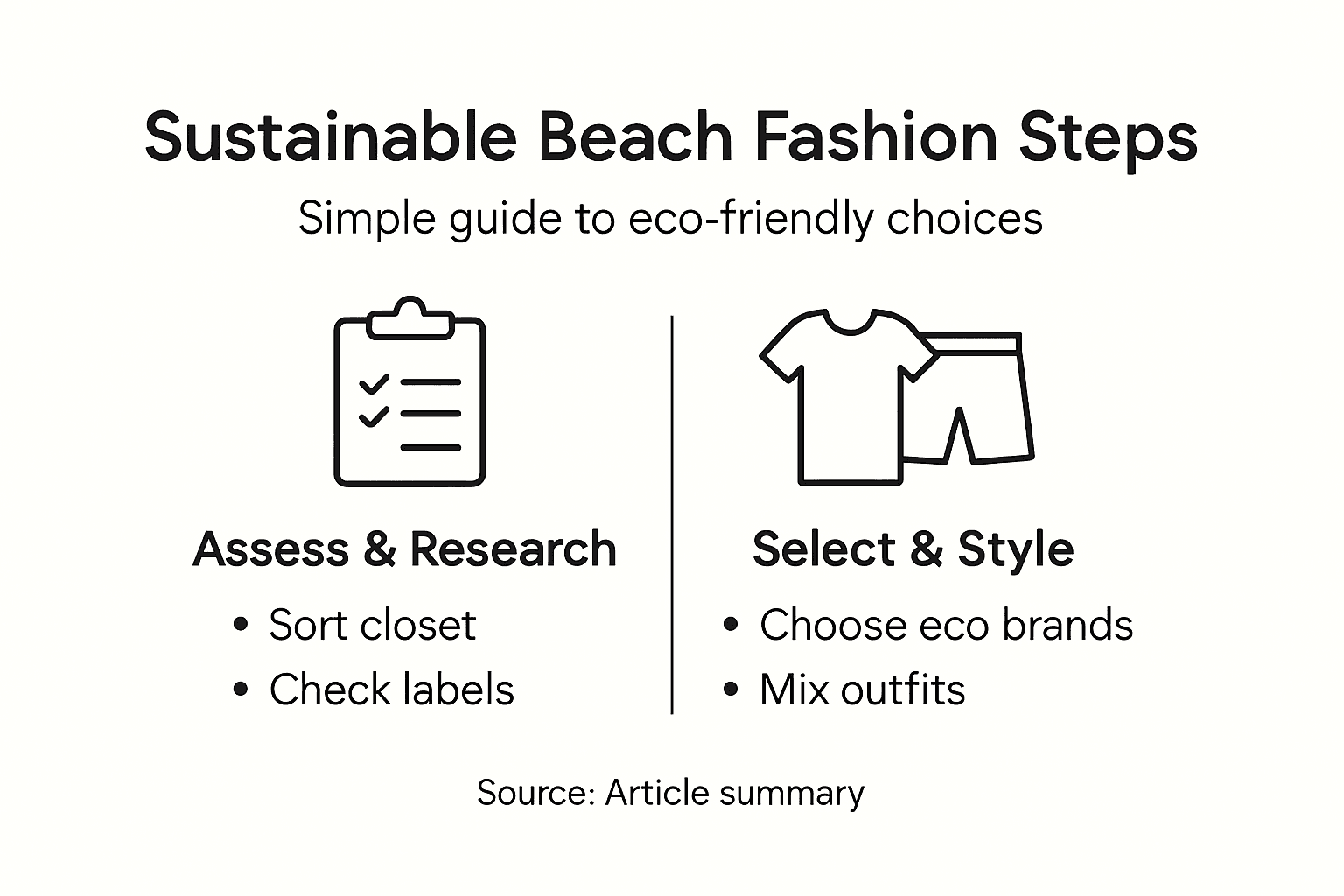
Sustainable styling techniques emphasize creating versatile, timeless looks that transcend seasonal trends. This means selecting pieces that can be mixed, matched, and worn multiple ways to reduce overall consumption.
Consider these strategic styling principles:
- Versatility: Choose multi-purpose beach pieces
- Layering: Create multiple looks with fewer items
- Neutral color palette: Maximize mix-and-match potential
- Timeless designs: Avoid trend-driven disposable fashion
Your sustainable styling strategy should include:
- Select neutral base pieces
- Add versatile accessories
- Focus on quality over quantity
- Plan coordinated outfits in advance
Prioritize high-quality, organic materials that offer durability and style. Look for pieces that can transition from beachwear to casual wear, reducing the need for multiple specialized garments.
Sustainable style is about making conscious choices that look good and feel right.
Pro tip: Photograph your beach outfit combinations to create a personal styling guide, helping you maximize your sustainable wardrobe’s potential without unnecessary purchases.
Step 5: Verify Sustainability of Purchases
Ensuring the authenticity of sustainability claims requires a strategic and critical approach to evaluating fashion products. Your goal is to move beyond marketing rhetoric and uncover the genuine environmental impact of your potential purchases.
Sustainability certification frameworks provide critical tools for consumers to assess product claims with greater confidence. Understanding these verification methods will help you make more informed and responsible buying decisions.
Develop a comprehensive verification strategy with these key components:
- Documentation: Request detailed sustainability reports
- Certifications: Look for credible third-party environmental standards
- Transparency: Investigate brand supply chain practices
- Material traceability: Examine raw material sourcing
Your sustainability verification process should include:
- Research brand environmental policies
- Check for recognized eco-certifications
- Validate claimed sustainability metrics
- Understand production methodology
Pay close attention to potential greenwashing tactics, where brands may exaggerate their environmental credentials. Seek brands that provide comprehensive, verifiable information about their sustainability practices.
Below is a summary of key sustainability certifications to help verify eco-friendly product claims:
| Certification Name | Main Focus | What It Verifies |
|---|---|---|
| OEKO-TEX® | Chemical safety | No harmful substances |
| Global Recycle Standard | Recycled content | Authentic recycled materials |
| Fair Trade Certified | Social responsibility | Ethical labor practices |
| Bluesign® | Environmental process | Clean, low-waste manufacturing |
True sustainability goes beyond marketing - it requires genuine commitment and transparent reporting.
Pro tip: Create a personal sustainability scorecard with weighted criteria to objectively evaluate and compare different brand claims and certifications.
Elevate Your Sustainable Beach Style with Confidence
Building a sustainable beach wardrobe can feel overwhelming when sorting through fabrics, verifying eco-certifications, and navigating greenwashing. This guide highlights the challenge of making truly informed choices that balance environmental impact, style, and durability. If you want to reduce ocean pollution and embrace eco-conscious swimwear without compromising on fashion or function, you are not alone.
Discover how Le Club Original simplifies this journey by offering stylish, sustainable swim trunks and accessories designed with transparency and responsibility. Our collections prioritize recycled materials and eco-friendly production, helping you verify the authenticity of your choices through our commitment to sustainability.

Take the next step in your sustainable beachwear journey today. Explore our curated line of eco-conscious men’s swimwear and beach apparel at Le Club Original to start making a real impact now. Shop with confidence knowing every purchase supports ocean conservation and an environmentally responsible lifestyle.
Frequently Asked Questions
How can I assess my current beachwear for sustainability?
Begin by evaluating the fabric composition, wear and tear, and frequency of use of your beachwear. Sort items into categories: keep, repair, or replace, focusing on high-quality and eco-friendly materials.
What materials should I prioritize for sustainable swimwear?
Look for fabrics with lower environmental impacts, such as organic cotton, recycled polyester, and algae-based biopolymers. Prioritizing these materials can help reduce your carbon footprint significantly.
How can I verify the sustainability of my swimwear purchases?
Develop a review strategy that includes checking for credible certifications, examining brand transparency, and validating sustainability claims. Focus on gathering as much information as possible about the product’s lifecycle and sourcing practices.
What styling techniques can I use to ensure my beach outfits are sustainable?
Adopt principles like versatility and layering to create multiple looks from fewer pieces, emphasizing neutral colors and timeless designs. Aim to maximize the use of high-quality, multi-purpose items to reduce waste.
How do I research sustainable fashion brands effectively?
Investigate brands by focusing on their environmental policies, manufacturing transparency, and innovative sustainable materials. Create a spreadsheet to track potential brands and note their sustainability credentials and certifications for easy comparison.
Recommended
- 7 Best Ocean-Friendly Clothing Materials for Eco Apparel – Le Club Original
- 7 Best Ocean-Friendly Clothing Materials for Eco Apparel – Le Club Original
- 7 Best Ocean-Friendly Clothing Materials for Eco Apparel – Le Club Original
- 7 Essential Summer Beachwear Trends 2025 for Eco Style – Le Club Original