

Finding high-quality beachwear that matches your values can feel like a challenge when you care about clean oceans and ethical practices. Many eco-conscious men in North America want options that look good, last longer, and actually support local communities instead of polluting the planet. Local beachwear brings the answer: transparent supply chains and sustainable materials made close to home, reducing your environmental impact every time you head to the water.
Table of Contents
- Defining Local Beachwear And Common Misconceptions
- Eco-Friendly Materials And Sustainable Production
- Community Support And Ethical Labor Practices
- Reducing Carbon Footprint And Ocean Pollution
- Quality, Style, And Cost Compared To Imports
Key Takeaways
| Point | Details |
|---|---|
| Local Beachwear Supports Communities | Purchasing local beachwear benefits local economies by keeping money within communities and fostering job opportunities. |
| Quality and Durability Justify Cost | Although local beachwear may have a higher upfront price, its longevity and quality offer better value over time. |
| Eco-Friendly Manufacturing Practices | Local production significantly reduces carbon emissions and ocean pollution compared to mass-produced imports. |
| Authenticity in Style and Design | Local makers create timeless designs that reflect regional aesthetics, challenging the notion of limited style options in local offerings. |
Defining Local Beachwear and Common Misconceptions
Local beachwear is more than just a geographic label. It refers to swimwear and beach apparel produced within your region, typically by smaller manufacturers or artisans who maintain direct oversight of production. This closeness matters.
The manufacturing happens near you. Design, materials sourcing, production, and quality control all occur in familiar communities. You can often trace exactly where your swim trunks were made and by whom.
What Makes Beachwear “Local”
Local beachwear shares several defining characteristics:
- Production location: Manufactured in North America, not overseas in mass-production facilities
- Supply chain transparency: You know where materials come from and how workers are treated
- Smaller production runs: Limited quantities instead of massive inventory that becomes waste
- Direct community benefit: Money spent stays in local economies, supporting jobs and businesses
- Quality focus: Smaller makers prioritize durability and craftsmanship over volume
Fair labor conditions and ethical practices distinguish local production from global fast fashion, creating stronger accountability throughout the entire supply chain.
Breaking Down the Misconceptions
Misconception #1: “Local beachwear costs way too much.”
This isn’t entirely accurate. While some local brands charge premium prices, you’re paying for quality, durability, and transparency. A $120 pair of swim trunks built to last three seasons actually costs less per wear than cheaper alternatives you replace yearly.
Misconception #2: “Local options don’t match current styles.”
False. Modern local makers understand design trends. The difference? They create timeless pieces instead of following fast fashion cycles that become dated in weeks.
Misconception #3: “Supporting local means limited selection.”
Actually, locally-made beachwear offers eco-conscious style benefits including diverse designs that reflect regional aesthetics and preferences. You get choices tailored to your market, not mass-produced uniformity.
Misconception #4: “It’s just greenwashing—not actually better for the ocean.”
Local production genuinely reduces plastic pollution. Shorter transportation distances mean lower carbon emissions. Smaller production runs minimize fabric waste. These aren’t marketing claims; they’re measurable outcomes of localized manufacturing.
Local beachwear works differently because the entire supply chain operates under community scrutiny, not hidden in distant factories.
The real distinction comes down to accountability and connection. When your beachwear producer operates three hours away instead of three continents away, oversight becomes real.
Here’s how local beachwear compares to mass-produced imports across several key factors:
| Aspect | Local Beachwear | Mass-Produced Imports |
|---|---|---|
| Production Oversight | Direct, community-based | Remote, minimal visibility |
| Environmental Impact | Lower, due to local materials | High, from shipping and waste |
| Worker Treatment | Fair wages, safe conditions | Often unregulated, less scrutiny |
| Cost Over Time | Lower per wear, longer lasting | Higher due to frequent replacing |
| Style Trends | Timeless, regionally inspired | Fast fashion, quickly outdated |
Pro tip: When evaluating “local” brands, verify manufacturing actually happens in North America by checking production facilities directly—don’t just trust marketing claims about local sourcing.
Eco-Friendly Materials and Sustainable Production
The materials in your beachwear determine its true environmental impact. Conventional synthetic fabrics harm oceans through microplastic shedding and persistent pollution. Local manufacturers increasingly use alternatives that don’t compromise on performance or style.
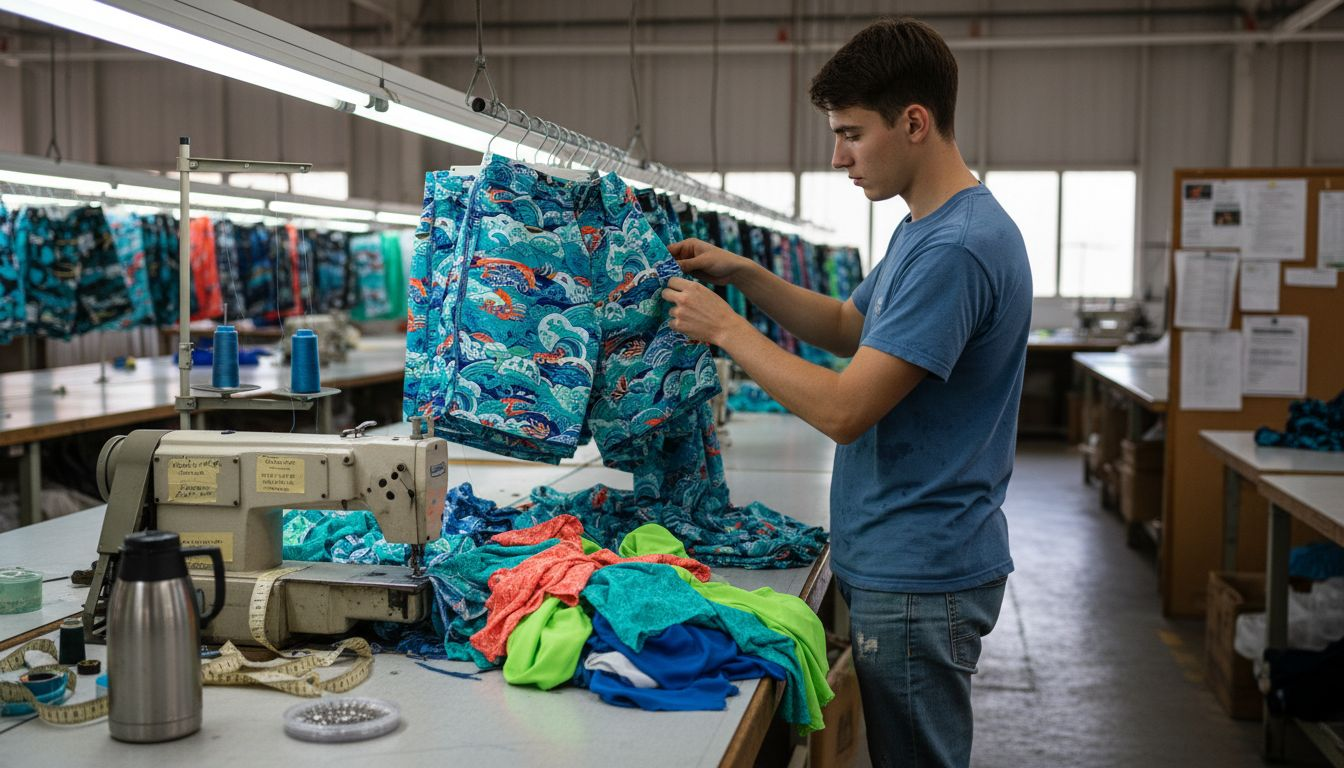
Sustainable beachwear combines durability with environmental responsibility. When you choose pieces made from the right materials, you’re actively reducing plastic waste entering marine ecosystems.
What Makes Materials Eco-Friendly
Not all “eco” claims are equal. Real sustainable materials share core characteristics:
- Biodegradable or recyclable: Breaks down naturally or gets reclaimed for new products
- Recycled content: Made from existing materials like fishing nets or plastic bottles
- Low resource consumption: Requires less water, chemicals, and energy during production
- Durability: Built to last multiple seasons, not disposable fast fashion
- Certified origins: Verified sustainable sourcing with third-party validation
Regenerated nylons like ECONYL made from recycled fishing nets exemplify how waste becomes wearable quality. These materials perform identically to virgin synthetics while eliminating ocean pollution at the source.
The Production Difference
Materials alone don’t tell the full story. How manufacturers process them matters equally. Advanced bio-fabrication techniques and efficient process integration reduce pollution and resource consumption throughout manufacturing.
Local producers control their entire supply chain, enabling transparency impossible in global operations. Fair wages, safe working conditions, and waste minimization happen under direct community oversight.
Key production practices include:
- Small-scale manufacturing that minimizes excess inventory
- Chemical-free dyeing processes that protect both workers and waterways
- Waste reduction through precise cutting and fabric optimization
- Closed-loop systems where scraps become new products
Why Scale Matters for Sustainability
Larger factories produce thousands of units monthly, forcing overstock and waste. Local makers produce what communities actually buy, eliminating the landfill problem entirely.
You’re also avoiding the carbon footprint of international shipping. Materials sourced regionally and manufactured nearby create dramatically lower emissions compared to beachwear traveling 8,000 miles from factory to beach.
Sustainable production isn’t about choosing one perfect material—it’s about transparent systems where every decision reduces environmental harm.
The difference becomes visible when you examine durability. Pieces designed to last three years instead of one season fundamentally change the environmental calculus.
Pro tip: Ask manufacturers directly about their material sources and production facilities—brands transparent about their processes are genuinely committed to sustainability, while those avoiding specifics likely aren’t.
Below is a summary of eco-friendly features to look for in sustainable beachwear:
| Eco-Friendly Feature | Why It Matters | How to Recognize It |
|---|---|---|
| Recycled Materials | Reduces ocean-bound plastics | Labels mention recycled sources |
| Biodegradable Fibers | Avoids landfill accumulation | Certified natural or plant-based |
| Low Resource Use | Limits water and energy waste | Third-party sustainability badges |
| Safe Dyes & Production | Protects workers and oceans | Transparent disclosure by brands |
| Long-Term Durability | Fewer replacements, less waste | Product warranty or quality claims |
Community Support and Ethical Labor Practices
When you buy local beachwear, you’re not just getting a product—you’re funding actual people in your community. Your money stays nearby, supporting jobs, families, and local economies instead of disappearing into distant corporate headquarters.
Local manufacturers operate under community scrutiny. Workers live in your region, making exploitation impossible to hide. This accountability creates genuine ethical standards that corporate supply chains can’t match.
How Local Production Protects Workers
Global fast fashion hides worker abuse behind layers of outsourcing. Local production eliminates those shadows. When your swim trunks are made three hours away, factory conditions matter directly to your community.
Fair wages and better working conditions become standard practice, not marketing language. Local makers pay workers enough to afford rent and groceries without juggling three jobs.
Key ethical protections in local production:
- Direct relationships: Designers and producers work face-to-face, not through intermediaries
- Fair compensation: Wages reflect actual living costs in your region
- Safe conditions: Facilities meet North American safety standards without exceptions
- Limited hours: Workers aren’t trapped in 12-hour factory shifts
- Skill development: Employees gain real craftsmanship, not repetitive line work
Economic Impact on Your Community
Every purchase creates ripple effects. Money spent locally cycles through your economy multiple times. A manufacturer buys materials from regional suppliers, who pay rent to local landlords, who shop at neighborhood businesses.
Compare that to buying mass-produced imports. That money leaves immediately, supporting factories overseas and corporate profits elsewhere.
Local beachwear jobs aren’t minimum-wage retail positions. They’re skilled manufacturing roles paying $18 to $28 hourly, with benefits and career growth. These positions support families and strengthen neighborhoods.
Supporting ethical labor means supporting people who can look you in the eye—that accountability changes everything.
Transparency as Your Guarantee
Local manufacturers have nothing to hide. Visit production facilities, meet craftspeople, see the entire process. This transparency is impossible with overseas suppliers hiding behind corporate subsidiaries.
You’ll understand exactly how your beachwear gets made and by whom. That knowledge matters when you’re wearing something that represents your values.
Pro tip: When evaluating brands, ask for factory location and visit if possible—brands eager to show their production facilities genuinely stand behind their labor practices.
Reducing Carbon Footprint and Ocean Pollution
Every beachwear purchase creates environmental consequences. The question is whether those consequences harm or help the ocean. Local manufacturing dramatically shifts the equation in your favor.
Global fast fashion relies on long supply chains that generate massive carbon emissions. Your swim trunks travel thousands of miles before reaching your closet, burning fossil fuels at every step. Local production eliminates that transportation waste entirely.
The True Cost of Distant Manufacturing
Shipping accounts for roughly 3 percent of global carbon emissions. That sounds small until you realize your single pair of swim trunks isn’t alone—millions ship annually. The cumulative effect damages marine ecosystems and accelerates climate change.
Fast fashion also contributes microfibers and chemical dyes contaminating waterways, directly harming marine life and ecosystems. These chemicals persist in oceans for decades, accumulating in fish and eventually your own body.
Problems created by global supply chains:
- Shipping emissions across oceans burning fossil fuels constantly
- Chemical dye runoff poisoning waterways and marine habitats
- Microfiber shedding from synthetic fabrics polluting ocean floors
- Overproduction creating textile waste in landfills
- Plastic packaging discarded carelessly into ecosystems
Local Manufacturing Solves Multiple Problems
Local beachwear eliminates most of these issues. Manufacturing nearby means zero shipping emissions. Smaller production runs reduce overstock and waste dramatically.
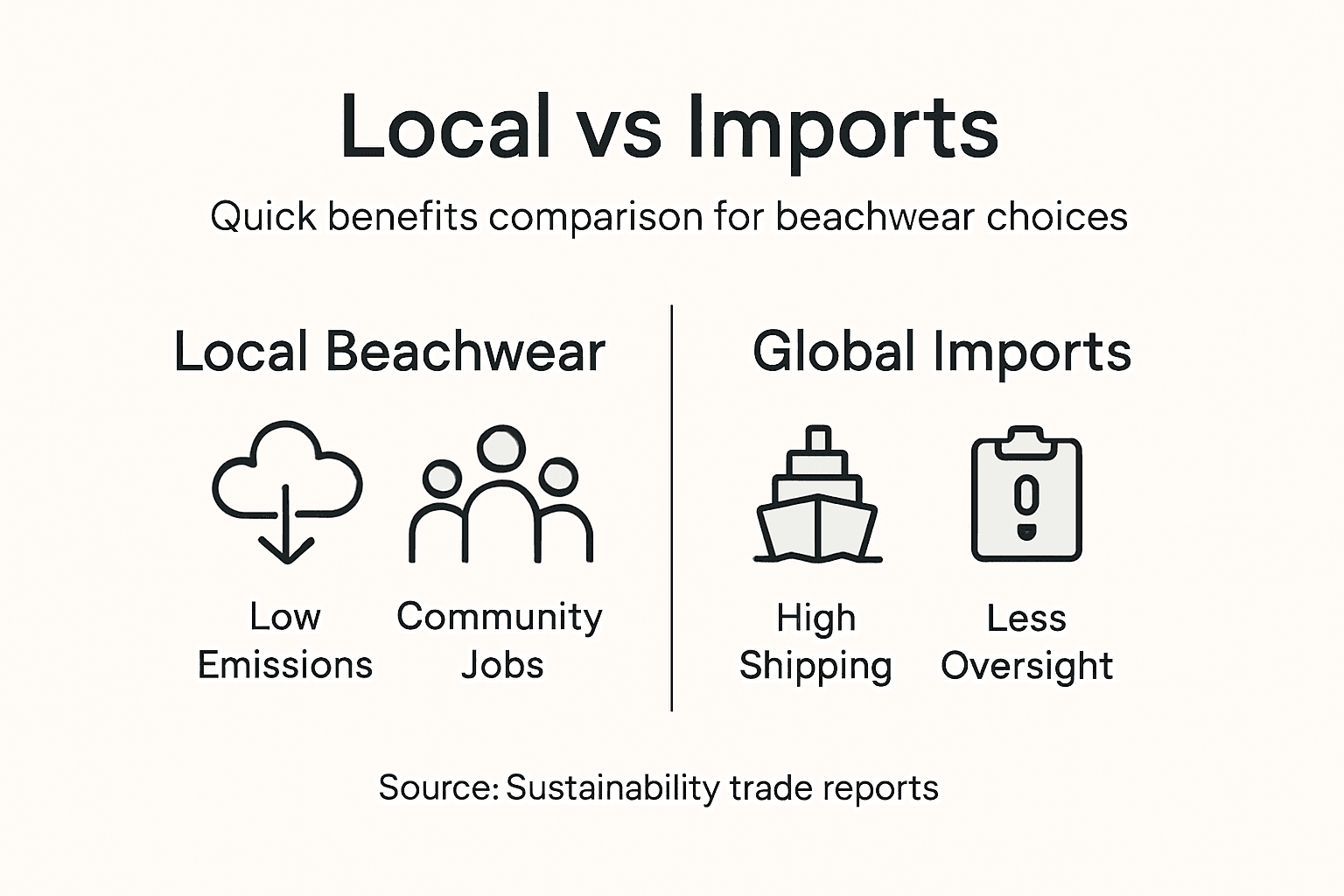
Local makers use sustainable dyes and processes regulated by environmental standards. Water used in production stays locally, where contamination gets monitored and managed, not hidden overseas.
Key environmental benefits of local production:
- Zero international shipping emissions
- Minimal packaging waste since products don’t travel far
- Regulated water usage and chemical management
- Smaller batches preventing overproduction
- Durability that reduces replacement frequency
How Your Choices Reduce Ocean Damage
Sustainable industry practices enhance climate resilience and reduce pollution while protecting marine ecosystems. By choosing local, you’re directly supporting these practices instead of funding destructive ones.
One durable pair of local swim trunks lasting three years equals three pairs of fast fashion discarded annually. That’s two fewer batches of microfibers shedding into oceans, two fewer shipments burning fuel, two fewer pieces of plastic packaging polluting landfills.
Local beachwear isn’t just a personal choice—it’s direct action reducing carbon emissions and protecting the ocean.
The math works in your favor. Supporting regional manufacturers aligns your spending with marine conservation, transforming consumption into environmental action.
Pro tip: Choose beachwear made from recycled materials locally—this combination eliminates both transportation emissions and prevents plastic waste from entering oceans in the first place.
Quality, Style, and Cost Compared to Imports
The price tag tells only part of the story. Cheap imports seem like smart shopping until you’re replacing them twice yearly. Local beachwear costs more upfront but delivers genuine value that cheap alternatives cannot match.
You’re comparing two fundamentally different products. One lasts three seasons and maintains color and fit. The other fades after six months and stretches out of shape by summer’s end.
The Real Price Comparison
Imported swim trunks might cost $30 while local options run $80 to $120. The math seems obvious until you factor in actual costs. Imported products may appear cheaper initially, but total costs including shipping, customs, and tariffs often narrow the price gap, making local products surprisingly competitive.
You’re also paying for quality control. Local manufacturers verify every batch before shipment. Overseas factories produce millions monthly with minimal oversight, prioritizing speed over standards.
Hidden costs of cheap imports:
- Rapid color fading after 10 washes
- Elastic deterioration within one season
- Seam failure from poor stitching
- Chlorine damage due to thin materials
- Frequent replacement expenses accumulating yearly
Quality That Justifies the Price
Local beachwear uses premium fabrics designed for durability. Stitching gets inspected individually, not batch-tested statistically. Elastic maintains shape through multiple seasons.
You’ll notice the difference immediately. The fabric feels substantial. Seams lie flat without bunching. Colors remain vibrant after dozens of washes.
One pair of quality local swim trunks worn consistently outlasts three pairs of imports. That’s a $120 investment replacing three $30 purchases. The math flips dramatically when durability enters the equation.
Style That Reflects Your Values
Local makers create timeless designs instead of fast fashion trends. You get pieces built to last, not disposable items becoming embarrassing next summer.
Styles reflect regional aesthetics and preferences. You’re choosing from collections designed for North American bodies and climates, not generic international sizing.
Spending more on quality beachwear isn’t wasteful—it’s financially smart when durability multiplies the value you receive.
Why local beachwear offers better value:
- Superior stitching lasting years, not months
- Premium materials resisting chlorine and saltwater damage
- Consistent sizing eliminating fit frustration
- Timeless designs avoiding seasonal obsolescence
- Ethical production you can feel good wearing
The real comparison isn’t price per purchase. It’s total cost per wear. A $100 local pair worn 60 times costs $1.67 per wear. A $30 import worn 15 times costs $2 per wear—before considering replacement frequency.
Pro tip: Calculate cost-per-wear by dividing price by estimated wearing occasions, accounting for durability—quality local beachwear typically wins even at triple the import price.
Choose Local. Protect Oceans. Support Communities.
The article highlights a major challenge: finding stylish beachwear that truly supports ethical labor, reduces ocean pollution, and strengthens your local community. If you want to avoid fast fashion’s hidden environmental and social costs you need durable, eco-friendly swim trunks made through transparent local manufacturing. Key concerns like microplastic pollution, high carbon footprints, and unfair labor can be resolved by choosing sustainable brands focused on quality and accountability.
At Le Club Original, you can find sustainable swimwear and beachwear that perfectly aligns with these values. Our curated collections emphasize durable fabrics such as recycled materials that help reduce plastic waste and ocean pollution. We offer transparent sourcing and support local communities through ethical production practices. When you shop with us, you’re not only investing in high-quality, timeless style—you’re actively protecting marine life and uplifting local economies.
Ready to make a difference with your beachwear choices? Explore our wide range of eco-conscious swim trunks and apparel, enjoy up to 50% off during seasonal sales, and benefit from free shipping on orders over $50. Discover how fashion can be a force for good by visiting Le Club Original now. Wear your values with pride and help safeguard our oceans and communities today.
Frequently Asked Questions
What are the benefits of buying local beachwear?
Buying local beachwear supports your community by keeping money in the local economy, creating jobs, and funding families. It also reduces the environmental impact associated with long-distance shipping and mass production.
How does local beachwear help the ocean?
Local beachwear significantly reduces carbon emissions by minimizing transportation distances and typically uses eco-friendly materials that do not harm marine ecosystems, like biodegradable and recycled fabrics.
Why is local beachwear often more expensive than mass-produced options?
Local beachwear may have a higher upfront cost because it focuses on quality, durability, and ethical labor practices. However, this investment results in longer-lasting items that ultimately provide better value over time.
What materials should I look for in eco-friendly beachwear?
Look for beachwear made from biodegradable or recyclable materials, recycled content from items like fishing nets, and those produced with low resource consumption methods. Certifications from third-party organizations can also help verify their sustainability claims.