

Every parent faces the challenge of keeping their child safe while allowing them to enjoy the beach. Urban families often search for swimwear that genuinely protects delicate skin from harmful sun exposure. Sun-protective swimwear uses advanced fabrics with higher thread counts and chemical UV blockers, offering a much denser barrier than regular clothes. This article breaks down how Ultraviolet Protection Factor (UPF) ratings and modern sustainable materials create a stylish yet robust shield against UV rays, empowering parents to make smarter choices.
Table of Contents
- How Swimwear Shields Skin From UV Rays
- Common Myths About Sun-Protective Swimwear
- UPF Ratings and How They Work
- Eco-Friendly Materials and Sun Protection
- Choosing and Maintaining UV-Protective Swimwear
Key Takeaways
| Point | Details |
|---|---|
| Importance of UPF Ratings | UPF ratings are crucial for understanding the effectiveness of swimwear in blocking UV rays, with UPF 50+ providing the highest protection. |
| Myths Around Sun Protection | Not all clothing offers equal UV protection, and combining sunscreen with protective swimwear is essential for comprehensive defense against solar radiation. |
| Sustainable Swimwear Options | Eco-friendly swimwear made from recycled or plant-based materials can provide effective UV protection while minimizing environmental impact. |
| Care for Swimwear | Proper maintenance of UV-protective swimwear is vital to preserve its protective capabilities, including following washing instructions and avoiding excessive wear. |
How Swimwear Shields Skin From UV Rays
Protecting children from harmful ultraviolet (UV) radiation starts with understanding how specialized swimwear creates a defensive barrier against sun damage. Unlike standard clothing, sun-protective swimwear uses advanced fabric technologies to block dangerous solar radiation before it reaches delicate skin.
Sun-protective swimwear employs sophisticated design strategies to prevent UV penetration. Specialized fabrics with higher thread counts create a much denser barrier that significantly reduces UV light transmission. These innovative textiles work by:
- Absorbing ultraviolet radiation
- Blocking UV rays through tighter weave patterns
- Maintaining protective qualities even when wet
- Covering vulnerable skin areas most susceptible to damage
Ultraviolet Protection Factor (UPF) ratings provide critical information about a garment’s protective capabilities. These scientifically measured ratings indicate exactly how much UV radiation can penetrate the fabric, giving parents a clear understanding of their child’s potential sun exposure.
Sun-protective swimwear transforms passive protection into an active defense mechanism against potential skin damage.
The most effective UV-protective swimwear combines multiple protective strategies. Chemical treatments, specialized synthetic fibers, and strategic fabric construction work together to create a comprehensive shield that goes beyond traditional swimwear design.

Pro tip: Check swimwear labels for explicit UPF ratings, with UPF 50+ offering the highest level of protection against harmful solar radiation.
Common Myths About Sun-Protective Swimwear
Parents often face a maze of misconceptions when it comes to protecting their children from harmful UV radiation. Understanding the truth behind common myths can help make more informed decisions about sun safety and swimwear selection.
One persistent myth is that all clothing provides equal sun protection. In reality, standard fabrics can have dramatically different levels of UV defense. Not all swimwear is created equal, and some key differences include:
- Regular cotton fabrics often allow significant UV penetration
- Darker and tightly woven materials offer better natural protection
- Specialized UPF-rated swimwear provides measurable UV blocking
- Fabric thickness and composition dramatically impact protection levels
Sunscreen Sufficiency is another widespread misconception. Many parents believe that applying sunscreen alone is adequate protection. Research consistently shows that combining sunscreen with protective clothing offers the most comprehensive defense against solar radiation.
Not all swimwear shields your child equally - understanding the differences can prevent potential skin damage.
Another common misunderstanding is that UV-protective swimwear becomes ineffective when wet. Modern sun-protective garments are engineered to maintain their protective properties even after water exposure, using advanced fabric technologies that continue blocking harmful rays.
Pro tip: Always check the UPF rating on swimwear and remember that darker, tighter-woven fabrics provide better natural sun protection.
UPF Ratings and How They Work
Understanding Ultraviolet Protection Factor (UPF) ratings is crucial for parents seeking comprehensive sun protection for their children. These scientific measurements provide a clear, quantifiable way to assess how effectively swimwear and clothing block harmful solar radiation.
UPF ratings measure fabric’s UV protection by indicating the fraction of ultraviolet rays that can penetrate the material. The rating system works like a shield, with higher numbers representing more robust protection. Key aspects of UPF ratings include:
- UPF 50 blocks 98% of UV radiation
- Ratings range from UPF 15 to UPF 50+
- Lower UPF values indicate less protection
- Scientific testing ensures consistent accuracy
The protection level varies significantly across different fabrics. Regular cotton shirts typically offer minimal protection, with UPF ratings around 5, while specialized swimwear can provide substantially higher defense against solar radiation.
Here’s a quick reference comparing different fabric types and their typical UPF protection:
| Fabric Type | Typical UPF Rating | UV Protection Level | Additional Benefits |
|---|---|---|---|
| Regular cotton | UPF 5 | Minimal protection | Breathable, affordable |
| Tightly woven nylon | UPF 30-50+ | High protection | Durable, dries quickly |
| Mineral-infused | UPF 50+ | Superior protection | Reflects UV, eco-friendly |
| Recycled materials | UPF 30-50 | High protection | Environmentally responsible |
A UPF rating is more than a number - it’s a scientifically validated shield against potential skin damage.
Multiple factors influence a fabric’s UPF rating, including color, fabric density, stretch, and moisture content. Darker colors and tighter weaves generally provide superior UV protection, making the choice of swimwear more complex than simply selecting an attractive design.
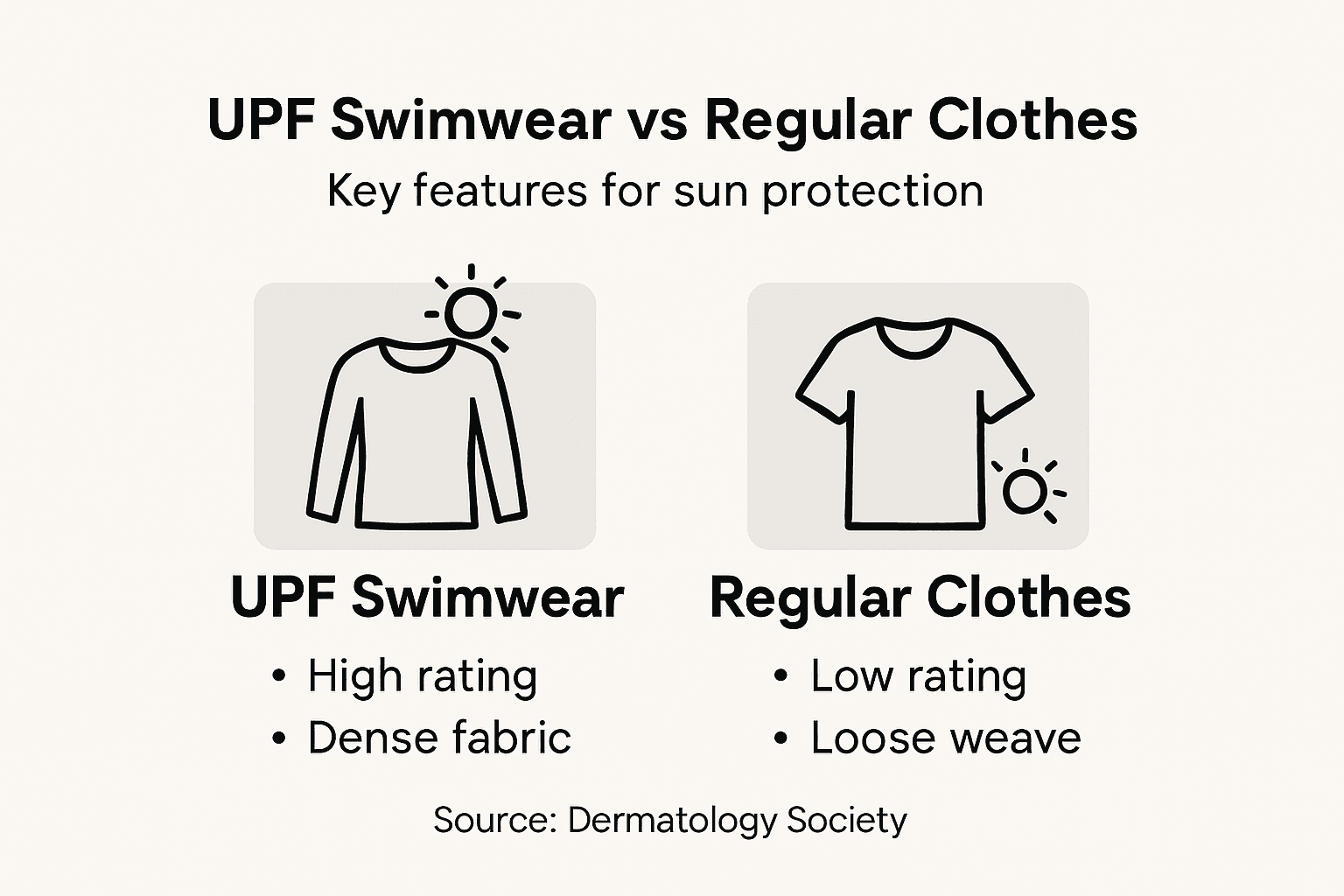
Pro tip: When shopping for sun-protective swimwear, prioritize UPF 50+ ratings and choose darker, tightly woven fabrics for maximum protection.
Eco-Friendly Materials and Sun Protection
Environmentally conscious parents are increasingly seeking swimwear that protects both their children’s skin and the planet. Innovative fabric technologies are revolutionizing the way we think about sun-protective clothing, combining ecological responsibility with advanced UV defense.
Sustainable swimwear materials now offer remarkable benefits, including:
- Recycled nylon from ocean plastics
- Plant-based fiber alternatives
- Mineral-infused protective fabrics
- Reduced environmental manufacturing impact
- Enhanced UV blocking capabilities
Natural minerals like titanium dioxide are now being incorporated directly into fabric weaves, creating a dual-purpose solution that reflects UV rays while minimizing ecological footprint. These advanced textiles are engineered to provide robust sun protection without compromising environmental standards.
Eco-friendly swimwear represents a powerful intersection of personal health and planetary wellness.
Modern sustainable swimwear goes beyond traditional approaches by integrating scientific innovations that prioritize both skin protection and environmental conservation. The materials are carefully selected to ensure tight weaves, UV-blocking treatments, and minimal environmental impact during production and disposal.
Compare sun-protective swimwear features for eco-conscious and conventional options:
| Feature | Conventional Swimwear | Eco-Friendly Swimwear |
|---|---|---|
| Material Origin | Synthetic fibers (new) | Recycled nylon, plant-based fiber |
| Environmental Impact | Higher manufacturing footprint | Reduced waste, sustainable |
| UV Protection | Variable, depends on UPF rating | Consistently high UPF ratings |
| Innovation | Standard weave and dye methods | Mineral-infused, advanced textiles |
Pro tip: Look for swimwear with verified recycled material certifications and explicit UPF ratings to ensure both environmental and sun protection standards.
Choosing and Maintaining UV-Protective Swimwear
Selecting the right sun-protective swimwear for children requires careful consideration of multiple factors beyond aesthetic appeal. Protecting young skin demands strategic fabric selection that goes beyond conventional swimming attire standards.
When shopping for UV-protective swimwear, parents should prioritize the following key characteristics:
- UPF rating of 50+ recommended
- Tightly woven synthetic fabrics
- Darker or brighter colored materials
- Full-coverage design options
- Fabric that maintains protection when wet
Fabric Maintenance plays a critical role in preserving sun protection capabilities. Some essential care strategies include:
- Follow manufacturer washing instructions precisely
- Use gentle, chemical-free detergents
- Avoid stretching or excessive wringing
- Air dry in shaded areas
- Replace swimwear when fabric shows signs of wear
Cancer prevention experts recommend regular inspection of swimwear to ensure continued effectiveness. Fabric can degrade over time, potentially reducing its protective capabilities.
Proper swimwear maintenance is as crucial as initial selection for comprehensive sun protection.
Consumers should understand that UV-protective swimwear represents an investment in their child’s long-term skin health. Careful selection and maintenance can significantly reduce potential sun damage risks.
Pro tip: Invest in multiple UV-protective swimwear pieces and rotate them to extend overall fabric longevity and maintain consistent sun protection.
Protect Your Child’s Skin with Stylish, Sustainable Swimwear
Children’s delicate skin deserves proven protection from harmful UV rays and sun damage. As this article highlights, finding swimwear with a high UPF rating and durable, tightly woven fabrics is essential for real sun defense. The challenge many parents face is balancing effective sun protection with sustainable choices that support our planet’s health.
At Le Club Original, we understand these concerns and offer a curated collection of eco-friendly swim trunks designed with both safety and style in mind. Our swimwear features UPF-rated fabrics that maintain their protective qualities even when wet while helping reduce plastic pollution through sustainable manufacturing. Choose from our latest New Arrivals and enjoy up to 50% off in seasonal sales.
Give your child the best sun protection and make an eco-conscious impact with every purchase.
Shop now to combine high-performance UV defense with fashion-forward, planet-friendly swimwear.

Explore the full collection at Le Club Original and take the first step toward safer, sustainable beach days today.
Frequently Asked Questions
How does sun-protective swimwear block UV rays?
Sun-protective swimwear uses advanced fabric technologies that create a dense barrier against UV radiation. These fabrics absorb UV rays, block them through tighter weave patterns, and maintain protection even when wet.
What does UPF rating mean, and why is it important for swimwear?
The Ultraviolet Protection Factor (UPF) rating indicates how much UV radiation can penetrate a fabric. A higher UPF means greater protection; for example, UPF 50 blocks 98% of UV rays, making it essential for keeping children safe from sun exposure.
Can regular swimwear provide sufficient sun protection for children?
No, not all swimwear offers equal sun protection. Regular fabrics may allow significant UV penetration, while specialized UPF-rated swimwear is scientifically designed to provide measurable UV blocking, making it a safer choice for children.
Does sun-protective swimwear remain effective when wet?
Yes, modern sun-protective swimwear is engineered to retain its protective properties even when wet. Advanced textile technologies ensure that it continues to block harmful UV rays during water activities.
Recommended
- How Your Beachwear Can Help Prevent Sunburn – Le Club Original
- How Your Beachwear Can Help Prevent Sunburn – Le Club Original
- How Your Beachwear Can Help Prevent Sunburn – Le Club Original
- Sun Protective Beachwear: Stay Safe and Stylish This Summer – Le Club Original
- Best Summer Hats and Caps in New Zealand: 2025 Style Guide
- Tips to keep your kids hydrated – EQUA - Sustainable Water Bottles