

Finding stylish swimwear that matches your values can be a real challenge for eco-conscious men and boys planning an ocean getaway. Sustainability matters because every choice affects the planet and the health of the oceans. By focusing on materials and production that do not harm the environment or deplete resources, you can enjoy vacations with confidence, knowing your swimwear supports environmental protection and global ocean conservation.
Table of Contents
- What Makes Summer Essentials Sustainable
- Key Materials and Eco-Friendly Innovations
- Impact of Sustainable Choices on Oceans
- Comparing Traditional and Green Swimwear
- How to Shop for Genuinely Responsible Gear
Key Takeaways
| Point | Details |
|---|---|
| Sustainable Summer Essentials | Focus on environmental responsibility through ethical production, eco-friendly materials, and social accountability. |
| Material Innovation | Utilize advanced, sustainable fabrics such as recycled plastics and natural fibers, which reduce ecological impacts. |
| Consumer Impact | Choosing sustainable options actively contributes to ocean conservation and promotes eco-friendly practices. |
| Informed Shopping | Research brands for genuine sustainability claims, transparency, and environmental certifications before making purchases. |
What Makes Summer Essentials Sustainable
Sustainable summer essentials represent a holistic approach to fashion and lifestyle that prioritizes environmental responsibility and ethical production. These items are designed not just for style and comfort, but with a deep commitment to reducing ecological impact and supporting responsible manufacturing practices.
Sustainability in summer wear encompasses several critical dimensions:
- Material Selection: Choosing fabrics that have minimal environmental footprint
- Production Processes: Manufacturing techniques that conserve resources and minimize waste
- Supply Chain Ethics: Ensuring fair labor practices and transparent sourcing
- Long-Term Durability: Creating products designed to last multiple seasons
The core philosophy behind sustainable summer essentials involves understanding ecological balance. This means selecting materials and production methods that do not harm ecosystems, deplete natural resources, or contribute to pollution. High-quality sustainable swimwear and beach accessories are crafted with innovative materials like recycled plastics, organic cotton, and regenerative fabrics.
Moreover, sustainable summer essentials go beyond environmental considerations. They represent a broader commitment to social responsibility and global stewardship. By supporting brands that prioritize sustainability, consumers actively participate in a global movement toward more conscious consumption.
Sustainable summer essentials are not just products—they’re a statement of environmental commitment and personal values.
Key characteristics that define truly sustainable summer wear include:
- Eco-friendly material sourcing
- Reduced carbon footprint during production
- Minimal waste generation
- Fair labor practices
- Potential for recycling or biodegradation
Pro tip: When shopping for sustainable summer essentials, look beyond marketing claims and research the brand’s actual environmental certifications and transparent manufacturing practices.
Key Materials and Eco-Friendly Innovations
The world of sustainable summer essentials is rapidly evolving, driven by groundbreaking innovations in eco-friendly materials and manufacturing techniques. These advancements are transforming how we approach clothing design, production, and environmental responsibility.
Several key materials are leading the sustainable fashion revolution:
- Natural Plant Fibers: Bamboo and hemp, which grow quickly with minimal environmental impact
- Recycled Synthetic Materials: Transformed ocean plastics and industrial waste
- Bio-based Composites: Innovative materials derived from renewable biological sources
- Regenerative Fabrics: Materials that actively support ecosystem restoration
Green chemistry principles are revolutionizing how summer essentials are conceptualized and produced. Manufacturers are now focusing on designing materials that minimize environmental harm, reduce waste, and support a circular economy. This approach goes beyond traditional sustainability, creating products that actively contribute to environmental restoration.
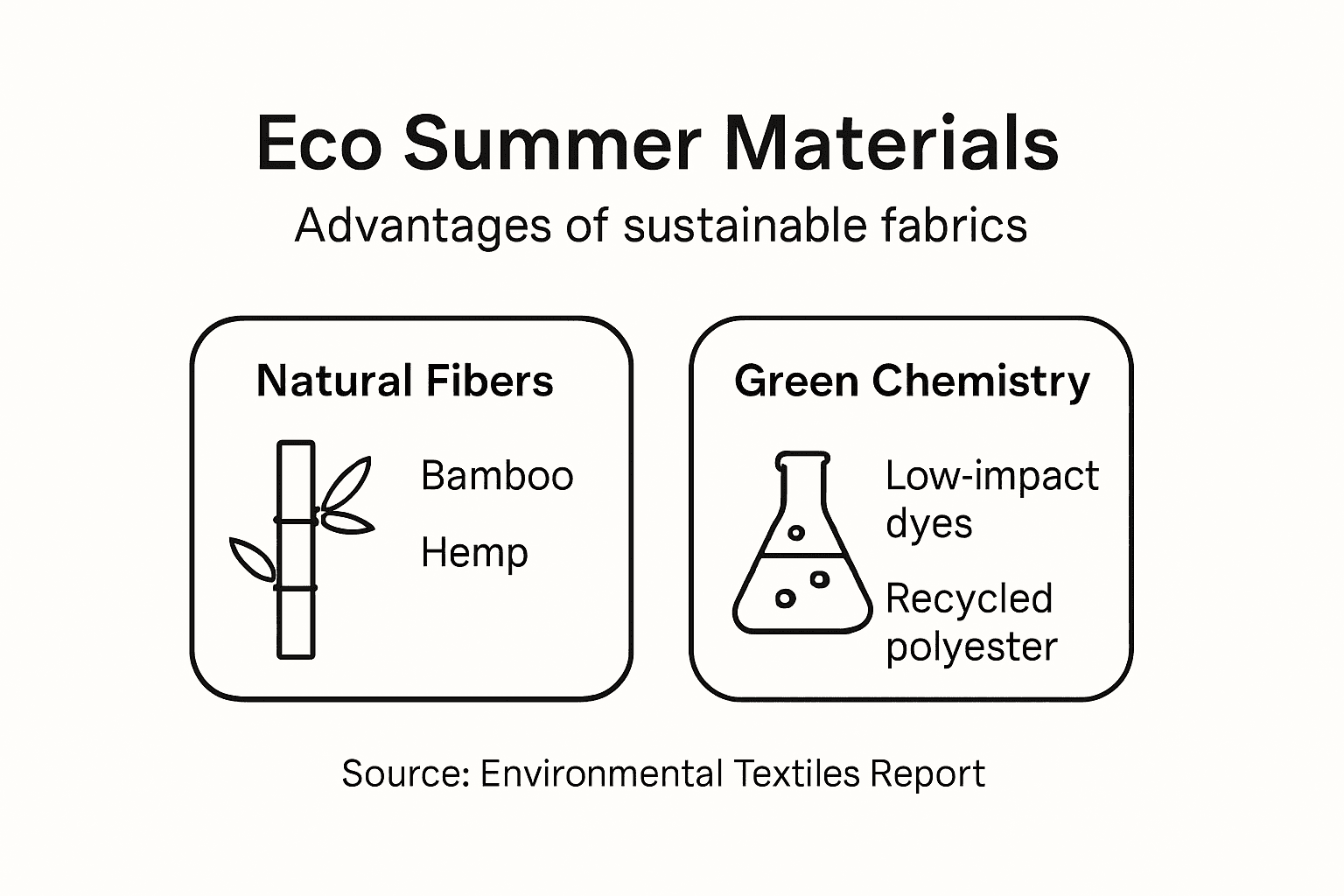
Innovative sustainable materials offer remarkable benefits. Bamboo and hemp, for instance, require significantly less water and no pesticides compared to conventional cotton. Recycled polyester made from ocean plastics not only reduces waste but also helps clean marine environments. These materials are not just environmentally friendly—they’re often more durable and performance-oriented than traditional fabrics.

Here’s how common eco-friendly summer materials differ in their sustainability impact:
| Material | Environmental Benefit | Durability |
|---|---|---|
| Bamboo | Grows quickly, needs little water | Highly resistant to wear |
| Recycled Polyester | Reduces plastic waste, saves energy | Strong and long-lasting |
| Organic Cotton | Grown without harmful chemicals | Softer, robust for daily use |
| Regenerated Nylon | Uses waste, lowers oil demand | Retains stretch, resists fading |
Sustainable materials are not a compromise—they’re a superior solution for both consumers and the planet.
Key innovations in eco-friendly summer essentials include:
- Biodegradable fabric technologies
- Zero-waste manufacturing processes
- Carbon-neutral production methods
- Water-conservation techniques
- Closed-loop recycling systems
Pro tip: When evaluating sustainable summer wear, look beyond marketing claims and investigate the specific materials, manufacturing processes, and environmental certifications of the brand.
Impact of Sustainable Choices on Oceans
Our summer choices have profound consequences for marine ecosystems, extending far beyond the immediate moment of consumption. Ocean health depends critically on the collective decisions we make about the products we purchase and use, particularly in summer apparel and accessories.
The environmental impact of unsustainable summer essentials is staggering:
- Plastic Pollution: Millions of tons of synthetic clothing fibers enter marine environments annually
- Chemical Runoff: Toxic dyes and manufacturing chemicals contaminate ocean ecosystems
- Carbon Emissions: Traditional textile production contributes significantly to global climate change
- Microfiber Shedding: Synthetic materials release microscopic plastic particles into water systems
Sustainable summer choices directly contribute to marine conservation by reducing these harmful environmental pressures. When consumers select eco-friendly materials like recycled polyester, biodegradable fabrics, and organic textiles, they actively participate in protecting marine biodiversity and supporting ocean restoration efforts.
The interconnected nature of global ecosystems means that every sustainable choice creates a ripple effect. Reducing marine pollution through responsible clothing selections helps maintain the ocean’s critical functions, including carbon absorption, temperature regulation, and supporting complex marine food webs.
Every sustainable summer essential is a vote for ocean preservation and global environmental health.
Key ways sustainable summer choices protect oceans include:
- Minimizing plastic waste input
- Reducing chemical pollution
- Supporting regenerative manufacturing practices
- Encouraging circular economy models
- Promoting marine ecosystem conservation
Pro tip: Research brands that demonstrate transparent environmental commitments and actively contribute to ocean conservation initiatives.
Comparing Traditional and Green Swimwear
The evolution of swimwear reflects a significant shift from performance-focused traditional designs to environmentally conscious green alternatives. Swimwear technology has transformed dramatically over decades, moving beyond mere aesthetic and functional considerations to prioritize ecological responsibility.
Traditional swimwear characteristics include:
- Material Composition: Primarily virgin synthetic fabrics
- Production Methods: High-chemical intensive manufacturing
- Environmental Impact: Significant carbon footprint
- Durability: Often less sustainable and shorter lifecycle
Green swimwear represents a revolutionary approach to beach and swim apparel, integrating advanced sustainability principles with cutting-edge design and performance. These eco-friendly alternatives utilize innovative materials like regenerated nylon, recycled polyester, and bio-based fabrics that dramatically reduce environmental harm while maintaining superior quality and style.
The key distinctions between traditional and green swimwear extend beyond material selection. Sustainable swimwear brands prioritize ethical manufacturing, transparent supply chains, and circular economy principles. They actively work to minimize waste, reduce chemical usage, and create products that have minimal negative environmental impact.
Compare traditional and sustainable swimwear at a glance:
| Aspect | Traditional Swimwear | Green Swimwear |
|---|---|---|
| Main Materials | Virgin synthetics (nylon, polyester) | Recycled or regenerative fabrics |
| Manufacturing | High energy and chemical use | Resource-efficient, less pollution |
| Lifecycle Impact | Short lifespan, hard to recycle | Designed for longevity, recyclability |
| Social Factors | Unclear labor standards | Focus on fair labor and transparency |
Sustainable swimwear isn’t just a trend—it’s a fundamental reimagining of how we approach clothing production and consumption.
Core differences between traditional and green swimwear include:
- Material sourcing and environmental impact
- Manufacturing process transparency
- Chemical and water usage
- End-of-life product disposal
- Social and environmental responsibility
Pro tip: When selecting swimwear, examine the brand’s environmental certifications and material sourcing practices to ensure genuine sustainability.
How to Shop for Genuinely Responsible Gear
Navigating the complex landscape of sustainable summer essentials requires a strategic and informed approach. Ethical shopping practices demand more than casual browsing—they require deliberate research and critical evaluation of brands’ environmental commitments.
Key strategies for identifying genuinely responsible gear include:
- Certification Verification: Look for credible sustainability labels
- Supply Chain Transparency: Research brand manufacturing practices
- Material Traceability: Understand the origin of product components
- Environmental Impact Assessment: Evaluate the full lifecycle of products
Consumers committed to responsible shopping should develop a comprehensive evaluation framework. This means moving beyond surface-level marketing claims and delving into substantive evidence of a brand’s environmental and social responsibilities. Investigating a company’s carbon footprint, labor practices, and waste reduction strategies provides deeper insights into their genuine commitment to sustainability.
Effective responsible shopping requires understanding the nuanced differences between greenwashing and authentic sustainable practices. Brands truly dedicated to environmental stewardship will provide detailed documentation about their production processes, material sourcing, and ongoing sustainability initiatives.
Responsible gear shopping is an act of environmental advocacy, not just a purchasing decision.
Essential steps in responsible gear selection:
- Research brand sustainability credentials
- Verify third-party environmental certifications
- Assess product material composition
- Evaluate manufacturing transparency
- Consider product longevity and repairability
Pro tip: Develop a personal checklist of sustainability criteria and consistently apply it when evaluating potential purchases to make more informed, environmentally responsible choices.
Embrace Sustainable Summer Style with Confidence
The article highlights the urgent need to choose truly sustainable summer essentials that prioritize eco-friendly materials, ethical manufacturing, and ocean protection. If you are concerned about the environmental impact of your swimwear and beachwear choices, you are not alone. Many consumers struggle to find stylish options that align with their values while reducing plastic pollution and chemical waste harming our oceans.
At Le Club Original, we understand these challenges deeply. Our curated collections of sustainable swim trunks and beach apparel are crafted from recycled and regenerative fabrics designed for durability and low environmental impact. By choosing from our eco-friendly selections, you take a powerful stand for ocean preservation and responsible fashion.
Explore our sustainable swimwear and beachwear today and join a community committed to conscious consumption and a healthier planet.

Make your next beach day meaningful. Shop Le Club Original now to enjoy stylish, earth-friendly swimwear with free shipping on qualifying orders. Reduce your carbon footprint while looking great on vacation. Act today and support true sustainability in summer essentials.
Frequently Asked Questions
What are sustainable summer essentials?
Sustainable summer essentials refer to fashion and lifestyle products designed with an emphasis on environmental responsibility, ethical production, and long-term durability.
Why is it important to choose eco-friendly materials for summer wear?
Choosing eco-friendly materials reduces the environmental footprint, conserves resources, and supports sustainable manufacturing practices, making a positive impact on the planet.
How do sustainable summer essentials contribute to ocean conservation?
Sustainable summer essentials reduce plastic pollution, minimize chemical runoff, and support manufacturing practices that protect marine ecosystems, helping to maintain ocean health.
What distinguishes green swimwear from traditional swimwear?
Green swimwear is made from recycled or regenerative fabrics, features ethical manufacturing processes, and has a lower environmental impact compared to traditional swimwear, which often relies on virgin synthetics and high chemical use.