

Every father who values the outdoors knows how important it is to keep European beaches clean for future family days. Picking swimwear is no longer just about bright colors or the latest trends. Today, environmental responsibility in swimwear means understanding how each choice—from fabric to final wash—affects both your child and the planet. Explore how the best sustainable brands are fighting microplastic pollution and making it easy for style-conscious dads to make a real difference.
Table of Contents
- Defining Environmental Responsibility In Swimwear
- Types Of Sustainable Swimwear Materials
- Eco-Friendly Manufacturing Practices Explained
- Role Of Certifications In Ethical Swimwear
- Consumer Choices That Reduce Beach Pollution
Key Takeaways
| Point | Details |
|---|---|
| Holistic Environmental Responsibility | Swimwear brands must consider the entire lifecycle of their products, from design to disposal, to minimize ecological impact. |
| Sustainable Material and Production | Using recycled materials and sustainable manufacturing practices can significantly reduce waste and pollution in the swimwear industry. |
| Role of Certifications | Certifications such as OEKO-TEX and Fair Trade help consumers identify brands that adhere to environmental and ethical standards. |
| Consumer Impact on Pollution | Consumers can reduce beach pollution by choosing responsibly sourced materials and practicing mindful garment care. |
Defining Environmental Responsibility in Swimwear
Environmental responsibility in swimwear extends far beyond simple fabric selection - it represents a holistic approach to minimizing ecological impact throughout a garment’s entire lifecycle. Modern swimwear brands must consider every stage, from initial design to production, usage, and eventual disposal.
Research from Arizona State University recently revealed that synthetic swimwear fibers contribute significantly to microplastic pollution, expanding our understanding of environmental responsibility. Microplastic contamination in aquatic environments now represents a critical concern for eco-conscious consumers and manufacturers.
Key aspects of environmental responsibility in swimwear include:
-
Sustainable Material Selection
- Using recycled synthetic fibers
- Exploring biodegradable fabric alternatives
- Minimizing chemical treatments
-
Production Practices
- Reducing water consumption
- Implementing energy-efficient manufacturing
- Ensuring fair labor practices
-
Product Lifecycle Management
- Designing for durability
- Creating repair and upcycling programs
- Developing responsible end-of-life disposal strategies
A 2025 academic study highlights that consumer behavior plays a crucial role in environmental responsibility. Performance swimwear sustainability depends not just on manufacturing, but on how consumers care for and extend the life of their garments.
Pro tip: Choose swimwear brands that transparently communicate their environmental practices and offer repair or recycling programs for their products.
Types of Sustainable Swimwear Materials
Sustainable swimwear materials represent a critical innovation in reducing environmental impact while maintaining performance and style for eco-conscious consumers. Recycled fiber technologies have dramatically transformed the swimwear industry, offering alternatives that dramatically reduce waste and carbon emissions.
Key sustainable materials in modern swimwear include:
-
Recycled Synthetic Fibers
- ECONYL regenerated nylon
- Repreve fiber from recycled plastic bottles
- 100% recycled polyester
-
Natural and Biodegradable Options
- Organic cotton
- Hemp fabrics
- Bamboo-derived textiles
A 2024 textile engineering study highlights the significant environmental benefits of these materials. Recycled fiber performance attributes demonstrate that sustainable materials can match or exceed traditional fabric qualities while providing substantial ecological advantages.

The evolution of sustainable swimwear materials goes beyond environmental considerations, addressing both performance and aesthetic requirements. Innovative fabrics now offer enhanced durability, color retention, and stretch capabilities, proving that eco-friendly choices need not compromise style or functionality.
Pro tip: When purchasing sustainable swimwear, look for transparent information about material sourcing and verify the percentage of recycled content in the fabric.
Here’s how popular sustainable swimwear materials compare:
| Material Type | Main Benefit | Typical Drawback | Notable Attribute |
|---|---|---|---|
| ECONYL regenerated nylon | Reduces ocean plastic waste | Higher production cost | Made from discarded fishing nets |
| Recycled polyester | Lowers landfill waste | May shed microfibers | Strong color retention |
| Organic cotton | Biodegradable and soft | Absorbs more water | Free from pesticides |
| Hemp fabric | Naturally antimicrobial | Coarse texture possible | Requires minimal water to grow |
| Bamboo-derived textile | Breathable and soft | Chemical processing used | Naturally UV resistant |
Eco-Friendly Manufacturing Practices Explained
Eco-friendly manufacturing in the swimwear industry represents a transformative approach to reducing environmental impact through innovative production techniques. Sustainable manufacturing methods are revolutionizing how swimwear brands approach production, minimizing waste and environmental pollution.
Key eco-friendly manufacturing practices include:
-
Water Conservation Techniques
- Water-recycling dyeing processes
- Closed-loop water management systems
- Minimizing water consumption in fabric production
-
Sustainable Production Strategies
- Fair Trade Certified sewing practices
- Low-impact chemical treatments
- Energy-efficient manufacturing processes
Circular fashion principles are increasingly driving manufacturers to develop innovative approaches that reduce ecological footprints. These strategies involve carefully selecting materials, minimizing waste, and creating production cycles that prioritize environmental responsibility.
Modern swimwear manufacturers are developing advanced technologies to improve sustainability. Chemically bonded coatings now extend fabric durability, while specialized additives enable better biodegradability in synthetic materials, demonstrating a comprehensive approach to environmental consciousness.
Pro tip: Research brands that transparently share their manufacturing processes and certifications to ensure you’re supporting truly sustainable swimwear production.
Role of Certifications in Ethical Swimwear
Certifications serve as critical validators of environmental and ethical standards in the swimwear industry, providing consumers with transparent insights into a brand’s sustainability commitments. Sustainability certification frameworks play a pivotal role in combating greenwashing and establishing credible environmental responsibility standards.
Key certification categories include:
-
Environmental Impact Certifications
- OEKO-TEX Standard 100
- Global Recycled Standard
- Bluesign System
-
Ethical Manufacturing Certifications
- Fair Trade Certified
- Social Accountability International (SA8000)
- Worldwide Responsible Accredited Production (WRAP)
Microplastic reduction standards have emerged as a critical aspect of modern swimwear certifications, addressing the growing concern of environmental pollution through fiber shedding and material selection.
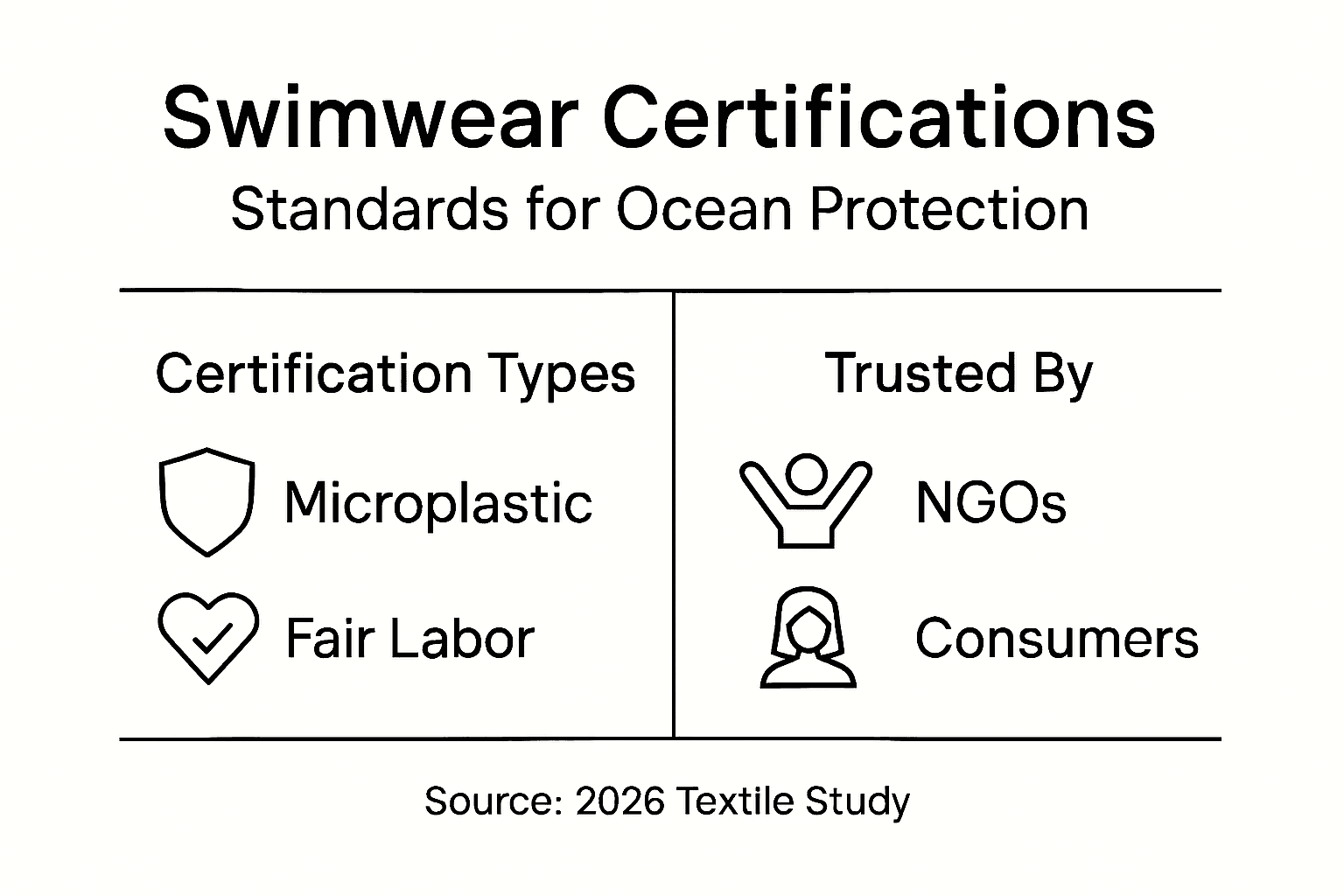
These certifications go beyond simple marketing claims, providing rigorous third-party verification of a brand’s environmental and social practices. They examine everything from raw material sourcing and manufacturing processes to worker conditions and overall ecological impact, creating a comprehensive framework for sustainable production.
Pro tip: Always check for multiple certifications and research their specific standards to ensure genuine environmental commitment from swimwear brands.
Here’s a quick reference for common sustainability certifications in swimwear:
| Certification Name | Focus Area | Trusted By |
|---|---|---|
| OEKO-TEX Standard 100 | Chemical safety | Global apparel brands |
| Global Recycled Standard | Recycled content | Material suppliers |
| Bluesign System | Sustainable process | Textile manufacturers |
| Fair Trade Certified | Worker welfare | Ethical brands |
| Social Accountability (SA8000) | Labor standards | Social compliance orgs |
| WRAP | Responsible sourcing | Worldwide producers |
Consumer Choices That Reduce Beach Pollution
Consumer decisions play a critical role in mitigating environmental damage from swimwear, with individual actions collectively creating significant impact on ocean health. Consumer behavior in swimwear sustainability demonstrates how mindful choices can dramatically reduce beach and marine pollution.
Key strategies for reducing beach pollution through consumer choices include:
-
Material Selection
- Choose swimwear made from recycled or natural fibers
- Avoid synthetic materials prone to microfiber shedding
- Prioritize brands with transparent sustainability practices
-
Garment Care and Lifecycle
- Wash synthetic swimwear less frequently
- Use specialized microfiber catching laundry bags
- Repair and upcycle existing swimwear instead of replacing
Microplastic reduction strategies highlight the importance of consumer awareness in selecting swimwear that minimizes environmental contamination. By understanding the ecological impact of different materials, consumers can make informed decisions that protect marine ecosystems.
Beyond material selection, responsible consumers can support broader environmental initiatives by choosing brands committed to sustainable manufacturing, investing in high-quality swimwear that lasts longer, and participating in beach cleanup and conservation efforts.
Pro tip: Invest in a microfiber catching laundry bag and wash your synthetic swimwear sparingly to significantly reduce microplastic pollution.
Embrace Sustainable Swimwear to Protect Ocean Health
The challenge of microplastic pollution from synthetic swimwear fibers is a growing threat to our oceans and marine life. This article reveals how environmental responsibility requires thoughtful choices in materials and production. If you want to make a real difference, choosing swimwear made from recycled or natural fibers and supporting brands committed to eco-friendly manufacturing is key. At Le Club Original, we share your passion for protecting ocean health and reducing plastic pollution through sustainable swim trunks and beachwear for men and boys.

Discover stylish, high-quality swimwear that aligns with your environmental values at Le Club Original. Enjoy free shipping on orders over $50 and benefit from up to 50% off during our seasonal sales. Start your journey toward eco-conscious beachwear today by exploring our New Arrivals and Best Sellers. Make every choice count for cleaner oceans and a brighter future.
Frequently Asked Questions
What is environmental responsibility in swimwear?
Environmental responsibility in swimwear refers to a comprehensive approach that considers the ecological impact of a swimsuit throughout its entire lifecycle, including design, production, usage, and disposal.
How do synthetic swimwear fibers contribute to ocean pollution?
Research indicates that synthetic fibers from swimwear are significant sources of microplastic pollution in aquatic environments, which can harm marine life and ecosystems.
What materials are considered sustainable for swimwear?
Sustainable swimwear materials include recycled synthetic fibers like ECONYL and Repreve, as well as natural and biodegradable options such as organic cotton, hemp, and bamboo-derived textiles.
How can consumers reduce the environmental impact of their swimwear?
Consumers can reduce impact by selecting swimwear made from sustainable materials, washing synthetic garments less frequently, using microfiber-catching laundry bags, and opting for repair and upcycling instead of disposal.