

Finding genuinely sustainable beachwear can be confusing when so many brands claim to be eco-friendly without clear proof. With greenwashing so common, choosing ocean-friendly swimwear becomes a challenge for anyone who cares about looking good while protecting the planet. This guide highlights what makes authentic eco-friendly beachwear unique, debunks the biggest myths, and gives you the knowledge needed to make choices that support both style and ocean health.
Table of Contents
- Eco-Friendly Beachwear Defined And Debunking Myths
- Types Of Sustainable Swimwear And Fabrics Used
- Key Features Of Stylish Eco-Conscious Beachwear
- How Eco-Friendly Beachwear Supports Ocean Health
- Consumer Responsibilities And Garment Care
- Comparing Eco-Friendly And Conventional Beachwear
Key Takeaways
| Point | Details |
|---|---|
| Genuine Eco-friendly Swimwear | Focus on manufacturing processes that minimize ecological impact and utilize recycled materials. |
| Performance of Sustainable Fabrics | Innovative materials like ECONYL and REPREVE offer durability while supporting environmental responsibility. |
| Consumer Role in Sustainability | Choices in swimwear directly influence marine health; select brands with transparent practices. |
| Comparison with Conventional Options | Eco-friendly alternatives reduce pollution and resource consumption compared to traditional swimwear. |
Eco-friendly beachwear defined and debunking myths
Eco-friendly beachwear represents a thoughtful approach to swimwear design that prioritizes environmental responsibility. Unlike traditional swimwear production, these garments focus on minimizing ecological impact through sustainable material selection and manufacturing processes.
The landscape of sustainable swimwear is complex, with several persistent myths clouding consumer understanding. Greenwashing practices often mislead consumers about the true environmental credentials of beach apparel. Understanding these nuances helps make more informed purchasing decisions.
Key characteristics of genuine eco-friendly beachwear include:
- Utilizing recycled synthetic materials
- Minimizing water and chemical usage during production
- Implementing transparent manufacturing processes
- Reducing overall carbon footprint
- Supporting circular fashion principles
Contrary to popular belief, eco-friendly doesn’t always mean exclusively natural fibers. Sustainable swimwear often employs recycled synthetic materials that can actually have a lower environmental impact compared to traditional natural fabrics. The key is understanding the entire lifecycle of the product, from raw material sourcing to eventual disposal.
Pro tip: Always request detailed material breakdown and manufacturing transparency from swimwear brands to verify their genuine sustainability claims.
Types of sustainable swimwear and fabrics used
Sustainable swimwear has evolved dramatically, moving beyond traditional fabric choices to innovative materials that prioritize environmental responsibility. Sustainable swimwear fabrics now encompass advanced recycled and regenerative materials that challenge conventional production methods.
The most prominent sustainable swimwear materials include:
- ECONYL: Regenerated nylon from ocean and landfill waste
- REPREVE: Recycled polyester made from plastic bottles
- Organic Cotton Blends: Natural fiber options with reduced environmental impact
- Hemp Fabric: Rapidly renewable material with low water requirements
- Recycled Polyester: Transformed plastic waste into performance swimwear
These innovative fabrics offer remarkable benefits beyond environmental sustainability. Recycled synthetic materials maintain exceptional performance characteristics like durability, stretch, and chlorine resistance. Certifications such as Global Recycled Standard (GRS) and OEKO-TEX ensure chemical safety and provide transparency in the manufacturing process.
While natural fibers like organic cotton and hemp remain less common in high-performance swimwear, they excel in casual beachwear and cover-ups. Their biodegradability and lower carbon footprint make them attractive alternatives for environmentally conscious consumers seeking more sustainable fashion choices.

Here’s a snapshot of how some leading sustainable swimwear materials compare on important criteria:
| Material | Source | Sustainability Benefit | Performance Quality |
|---|---|---|---|
| ECONYL | Ocean, landfill waste | Reduces ocean plastic, upcycles nylon | Highly durable, stretchy |
| REPREVE | Recycled plastic bottles | Diverts bottles from landfills | Good stretch, chlorine resistance |
| Organic Cotton | Organic farms | Low pesticide, biodegradable | Soft, less elastic |
| Hemp Fabric | Rapidly renewable | Minimal water, natural fiber | Breathable, strong |
| Recycled Polyester | Post-consumer plastic | Lowers plastic waste, less energy used | High performance, versatile |
Pro tip: When shopping for sustainable swimwear, always check for third-party certifications and detailed material composition to verify genuine eco-friendly claims.
Key features of stylish eco-conscious beachwear
Eco-conscious beachwear combines cutting-edge sustainability with contemporary design, challenging traditional notions of fashion and environmental responsibility. Modern sustainable swimwear goes far beyond basic functionality, delivering sophisticated style that resonates with environmentally aware consumers.
Key characteristics of stylish eco-conscious beachwear include:
- Innovative Sustainable Fabrics: Upcycled marine plastics and regenerated materials
- Performance Features: Quick-dry technology and UV protection
- Ethical Manufacturing: Fair labor practices and transparent production
- Versatile Design: Adaptable silhouettes for multiple beach activities
- Vibrant Color Palettes: Modern, eye-catching color combinations
Contemporary eco-conscious swimwear brands are revolutionizing beach fashion by integrating environmental consciousness with high-fashion design. By collaborating with marine conservation organizations, these brands create collections that not only look stunning but actively contribute to ocean health and sustainability.
The intersection of style and sustainability means consumers no longer have to compromise between aesthetic appeal and environmental responsibility. Advanced manufacturing techniques and innovative material sourcing have enabled designers to create beachwear that is simultaneously fashionable, functional, and environmentally responsible.
Pro tip: When selecting eco-conscious beachwear, prioritize brands that provide transparent information about their material sourcing and manufacturing processes.
How eco-friendly beachwear supports ocean health
Ocean health is critically dependent on responsible consumer choices, and sustainable beachwear represents a powerful method for reducing marine environmental degradation. By selecting eco-conscious swimwear, consumers directly contribute to protecting marine ecosystems and reducing textile pollution.
Key ways eco-friendly beachwear supports ocean health include:
- Reducing Microplastic Pollution: Preventing synthetic fiber shedding
- Minimizing Chemical Runoff: Using non-toxic, biodegradable materials
- Supporting Circular Economy: Utilizing recycled ocean plastics
- Promoting Sustainable Manufacturing: Reducing industrial water contamination
- Raising Environmental Awareness: Encouraging responsible consumption
Eco-friendly swimwear brands are transforming waste materials into high-performance garments, effectively removing potential ocean pollutants from the environment. By upcycling discarded fishing nets, plastic bottles, and other marine debris, these innovative manufacturers create a direct positive impact on ocean ecosystems.
Consumers play a crucial role in marine conservation through their purchasing decisions. Choosing beachwear made from regenerated materials, supporting brands with transparent environmental practices, and understanding the lifecycle of textile production can significantly contribute to protecting marine biodiversity and global ocean health.
Pro tip: Research swimwear brands that provide clear documentation about their environmental impact and material sourcing to make genuinely sustainable choices.
Consumer responsibilities and garment care
Sustainable clothing consumption requires active consumer involvement in every stage of a garment’s lifecycle, from purchasing to disposal. Understanding the environmental impact of clothing care practices empowers individuals to make more responsible choices that protect both their beachwear and marine ecosystems.
Key consumer responsibilities for eco-friendly beachwear include:
- Mindful Washing: Minimizing frequency and using cold water
- Gentle Detergent Selection: Choosing environmentally friendly, mild cleaning products
- Proper Drying: Air-drying to reduce fabric stress and energy consumption
- Repair and Maintenance: Extending garment life through timely repairs
- Responsible Disposal: Recycling, donating, or upcycling worn-out items
The science behind sustainable garment care is compelling. Reducing wash frequency can significantly decrease microfiber shedding, which is a major source of ocean pollution. Each careful washing cycle matters, with cold water and gentle cycles helping to preserve both the garment’s integrity and the broader marine environment.
Ultimately, consumers are the most critical agents of change in sustainable fashion. By adopting mindful purchasing habits, practicing careful garment maintenance, and prioritizing longevity over disposability, individuals can transform their relationship with clothing and actively contribute to ocean conservation efforts.
Pro tip: Invest in a specialized microfiber-catching laundry bag to minimize microplastic pollution during washing.
Comparing eco-friendly and conventional beachwear
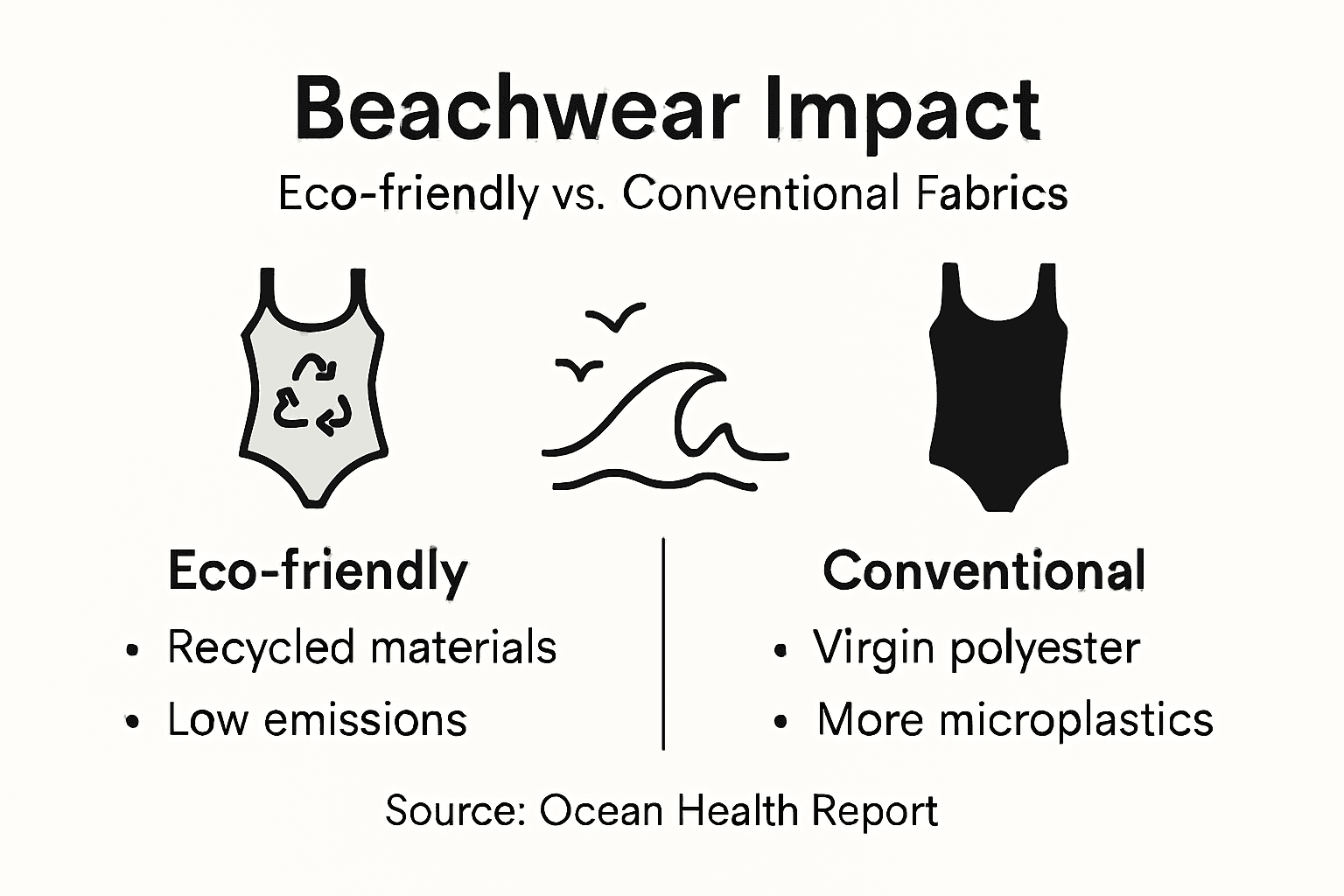
Conventional beachwear and eco-friendly alternatives present dramatically different environmental footprints, challenging consumers to reconsider their clothing choices. The fundamental differences extend beyond material composition to encompass broader ecological impacts and sustainability principles.
Key comparative characteristics include:
-
Material Source:
- Conventional: Virgin synthetic fibers from fossil fuels
- Eco-friendly: Recycled, biodegradable materials
-
Water Usage:
- Conventional: High water consumption
- Eco-friendly: Significantly reduced water requirements
-
Carbon Footprint:
- Conventional: High greenhouse gas emissions
- Eco-friendly: Substantially lower emissions
-
Pollution Potential:
- Conventional: High microplastic generation
- Eco-friendly: Minimal environmental contamination
-
Durability:
- Conventional: Standard performance
- Eco-friendly: Comparable or superior quality
Fabric choices reveal stark environmental trade-offs, with traditional materials like virgin polyester contributing significantly to global pollution. Regenerative fabrics such as ECONYL and recycled polyester offer transformative alternatives that maintain performance standards while dramatically reducing environmental impact.
The transition to eco-friendly beachwear represents more than a fashion choice—it’s a commitment to planetary health. By selecting sustainable materials, consumers directly contribute to reducing ocean plastic pollution, minimizing resource extraction, and supporting innovative manufacturing practices that prioritize environmental stewardship.
The following table contrasts eco-friendly and conventional beachwear in practical ways:
| Aspect | Eco-friendly Beachwear | Conventional Beachwear |
|---|---|---|
| Material Source | Recycled or renewable | Virgin synthetic fabrics |
| Manufacturing Impact | Reduced water, transparent | Higher emissions, opaque |
| Longevity | Repairable, designed for reuse | Standard, often disposable |
| End-of-Life Option | Recycling, biodegrading | Landfill, minimal recovery |
Pro tip: Invest in versatile, high-quality eco-friendly swimwear that offers multiple styling options to maximize wear and minimize environmental impact.
Choose Eco-Friendly Beachwear That Protects Our Oceans Today
The article highlights a critical challenge faced by beachwear consumers: the environmental impact of traditional swimwear production on ocean health. With concerns about microplastic pollution, chemical runoff, and waste from virgin synthetic fibers, it is more important than ever to prioritize sustainable swimwear choices. By embracing materials like recycled nylon and polyester, and supporting transparent manufacturing processes, you help reduce ocean pollution and contribute to a circular economy.
At Le Club Original, we share your commitment to ocean conservation and eco-conscious living. Our carefully curated collections of stylish and eco-friendly swim trunks and beach apparel use regenerated fabrics that minimize environmental harm. Experience high-performance swimwear that supports ethical labor practices and reduces microplastic shedding.

Take action now by exploring our latest arrivals and seasonal sales to find durable, versatile pieces that align with your values. Visit Le Club Original to start making a positive impact with every beach day. Discover more about how stylish sustainable swimwear can fit your lifestyle and protect ocean health today.
Frequently Asked Questions
What are the environmental benefits of choosing eco-friendly beachwear?
Eco-friendly beachwear reduces marine pollution, minimizes chemical runoff, supports a circular economy by utilizing recycled materials, and promotes sustainable manufacturing practices that protect ocean health.
How does sustainable swimwear reduce microplastic pollution?
Sustainable swimwear is designed to minimize shedding of synthetic fibers, which are a major source of microplastic pollution that affects marine ecosystems when released into waterways during washing.
Are recycled synthetic materials as durable and functional as traditional swimwear fabrics?
Yes, recycled synthetic materials often maintain or exceed the performance characteristics of traditional swimwear fabrics, including durability, stretch, and chlorine resistance, making them suitable for active beachwear.
How can consumers care for eco-friendly beachwear to extend its lifespan?
Consumers can extend the lifespan of eco-friendly beachwear by washing less frequently, using cold water and gentle detergents, air-drying the garments, and performing timely repairs to mitigate wear and tear.