

You’re ready to recycle your old swim trunks, but you’re stuck. Where do you start? What needs to happen before recycling? Most eco-conscious men face this exact dilemma when trying to dispose of worn swimwear responsibly. This guide provides clear, actionable steps to prepare your swimwear correctly and connect with effective recycling programs. You’ll learn exactly how to clean, prep, and recycle swim trunks while avoiding common mistakes that lead to rejected batches.
Table of Contents
- Prerequisites: Understanding Swimwear Materials To Recycle
- Step 1: Cleaning And Preparation
- Step 2: Removing Non-Fabric Elements
- Step 3: Mechanical Recycling Process
- Step 4: Chemical Recycling Alternative
- Step 5: Drop-Off And Mail-In Options
- Common Mistakes And Troubleshooting
- Expected Outcomes And Environmental Impact
- Explore Sustainable Swimwear Solutions At Le Club Original
- Frequently Asked Questions About Swimwear Recycling
Key takeaways
| Point | Details |
|---|---|
| Recyclable materials | Swimwear made of nylon and polyester is fully recyclable through specialized programs. |
| Preparation essentials | Clean thoroughly and remove all hardware like zippers and buckles before recycling. |
| Recycling methods | Mechanical recycling recovers up to 95% of fabric; chemical recycling enables infinite reuse. |
| Convenient options | Mail-in programs and local drop-off centers make swimwear recycling accessible nationwide. |
| Environmental impact | Proper recycling reduces landfill textile waste by up to 75% and supports ocean conservation. |
Prerequisites: understanding swimwear materials to recycle
Before you recycle, you need to know what you’re working with. Recycling swimwear primarily involves recovering polyamide (nylon) and polyester fabrics, which make up 70 to 90% of most swimwear. These synthetic materials are perfect candidates for recycling because they maintain structural integrity through multiple processing cycles.
Knowing your fabric types helps you sort correctly. Check the care label inside your swim trunks to confirm the material composition. Most modern swimwear combines nylon for stretch and polyester for durability, both fully recyclable.
Cleaning and drying your swimwear before recycling is critical. Contamination from sand, salt, sunscreen, or body oils can ruin entire recycling batches. Facilities reject dirty garments because contaminants damage machinery and reduce fiber quality.
You’ll need basic tools for preparation:
- Sharp scissors or fabric shears
- Needle-nose pliers for stubborn hardware
- Mild detergent without fabric softener
- Drying rack or clothesline
Understanding these prerequisites sets you up for success. When you know what materials recyclers accept and how to prepare them, you avoid wasted effort and rejected submissions. Following a recycled swimwear checklist essential steps guide ensures nothing gets overlooked. Learning why recyclable swimwear matters reinforces your commitment to this environmental action.
Step 1: cleaning and preparation
Start with thorough cleaning. Rinse your swim trunks in cold water to remove sand, salt, and chlorine residue. These substances interfere with recycling equipment and reduce fiber recovery rates.
Wash your swimwear in a machine using mild detergent. Skip the fabric softener completely. Softeners coat fibers with chemicals that damage recovery rates by up to 25%, making recycled material less valuable and harder to process.
Rinse twice to ensure all detergent is gone. Residual soap creates problems during the recycling process by attracting dirt and preventing proper fiber separation.
Dry your swimwear completely before recycling. Hang it on a rack or line in a well-ventilated area. Never send damp swimwear to recyclers. Moisture breeds mold and bacteria, contaminating entire batches and leading to rejection.
Inspect for remaining residues after drying. Look for sunscreen stains, body oils, or discoloration. If you spot any, wash again. Recycling facilities have strict cleanliness standards, and failing to meet them wastes everyone’s time.
Follow these cleaning steps precisely:
- Cold water rinse for initial contamination removal
- Machine wash with mild detergent only
- Double rinse to eliminate all soap residue
- Complete air drying in ventilated space
- Final inspection for any remaining contaminants
Proper preparation protects fiber quality and ensures acceptance. Clean swimwear processes more efficiently, yielding higher-quality recycled material. This effort directly impacts environmental outcomes because better fiber recovery means more material diverted from landfills.
Pro Tip: Keep a dedicated mesh laundry bag for swimwear headed to recycling. This keeps them separate from regular laundry and prevents cross-contamination with non-recyclable items.
For detailed cleaning protocols, check the swimwear recycling checklist which breaks down each preparation stage.
Step 2: removing non-fabric elements
Non-fabric components are recycling killers. Metal zippers, plastic buckles, elastic waistbands with metal tips, and decorative hardware cause over 30% contamination in recycling batches. Facilities cannot process these materials alongside fabric, so they must go.
Grab your scissors and pliers. Start by cutting away drawstrings completely. Most contain polyester cores with plastic or metal tips that jam shredding equipment. Remove them entirely rather than trying to separate components.

Tackle zippers next. Use pliers to grip the zipper pull, then cut the fabric around the zipper tape with scissors. Pull the entire zipper assembly free. If stitching is stubborn, cut carefully along the seam line.
Remove any buckles or snap closures. These plastic or metal fasteners cause major problems in mechanical recycling. Unscrew, cut away, or use pliers to extract them from the fabric.
Check for hidden hardware:
- Metal grommets in waistbands
- Plastic stays in pockets
- Decorative snaps or buttons
- Reinforcement bars in fly areas
- Hook and eye closures
Your goal is pure fabric. Every non-textile element you remove increases recycling yield and improves fiber quality. Recyclers appreciate this effort because it reduces their processing costs and contamination risks.
Neglecting hardware removal leads to batch rejection. Facilities send contaminated swimwear to landfills rather than risk damaging expensive equipment. Your preparation determines whether your swimwear gets recycled or trashed.
Pro Tip: Save removed hardware in a separate container. Metal zippers and buckles can often be recycled through scrap metal programs, giving these components a second life too.
The swimwear recycling checklist essential steps resource provides visual guides for identifying and removing common hardware types found in men’s swim trunks.
Step 3: mechanical recycling process
Mechanical recycling transforms your prepared swimwear into new textile fibers through physical processing. This method dominates the industry because it’s cost effective and efficient for synthetic fabrics like nylon and polyester.
Here’s how the process works. Recyclers first sort incoming swimwear by fabric type and color. This sorting ensures consistent output quality and prevents color contamination in final products.
Next comes shredding. Industrial shredders tear fabric into small pieces, then finer shredders reduce these to individual fibers. Mechanical recycling through shredding and fiber regeneration can recycle up to 95% of synthetic swimwear fabrics into new yarns with minimal quality loss.
Cleaning follows shredding. Machines wash and rinse fibers to remove final contaminants. This step is why your initial cleaning matters, preparation reduces the load on industrial equipment.
Fibers then undergo carding and combing to align them for spinning. These aligned fibers are spun into new yarns, which textile manufacturers use to create fresh fabrics.
The process stages break down like this:
- Sorting: Fabric type and color separation for quality control
- Shredding: Mechanical tearing into progressively smaller pieces
- Cleaning: Industrial washing to remove remaining contaminants
- Fiber processing: Carding and combing for alignment
- Spinning: Conversion into new usable yarns
| Process Stage | Purpose | Recovery Rate |
|---|---|---|
| Sorting | Separate by type and color | 98% accuracy |
| Shredding | Break down to fiber level | 95% material retained |
| Cleaning | Remove final contaminants | 92% fiber purity |
| Fiber processing | Align for spinning | 90% usable output |
| Spinning | Create new yarns | 88% final yield |
Mechanical recycling significantly reduces landfill waste. Every pound of swimwear recycled saves approximately 0.8 pounds from landfills. This method supports circular fashion by keeping materials in use rather than disposing of them after single lifecycles.
The recycled swimwear guide offers deeper insights into how facilities process different swimwear types and what happens to fibers after recovery.
Step 4: chemical recycling alternative
Chemical recycling offers a high-tech alternative to mechanical processing. This method breaks synthetic fibers down to their molecular building blocks, called monomers, which can be purified and repolymerized into virgin-quality material.
The process uses solvents or chemical reactions to dissolve polyester and nylon fabrics. These dissolved polymers separate from contaminants, dyes, and finishes that would compromise quality in mechanical recycling.
After purification, monomers are rebuilt into new polymers. This regeneration creates material identical to virgin nylon or polyester, avoiding the slight quality degradation that occurs with mechanical recycling.
Chemical recycling’s biggest advantage is infinite reuse potential. Because fibers are broken down and rebuilt at the molecular level, there’s no accumulation of damage or impurities. The same material can cycle through chemical recycling repeatedly without quality loss.
Key benefits of chemical recycling:
- Complete fiber regeneration to virgin quality
- Removal of all dyes, finishes, and contaminants
- Infinite recyclability without degradation
- Higher value recycled materials
- Ability to process mixed or contaminated fabrics
Currently, chemical recycling remains limited to specialized facilities. The process requires significant capital investment and technical expertise. Most programs operate on industrial scales, partnering with major textile manufacturers rather than accepting consumer drop-offs.
Despite limited availability, chemical recycling represents the future of textile sustainability. As facilities expand and costs decrease, this method will likely become more accessible for individual consumers recycling swimwear.
For now, check with recycling programs about their processing methods. Some advanced facilities offer chemical recycling for swimwear, though mechanical processing remains far more common in 2026.
Step 5: drop-off and mail-in options
Getting your prepared swimwear to recyclers is easier than you think. Two main options exist: local drop-off centers and mail-in programs. Both work well, choose based on convenience and availability in your area.
Local drop-off centers provide immediate recycling access. Many cities now host textile recycling facilities that accept swimwear. Check your municipal recycling website or call local waste management to find participating locations near you.
Mail-in programs offer nationwide convenience. Several organizations run postal recycling services where you ship prepared swimwear directly to processing facilities. These programs typically provide prepaid shipping labels or accept packages at standard postal rates.
Typical mail-in recycling timelines run 4 to 6 weeks from shipping to processing completion. This includes transit time, facility sorting, and actual recycling. You won’t get your swimwear back, it’s transformed into new material.
Before choosing an option, verify facility acceptance policies:
- Confirm they accept swimwear specifically
- Check if they require minimum quantities
- Ask about acceptable material types
- Understand their preparation requirements
- Verify they process rather than resell items
Some facilities focus on resale or donation rather than recycling. Make sure your chosen program actually recycles swimwear into new materials, not just redistributes wearable items.
National mail-in programs often provide tracking. You can monitor your package and receive confirmation when the facility processes your swimwear. This transparency builds trust and encourages continued participation.
Local drop-offs offer immediacy but may have limited hours. Mail-in programs provide flexibility but require packaging and shipping effort. Evaluate both based on your schedule and location.
Accessibility drives recycling participation. The easier you make the process, the more likely you’ll stick with it long term. Find the option that fits your lifestyle and commit to using it regularly.
For location-specific resources, explore swimwear recycling locations which maps facilities and programs across North America.
Common mistakes and troubleshooting
Even well-intentioned recyclers make mistakes. Understanding common errors helps you avoid them and ensures successful swimwear recycling.
The biggest mistake is leaving hardware attached. Not removing zippers, buckles, and fasteners causes over 30% contamination rates, leading directly to batch rejection. Facilities cannot afford to damage equipment, so contaminated swimwear goes straight to landfills.
Using fabric softener before recycling is another frequent error. Softeners coat fibers with waxy chemicals that reduce fiber quality by up to 25%. This coating interferes with processing equipment and lowers the value of recycled material.
Incomplete cleaning invites problems. Swimwear with lingering sand, salt, or sunscreen residue contaminates recycling batches. Moisture is equally problematic, damp swimwear breeds mold during storage and transit, forcing facilities to reject entire shipments.
Assuming acceptance without confirmation causes frustration. Not all recycling centers accept swimwear. Some focus exclusively on cotton textiles or household fabrics. Always verify acceptance policies before dropping off or mailing swimwear.
Common mistakes to avoid:
- Skipping hardware removal entirely
- Using fabric softener in final wash
- Sending damp or dirty swimwear
- Mixing recyclable with non-recyclable items
- Not confirming facility acceptance first
- Including items with permanent stains or damage beyond wear
Troubleshooting rejected submissions starts with identifying the cause. If a facility rejects your swimwear, ask why. Common reasons include contamination, improper preparation, or unacceptable material types.
Fix hardware contamination by thoroughly inspecting every garment. Run your hands over all seams and closures to feel for hidden fasteners. Remove anything that isn’t fabric.
Address cleaning issues by rewashing with proper technique. Use mild detergent, skip softener, rinse thoroughly, and dry completely. Inspect again before resubmitting.
For detailed troubleshooting guidance, reference swimwear recycling errors which covers solutions for specific rejection scenarios.
Expected outcomes and environmental impact
Understanding what to expect from swimwear recycling helps you stay committed and appreciate the environmental benefits of your efforts.
Timelines vary by program and method. Mechanical recycling typically takes 2 to 4 weeks from collection to fiber regeneration. Chemical recycling requires 6 to 8 weeks due to more complex processing. Mail-in programs add shipping time to these estimates.
Recovery rates depend on preparation quality and recycling method. Well-prepared swimwear achieves 90 to 95% material recovery in mechanical recycling. Poor preparation drops this to 60 to 70% due to contamination and processing difficulties.
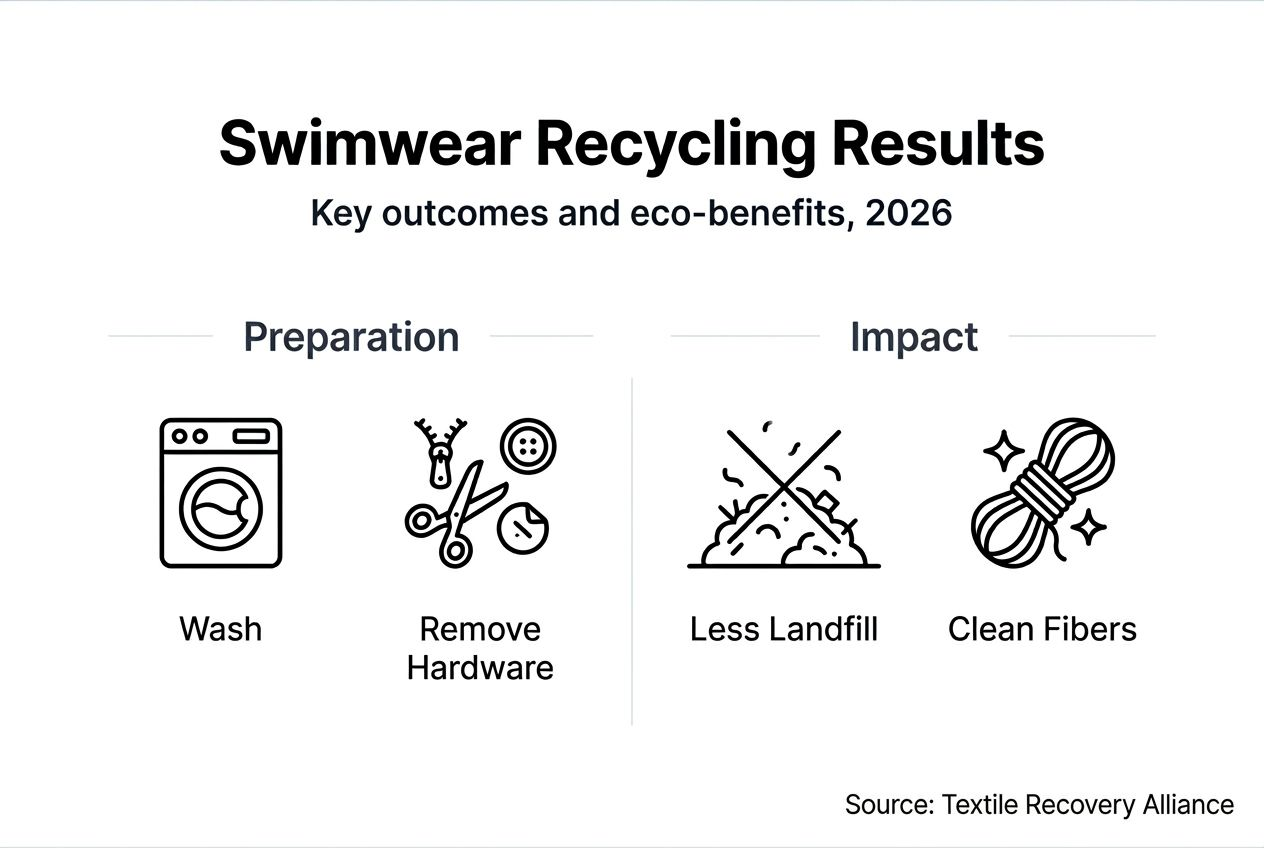
The environmental impact is substantial. Recycling swimwear can reduce landfill textile waste by up to 75% compared to disposal. Every recycled swim trunk prevents approximately 0.3 pounds of synthetic fabric from sitting in landfills for 200-plus years.
Proper preparation amplifies these benefits. Clean, hardware-free swimwear processes more efficiently, yielding higher-quality recycled fibers. These superior fibers command better prices and encourage manufacturers to use recycled content in new products.
| Outcome | Mechanical Recycling | Chemical Recycling | No Recycling |
|---|---|---|---|
| Processing time | 2 to 4 weeks | 6 to 8 weeks | Immediate disposal |
| Material recovery | 90 to 95% | 95 to 99% | 0% |
| Fiber quality | Good (slight degradation) | Excellent (virgin quality) | N/A |
| Environmental benefit | High (75% waste reduction) | Very high (infinite reuse) | None (100% landfill) |
| Accessibility | Widely available | Limited facilities | Universal |
Recycling swimwear supports ocean conservation efforts. Synthetic fabrics in landfills break down into microplastics that eventually reach waterways and oceans. Recycling prevents this pollution at the source.
The circular fashion model depends on participation. Every person who recycles swimwear strengthens the economic case for recycling infrastructure. Your individual action contributes to systemic change.
Learn more about swimwear upcycling impact and broader swimwear environmental impact to understand how recycling fits into larger sustainability efforts.
Explore sustainable swimwear solutions at Le Club Original
Ready to go beyond recycling? Le Club Original offers stylish swim trunks designed with sustainability in mind from the start. Our collections feature eco-friendly materials and construction methods that reduce environmental impact while delivering the style and performance you expect.

Browse our range of sustainable swimwear crafted for men and boys who care about ocean health. We provide resources and guides, including our comprehensive recycled swimwear checklist, to help you make informed choices about swimwear lifecycle management. Discover recyclable swimwear importance and join a growing community committed to circular fashion and cleaner oceans. Take action today for a greener wardrobe.
Frequently asked questions about swimwear recycling
What types of swimwear materials can be recycled?
Swimwear made primarily of nylon (polyamide) and polyester can be recycled through specialized textile programs. These synthetic fabrics, which comprise 70 to 90% of most swim trunks, maintain structural integrity through recycling processes. Mixed-material swimwear with small amounts of spandex or elastane is also recyclable, though the stretch fibers are typically separated and processed differently.
Can I recycle swimwear with zippers or buckles still attached?
No, you must remove all metal and plastic hardware before recycling swimwear. Zippers, buckles, drawstring tips, and fasteners cause contamination rates exceeding 30%, leading facilities to reject entire batches. Use scissors and pliers to carefully extract all non-fabric elements before submitting swimwear to recycling programs.
How long does the swimwear recycling process typically take?
Mechanical recycling takes 2 to 4 weeks from collection to fiber regeneration. Chemical recycling requires 6 to 8 weeks due to more complex molecular processing. Mail-in programs add 1 to 2 weeks for shipping and intake processing, bringing total timelines to 3 to 10 weeks depending on method and location.
Are mail-in swimwear recycling programs available nationwide?
Yes, several organizations operate mail-in textile recycling programs accepting swimwear from across North America. These programs typically provide prepaid shipping labels or accept packages at standard postal rates. Verify specific program acceptance policies before mailing, as some focus on particular fabric types or require minimum quantities.
What should I avoid doing before recycling swimwear?
Avoid using fabric softeners, which reduce fiber quality by 25% and interfere with processing equipment. Never send damp swimwear, as moisture breeds mold and contaminates batches. Don’t skip hardware removal or proper cleaning, these mistakes cause rejection. Finally, never assume facility acceptance without confirming their specific policies for swimwear recycling.