

Salt, chlorine, and sand can cling to even the most luxurious, eco-friendly swim trunks after a trip to a sunny California beach or a lively Florida pool. For men who care about both style and sustainability, these invisible residues are a real threat to long-term garment life. Following expert storage practices not only keeps trunks looking sharp but also protects fabric integrity so every getaway feels fresh and worry-free. Discover how thorough cleaning and complete drying protect your favorite swim trunks for seasons to come.
Table of Contents
- Step 1: Clean Swim Trunks Thoroughly Before Storing
- Step 2: Dry Completely to Prevent Odor and Mildew
- Step 3: Fold Swim Trunks to Maintain Their Shape
- Step 4: Choose a Cool, Eco-Friendly Storage Solution
- Step 5: Check Periodically for Freshness and Quality
Quick Summary
| Key Point | Explanation |
|---|---|
| 1. Thoroughly Clean Your Swim Trunks | Rinse immediately after use to prevent mold, mildew, and odors from setting in on the fabric. |
| 2. Ensure Complete Drying | Lay trunks flat in a well-ventilated area, checking moisture levels to avoid mildew and odors. |
| 3. Properly Fold for Preservation | Fold along natural seams to maintain shape and prevent permanent creases in the fabric. |
| 4. Choose Eco-Friendly Storage Solutions | Use breathable materials for storage to minimize moisture and environmental impact while protecting the trunks. |
| 5. Periodically Inspect for Issues | Check trunks every few months for odors, discoloration, or moisture to maintain quality and freshness. |
Step 1: Clean swim trunks thoroughly before storing
Before your swim trunks hit the storage closet, they need a proper cleaning session. This step is non-negotiable if you want your trunks to maintain their shape, color, and durability through multiple vacation seasons. Salt, chlorine, sand, and body oils accumulate on the fabric during use, and leaving them there creates the perfect environment for mold, mildew, and permanent odor that no amount of washing will fix later.
Start by rinsing your trunks in cool, fresh water immediately after wearing them. This initial rinse removes the bulk of salt and chlorine before they have time to set into the fibers. Hold them under running water and gently agitate the fabric with your hands, paying special attention to seams and waistbands where debris tends to hide. If you’ve been in the ocean, give them an extra thorough rinse since salt exposure accelerates fabric degradation more aggressively than chlorinated pools. After the initial rinse, fill a sink or basin with cool water and a small amount of mild detergent. Submerge your trunks and let them soak for 15 to 20 minutes, then gently rub problem areas with your fingers. Avoid aggressive scrubbing or wringing, which can damage elastic and distort the fit.
Once the soak is complete, rinse thoroughly under running water until the water runs clear and you no longer smell soap. This final rinse is critical because any remaining detergent residue can trap moisture and create odors in storage. For trunks used in open water conditions with natural elements and contaminants, follow the same process but consider an extra rinse cycle to ensure complete cleanliness. After rinsing, gently squeeze out excess water (don’t wring), then lay your trunks flat on a clean towel to air dry completely before storing them away. Never pack damp or even slightly moist swim trunks into storage, as moisture creates an ideal breeding ground for mildew.
Pro tip Wash your trunks within a few hours of wearing them rather than letting them sit in a gym bag or beach tote, since dried salt and chlorine become much harder to remove and can permanently etch into fibers.
Step 2: Dry completely to prevent odor and mildew
Wet swim trunks left in storage are basically an invitation for mildew and unpleasant odors to move in permanently. You cannot skip this step. Complete drying is what stands between fresh trunks ready for your next beach trip and a moldy disaster that ruins the fabric. This is where patience pays off, and where cutting corners creates real problems.
After you’ve rinsed and gently squeezed out excess water, lay your trunks flat on a clean, absorbent towel in a well-ventilated area. Air circulation is your friend here. Open a window, position a fan nearby, or hang them in a shaded spot outdoors if weather permits. The key word is shaded, since direct sunlight can fade colors and degrade elastic fibers over time, especially with eco-conscious, sustainable materials that are often more sensitive to UV exposure. Let gravity do minimal work and air movement do the heavy lifting. You’ll want to flip your trunks over halfway through to ensure both sides dry evenly. Check the inside seams and waistband area specifically, as moisture loves to hide in these spots. Complete drying typically takes 24 to 48 hours depending on humidity and ventilation in your space. Don’t rush this part by throwing partially damp trunks into a drawer. Drying swim gear fully in shaded, well-ventilated areas prevents microbial contamination and odor development that becomes nearly impossible to remove once it takes hold.
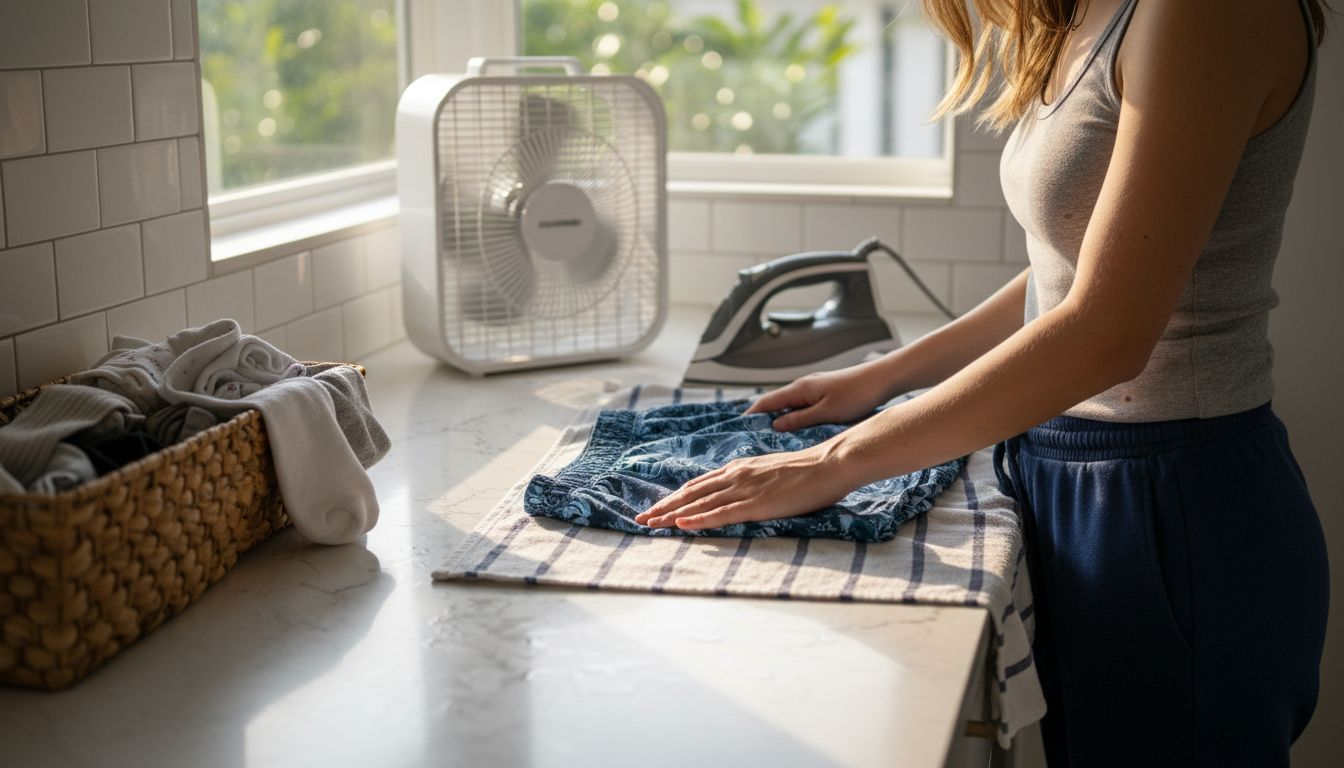
You’ll know your trunks are truly dry when they feel completely dry to the touch, including the interior lining and waistband. Run your hand along the seams and flex the fabric, looking for any cool spots that might indicate trapped moisture. Once you’re confident they’re completely dry, you’re ready to move them into proper storage. If you live in a humid climate, consider using a small fan or dehumidifier in your storage area to maintain optimal conditions. The time you invest in thorough drying now eliminates headaches later and keeps your trunks fresh season after season.
Pro tip Dry your trunks in the same room where you’ll store them if possible, so you understand the humidity levels and can adjust your drying time accordingly before putting them away.
Step 3: Fold swim trunks to maintain their shape
How you fold your swim trunks matters more than you might think. Careless crumpling or jamming them into tight spaces creates permanent creases and stretches out the fabric in ways that affect fit and appearance. Proper folding preserves the elastic integrity and keeps your trunks looking like they did when you first pulled them from the closet. This step takes maybe two minutes but pays dividends in longevity.
Start by laying your completely dry trunks flat on a clean surface with the front facing up. Smooth out any wrinkles gently with your hands, then identify the natural seams running along the sides. Folding swim trunks along natural seams rather than crumpling maintains fabric elasticity and prevents deformation over time. To begin, fold one side of the trunks inward along the side seam, then fold the other side to meet it, creating a long rectangular shape. Next, fold the waistband down toward the leg openings about one third of the way, then fold the leg end up to meet it. This accordion style folding creates gentle, natural creases that follow the garment’s existing structure rather than fighting against it. The goal is to work with the fabric’s design, not against it. Avoid sharp, aggressive folds that crease the material at odd angles. Your trunks should look neat and compact without any harsh wrinkles.
Once folded, your trunks should form a compact rectangle that fits easily into your storage container without requiring any compression or forcing. If you’re stacking multiple pairs, place them flat rather than standing them upright, which can cause the bottom pair to become misshapen. Make sure your storage space is cool and dry before placing your carefully folded trunks inside. The investment in thoughtful folding now prevents having to spend time removing stubborn creases or dealing with permanently stretched elastic later.
Here’s a summary of common swim trunk storage issues and how to prevent them:
| Problem | Cause | Prevention Tip |
|---|---|---|
| Mildew development | Storing when damp | Air dry fully before storage |
| Odor retention | Incomplete cleaning or drying | Rinse well and dry in ventilated space |
| Fabric fading | Direct sunlight exposure | Dry and store in shaded areas |
| Elastic loss | Aggressive wringing or folding | Fold gently, never wring |
| Misshaping | Overstuffed containers | Store unfolded or stacked flat |
Pro tip Fold your trunks while they’re still slightly warm from air drying, as the fabric is more pliable and less likely to develop sharp creases that won’t relax.
Step 4: Choose a cool, eco-friendly storage solution
Where you store your swim trunks matters just as much as how you prepare them. The right storage container protects your investment while aligning with your values as an eco-conscious consumer. You want a solution that keeps moisture and heat at bay without relying on synthetic materials or excessive packaging. This is where thoughtful choices make a real difference for both your trunks and the planet.
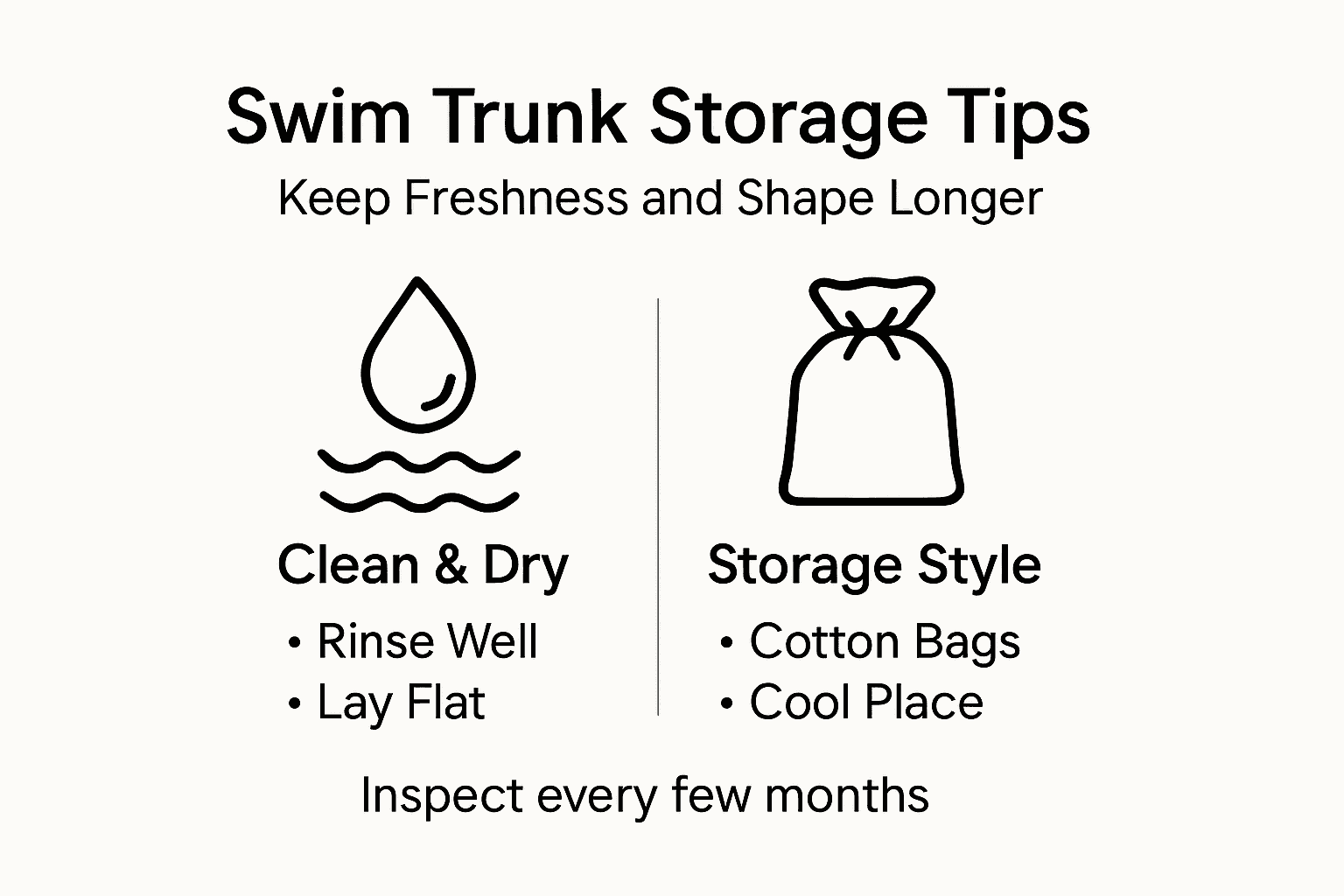
Look for storage options made from breathable, natural fiber materials like cotton canvas, linen, or recycled fabrics. These materials allow air circulation while protecting your trunks from dust and light exposure. A simple cotton storage bag or a drawer lined with acid-free tissue paper works exceptionally well. Avoid plastic containers that trap moisture and create humid microclimates where mildew thrives. If you do use plastic, ensure it has ventilation holes or leave it slightly ajar during storage. Breathable materials in storage solutions prevent moisture build-up while minimizing environmental impact on your eco-friendly swim trunks. The storage location itself is equally critical. Choose a cool, dry area away from direct sunlight, heat sources, or humidity. A bedroom closet, hall closet, or storage shelf works better than a basement prone to dampness or an attic subject to temperature swings. Temperature stability is your goal, not perfection. Aim for storage conditions between 60 and 75 degrees Fahrenheit with humidity levels below 50 percent if possible.
When selecting your storage space, think about ventilation and air movement. A closet with a crack in the door allows better airflow than a sealed space. Avoid storing your trunks near heating vents, radiators, or windows where temperature fluctuations occur. If you live in a particularly humid climate, consider placing a small packet of silica gel or activated charcoal near your trunks to absorb excess moisture, but keep these packets from direct contact with the fabric. Once you’ve selected your storage location and container, label your storage area with the contents and storage date so you know when to inspect your trunks before the next vacation season.
Compare the effectiveness of popular storage materials for swim trunks:
| Storage Material | Breathability | Moisture Control | Eco-Friendliness |
|---|---|---|---|
| Cotton canvas bag | Excellent | Minimizes mold risk | Highly eco-friendly |
| Plastic container | Poor (unvented) | Traps humidity | Low, unless recycled |
| Linen fabric pouch | Very good | Reduces condensation | Biodegradable |
| Cardboard box | Moderate | Can absorb moisture | Recyclable |
Pro tip Store your swim trunks in the same cool room where you dry them if possible, as this ensures consistent temperature and humidity levels that prevent the shock of moving them to a drastically different environment.
Step 5: Check periodically for freshness and quality
Storage isn’t a “set it and forget it” situation. Your swim trunks deserve occasional attention to catch any problems before they become permanent. Regular inspections catch early signs of deterioration and keep your trunks vacation-ready whenever you need them. Think of it as preventative maintenance that takes just a few minutes but saves you from disappointment.
Every few months, open your storage container and give your trunks a quick inspection. Start by smelling them, as odor is often the first indicator that something has gone wrong. A fresh smell means you’re good to go. Any musty or sour odor signals potential mildew or bacterial growth that needs immediate attention. Next, visually examine the fabric for any discoloration, spots, or fading. Run your hands over the material to check for brittleness or unusual texture changes. Pay special attention to the seams, waistband, and leg openings where problems often start. Look at the elastic to see if it’s lost its stretch or shows signs of deterioration. Periodic inspection for early signs of deterioration helps maintain freshness and functionality of your stored swim trunks. If you notice any issues, address them immediately. Light odor can often be resolved with a gentle rewash and thorough air drying. Slight discoloration might just be dust that brushes away, but persistent stains warrant deeper investigation and possibly a spot treatment before returning them to storage.
If you discover mildew or persistent odor during your inspection, don’t panic. Remove the trunks, rewash them thoroughly with mild detergent, and air dry them completely in a well-ventilated space before returning them to storage. This catch-and-correct approach prevents small problems from escalating into unwearable situations. Also take this inspection opportunity to verify that your storage conditions remain optimal. Check for any signs of moisture in the container, unusual temperature changes, or pest activity. If you notice your storage area has become damp or warm, you may need to relocate your trunks or adjust your storage setup. Regular checks transform storage from a passive process into an active commitment to garment care.
Pro tip Mark your calendar to check your trunks every two to three months, or set a phone reminder about one month before your next planned vacation so you have time to address any issues that arise.
Keep Your Swim Trunks Fresh and Stylish With Sustainable Choices
Properly storing your swim trunks can be a challenge. You want to prevent mildew, maintain shape, and keep fabric colors vibrant without spending too much time or effort. This article highlights how important thorough rinsing, complete drying, gentle folding, and eco-friendly storage solutions are to extending the life of your trunks while stopping odors and fabric breakdown in their tracks. If you struggle with finding swim trunks that not only last but also align with your values for sustainability and style, there is a solution.

Explore the collection at Le Club Original where you can find premium, eco-conscious swim trunks designed to withstand frequent wear and proper care. These trunks use environmentally friendly fabrics that resist fading and fabric degradation while supporting ocean pollution reduction efforts. Shop now and enjoy seasonal sales on sustainable beachwear crafted for men and boys who care about both the planet and looking their best. Protect your trunks’ freshness and shape by choosing stylish options that are easy to care for and come with free shipping offers. Visit Le Club Original and start your journey toward lasting freshness and responsible swimwear today.
Frequently Asked Questions
How do I clean my swim trunks before storing them?
To clean your swim trunks effectively, rinse them in cool water immediately after use to remove salt, chlorine, and debris. After rinsing, soak them in cool water with a mild detergent for 15 to 20 minutes before gently rubbing problem areas and rinsing thoroughly until there is no soap residue.
How can I ensure my swim trunks dry completely before storage?
To ensure complete drying, lay your swim trunks flat on a clean towel in a well-ventilated area, avoiding direct sunlight. Flip them over halfway through the drying process and allow 24 to 48 hours for thorough drying to prevent mildew and odors.
What is the best way to fold swim trunks for storage?
Fold your swim trunks along their natural seams to maintain their shape and elasticity. First, fold each side inward, then fold the waistband down and the leg openings up to create a compact rectangle that fits neatly in storage.
What type of storage solution is best for swim trunks?
Choose breathable storage solutions, such as cotton canvas bags or lined drawers, to protect your swim trunks from moisture and light. Avoid plastic containers unless they have ventilation, as these can trap humidity and promote mildew growth.
How often should I check my stored swim trunks for freshness?
Inspect your stored swim trunks every few months to catch any signs of mildew, odors, or fabric deterioration early on. Regular inspections will help maintain their freshness and functionality, ensuring they are ready for your next vacation.
What should I do if my swim trunks develop a musty odor in storage?
If your swim trunks develop a musty odor, remove them from storage, rewash them with a mild detergent, and ensure they dry completely in a well-ventilated space. This will help eliminate odor and prevent any moisture-related issues.