

Most American men would be surprised to hear that over 640,000 tonnes of fishing nets end up in the world’s oceans each year, yet this waste is now being transformed into high-performance swimwear. Sustainability is no longer just a trend, it is a movement reshaping how style and ocean protection go hand in hand. Discover how innovative recycled fabrics challenge outdated myths, letting you look sharp by the pool while making a real impact on reducing ocean plastic.
Table of Contents
- Recycled Swimwear Defined and Debunked Myths
- How Recycled Fabrics Are Made and Used
- Types of Recycled Materials in Swimwear
- Eco and Social Impact on Oceans and Communities
- Comparing Recycled vs. Traditional Swimwear
- Cost, Care, and Practical Considerations
Key Takeaways
| Point | Details |
|---|---|
| Sustainable Production | Recycled swimwear turns plastic waste into high-performance textiles, minimizing environmental impact. |
| Performance Comparison | Modern recycled swimwear matches traditional options in durability, UV protection, and chlorine resistance. |
| Economic and Social Impact | Recycled fabrics contribute to job creation in communities affected by plastic pollution, promoting economic development. |
| Long-Term Value | Although initially more expensive, recycled swimwear offers durability and environmental benefits that justify the investment. |
Recycled Swimwear Defined and Debunked Myths
Recycled swimwear represents a groundbreaking approach to sustainable fashion, transforming discarded plastics and ocean waste into high-performance swim apparel. By reimagining fabric production, manufacturers are creating swimwear that challenges traditional performance expectations while simultaneously reducing environmental impact.
Contrary to popular misconceptions, recycled swimwear isn’t a compromise between style and sustainability. Modern chemical recycling techniques preserve fabric quality, ensuring chlorine resistance and durability comparable to virgin materials. These advanced processes break down plastic waste into molecular components, allowing complete reconstruction of textile fibers with consistent strength and elasticity. The result is swimwear that looks and performs just as well as traditional options, but with a significantly reduced carbon footprint.
The transformation process typically involves collecting plastic waste like discarded water bottles, fishing nets, and industrial plastic remnants. These materials undergo sophisticated mechanical and chemical treatments that deconstruct and purify the polymers, enabling manufacturers to spin them into new, high-quality textile yarns. This circular approach not only prevents waste from entering landfills and oceans but also dramatically reduces the energy and raw material consumption associated with traditional fabric production.
Pro tip: When shopping for recycled swimwear, look for certifications like Global Recycled Standard (GRS) to ensure authentic sustainable manufacturing practices.
How Recycled Fabrics Are Made and Used
The transformation of waste materials into high-performance swimwear follows a sophisticated textile recycling process that combines environmental responsibility with cutting-edge manufacturing techniques. This innovative approach begins with collecting and sorting post-consumer waste like plastic bottles, fishing nets, and discarded textiles, which become the raw ingredients for sustainable fabric production.
The mechanical recycling method involves carefully cleaning and shredding collected plastic waste into small fragments. These fragments are then melted and extruded into fine threads, which can be spun into yarns suitable for fabric production. Chemical recycling represents an even more advanced technique, breaking down plastic waste into its molecular components and reconstructing them into virgin-quality fibers. This process allows manufacturers to create fabrics with properties nearly identical to those made from new petroleum-based materials.
Recycled fabrics are now being utilized across multiple clothing categories, with swimwear emerging as a particularly promising application. By converting waste into wearable textiles, manufacturers can significantly reduce carbon emissions and prevent millions of plastic items from entering landfills and oceans. The resulting fabrics maintain excellent performance characteristics, including UV protection, chlorine resistance, and durability comparable to traditional swimwear materials.
Pro tip: Check the fabric composition label to understand the percentage of recycled content in your swimwear and support brands committed to sustainable manufacturing practices.
Types of Recycled Materials in Swimwear
Recycled swimwear represents a complex ecosystem of innovative materials, with post-consumer waste transformation at its core. The primary recycled materials revolutionizing swimwear include ECONYL, recycled polyester, and regenerated nylon, each offering unique sustainability benefits while maintaining exceptional performance characteristics.
ECONYL stands out as a premium regenerated nylon fabric, ingeniously crafted from discarded fishing nets, carpet fibers, and industrial plastic waste. This advanced material undergoes a sophisticated chemical recycling process that breaks down waste into its molecular components, allowing complete reconstruction into virgin-quality nylon fibers. Recycled polyester, typically sourced from plastic water bottles, represents another crucial material. Through mechanical and chemical recycling techniques, these plastic bottles are transformed into high-performance textile yarns that deliver identical durability and stretch properties as traditional petroleum-based polyester.

Waste materials in fashion are categorized into three primary sources: post-consumer waste (discarded clothing and personal items), post-industrial waste (manufacturing remnants), and plastic waste collected from oceans and landfills. These diverse sources enable manufacturers to create swimwear with significant environmental advantages. Recycled nylon from fishing nets offers a particularly compelling narrative, directly addressing ocean pollution while creating high-performance swim apparel that maintains exceptional chlorine resistance and durability.
Pro tip: Research brands that provide transparency about their recycled material sources and percentage of recycled content in their swimwear to make the most environmentally responsible purchasing decisions.
Here is a comparison of key recycled materials used in swimwear:
| Material | Source Waste | Unique Benefits | Main Applications |
|---|---|---|---|
| ECONYL | Fishing nets, carpets | High chlorine resistance, upcycled ocean waste | Premium swimwear, activewear |
| Recycled Polyester | Plastic water bottles | Strong durability, identical stretch | Mainstream swimwear, clothing |
| Regenerated Nylon | Industrial plastic scraps | Excellent elasticity, reduced emissions | Sportswear, sustainable fashion |
Eco and Social Impact on Oceans and Communities
Recycled swimwear represents far more than a fashion trend. Plastic pollution mitigation has become a critical strategy for protecting marine ecosystems and supporting vulnerable coastal communities worldwide. By transforming discarded plastics into high-performance textiles, manufacturers are creating a powerful mechanism for environmental restoration and economic empowerment.
The environmental benefits extend beyond waste reduction. When plastic waste is collected from oceans, rivers, and landfills, it prevents potential harm to marine wildlife, reduces microplastic contamination, and decreases the overall carbon footprint associated with traditional textile production. Coastal communities directly benefit from these recycling initiatives through job creation, improved waste management infrastructure, and economic opportunities that arise from collecting and processing ocean-bound plastics.
Moreover, the social impact of recycled swimwear transcends environmental conservation. Many sustainable fashion brands now partner with local communities in regions heavily impacted by plastic pollution, providing fair wages and training programs for waste collection and textile processing. These collaborative efforts not only clean marine environments but also create economic pathways for workers in regions with limited industrial opportunities, effectively turning environmental challenges into sustainable economic models that support both ecological health and human development.
Pro tip: When purchasing recycled swimwear, research brands that demonstrate transparent community engagement and provide clear documentation about their environmental and social impact initiatives.
Comparing Recycled vs. Traditional Swimwear
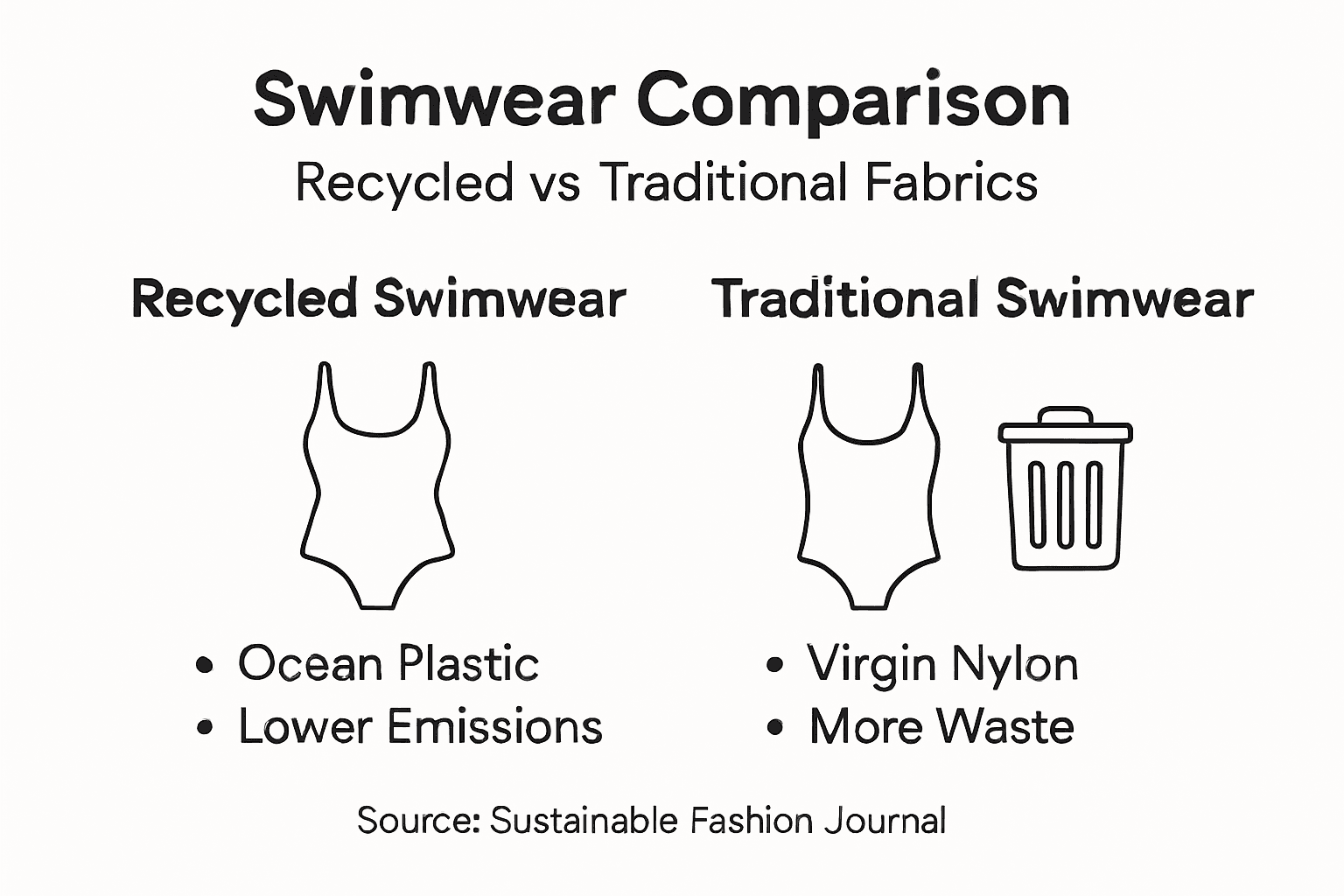
The swimwear landscape is undergoing a transformative shift, with fabric performance comparisons revealing that recycled materials are no longer a compromise between sustainability and quality. Modern recycled swimwear fabrics deliver identical stretch, durability, and chlorine resistance to their traditional petroleum-based counterparts, challenging long-held perceptions about sustainable textile performance.
Traditional swimwear manufacturing relies heavily on virgin petroleum-derived nylon and polyester, which require significant fossil fuel extraction and contribute substantially to carbon emissions. In contrast, recycled swimwear transforms waste materials into high-performance textiles through advanced mechanical and chemical recycling processes. These innovative techniques deconstruct plastic waste at the molecular level, reconstructing fibers with precisely the same structural integrity as virgin materials. The result is a product that matches traditional swimwear in key performance metrics like UV protection, elasticity, quick-drying capabilities, and resistance to environmental degradation.
Beyond performance, the environmental impact differential is profound. While traditional swimwear production generates approximately 3.8 times more carbon emissions and consumes substantially more raw materials, recycled swimwear reduces carbon footprint by up to 67%. This dramatic reduction occurs without sacrificing comfort, style, or functional characteristics that swimmers and beach enthusiasts demand. Moreover, each recycled swimwear piece represents a direct intervention in global waste management, preventing potential plastic pollution and supporting circular economy principles.
Compare performance and environmental impact of recycled vs. traditional swimwear fabrics:
| Attribute | Recycled Swimwear | Traditional Swimwear |
|---|---|---|
| Durability | Comparable to virgin fiber | Consistently strong |
| UV Protection | High | High |
| Carbon Footprint | Up to 67% less | Much higher emissions |
| Resource Consumption | Reuses plastic waste | Relies on fossil fuels |
Pro tip: When comparing recycled and traditional swimwear, examine fabric composition labels and look for certifications that verify sustainable manufacturing and performance standards.
Cost, Care, and Practical Considerations
Recycled swimwear represents a nuanced investment that balances initial cost with long-term value, extending garment lifecycle through mindful maintenance. While recycled options typically carry a slightly higher upfront price, their durability and environmental benefits often translate to more economical and responsible purchasing decisions for conscientious consumers.
Care requirements for recycled swimwear differ subtly from traditional garments. Experts recommend hand washing in cold water, avoiding harsh detergents, and air drying to preserve fabric integrity. Swimwear component selection becomes critical, with certified recycled materials like GRS-labeled fabrics requiring specific handling to maintain performance characteristics. Consumers should pay close attention to manufacturer care instructions, which often recommend gentler washing techniques to protect the unique molecular structure of recycled fibers.
Practical considerations extend beyond maintenance to broader environmental impact. Many recycled swimwear brands now offer take-back programs and recycling initiatives, allowing consumers to responsibly dispose of worn garments and participate in a circular economy. These programs not only reduce textile waste but also provide additional value through potential discounts or credits for future purchases. The lifecycle cost of recycled swimwear becomes increasingly attractive when factoring in these environmental and economic benefits, making them a compelling choice for budget-conscious and eco-aware consumers.
Pro tip: Invest in a specialized gentle detergent designed for technical fabrics to maximize the lifespan of your recycled swimwear and maintain its performance characteristics.
Discover Stylish Sustainability with Recycled Swimwear at Le Club Original
The challenge of finding swimwear that balances high performance, environmental responsibility, and style ends here. If you want swim trunks that deliver durability and chlorine resistance powered by recycled materials like ECONYL and regenerated nylon, you are in the right place. Le Club Original offers a curated collection of eco-friendly swimwear designed to reduce plastic pollution in oceans while keeping you looking sharp at every beach or poolside moment.

Explore our latest arrivals to experience sustainable swimwear that supports ocean cleanup initiatives and community empowerment. Enjoy great savings with discounts up to 50% sitewide and free shipping on orders over $50. Act now to join a movement where style meets responsibility and make your next swimsuit purchase a commitment to the planet. Shop today at Le Club Original and wear your values with pride.
Frequently Asked Questions
What are the main benefits of recycled swimwear?
Recycled swimwear offers several benefits, including reduced environmental impact, comparable performance to traditional swimwear, and unique styling options that promote sustainability and responsible consumption.
How is recycled swimwear made?
Recycled swimwear is made from post-consumer waste like plastic bottles and fishing nets. These materials undergo mechanical and chemical recycling processes to create high-quality textile fibers used in swimwear production.
Is recycled swimwear durable and high-performing?
Yes! Modern recycled swimwear maintains durability, chlorine resistance, and stretch characteristics comparable to traditional materials, ensuring it can withstand regular use in water activities.
How can I care for my recycled swimwear to extend its lifespan?
To extend the lifespan of your recycled swimwear, hand wash in cold water, use a gentle detergent, and air dry instead of machine drying. Following the manufacturer’s care instructions is essential to maintain the fabric’s integrity.
Recommended
- 5 Reasons Why You Should Switch to Sustainable Swimwear – Le Club Original
- 5 Reasons Why You Should Switch to Sustainable Swimwear – Le Club Original
- Embrace Sustainable Beachwear: Recycled Polyester and Linen Shirts – Le Club Original
- Embrace Sustainable Beachwear: Recycled Polyester and Linen Shirts – Le Club Original
- Men’s Organic Cotton T-shirt – MEXESS