

Searching for stylish swim trunks that actually fit? Many American men find sizing confusing and frustrating, especially when eco-friendly options are involved. Getting accurate waist and hip measurements is the first step to comfort and confidence at the beach. This guide breaks down practical advice and expert-backed methods for finding sustainable trunks with the perfect fit, so you can move freely and look your best every time you hit the water.
Table of Contents
- Step 1: Measure Your Waist and Hips Correctly
- Step 2: Identify Your Preferred Swim Trunk Fit
- Step 3: Compare Measurements to Size Charts
- Step 4: Check Comfort and Mobility Before Purchase
- Step 5: Confirm Your Fit With a Trial Wear
Quick Summary
| Key Point | Explanation |
|---|---|
| 1. Measure Waist and Hips Accurately | Accurate measurements ensure swim trunks fit comfortably and confidently during beach or pool activities. |
| 2. Choose Your Preferred Fit Style | Swim trunk styles vary. Consider inseam length and overall silhouette for comfort based on your body type and activities. |
| 3. Reference Brand Size Charts | Size charts differ among brands. Always compare your measurements to the brand’s specific size chart to find the best fit. |
| 4. Test Comfort and Mobility Before Buying | Perform movement tests to check for comfort and fit. Ensure the trunks move with you and don’t chafe during activities. |
| 5. Conduct a Trial Wear Period | Wear the trunks at home and in water to assess fit and comfort in real-life situations before making a final purchase decision. |
Step 1: Measure Your Waist and Hips Correctly
Getting accurate measurements is the foundation of finding swim trunks that fit you properly. Your waist and hip measurements determine not just comfort, but also how the trunks will sit and move with your body in the water. This step takes less than five minutes, but it’s worth doing right because it directly impacts how confident you’ll feel at the beach or pool.
Start by stripping down to just your underwear or nothing at all, since loose clothing will throw off your measurements. Stand upright with your feet positioned about shoulder-width apart, keeping your posture natural and relaxed (not sucked in or puffed out). The key here is to measure your body as it actually exists, not some imaginary version of yourself. For your waist, locate the narrowest part of your torso between the top of your hip bones and the base of your rib cage, which usually sits just above your belly button. Wrap your measuring tape around this area horizontally, keeping it parallel to the floor. The tape should feel snug against your skin but shouldn’t dig in or create indentations. If you pull too tight, you’ll end up with trunks that feel restrictive when you’re actually wearing them. Take the measurement while you’re in a relaxed, natural breathing state, not while holding your breath.
For your hips, the process is similar but requires finding the right spot. Stand with your feet together this time, and measure the fullest part of your hips and buttocks, which typically sits about 7 to 9 inches below your natural waist. Again, keep the tape measure horizontal and parallel to the floor, running it smoothly around without twisting or pulling too tight. Many guys initially underestimate their hip measurement because they’re more focused on their waist size, but this number matters for swim trunks since it determines how the legs will fit and whether the trunks will ride up when you’re moving in water. Write down both measurements right away so you don’t forget them. If possible, measure yourself twice to verify your numbers, especially if you’re between sizes. Take a photo of your measurements on your phone for reference when you’re shopping or ordering online later.
Pro tip: Measure yourself in the morning before eating and drinking heavily, and do this on a day when you’re not bloated or unusually swollen, since your measurements naturally fluctuate by a half inch or more throughout the day depending on what you’ve consumed and your activity level.
Step 2: Identify Your Preferred Swim Trunk Fit
Now that you know your measurements, the next step is understanding what fit actually works for your body and lifestyle. Swim trunks come in vastly different styles, and choosing the right one goes beyond just picking a size. Your preferred fit determines how you’ll feel whether you’re lounging on the beach, swimming actively, or moving around at a poolside gathering. The good news is that once you understand the options, finding your ideal fit becomes straightforward.
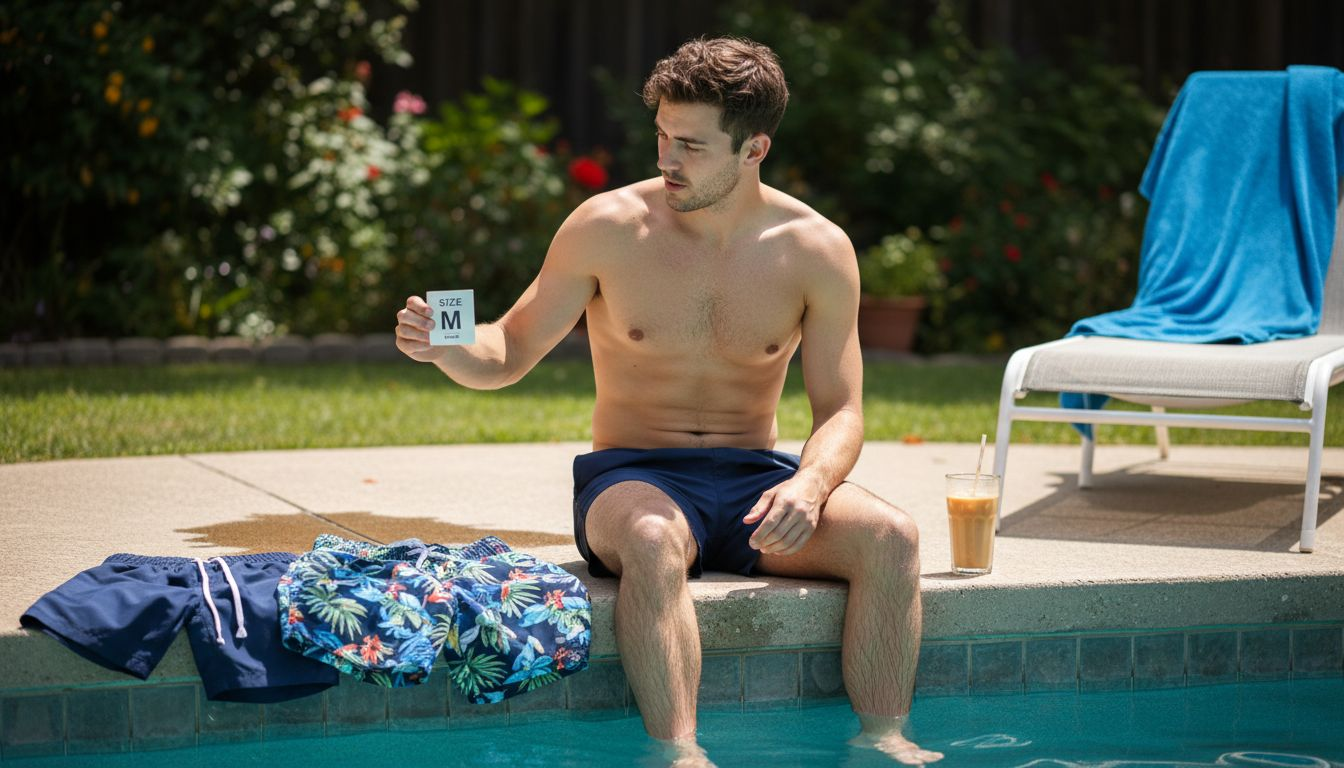
Start by thinking about the inseam length and how you want the trunks to sit on your legs. Most swim trunks range from mid-thigh cuts to knee-length options, and this choice is purely personal preference mixed with practical considerations. If you’re planning to be active in the water, shorter cuts (around 5 to 7 inches from the waist) give you freedom of movement and dry faster. Longer cuts that hit near the knee offer more coverage and work better if you prefer a more conservative look or spend more time on the sand than in the waves. Mid-thigh options, typically around 7 to 9 inches, offer a nice balance and tend to be the most versatile choice for eco-conscious guys who want one solid pair that works in multiple situations. Beyond length, consider the overall silhouette. Some swim trunks fit snug around the hips and thighs, while others give you more room. Your body shape matters here too. If you carry more weight in your thighs or have a wider hip structure, you’ll want trunks with a bit more room in those areas to avoid that pinched feeling when you move. Conversely, if you’re leaner, a tapered cut might give you better proportions.
When evaluating how different swim trunk features impact comfort, pay attention to the waistband construction. Your trunks should feel snug at the waist without restriction, and they should stay secure during activity without requiring constant adjustment. Look for adjustable waistbands with drawstrings that give you control over fit, since bodies shift and change throughout the year. The material also plays a role in how fit feels. Quality sustainable swim trunks made from recycled materials or organic fabrics tend to maintain their shape and support better than cheaper alternatives. When you try on options, move around. Bend, sit, and simulate the activities you’ll actually do. Does the waistband dig in when you bend? Do the legs ride up when you move your hips? Does the material stretch and move with your body? These practical tests reveal whether a fit works for your lifestyle far better than standing still in a fitting room.
Pro tip: If you’re between sizes or prefer different fits for different activities, buying two pairs in different styles gives you flexibility. A slightly slimmer fit works great for active swimming, while a more relaxed cut excels for casual beach days, and having both means you’ll reach for the right option depending on your plans.
Here’s a quick reference comparing common swim trunk fits and their practical benefits:
| Trunk Fit Style | Ideal For | Range of Movement | Coverage Level |
|---|---|---|---|
| Short (5–7 inch) | Active swimming | Excellent | Minimal |
| Mid-thigh (7–9 inch) | Versatile usage | Good | Moderate |
| Knee-length (10+ in) | Beach lounging | Limited | Maximum |
Step 3: Compare Measurements to Size Charts
You’ve taken your measurements and identified your preferred fit, but now comes the crucial step of actually matching those numbers to real products. This is where many guys stumble because they assume their jean size or typical clothing size will work for swim trunks. Spoiler alert: it won’t. Understanding how to read and interpret size charts correctly is the difference between ordering something that fits perfectly and wasting money on a return.
Start by pulling up the size chart for the specific brand or style you’re interested in. Every reputable swim trunk manufacturer publishes these charts on their website, usually near the product description. Look for the waist measurement column and find the range that matches your measurement. Here’s the critical part: you need to know that vanity sizing differs significantly between brands, so your jean size is basically useless for swim trunk shopping. If you wear a 34 in jeans, that doesn’t mean you wear a 34 in swim trunks. Many jeans come in vanity sizes that are intentionally smaller than their marked size to make shoppers feel good, whereas quality swim trunk makers tend to be more honest about their measurements. Compare your actual waist measurement to the chart rather than looking at the letter or number designation on the label. If your waist is 34 inches, find the size that lists 34 inches in its range, regardless of what it’s called. Pay close attention to whether the chart shows your measurement at the low end, middle, or high end of a size range. If you measured 34 inches and a size shows a range of 32 to 36 inches, you’re in the sweet spot at the middle of that range. If you’re at 34 inches and the size shows 34 to 38 inches, you’re at the lower end, which means that size might feel slightly loose.
Don’t stop at just one size chart if you’re shopping around. Consult multiple brand charts to understand how different manufacturers approach sizing. Some premium sustainable brands cut their trunks more generously in the hip and thigh area, while others go for a sleeker, more fitted silhouette. This variation means the same waist measurement might correspond to different sizes depending on the brand’s overall design philosophy. Also pay attention to any notes about shrinkage in the care instructions. Quality swim trunks made from sustainable materials might have slightly different shrinkage characteristics than conventional options, which could affect how the fit evolves after a few washes. Don’t forget to consider the inseam or length measurements if those are available on the chart. Your hip measurement matters too, especially if you noted that you have a fuller hip or thigh area. Some charts include hip measurements, and those are worth checking to ensure the overall silhouette will work for your body shape. When multiple measurements seem to fit, lean toward the slightly smaller size if the trunks have an adjustable waistband with a drawstring, since you can fine tune the fit rather than hoping stretched fabric will somehow shrink back into shape.
Pro tip: Screenshot or save the size charts from brands you like before making a purchase, because you can reference them next time without searching. Keep a note file on your phone with your exact waist, hip, and preferred inseam measurements so you can quickly cross reference when shopping online or in stores.
Step 4: Check Comfort and Mobility Before Purchase
Before you commit to buying a pair of swim trunks, you need to assess how they’ll actually perform when you’re using them. Comfort isn’t just about how the waistband feels sitting at your desk. Real comfort means the trunks move with your body, stay in place during activity, and don’t leave you dealing with irritation or restriction when you’re paddleboarding, playing beach volleyball, or simply swimming laps. This step separates trunks that look good online from trunks that actually work for your lifestyle.
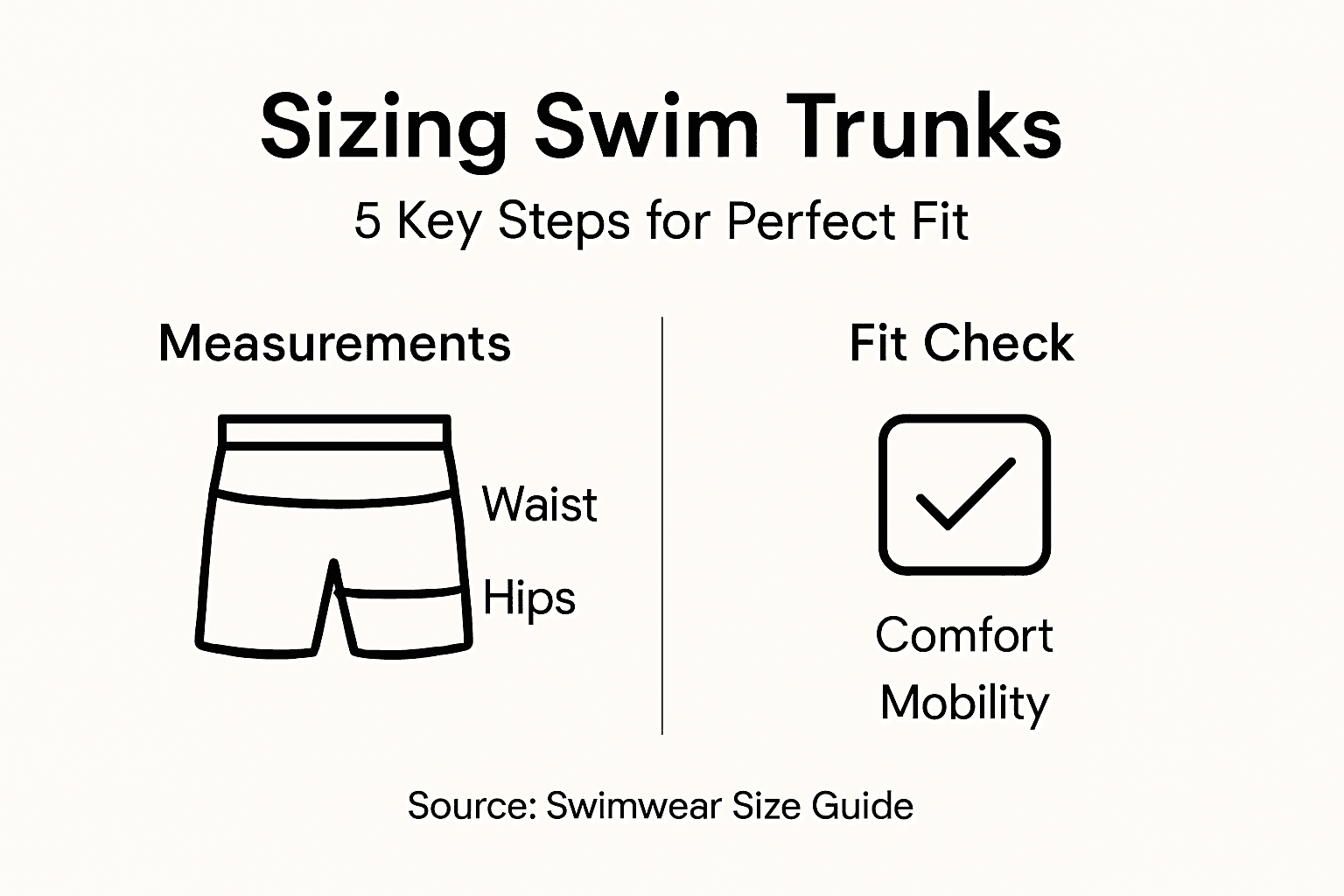
If you’re shopping in person, try on the trunks and perform simple movement tests right there in the fitting room. Bend forward, squat down, sit, and raise your knees toward your chest. Does the waistband dig in at any point, or does it feel comfortable throughout these movements? Check whether the legs ride up when you bend or whether they stay in place. Simulate throwing motions like you might do while playing catch on the beach, or practice your paddleboarding paddle stroke if that’s something you do. The trunks should move with you rather than against you. Pay attention to any areas where fabric bunches or creates friction. If you feel chafing potential in the fitting room, imagine how much worse it’ll be after thirty minutes in saltwater or chlorine. Modern swim trunks that incorporate four-way stretch technology and quick-drying fabrics are specifically designed to handle these demands, offering enhanced mobility without restricting your range of motion. Look for these features when evaluating your options, as they make a tangible difference in how the trunks perform during actual water activities. When you’re examining the fabric itself, understand that quality matters tremendously. Cheap trunks made from basic nylon might feel stiff and restrictive initially, whereas premium materials with stretch technology feel noticeably more flexible and supportive from the first wear.
If you’re ordering online, read through customer reviews with a specific lens. Ignore generic comments and look for detailed feedback about mobility and comfort during actual use. Search for keywords like “runs small,” “runs large,” “restricting,” “chafing,” or “great for swimming.” Real users testing these trunks in real situations provide invaluable insight that product descriptions never will. Pay special attention to reviews from guys who mention activities similar to what you plan to do. If you’re into active water sports, prioritize reviews from people doing the same. Also check whether reviewers mention durability and how the fit changes after washing, since sustainable materials sometimes perform differently than conventional options through multiple wash cycles. Consider the return policy before purchasing. Reputable brands make returns painless, recognizing that fit is personal and sometimes you need to try on trunks to truly evaluate them. If a brand’s return policy is complicated or restrictive, that’s a red flag suggesting they’re not confident in their product quality. Trust your gut. If trunks feel off when you’re evaluating them, they’ll feel off when you’re trying to enjoy time in the water.
Pro tip: When trying on trunks, wear them for at least 10 minutes and move around actively during that time, rather than just checking the mirror for 30 seconds. Your body adjusts to new clothing within that window, and genuine discomfort or restriction will become apparent when you’re actually mobile, not when you’re standing still.
Use this summary to compare key features affecting swim trunk comfort and long-term performance:
| Feature | Impact on Comfort | Impact on Durability |
|---|---|---|
| Waistband type | Adjustable fit | Reduces stretching |
| Material quality | Soft, flexible feel | Resists wear and tear |
| Leg cut shape | Prevents pinching | Maintains silhouette |
| Quick-dry fabric | Minimizes discomfort | Dries faster, less odor |
Step 5: Confirm Your Fit With a Trial Wear
You’ve done all the preparation work, compared measurements, and evaluated options. Now comes the real test: actually wearing the swim trunks to see how they perform in your daily life and activities. A trial wear period is where theoretical fit becomes lived reality, and you’ll quickly discover whether your choices were spot on or whether you need to try something different. This step typically takes a few days but provides invaluable information that no size chart or review can fully capture.
When your trunks arrive, try them on immediately in the privacy of your home. Wear them around the house for an hour or two, doing regular activities like sitting on the couch, walking up stairs, and bending down to pick things up. This initial wear reveals whether the waistband feels comfortable during everyday movement or whether it’s creating pressure points. Pay attention to how the fabric feels against your skin. Quality sustainable swim trunks should feel soft and pleasant rather than stiff or plasticky. Notice whether the leg openings feel right or if they’re creating any rolling or bunching. Check if the drawstring stays tied or keeps coming loose with normal movement. These small details matter because they compound over hours of wear. If something feels slightly off during this casual wear test, it’ll become genuinely bothersome once you add water, sun exposure, and extended activity into the equation.
Next, take your trial wear to an actual water environment if possible. Whether it’s a pool, lake, or ocean, spending 20 to 30 minutes in the water reveals how the trunks truly perform. Do they stay in place when you’re swimming, or do they ride up or slip down? How do they feel when wet? Some materials create an uncomfortable clinging sensation while others maintain their shape and structure. After getting out of the water, notice the drying speed and comfort level. Quick-drying fabrics make a dramatic difference in how long you’ll want to stay in the trunks post-swim, and this becomes apparent only through actual trial. Additionally, assess how the trunks feel during activities specific to your beach or pool routine. If you paddle board, test them on the water. If you play water volleyball, jump around and simulate those movements. Understanding what makes quality swim trunks perform well helps you evaluate your trial wear against those benchmarks.
After several days of wear and water time, honestly assess whether these are the trunks for you. Do you feel confident and comfortable in them? Would you actually reach for them repeatedly, or are they already sitting in the back of your drawer? Real comfort and fit mean you’ll gravitate toward these trunks naturally for your beach trips and pool days. If during your trial wear you realize the fit isn’t right, most reputable brands including sustainable manufacturers have generous return windows of 30 days or more, so you can exchange them without penalty. This is actually the point of trial wear. Better to discover fit issues now than to regret your purchase later when you’re already at the beach.
Pro tip: Wear your trial trunks on different types of days and in different climates if you can, since your body responds differently to heat and humidity, and the trunks might feel slightly different depending on environmental conditions and what you’ve eaten or drunk that day.
Find Your Perfect Sustainable Swim Trunks With Confidence
Choosing swim trunks that fit comfortably and move with you can feel challenging, especially when sizing varies so much between brands and styles. This guide helps you measure your waist and hips accurately and understand fit types to avoid trunks that restrict your movement or leave you constantly adjusting at the beach or pool. If you want swimwear that fits just right while supporting the environment, Le Club Original offers a carefully curated collection of sustainable swim trunks designed for comfort, style, and mobility.
Explore our eco-friendly swim trunks to experience the best in adjustable waistbands, quick-dry fabrics, and fits tailored for active swimming or relaxed beach days. Don’t settle for less when it comes to fit and sustainability. Visit Le Club Original now to browse new arrivals, shop seasonal sales with discounts up to 50 percent, and find trunks that feel great and do good. Make your next beach or pool day the most comfortable and eco-conscious yet.
Frequently Asked Questions
How do I accurately measure my waist and hips for swim trunks?
To measure your waist and hips correctly, stand upright and use a measuring tape to find the narrowest part of your torso for the waist, and the fullest part of your hips for hip measurement. Ensure the tape is snug but not tight, and record both measurements for later reference.
What inseam length should I choose for swim trunks based on my activities?
Choose a swim trunk inseam length based on how active you’ll be in the water. For active swimming, look for trunks that are 5 to 7 inches long, whereas mid-thigh (7 to 9 inches) is a versatile option for various activities, and knee-length (10 inches or more) provides maximum coverage for lounging.
How can I interpret size charts when shopping for swim trunks?
To effectively interpret size charts, locate the waist measurement section and find the range that matches your measured waist size. Remember that sizes can vary between brands, so always refer to the specific size chart for the brand you’re considering before making a purchase.
What should I check for comfort and mobility before purchasing swim trunks?
Before buying swim trunks, assess how they feel when you move. Try bending, squatting, and simulating activities like swimming to ensure the waistband and leg openings don’t restrict movement, and look for features like four-way stretch fabric for added comfort.
How do I perform a trial wear of swim trunks to confirm the fit?
To perform a trial wear, put on the swim trunks and wear them around your house for at least one to two hours to assess comfort. If possible, also wear them in a water environment to see how they perform during actual activities and check for any discomfort or fit issues.
When should I return or exchange swim trunks if they don’t fit?
If you find that the swim trunks feel uncomfortable or don’t fit well during your trial wear, consider returning or exchanging them within the return window provided by the retailer. It’s best to address fit issues promptly to ensure you have the right gear for your activities.
Recommended
- Tips For Buying Men’s Swim Trunks Online – Le Club Original
- Tips For Buying Men’s Swim Trunks Online – Le Club Original
- Are You Supposed to Wear Underwear Under Swim Trunks? – Le Club Original
- 7 Key Features of High-Quality Swim Trunks for Men – Le Club Original
- City in Grids — Men’s Swim Trunks — Men’s Swim Shorts – Eman’s Gallery