

Shopping for boys’ swim trunks takes more than grabbing the brightest pair on the rack. Parents who care about the planet want swimwear that endures endless adventures and reduces waste—because every purchase sends a message. Choosing trunks built for both durability and style turns a simple necessity into a win for your budget and the environment. Durability directly supports sustainability by making each pair last longer, cutting down on waste and the need for replacements. Discover what defines quality and what to look for so your family’s choices really make a difference.
Table of Contents
- Defining Durability In Boys Swim Trunks
- Types Of Materials And Their Longevity
- The Connection Between Durability And Sustainability
- How Durability Impacts Comfort And Safety
- Cost, Waste, And Environmental Implications
- Choosing Truly Sustainable Swim Trunks
Key Takeaways
| Point | Details |
|---|---|
| Durability is Essential | Look for swim trunks made with high-quality materials that resist chlorine, UV damage, and maintain shape through multiple uses. |
| Invest in Sustainability | Choosing durable swim trunks reduces waste and environmental impact, making it a financially and ecologically sound decision. |
| Comfort Matters | Durable swim trunks enhance comfort by minimizing chafing and maintaining fit, allowing for more enjoyable water activities. |
| Evaluate Brands Thoughtfully | Investigate material sourcing, manufacturing processes, and repair options to ensure you are supporting truly sustainable brands. |
Defining Durability in Boys Swim Trunks
When you’re shopping for swim trunks for your sons, durability means something specific—and it’s not just about how long they last before falling apart. Durability in products is the ability to remain functional over time without needing excessive repairs. For boys’ swim trunks, this translates to real-world performance: Can they handle repeated trips to the pool? Will they survive a full summer of water play without fading, stretching, or losing shape? Will the seams stay intact after dozens of washes? These questions matter because quality swim trunks represent an investment in your family’s comfort and, honestly, your sanity (no more mid-swim wardrobe failures).
The durability of swim trunks designed for active use involves several interconnected factors working together. First, the fabric itself must resist degradation from chlorine, saltwater, and UV rays. Unlike everyday cotton shorts that absorb water and lose shape, swim trunks use specialized materials engineered to repel water while maintaining structure. Second, construction quality matters enormously. The stitching, hem reinforcement, and seam placement determine whether your son’s trunks will hold up through cannonballs and skateboard sessions at the beach. Third, durability means the trunks retain their comfort and fit across multiple seasons. A durable pair won’t ride up, bunch, or chafe after a few months of use—they’ll still feel as good in August as they did in June.
For eco-conscious parents, durability connects directly to sustainability in ways that manufacturers don’t always highlight. When swim trunks last longer, your family buys fewer replacements, which means less textile waste entering landfills. That’s the math: one pair lasting three years instead of one year equals two fewer pairs manufactured, processed, and shipped. Since conventional textile production consumes enormous amounts of water and generates significant chemical pollution, extending the lifespan of each garment becomes an environmental act. This is especially important in swimwear, where fast fashion has trained consumers to expect trunks to wear out quickly. Durable, well-made trunks break that cycle and demonstrate that longevity and style aren’t mutually exclusive. Look for indicators like reinforced waistbands, quality drawstring systems, and materials specifically chosen for their resistance to sun and water damage.
Understanding durability also protects your budget during crucial growth years. Boys aged 5-15 change sizes unpredictably—sometimes growing inches in a few months. When your investment in swim trunks includes genuine durability, you have the realistic option of hand-me-downs between siblings or even passing them along to family friends. A well-constructed pair maintains its elasticity and shape through these transitions, whereas poorly made trunks deteriorate so quickly they barely survive a single wearer’s growth cycle.
Pro tip: Before purchasing, check the fabric composition and construction details—look specifically for chlorine-resistant materials and reinforced seams at stress points like the leg openings and waistband, which take the most punishment during active play.
Types of Materials and Their Longevity
Not all swim trunk materials perform equally when your son spends hours in the pool or ocean. Most swim trunks use nylon and spandex blends because this combination creates a powerful durability advantage. Nylon is the workhorse here—it resists water absorption, dries quickly, and maintains its structural integrity after countless chlorine exposures. Spandex provides the stretch that keeps trunks comfortable during active swimming and diving. When these two materials work together in the right proportions, typically around 85% nylon to 15% spandex, you get swim trunks that actually hold their shape season after season. This matters more than you might think, because inferior blends quickly develop bagging around the thighs and a stretched-out waistband that no amount of washing fixes.
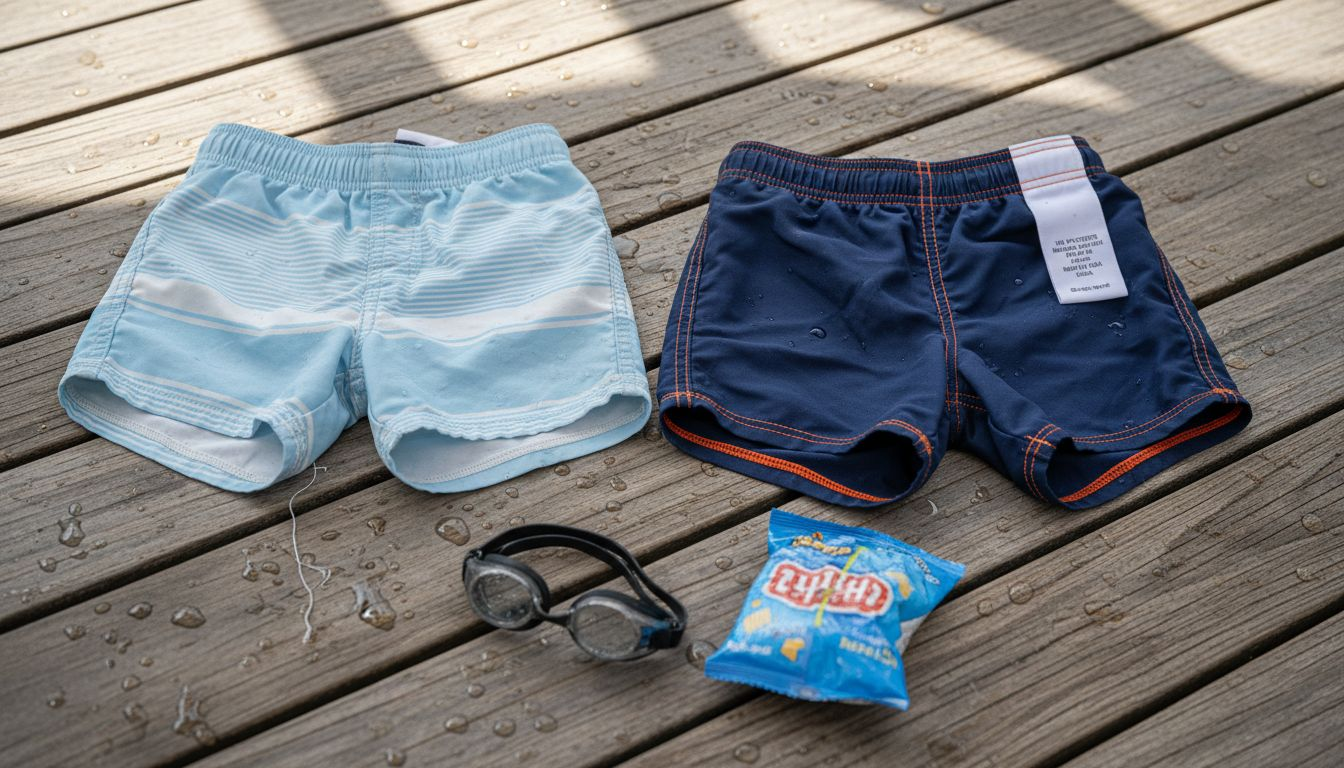
The science behind material longevity involves understanding how different fabrics respond to the harsh environment of water and sun exposure. Swimwear textiles face evaluation for durability, chlorine resistance, UV resistance, and water absorption. Think about what your son’s trunks endure: chlorinated pool water that breaks down lower-quality synthetics, intense UV rays that fade inferior dyes and weaken fabric fibers, repeated stretching during swimming, and the constant friction from sand and rough pool decks. Premium materials specifically engineered for swimwear handle these stressors better than generic polyester or cotton blends. Polyester variants designed for swimwear offer excellent UV resistance and color retention, making them ideal for sun-intensive beach days. Some manufacturers blend nylon with recycled polyester or other sustainable synthetics to maintain durability while reducing environmental impact—a combination that appeals to eco-conscious parents wanting both performance and responsibility.
The longevity difference between materials becomes obvious when comparing wear patterns across a single summer. Lower-quality nylon blends (typically under 80% nylon content) start showing signs of breakdown by July: colors fade significantly, the fabric develops a papery texture instead of remaining smooth, and the elastic loses its snap. Quality nylon and spandex blends maintain vibrant colors through multiple seasons, feel soft against skin, and keep their stretch even after 50 or 60 wash cycles. You’ll also notice that premium materials resist pilling and snags better than budget options. When your son’s trunks snag on a pool edge or rough surface, quality nylon bounces back, while cheaper alternatives develop visible damage. The fabric weight matters too. Heavier nylon (typically measured in grams per square meter) indicates better durability than thin, flimsy materials that feel insubstantial when you handle them in stores.
Beyond the primary nylon and spandex combination, some manufacturers incorporate antimicrobial treatments or chlorine-resistant technologies that extend lifespan even further. These specialized features cost more upfront, but they prevent the yellowing and texture deterioration that occurs when chlorine breaks down untreated synthetic fibers. For families with multiple children or those planning to pass down swim trunks, investing in materials with these treatments makes financial sense. Also consider that material longevity connects directly to sustainable fashion. A pair of swim trunks made from high-quality, chlorine-resistant nylon and spandex that lasts four years represents far less environmental impact than buying cheaper trunks annually. Your purchase decision at the material level directly influences how many garments your family eventually sends to landfills.
Pro tip: Check the care label for specific material percentages and look for nylon content of 80% or higher; this single indicator predicts durability better than almost any other factor, and washing in cold water with mild soap extends the lifespan of any quality blend by preventing fiber breakdown.
Here’s how the main swim trunk materials compare on durability and eco impact:
| Material Type | Durability Over Time | Resistance to Chlorine/UV | Environmental Footprint |
|---|---|---|---|
| Nylon/Spandex Blend | High, retains shape | Excellent, minimal fading | Moderate, often synthetic origin |
| Polyester (Swimwear grade) | Very high, resists pilling | Excellent, keeps color | Variable, often recyclable |
| Cotton Blend | Low, loses shape | Poor, fades quickly | High resource use, high waste |
| Recycled Synthetics | High, with eco treatments | Excellent with added resistance | Lowest, reduces landfill waste |
The Connection Between Durability and Sustainability
Here’s a truth that most swimwear marketing ignores: buying cheaper swim trunks that fall apart after one season is actually the environmentally destructive choice. Durability extends a product’s useful life, reducing the need for frequent replacement and lowering material consumption and waste. When you purchase durable swim trunks for your son, you’re not just making a smart financial decision—you’re actively reducing your family’s environmental footprint. The connection is direct and measurable. One pair of quality swim trunks lasting four years instead of one year means you’ve prevented three pairs from being manufactured, transported, packaged, and eventually discarded. That’s three times less water consumption in production, three times fewer chemicals released into ecosystems, and three times less textile waste heading to landfills. For eco-conscious parents, this reality aligns perfectly with your values. Durability becomes a form of environmental activism, one purchase at a time.
The environmental math behind durability reveals why this matters beyond your household. Textile production consumes approximately 79 trillion liters of water annually worldwide, and the fashion industry generates about 92 million tons of textile waste each year. Your family’s swimwear choices contribute to these staggering numbers. When you choose swim trunks engineered for longevity—with reinforced seams, quality materials, and thoughtful construction—you’re reducing demand for fast fashion manufacturing. This decreased demand translates into fewer factory hours, less water treatment needed, fewer dyes released into waterways, and reduced carbon emissions from shipping replacement garments. Product durability is a key factor in sustainable consumption and production, contributing to eco-efficiency by mitigating resource depletion and waste creation. The circular economy concept depends on products lasting longer before re-entering the waste stream. Durable swim trunks embody this principle perfectly. They can be handed down between siblings, passed to cousins, or donated to younger neighbors when your son outgrows them. A single pair might serve five or six children before finally wearing out, multiplying the environmental benefit exponentially.
This connection between durability and sustainability also addresses the ocean plastic crisis that likely motivated your eco-conscious approach in the first place. While swimwear itself doesn’t directly become ocean plastic, the manufacturing and transportation of disposable fashion create enormous carbon footprints that accelerate climate change. Rising ocean temperatures, changing currents, and environmental instability all contribute to existing plastic pollution. By choosing durable swim trunks, you’re supporting a manufacturing philosophy that minimizes environmental impact. Additionally, quality swimwear from sustainable brands often uses recycled materials or eco-friendly dyes, further reducing harm. When you invest in durable, sustainably made swim trunks, you’re sending a market signal that consumers value longevity over trend cycles. Brands respond to these signals by investing in better materials, improved manufacturing processes, and reduced waste. Your purchasing power, multiplied across thousands of eco-conscious parents, actually reshapes how swimwear gets made.
The financial and environmental benefits compound over time, especially in families with multiple children. Consider a family with three boys aged 5, 8, and 12. High-quality durable swim trunks cost more initially—perhaps $50 to $70 per pair versus $20 for discount alternatives. But that quality pair lasts four to five seasons and fits multiple children through hand-me-downs, resulting in a real cost of around $10 to $15 per child per year. The cheaper trunks require replacement every season, totaling $20 per child per year while generating significantly more waste. Your choice to prioritize durability saves money while actively protecting the environment. This is the rare situation where the ethical choice and the economical choice align perfectly.
Pro tip: Track which swim trunks your sons wear through multiple seasons and calculate the actual cost per wear; this real-world data motivates future purchases toward durability, and sharing these comparisons with other parents amplifies the sustainability message in your community.
How Durability Impacts Comfort and Safety
Your son’s comfort in the water matters far more than you might realize, and it’s directly tied to how durable his swim trunks are. When trunks start deteriorating, comfort becomes the first casualty. Durability in swim trunks affects comfort through quality fabric that maintains fit, reduces chafing, and manages moisture efficiently. Think about what happens when swim trunks lose their durability: the waistband stretches out and no longer holds securely, forcing your son to constantly hitch them up instead of focusing on swimming or playing. The fabric becomes thin and clingy rather than structured, causing bunching and uncomfortable friction against his skin. The internal netting deteriorates, losing its moisture-wicking properties and creating that unpleasant clammy feeling that makes kids want to get out of the water. Quality, durable fabrics maintain their performance characteristics through entire seasons—the waistband stays snug, the fabric breathes properly, and the netting continues to manage moisture. This isn’t about luxury. This is about your son actually enjoying water activities instead of dealing with persistent discomfort.
Chafing represents a significant comfort and safety concern that parents often underestimate. Children spend extended periods in swim trunks—pool days can stretch from mid-morning through afternoon, with multiple water sessions plus drying time. Durable swim trunks retain their structural integrity, preventing sagging or tearing that hinders swimming and causes discomfort. Lower-quality trunks lose their shape quickly, the fabric becomes rough from repeated wetting and drying, and the seams start fraying. Your son ends up with irritated, raw skin that makes him reluctant to return to the water the next day. Durable trunks maintain smooth, soft fabric throughout their lifespan. The seams stay reinforced and intact rather than unraveling, the fabric retains its smooth finish, and the internal seams that contact sensitive areas don’t develop rough edges. This comfort directly translates into safety because a comfortable child is a confident child in the water. When your son isn’t distracted by chafing or bunching trunks, he can focus on proper swimming technique, water awareness, and his own safety.
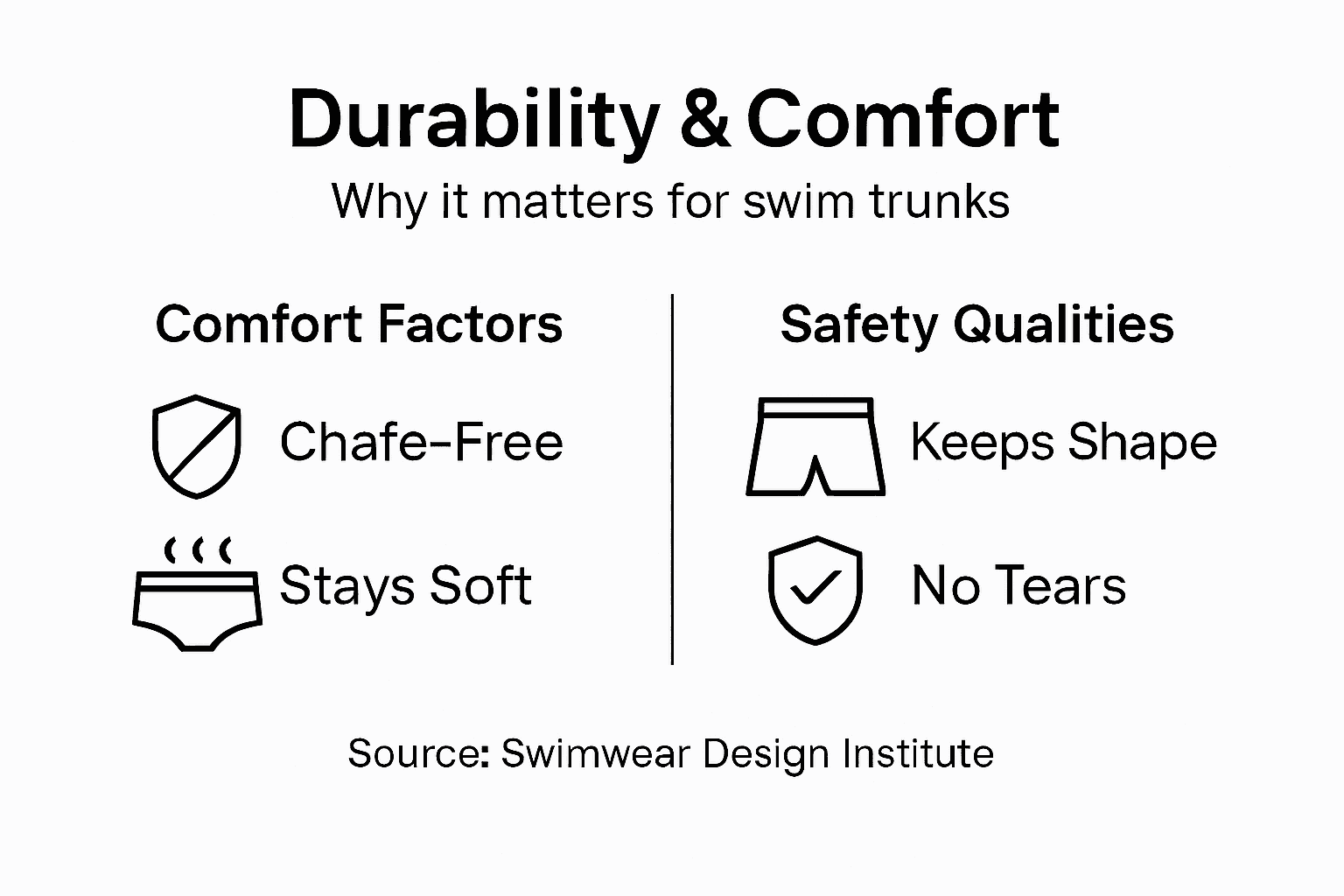
The safety aspect extends beyond chafing into fit and freedom of movement. Durable swim trunks that maintain their shape provide secure support during active water play. When trunks start sagging from deteriorated elastic, they restrict leg movement and create entanglement hazards. A boy wearing loose, sagging trunks can’t move his legs freely during swimming strokes, and the excess fabric can catch on pool edges or playground equipment. Durable trunks with quality elastic stay firmly in place, allowing full range of motion for kicking, climbing, and diving. This is especially critical for younger boys aged 5-8 who are still developing water confidence and coordinating complex movements. Poor-fitting trunks that slip or bunch create psychological barriers—your son becomes self-conscious about his appearance and may avoid water activities altogether. Durable, well-fitting trunks build confidence. He moves freely, stays comfortable, and genuinely enjoys being in the water. The internal support structure of quality swim trunks also matters for safety. Good netting provides compression and support that prevents chafing and irritation during active play.
Consider the practical reality of swimming pool environments. Chlorine is harsh. Saltwater is harsh. Sand is abrasive. Concrete pool decks are rough. UV rays are intense. When you pair these harsh conditions with poorly made swim trunks, the degradation accelerates dramatically. Within weeks, the fabric becomes thin and papery, loses its water-resistant properties, and develops rough spots. Your son experiences increasing discomfort as the season progresses. Durable swim trunks resist this environmental damage. The fabric remains supple and soft. The colors stay vibrant. The fit stays consistent. By mid-summer, your son is still comfortable and confident rather than dealing with a deteriorating garment that’s become almost unwearable. This consistent comfort throughout the entire season translates into more water time, better skill development, and genuine joy in aquatic activities. The investment in durability pays dividends in quality-of-life terms that go far beyond the initial purchase price.
Pro tip: After each pool or beach visit, rinse swim trunks in fresh water immediately and lay them flat to dry in shade rather than direct sun; this simple routine extends the comfort-supporting features of durable trunks by preventing fabric degradation and elastic breakdown that accelerates over time.
Cost, Waste, and Environmental Implications
Let’s talk about the numbers, because they reveal something counterintuitive about budget shopping for swim trunks. Most parents assume cheaper swim trunks save money. They don’t. The math actually works in the opposite direction. Longer product durability reduces the frequency of purchasing replacements, lowering overall consumer costs and reducing environmental waste. Picture this scenario: You buy discount swim trunks for $20. They last one season before the elastic fails and the fabric develops permanent damage. Next summer, you buy another pair for $20. And another the following summer. Over four years, you’ve spent $80 on swim trunks for a single child. Now compare that to purchasing one pair of quality, durable swim trunks for $65. That same pair lasts four to five seasons and fits multiple children through hand-me-downs. Your actual cost per season drops dramatically, and you’ve invested less total money. The math becomes even more compelling in families with multiple boys. When durable swim trunks can move from one brother to the next, the per-child cost becomes almost negligible.
The waste calculation extends far beyond your household budget. Durability directly influences product lifecycle costs and waste, with less durable goods generating more waste through frequent disposal. Every time you purchase a new pair of cheap swim trunks, you’re not just spending money. You’re generating textile waste. Those worn-out trunks end up in landfills, where synthetic fabrics take approximately 200 years to decompose. Your family purchasing one cheap pair annually adds four worn-out swim trunks to landfills per child over a four-year period. For a family with three boys, that’s 12 discarded garments heading to waste. Now multiply this across thousands of families making the same budget choice. The aggregate environmental damage becomes staggering. Landfills overflow with textile waste. Manufacturing and transportation emissions accumulate. Water consumption for production multiplies unnecessarily. One intentional choice to purchase durable swim trunks prevents multiple garments from becoming waste. This isn’t theoretical. Your purchasing decisions directly influence how much textile waste your family generates.
The environmental implications extend backward into manufacturing and forward into your home. Producing a single pair of swim trunks consumes significant resources: approximately 2,700 liters of water in the dyeing and treatment process, chemical inputs for coloring and finishing, energy for manufacturing, and transportation emissions. When you purchase cheap swim trunks that last one season, you’re essentially multiplying these resource inputs. Four pairs of cheap trunks over four years requires four complete manufacturing cycles, four sets of transportation, four applications of water and chemicals. One durable pair eliminates this multiplied impact. The environmental cost per season drops proportionally. Additionally, durable swim trunks from sustainable brands often use recycled materials or organic fibers, further reducing environmental footprint. When you invest in durability, you’re typically also investing in responsible manufacturing practices. The brands that prioritize durability also tend to prioritize sustainable sourcing, ethical labor practices, and minimal chemical use. Your purchasing decision influences multiple environmental and social factors simultaneously.
The long-term financial and environmental benefits compound significantly in households with growth and change. Consider a realistic family scenario: Your eldest son outgrows his durable swim trunks after two seasons of regular use. Instead of discarding them, they transition to your middle son, who wears them for two more seasons. They then move to your youngest son for another year. That single pair of durable swim trunks serves three children across five years, preventing the purchase of nine cheap alternatives that would have filled your landfills. The upfront cost of $65 translates into approximately $4 per child per year, far cheaper than the $20 annual cost of disposable alternatives. Your family saves money while preventing significant environmental harm. This is the rare situation where cost-consciousness and environmental responsibility align perfectly. By choosing durability, you’re not making a noble sacrifice. You’re making the smart financial decision that also happens to benefit the planet. When you share this reality with other eco-conscious parents, you amplify the positive impact. Communities that collectively prioritize durability reduce aggregate textile waste, lower manufacturing demand, and send clear market signals that consumers value longevity. Your individual choice, multiplied across your social circle, creates measurable environmental improvement.
Pro tip: Calculate the true cost per wear by dividing the purchase price by the number of seasons a pair lasts, then compare this metric across brands; this reveals that durable swim trunks often cost 60 percent less per season than budget alternatives while generating significantly less waste.
Typical multi-child cost and waste savings with durable swim trunks:
| Family Scenario | Total Purchase Cost (4 Years) | Garments Sent to Landfill | Cost Per Child Per Year |
|---|---|---|---|
| 1 child, cheap trunks | $80 | 4 pairs | $20 |
| 1 child, durable trunks | $65 | 1 pair | $16.25 |
| 3 children, cheap trunks | $240 | 12 pairs | $20 |
| 3 children, shared durable | $65 | 1 pair | $5.42 |
Choosing Truly Sustainable Swim Trunks
When you’re ready to make the switch to genuinely sustainable swim trunks for your boys, the choice involves much more than grabbing whatever looks appealing online. Selecting sustainable swim trunks means considering materials, manufacturing processes, and durability throughout the garment’s lifecycle. Start by examining the material composition on the care label. Look for high nylon content (80% or higher), which provides the durability foundation you’ve learned about. But also investigate whether those materials come from recycled sources. Brands committed to sustainability increasingly use recycled polyester from reclaimed plastic bottles or regenerated nylon from ocean waste and industrial scraps. These recycled synthetics perform identically to virgin materials but eliminate the extraction and refining energy costs. Check for transparency about material sourcing. Legitimate sustainable brands openly disclose where materials originate and how they’re processed. If a company can’t or won’t explain their material choices, that’s a red flag suggesting they prioritize cost cutting over genuine sustainability.
Manufacturing processes matter as much as materials themselves. Sustainable swim trunks balance durability with eco-friendly materials and ethical production. Ask yourself: Does the brand use water-efficient dyeing techniques? Do they employ closed-loop systems that recycle water rather than dumping it into rivers? Are chemical treatments applied responsibly, or are excess dyes and finishes simply washed away? Truly sustainable brands invest in these technologies because they understand that quality fabrics require careful processing. Look for third-party certifications from organizations like GOTS (Global Organic Textile Standard) or Bluesign, which verify environmental and social responsibility in production. These certifications cost money and require regular auditing, so brands that maintain them demonstrate genuine commitment rather than greenwashing marketing claims. Also consider the brand’s labor practices. Sustainable swim trunks should be manufactured in facilities with fair wages, reasonable working hours, and safe conditions. Brands making these commitments often showcase them proudly because ethical labor practices appeal to conscious consumers like you.
Repairability represents an underrated aspect of true sustainability that most brands ignore. A durable swimsuit that can’t be repaired when seams fail or elastic loosens still ends up in landfills. Some sustainable brands design swim trunks specifically for repair, using standardized seams, accessible elastic, and replacement part availability. Before purchasing, ask whether the brand offers repair services or sells replacement parts separately. This simple feature extends garment lifespan dramatically. A pair of swim trunks with replaceable elastic that lasts seven or eight years instead of four represents a massive sustainability advantage. Additionally, investigate the brand’s take-back programs. Do they accept worn-out swim trunks for recycling? Will they regenerate the fabric into new garments? These programs keep textiles out of landfills and create circular systems where old products become raw materials for new ones. Brands operating these programs prove they’re thinking beyond the initial sale.
Final evaluation involves matching these sustainability criteria with practical functionality for your sons’ actual needs. Sustainable swim trunks shouldn’t require compromise on comfort, style, or performance. Your boys should genuinely enjoy wearing them. The best sustainable choice is one your son will actually wear repeatedly rather than reject because he dislikes the fit or appearance. Brands that integrate sustainability with genuine design innovation create products that excel on all fronts. They understand that eco-conscious parents want their children looking good, feeling comfortable, and wearing trunks that actually survive the chaotic reality of childhood. Compare features that indicate quality in swim trunks when evaluating options, because quality features directly correlate with durability and longevity. A thoughtfully chosen pair of sustainable swim trunks becomes an investment you’re genuinely proud of—a purchase that reflects your values while delivering exactly what your family needs.
Pro tip: Create a sustainability checklist including recycled material content, manufacturing certifications, repair availability, and take-back programs, then use it to evaluate brands before purchasing; this systematic approach prevents greenwashing confusion and ensures your money supports genuinely sustainable companies.
Invest in Swim Trunks That Truly Last and Protect the Planet
Choosing durable boys swim trunks is about more than getting through the summer without frustration. It is about finding swimwear built to withstand active play, frequent washes, and harsh pool chemicals while supporting your family’s environmental values. At lecluboriginal.com, we understand the importance of durability combined with sustainability and style. Our swim trunks use high-quality, chlorine-resistant fabrics and reinforced seams that hold their shape season after season. This means fewer replacements, less textile waste, and guaranteed comfort that keeps your son confident in and out of the water.
Discover our curated collection of eco-friendly swimwear designed to last and made with responsibility. Explore quality swim trunks that support your commitment to reducing environmental impact without sacrificing style and comfort. Act now and enjoy free shipping on orders over $50. Visit lecluboriginal.com to shop sustainable swim trunks and join a community putting durability and earth care first. Your smart purchase today shapes a cleaner ocean and happier summers for years to come.
Frequently Asked Questions
What factors contribute to the durability of boys’ swim trunks?
Durability in boys’ swim trunks derives from high-quality materials, construction quality, and the ability to retain comfort and fit over time. Look for fabrics that resist chlorine, saltwater, and UV rays, as well as reinforced seams and well-designed waistbands.
How can I ensure that the swim trunks I purchase are durable?
To ensure durability, check the fabric composition for high nylon content (80% or higher) and look for features like reinforced seams at stress points. Additionally, consider swim trunks treated for chlorine resistance and those made from premium materials.
How does durability in swim trunks relate to sustainability?
Durability directly impacts sustainability as longer-lasting swim trunks reduce the need for frequent replacements, leading to less textile waste and resource consumption. Investing in durable swim trunks promotes eco-friendly practices by minimizing waste and environmental impact.
Why is comfort important in durable swim trunks?
Comfort is crucial because durable swim trunks maintain their fit and structure, reducing issues like chafing and sagging. When trunks are comfortable, boys are more likely to enjoy swimming activities and focus on proper technique and safety rather than discomfort.