

Buying more swim trunks every season often feels like a quick fix, but the real challenge is finding beachwear that actually matches your values. With minimalist principles built around mindful consumption, emotional value, and sustainability through reduction, eco-conscious travelers can finally escape overcrowded closets and wasteful fashion choices. This guide explores how minimalist beachwear lets you travel lighter, look sharper, and reduce your impact on every coastline from Greece to Bali, all without sacrificing style or comfort.
Table of Contents
- Defining Beachwear Minimalism And Its Principles
- Types Of Minimalist Beachwear Styles
- Key Features And Design Elements
- The Role Of Sustainability In Minimalist Beachwear
- Practical Benefits For Eco-Conscious Travelers
Key Takeaways
| Point | Details |
|---|---|
| Mindful Consumption | Focus on purchasing high-quality pieces that align with your values, rather than making impulse buys. |
| Emotional Value & Functionality | Choose beachwear that boosts your confidence and functions well across various occasions. |
| Sustainability Through Reduction | Invest in fewer, durable items to significantly reduce your environmental impact and fashion footprint. |
| Practicality for Travelers | A minimalist beachwear collection simplifies packing, saving you money and reducing decision fatigue during trips. |
Defining Beachwear Minimalism and Its Principles
Beachwear minimalism isn’t about owning nothing. It’s about owning the right things. At its core, minimalism represents a deliberate shift in consumer behavior centered on sustainable lifestyle principles, emphasizing reduced consumption and keeping only items that are pragmatically or emotionally valuable. When applied to beach apparel, this means curating a collection of versatile, high-quality swim trunks and accessories that work across multiple trips, climates, and occasions rather than accumulating dozens of impulse purchases that end up unworn in your closet. It’s a philosophy that prioritizes intention over impulse, quality over quantity, and longevity over seasonal trends.
The principle operates on three foundational pillars. First, mindful consumption means you make deliberate choices before buying anything. You ask yourself whether that new pair of swim shorts will integrate with your existing collection, whether it’ll last multiple seasons, and whether it aligns with your values around environmental impact. Second, emotional value matters as much as functionality. Your beachwear should make you feel confident on the beach in Bali or Barcelona, not trigger buyer’s remorse before you even pack your suitcase. Third, and most critical for eco-conscious travelers, sustainability through reduction means fewer pieces require fewer resources to produce. The less you buy, the smaller your fashion footprint becomes. Research shows that adopting a minimalist lifestyle improves emotional well-being while promoting sustainability, a combination that resonates deeply with men aged 25-40 who want their purchasing decisions to reflect both personal wellness and environmental responsibility.
What makes beachwear minimalism different from general minimalism is its specific application to vacation and leisure wear. You’re not stripping your closet down to black and white basics like some minimalists do. Instead, you’re building a cohesive beach wardrobe where each piece works hard. Imagine owning three premium swim trunks in complementary colors rather than ten mid-quality pairs. Those three pairs combine with different cover-ups, rash guards, and accessories to create multiple complete looks, take up minimal luggage space, and cost less over time because they’re made to last. When you compare this to conventional shopping patterns where the average man buys beachwear he wears a handful of times before it fades or deteriorates, the minimalist approach becomes both a financial and environmental win. It’s the intersection of looking sharp on every beach, traveling light, spending less money, and reducing your impact on ocean ecosystems through lower overall consumption.
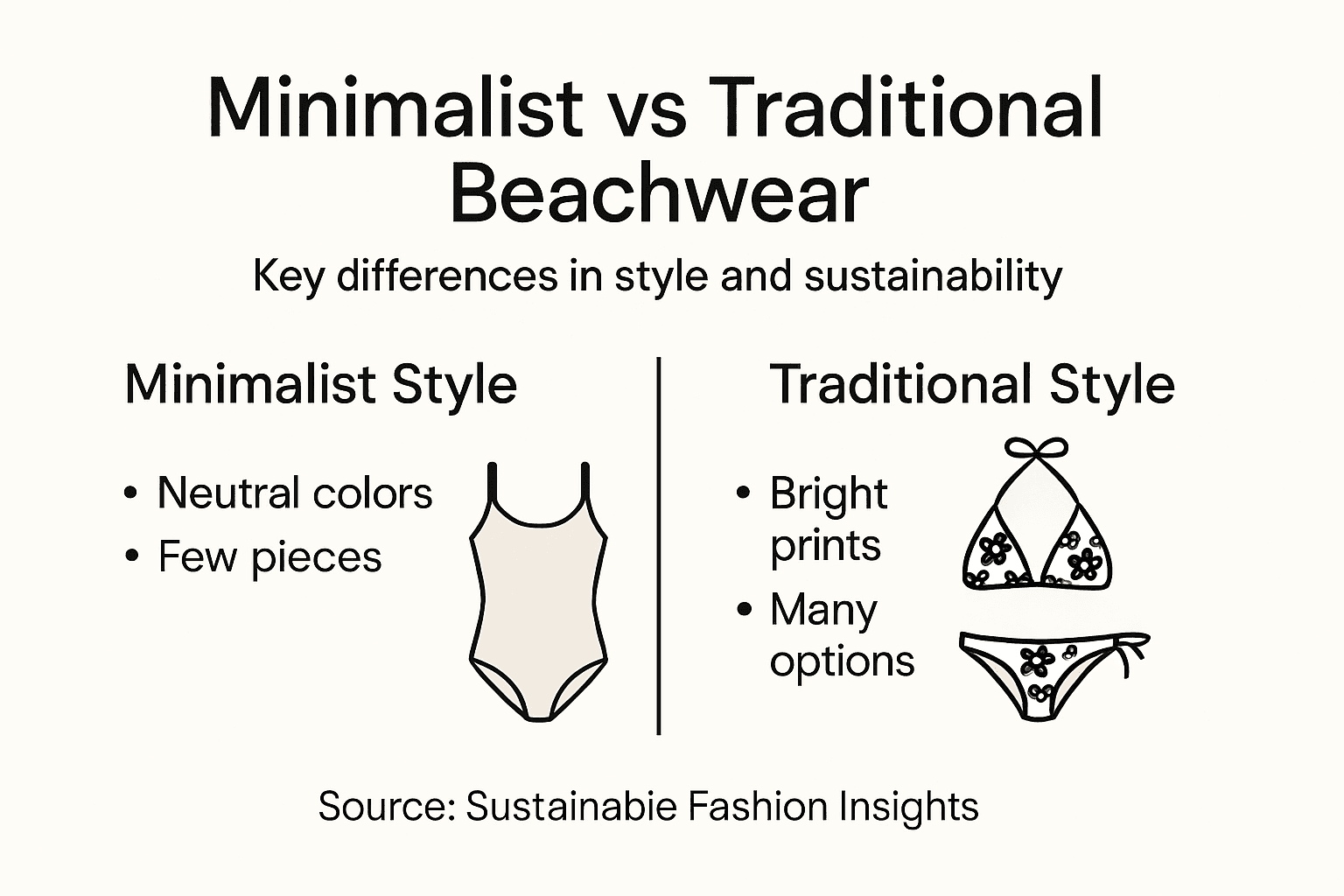
Here’s how minimalist and traditional beachwear approaches compare for eco-conscious travelers:
| Aspect | Minimalist Beachwear | Traditional Beachwear |
|---|---|---|
| Number of Pieces | 3-6, carefully selected | 10+, often impulse buys |
| Environmental Impact | Reduced footprint, less waste | High footprint, frequent waste |
| Financial Cost | Higher upfront, lower long-term | Low upfront, frequent spending |
| Wardrobe Flexibility | Mix-and-match versatility | Limited outfit combinations |
Pro tip: Start your minimalist beachwear journey by auditing what you already own, then identify the 2-3 pieces you actually reach for first. Build your capsule collection around those pieces, adding only complementary items that serve multiple purposes, rather than starting from scratch with an entire wardrobe redesign.
Types of Minimalist Beachwear Styles
Minimalist beachwear isn’t one-size-fits-all. The styles break down into several categories, each designed around the principle of doing more with less. Clean lines, neutral colors, and practical design form the foundation across all minimalist options, but how you apply these principles depends on your body type, climate preferences, and how you plan to use your beach wardrobe. The good news is that minimalist styles have moved far beyond boring basics. Modern minimalist beachwear offers surprisingly diverse options that look sharp whether you’re swimming in the Caribbean or relaxing at a Mediterranean resort.
The most popular minimalist styles fall into distinct categories. Streamlined swim trunks represent the foundation piece for most men building a minimalist beach wardrobe. Look for shorts with a simple cut, typically mid-thigh length or slightly shorter, in solid colors like navy, black, forest green, or warm earth tones. These work because they transition seamlessly from beach to casual settings, meaning you can wear them for swimming, then grab a shirt and walk into a beachside restaurant without changing. Premium one-piece swim shirts or rash guards offer another essential option, providing sun protection while maintaining clean aesthetics. They pair perfectly with minimalist shorts and serve double duty as a rashguard or casual cover-up depending on the fabric weight. Versatile cover-ups and lightweight layers complete the minimalist equation. A simple linen shirt, cotton kimono, or gauze cover-up made from natural fabrics lets you build multiple complete looks from the same core pieces. The key across all these categories is that timeless, comfortable styles with adjustable details support a wardrobe that adapts across seasons without requiring constant replacements.
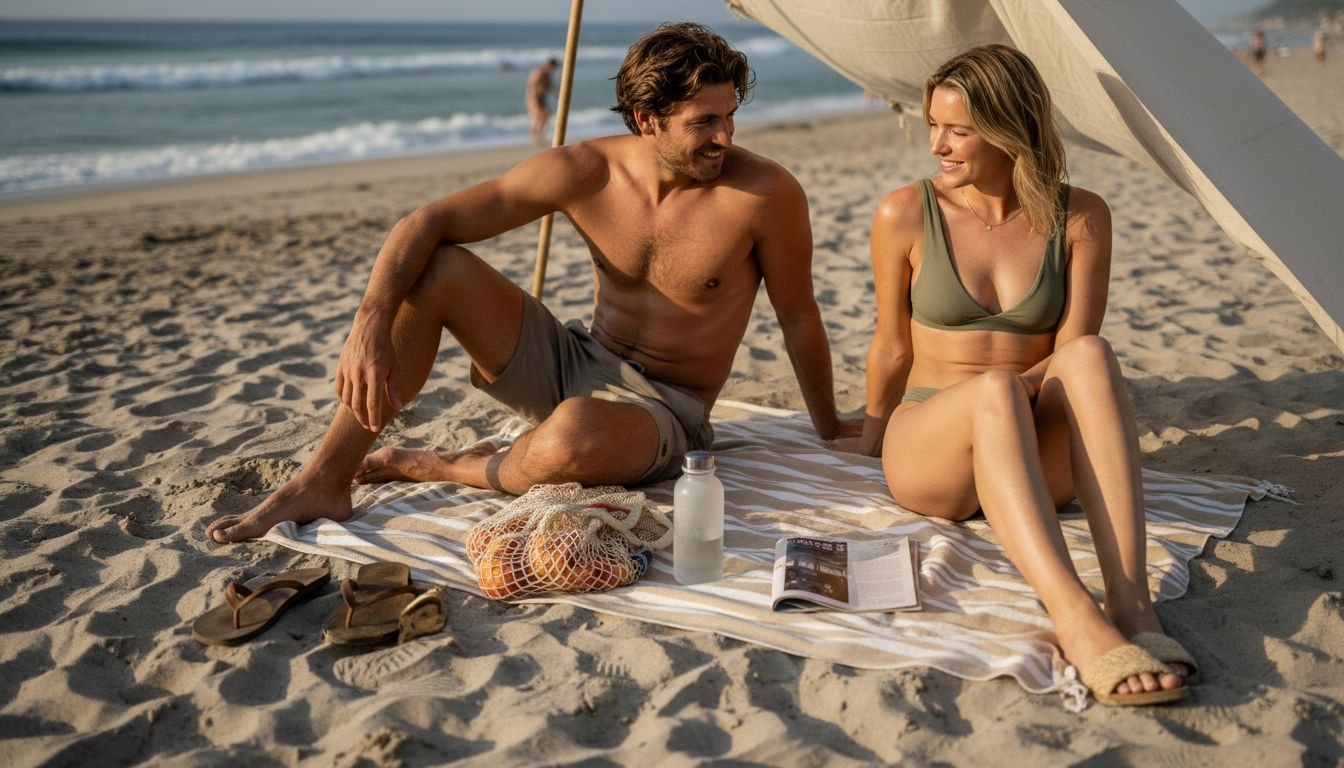
What makes these styles work together is their color strategy and material composition. Neutral palettes including beige, taupe, soft gray, white, and navy create natural harmony between pieces. You can confidently mix a charcoal swim trunk with a stone-colored cover-up without worrying about clashing patterns or competing colors. This isn’t about restriction, it’s about confidence. When your beachwear works as a coordinated system rather than random pieces, you actually feel more stylish, not less. Materials matter equally. Natural fabrics like organic cotton, recycled polyester, and linen-blend blends are both sustainable and practical. They dry faster than cheap synthetic blends, resist chlorine and saltwater damage better over time, and actually improve with age rather than degrading. This durability justifies the higher initial investment and aligns perfectly with minimalist philosophy. By choosing one or two exceptional pieces in each category, you avoid the overwhelming decision fatigue that comes with managing a massive closet while actually looking better on every beach.
Pro tip: Build your minimalist beachwear collection in neutral tones that work with your existing casual wardrobe, so your beach pieces seamlessly integrate with the rest of your traveling clothes and maximize outfit combinations from minimal pieces.
Key Features and Design Elements
Minimalist beachwear succeeds because of deliberate design choices, not despite them. Every element serves a purpose. Neutral color palettes form the foundation, using soft whites, blacks, charcoals, and earth tones like sand, taupe, and olive. These colors aren’t bland they’re strategic. A navy swim trunk pairs seamlessly with a stone-colored cover-up and works equally well with a cream rashguard. You’re not limited by clashing patterns or seasonal color trends. Instead, you gain flexibility. Each piece works with everything else in your collection, meaning you pack light without sacrificing outfit variety. Streamlined silhouettes matter equally. Minimalist beachwear features clean cuts that flatter diverse body types rather than chasing trendy shapes that work for only a narrow slice of men. A well-designed minimalist swim trunk sits properly at the waist, moves with your body during activity, and doesn’t require constant adjustment. The seams are flat and reinforced, the waistband sits comfortably without digging in, and the inseam length is proportional rather than exaggerated.
What separates quality minimalist beachwear from cheap knockoffs is the attention to fabric and construction. Minimalist apparel design emphasizes deliberate details, from seams and cuts to fabric choice, reducing visual clutter while enhancing material beauty. This means you notice immediately when you’re holding premium pieces. The fabric has weight and substance, not that plasticky feel of budget swimwear. High-quality, durable fabrics ensure the swimwear remains suitable for various beach activities across multiple seasons. Look for recycled polyester blends, organic cotton, or nylon fabrics engineered to resist chlorine, saltwater, and UV damage. The construction includes reinforced stress points like the leg openings, waistband, and seams where cheaper pieces fall apart after a handful of wears. Premium stitching uses thread that matches the fabric color, maintaining clean aesthetics even under scrutiny. Waistbands feature secure elastic that doesn’t lose shape, and drawstring systems actually function smoothly rather than jamming. These technical details sound minor until you’re on your third vacation and your beachwear still fits perfectly while budget alternatives have faded and stretched.
Functional design tailored for practical use represents the final pillar. Adjustable closures let you fine-tune fit without carrying multiple sizes. Quick-dry technology means your swim trunks dry faster than standard fabrics, critical when you’re exploring beach towns and only want one pair. Flat front designs eliminate unnecessary bulk, keeping you comfortable under casual cover-ups. Strategic seam placement prevents chafing during extended wear or water sports. These features exist because minimalist designers understand that beachwear must perform. A beautiful swim trunk that chafes after two hours isn’t minimalist, it’s just impractical. The best minimalist pieces balance aesthetics and functionality so completely that you never think about the design because it simply works. Your body feels supported, the fabric doesn’t cling awkwardly when wet, and you can move freely whether you’re swimming, paddling, or walking along the shore.
Key minimalist beachwear features and their advantages at the beach:
| Feature | Purpose | Practical Benefit |
|---|---|---|
| Neutral Color Palette | Easy color coordination | Reduces packing decisions |
| Quality Materials | Enhanced durability | Longer use, fewer replacements |
| Streamlined Silhouette | Comfortable fit | Suitable for diverse activities |
| Quick-Dry Technology | Fast moisture evaporation | Convenience after swimming |
Pro tip: When evaluating minimalist beachwear, feel the fabric weight and check seam construction closely because high-quality materials and reinforced stitching directly impact how many seasons your pieces will last, making premium investment pieces significantly cheaper per wear than budget alternatives.
The Role of Sustainability in Minimalist Beachwear
Sustainability and minimalism aren’t separate philosophies when it comes to beachwear, they’re two sides of the same coin. The connection runs deeper than marketing language or feel-good messaging. When you buy fewer pieces and choose quality over quantity, you automatically reduce your environmental footprint. Minimalist fashion inherently supports sustainability by encouraging reduced consumption and prioritizing quality over quantity. Think about the math. A man who owns one exceptional swim trunk that lasts five years has a dramatically smaller impact than someone who buys ten cheap pairs that fall apart after one season each. The durable piece requires fewer manufacturing cycles, generates less waste, and eliminates the constant churn of replacing worn-out items. This is where minimalism becomes radical. You’re not just making a personal style choice, you’re actively reducing the demand signal that drives overproduction in the fashion industry.
The materials themselves matter enormously. Sustainable minimalist beachwear utilizes eco-friendly materials such as organic cotton, recycled polyester, and innovative sustainable fibers engineered specifically to reduce environmental impact. When you purchase swim trunks made from recycled ocean-bound plastics or organic cotton grown without synthetic pesticides, you’re voting with your wallet for a different kind of production system. Ethical production practices focusing on fair labor and environmental impact align minimalist beachwear with broader sustainability goals that extend beyond your personal wardrobe. This means workers in manufacturing facilities earn fair wages, work in safe conditions, and aren’t exploited to keep prices artificially low. The environmental impact considerations include reduced water usage during production, lower chemical discharge into waterways, and manufacturing processes designed to minimize waste. It sounds like a lot of boxes to check, but when you buy less and choose responsibly sourced pieces, you’re supporting companies that have invested in these practices rather than cutting corners to maximize profit margins.
What makes this approach so powerful for travelers like you is the practical outcome. Sustainability in minimalist fashion involves reducing clothing waste through capsule wardrobes and minimizing carbon footprint while embracing durable, versatile clothing. Your minimalist beachwear collection becomes a capsule wardrobe that works across multiple vacations, climates, and occasions. You’re not buying new pieces for that trip to the Maldives, then different pieces for the Mediterranean. The same core items adapt. Your three premium swim trunks, two rashguards, and one lightweight cover-up work in Bali, Greece, Portugal, and Thailand. This reduces impulse purchases driven by travel planning anxiety. It eliminates the waste of buying vacation-specific items you’ll never wear again. Over a year of international travel, choosing minimalist sustainable pieces instead of trend-chasing beachwear means you generate significantly less waste, spend less money, pack lighter, and support companies that actually care about ocean health. The ocean you’re swimming in isn’t just a backdrop for your vacation, it’s an ecosystem affected by the choices you make about what you wear into it.
Pro tip: When shopping for minimalist beachwear, check the material composition and production certifications first because pieces made from recycled or organic materials and produced ethically tend to last significantly longer, making them a better financial investment even when the initial price tag feels higher.
Practical Benefits for Eco-Conscious Travelers
Choosing minimalist beachwear isn’t a sacrifice, it’s a strategic upgrade to how you travel. The practical benefits accumulate quickly once you commit to the approach. You pack lighter. A five-piece minimalist beachwear collection takes up roughly the same luggage space as two or three oversized beach towels. Compare that to traditional travelers who stuff suitcases with a dozen swimsuits, multiple cover-ups, and accessories they never wear. Your carry-on stays manageable, your back doesn’t ache hauling luggage through airport terminals, and you avoid checked baggage fees on budget airlines. You spend less money. Instead of dropping $400 across ten different swim trunks that fade and stretch within months, you invest $200 in two premium pairs that last years. The math compounds across multiple vacations. Over five years of international travel, minimalist buyers typically spend 40 to 60 percent less on beachwear while owning pieces that actually look better. You reduce decision fatigue. Without a bloated wardrobe, getting ready for the beach becomes automatic. You grab your go-to swim trunk, your preferred rashguard, and you’re ready. No standing in front of an open suitcase wondering which pair to wear. No anxiety about whether you packed the right items for various beach activities.
Beyond the logistics of travel itself, minimalist beachwear delivery substantial psychological benefits. Minimalism reduces environmental impact while being associated with enhanced well-being among consumers, meaning your choice to own less actually improves how you feel. This matters more than it sounds. When you’re on vacation, stress stems partly from logistics. Did I bring enough options? Do I have the right outfit? What if I don’t like how I look? Minimalist beachwear eliminates these mental loops entirely. You’ve already solved the wardrobe equation before you left home. Every piece you own works with everything else. Every item flatters you and aligns with your values. You show up to the beach confident, not overthinking. That mental clarity extends beyond clothing. When you live minimally while traveling, you notice your surroundings more. You’re not distracted by managing excessive belongings. You can actually be present on the beach instead of worrying about the seventeen items crammed in your hotel room.
The sustainability impact compounds across your travels. Every time you travel with your minimalist beachwear collection instead of buying new pieces locally or packing excessive options, you reduce demand for fast fashion beachwear. Multiply that across multiple trips per year, and you’re removing significant consumption from the system. You’re also modeling different behavior for people around you. When fellow travelers notice you looking stylish and put-together with three swim trunks instead of their eight oversized beach bags, conversations start. Your choices demonstrate that less actually works better. For eco-conscious men aged 25 to 40, this alignment matters. You’re not just making personal choices, you’re living your values visibly. The ocean you’re swimming in benefits from your reduced consumption. The workers producing your beachwear benefit from companies that can invest in ethical practices because they’re not racing to the bottom on price. The future benefits from normalizing that quality and intention matter more than quantity and impulse.
Pro tip: Before your next trip, lay out your minimalist beachwear collection and take a photo, then use that image as your packing template for future vacations to eliminate decision-making and ensure you always have coordinated pieces ready to go.
Discover How Style Meets Sustainability with Minimalist Beachwear
Minimalist beachwear solves the common challenge of juggling style, functionality, and environmental responsibility. If you are aiming to reduce clutter, minimize your fashion footprint, and enjoy versatile pieces that perform on every beach, embracing a curated collection made with sustainable materials is key. The article highlights the importance of intentional choices, emotional value, and eco-friendly fabrics. At the same time, it reveals how minimalist beachwear enhances your travel experience by lightening your load and boosting confidence.

Ready to elevate your vacation wardrobe with stylish and sustainable swim apparel? Explore Le Club Original for eco-conscious swim trunks and beach accessories designed to last and reduce ocean pollution. Every purchase supports ethical production and mindfully crafted collections so you can look your best and feel good about your impact. Start building your capsule beachwear collection today with pieces that combine comfort, durability, and timeless design. Visit Le Club Original now and make your next trip the embodiment of minimalist style and sustainability.
Frequently Asked Questions
What is beachwear minimalism?
Beachwear minimalism is a philosophy focused on curating a small, high-quality collection of swimwear and accessories that provide versatility for multiple occasions while reducing overall consumption and environmental impact.
How does minimalist beachwear contribute to sustainability?
Minimalist beachwear contributes to sustainability by encouraging mindful consumption and prioritizing quality over quantity. This approach reduces waste and environmental footprints by avoiding the overproduction associated with fast fashion.
What are the key features of quality minimalist beachwear?
Key features of quality minimalist beachwear include neutral color palettes for easy coordination, durable materials that resist damage, streamlined silhouettes for comfort, and functional designs with quick-dry technology and adjustable closures.
How can I build a minimalist beachwear collection?
To build a minimalist beachwear collection, start by auditing your current items and identifying versatile pieces that you frequently use. Aim for 3-6 high-quality items in complementary colors that can mix and match easily for various beach activities.